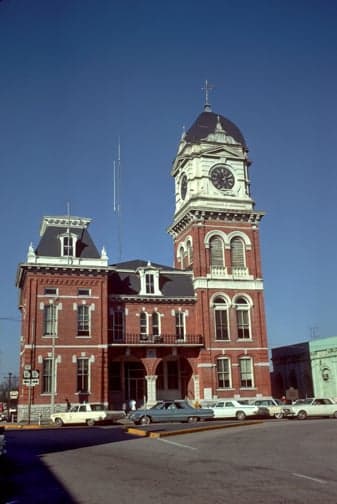
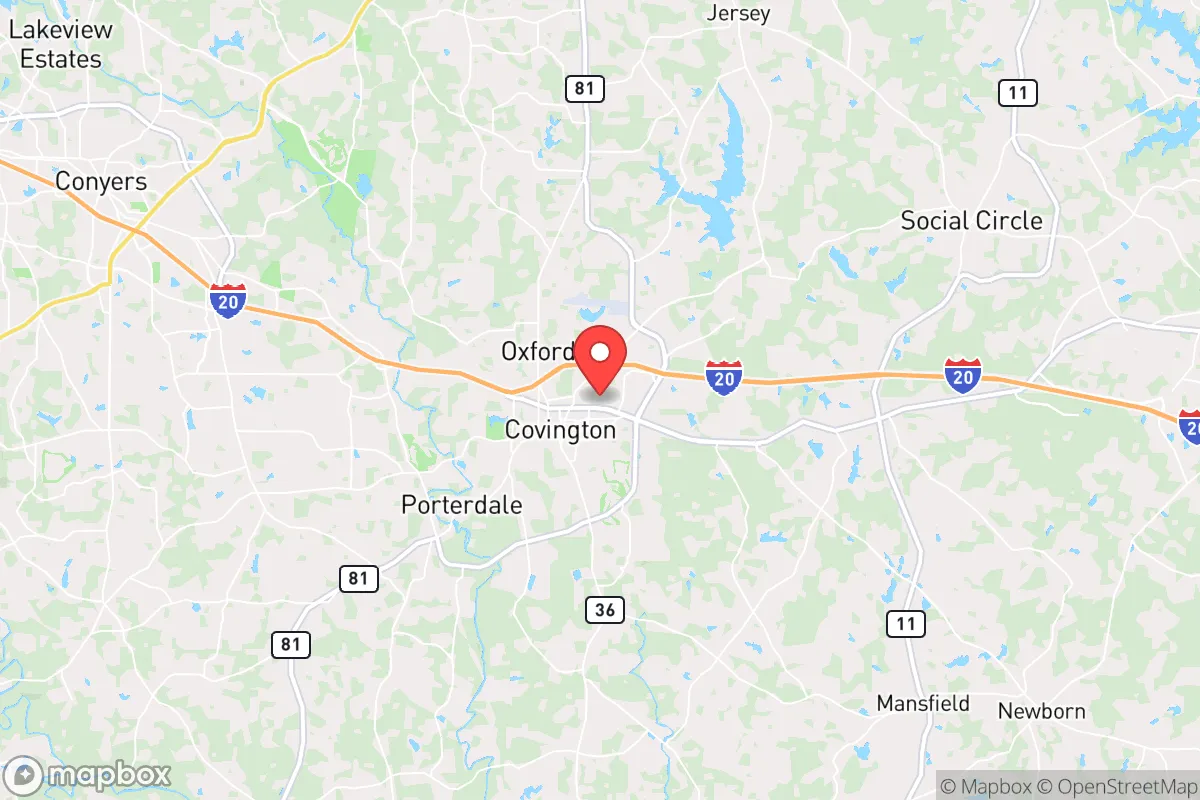
Photo: Wikipedia
Quality of Life in Covington, GA
A high quality of life with strong walkability, manageable living costs, healthy neighborhood signals, and solid amenity access.
What does Quality of Life tell us?
Quality of Life blends cost of living, nearby amenities, socioeconomic signals, and neighborhood character. City-level scores represent the whole municipality; individual neighborhoods can differ.
What does this tell us?
Quality of Life blends cost of living, nearby amenities, socioeconomic signals, and neighborhood character. City-level scores represent the whole municipality; individual neighborhoods can differ.
Cost of Living
6% below national average
The Real Cost of Living in Covington, GA for 2026
| Tier | Individual | Family (4) |
|---|---|---|
| Survival | $19k | $35k |
| Comfortable | $47k | $69k |
| Luxury | $86k+ | $134k+ |
| Elite (Top 5%) | $122k+ | $189k+ |
69%
The Area Signal
A metric tracking the socioeconomic signals of the area.
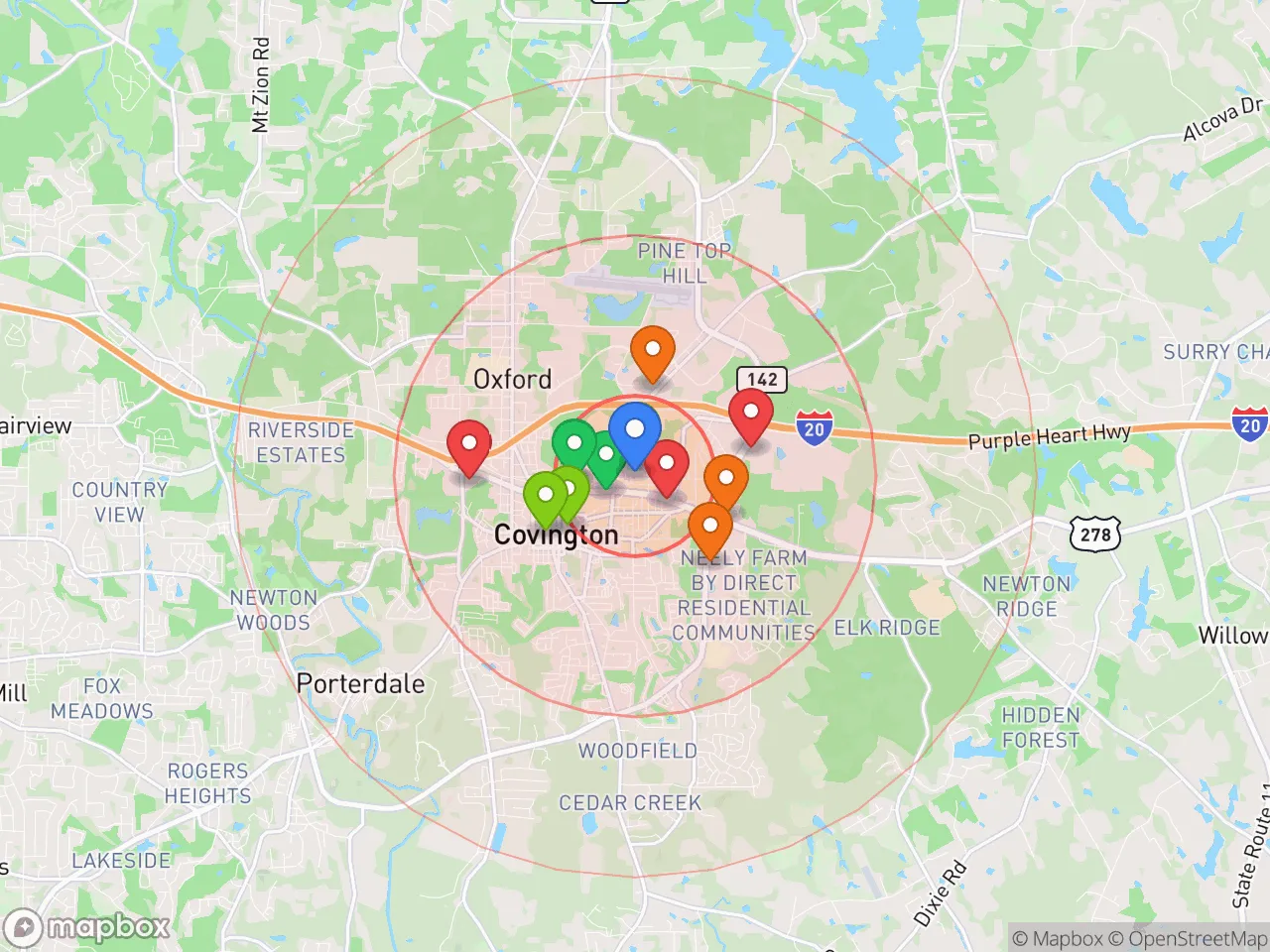
Hobbies
Explore the areaGroceries
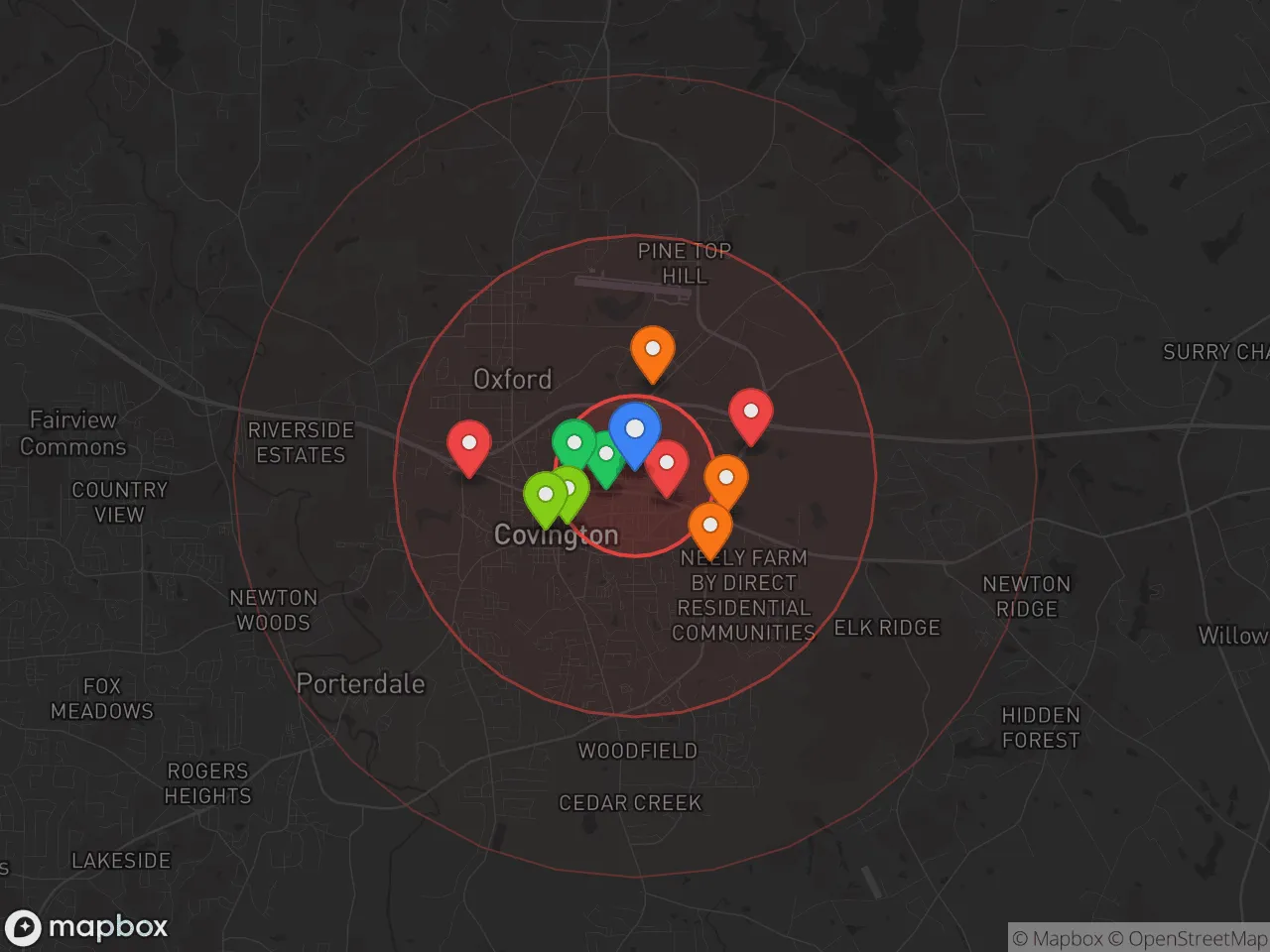
6 within 10 miles
Gas
20 within 10 miles
Hospital
5 within 20 miles
Airport
ATL — Hartsfield–Jackson Atlanta International
Post Office
USPS — Covington, GA
Critical Amenities
Quality-of-Life Analysis
Covington, Georgia, presents a quality of life defined by a blend of historic small-town charm and accessible suburban affluence, attracting a demographic mix of young families, long-term residents, and professionals who commute to Atlanta. The city’s cost of living sits at a 94 on the index (100 = U.S. average), making it notably more affordable than the national norm while offering a distinctly Southern, slower-paced lifestyle. This combination of relative affordability and proximity to a major metro area shapes the daily experience for the roughly 14,000 residents who call Covington home.
Cost of living, housing affordability, and how it compares to Atlanta
Covington’s housing market is a primary driver of its affordability, with a median home value of $242,700 — significantly lower than the Atlanta metro median of roughly $380,000. For renters, the median rent of $1,162 is also well below the metro average of around $1,500, making the city a practical entry point for first-time buyers and those seeking more space for their money. The trade-off is a longer commute: the average travel time to work is 28.3 minutes, which is slightly above the national average but typical for Atlanta exurbs. Many residents commute to jobs in Conyers, Snellville, or into the I-20 corridor toward downtown Atlanta, a drive that can stretch to 45–60 minutes during peak hours. Property taxes in Newton County are moderate, and overall utility costs align with the state average, reinforcing Covington’s reputation as a cost-effective alternative to pricier intown neighborhoods.
Local amenities, schools, and what daily life is like for families
Daily life in Covington revolves around its historic downtown square, which features locally owned shops, restaurants like Mystic Grill (a filming location for The Vampire Diaries), and seasonal events such as the Covington Farmers Market and the Newton County Fair. The Newton County School System serves the area, with Newton High School and Eastside High School being the primary public options; private alternatives include Providence Christian Academy. For outdoor recreation, residents use Turner Lake Park (with a splash pad, walking trails, and sports fields) and the Newton County Recreation Center. The city’s location along I-20 provides direct access to the Georgia International Horse Park in Conyers and Stone Mountain Park, both within a 30-minute drive. Healthcare needs are met by Piedmont Newton Hospital, a 100-bed facility offering emergency and surgical services. The overall rhythm is quiet and family-oriented, with a strong sense of community evident in local parades, church gatherings, and youth sports leagues.
Covington is best suited for those who prioritize space, affordability, and a slower pace over the instant urban amenities of Atlanta. Commuters willing to trade 30–60 minutes of driving for a lower mortgage or rent will find the city a practical fit, as will families seeking good schools, safe neighborhoods, and a tight-knit social fabric. Retirees and remote workers also gravitate here for the lower cost of living and historic character. However, those seeking a vibrant nightlife, extensive public transit, or a highly diverse job market within walking distance may find Covington too quiet or car-dependent. For the right buyer — one who values a historic downtown, lower housing costs, and a manageable commute to the metro area — Covington offers a stable, affordable quality of life that is increasingly rare in the Atlanta region.

Crime in Covington, GA
Generally safer than 59% of comparable U.S. locations.
Violent CrimeViolent Crime Analysis
Property CrimeProperty Crime Analysis
Crime Analysis
Covington, Georgia, reports a violent crime rate of 397.9 incidents per 100,000 residents and a property crime rate of 3,221.9 per 100,000. These figures place the city in a higher-risk category compared to national averages, a reality shaped in part by its location within the Atlanta metropolitan area. As a small city adjacent to a large, progressive-leaning metro, Covington faces crime pressures that are often exacerbated by regional justice policies that prioritize offender rehabilitation over public safety.
Crime in context
Covington's violent crime rate is roughly 14% higher than the national average of approximately 350 per 100,000, while its property crime rate exceeds the U.S. median by about 70%. When compared to the state of Georgia's overall violent crime rate (around 380 per 100,000), Covington is slightly above the state mark. However, the property crime figure is significantly elevated—Georgia's statewide rate hovers near 2,200 per 100,000. These disparities are not unusual for a bedroom community within a major metro area like Atlanta, where crime from the urban core can spill into surrounding suburbs. The presence of progressive district attorneys and judges in the broader metro region, who often advocate for reduced incarceration and lenient sentencing, contributes to a revolving-door effect that keeps repeat offenders on the streets and drives up local crime statistics.
What residents experience
For Covington residents, the most tangible daily concern is property crime. Theft, burglary, and vehicle break-ins are the most frequently reported offenses, with the 3,221.9 per 100K rate translating to roughly one property crime for every 31 residents annually. Violent crime, while less common, is still a serious worry: the 397.9 rate means about one violent incident per 251 residents each year. Aggravated assault accounts for the majority of violent offenses, though robbery and burglary-related violence also occur. Residents often report feeling safe in well-lit, active commercial areas during the day but express heightened caution at night and in less-trafficked residential zones. The influence of metro Atlanta's progressive criminal justice reforms—such as cash bail elimination and diversion programs—means that many offenders arrested in Covington are quickly back on the street, undermining deterrence and frustrating community safety efforts.
Neighborhood-level variation is significant. Historic districts like the Covington Square and newer subdivisions near Interstate 20 tend to see lower crime rates due to higher property values, better lighting, and more active neighborhood watch programs. In contrast, areas along U.S. Highway 278 and parts of the city's southern corridor report higher concentrations of both property and violent crime. Prospective residents should research specific street-level data on the Covington Police Department's crime mapping portal and consider that proximity to Atlanta's progressive justice system means crime patterns are influenced by regional policies, not just local enforcement. Choosing a home in a well-established neighborhood with strong community engagement can mitigate some of these risks, but the overarching metro-area context remains a factor for anyone relocating to Covington.
* Values derived from national, state, county, city and local statistics and may differ in a specific area. Last updated: 2026-08-26T02:47:53.000Z
Narrative content on this page is AI-generated and may contain mistakes. Verify any details that matter before acting on them.
ReloMaps may earn a commission from affiliate links at no extra cost to you.

