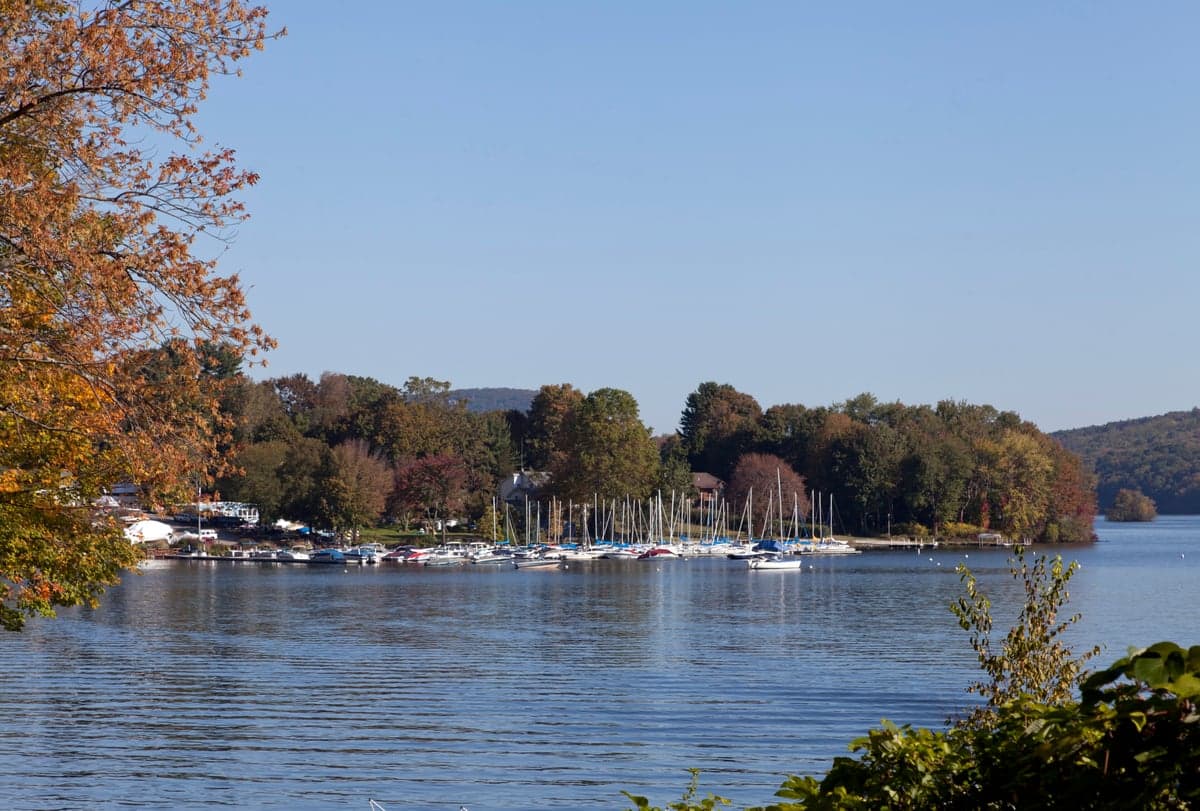
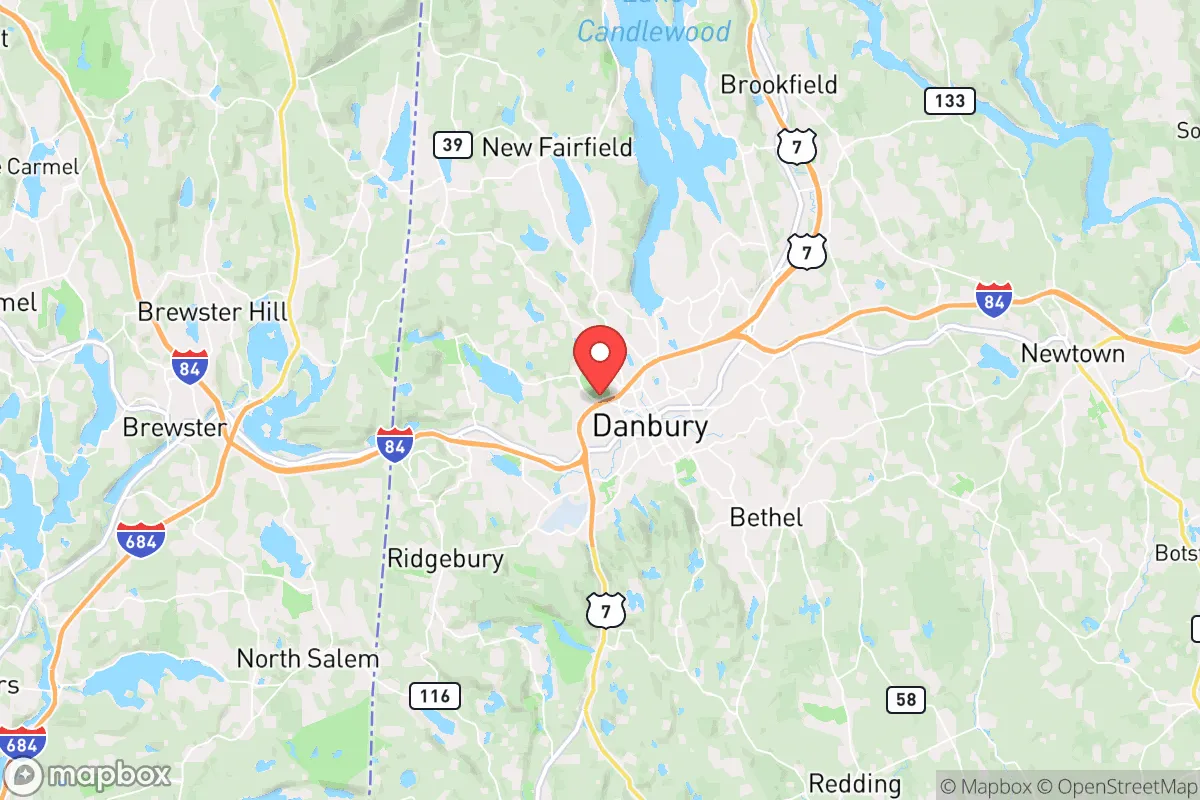
Photo: Wikipedia
Personal Sovereignty in Danbury, CT
Viable for self-reliance. Generally workable, though some barriers may limit total independence.
What does Personal Sovereignty tell us?
Personal Sovereignty measures your capacity for self-reliance and independence with minimal government friction. Higher scores mean fewer barriers between you and the way you want to live... but it assumes you have the space you need and good neighbors.
What does this tell us?
Personal Sovereignty measures your capacity for self-reliance and independence with minimal government friction. Higher scores mean fewer barriers between you and the way you want to live... but it assumes you have the space you need and good neighbors.
State Policy
Energy independence: Importer (5% of energy produced in-state)
Personal Liberty
Homesteading

Personal Liberty Analysis
Danbury, Connecticut, presents a mixed picture for those prioritizing personal sovereignty, where a relatively high degree of local self-reliance and community resilience is constantly weighed against a state-level regulatory environment that leans heavily toward centralized control. For the survivalist or prepper, Danbury offers a strategic paradox: it sits in a region with strong traditions of individual preparedness and a robust local economy, yet it operates under Connecticut's expanding state mandates on everything from firearms to energy policy. The city's proximity to New York's Hudson Valley and the rural fringes of Litchfield County provides a buffer zone, but the legal and tax architecture of the state is a persistent headwind for anyone seeking maximum autonomy.
Tax burden and regulatory posture in Danbury
Connecticut's tax posture is a primary concern for sovereignty-minded individuals. The state imposes a progressive income tax with rates reaching 6.99%, and Danbury's combined state and local sales tax rate is 6.35%. Property taxes in Danbury are moderate by Fairfield County standards, with a mill rate around 27.5, but they still represent a significant annual outflow for homeowners. More critically, the state's regulatory climate is dense: Connecticut has some of the most stringent building codes in the Northeast, which can complicate off-grid or alternative construction projects. The state's energy policies, including mandates for electric vehicle adoption and renewable energy targets, signal a long-term trajectory of increased government oversight on personal property and energy choices. For a prepper, this means that while Danbury itself may not be aggressively enforcing every state mandate, the legal framework is stacked against self-sufficient infrastructure like solar arrays with battery storage or rainwater collection systems without permits.
Self-defense and gun law specifics in Danbury
This is the most significant sovereignty trade-off in Danbury. Connecticut has some of the most restrictive gun laws in the nation, including a ban on "assault weapons" (defined broadly), a 10-round magazine limit, and a requirement for a permit to purchase any firearm, which involves a background check, a safety course, and a state-issued certificate. Open carry is effectively prohibited, and concealed carry permits are issued at the local level by the Danbury Police Department, but the state's "may-issue" framework has been effectively replaced by "shall-issue" after court rulings, though the process remains cumbersome. The state also has a "red flag" law that allows for the temporary seizure of firearms without a criminal conviction. For a survivalist, this means that building a robust personal armory is legally constrained, and any defensive planning must account for the possibility of state-level confiscation orders. The local gun culture in Danbury is more pragmatic than in the rural parts of the state, but the legal ceiling is low.
Self-reliance and homesteading viability in Danbury
Danbury's zoning and land-use patterns limit full-scale homesteading but offer niches for semi-self-reliance. The city is largely suburban and urban, with typical residential lot sizes ranging from 0.25 to 0.5 acres in most neighborhoods. Larger parcels exist in the northern and western fringes, near the New York border, where you can find 1- to 5-acre lots that allow for substantial gardens, small orchards, and even a few chickens or goats, though livestock regulations are strict and require permits. Off-grid living is legally difficult: Connecticut requires connection to the electrical grid for new construction, and rainwater harvesting is restricted for potable use. However, Danbury's strong local food scene — with multiple farmers' markets and a thriving community of small-scale producers — means that building a local supply network is feasible. The city's location on the I-84 corridor also provides access to rural suppliers in upstate New York and western Connecticut for bulk goods, seeds, and hardware. True self-sufficiency is not realistic within city limits, but a "suburban homestead" approach with intensive gardening, food preservation, and barter networks is viable.
Personal liberties in Danbury: parental rights, medical autonomy, speech, and property
On parental rights, Connecticut is a mixed bag. The state has strong laws supporting parental involvement in education, including a requirement for parental consent for most medical procedures for minors, but it also has a broad "minor consent" law for certain mental health and substance abuse treatments. The state's vaccine mandate for school attendance is one of the strictest in the country, which is a flashpoint for sovereignty-minded parents. Medical autonomy for adults is similarly constrained: Connecticut has a robust public health apparatus that can impose isolation and quarantine orders, and the state's emergency powers were used aggressively during the pandemic. Free speech is protected under the First Amendment, but the state has enacted laws against "hate speech" and "intimidation" that some critics argue can be used to chill political expression. Property rights are relatively strong in Danbury compared to more urbanized areas, but the state's eminent domain authority is broad, and environmental regulations can restrict land use. The city's zoning board has significant power over what you can do on your own land, from building a shed to running a home business.
Overall sovereignty assessment for Danbury
Danbury offers a strategic location for those who value personal sovereignty but are not willing to move to a completely rural or red-state environment. The city's strong local economy, diverse community, and access to both urban and rural resources make it a viable base for a prepper lifestyle focused on community resilience and local networking rather than full independence. The trade-off is clear: you gain proximity to markets, medical facilities, and a robust job market, but you operate under a state government that is actively expanding its reach into personal choices on firearms, energy, education, and health. For a single individual or family willing to navigate the regulatory landscape and build local alliances, Danbury can work as a "gray man" location — a place where you can maintain a low profile while building capacity. But for those seeking maximum legal autonomy, the rural parts of New Hampshire or upstate New York offer fewer state-level constraints. Danbury is a compromise, not a sanctuary.

* Values derived from national, state, county, city and local statistics and may differ in a specific area. Last updated: 2026-04-30T01:30:52.000Z
Narrative content on this page is AI-generated and may contain mistakes. Verify any details that matter before acting on them.
ReloMaps may earn a commission from affiliate links at no extra cost to you.

