 Popular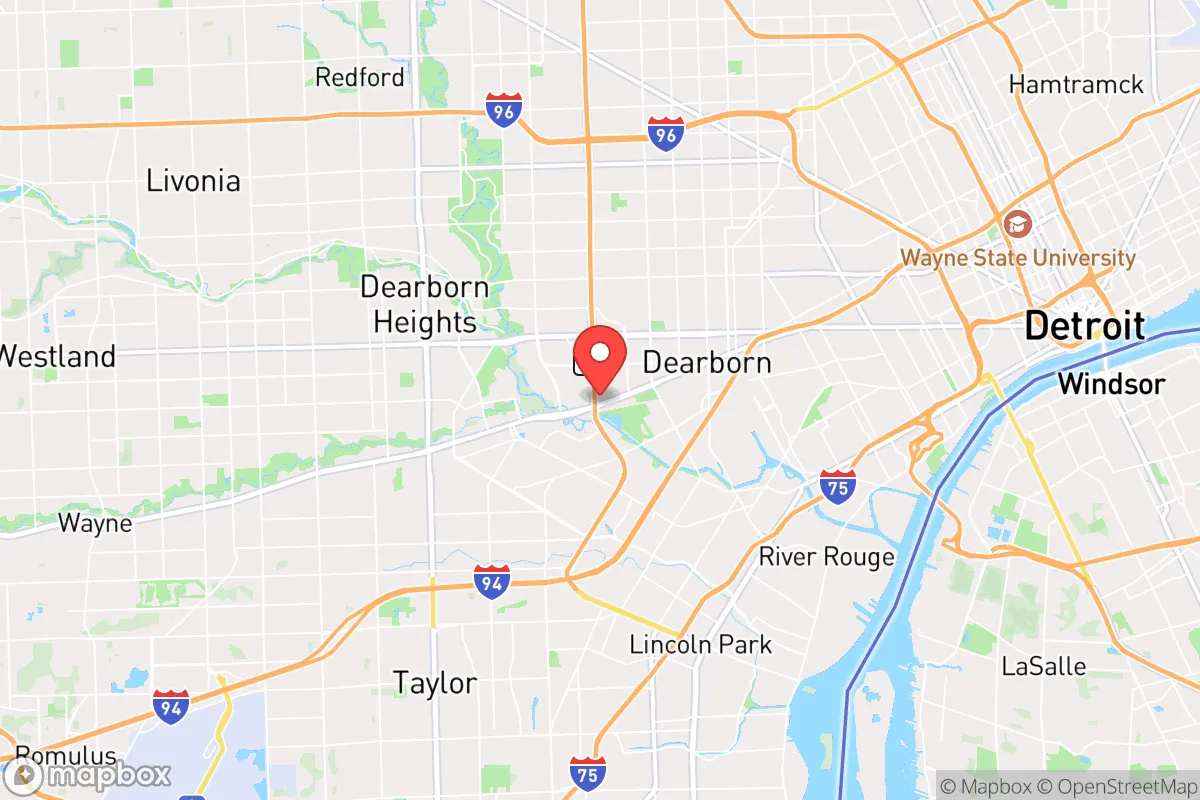
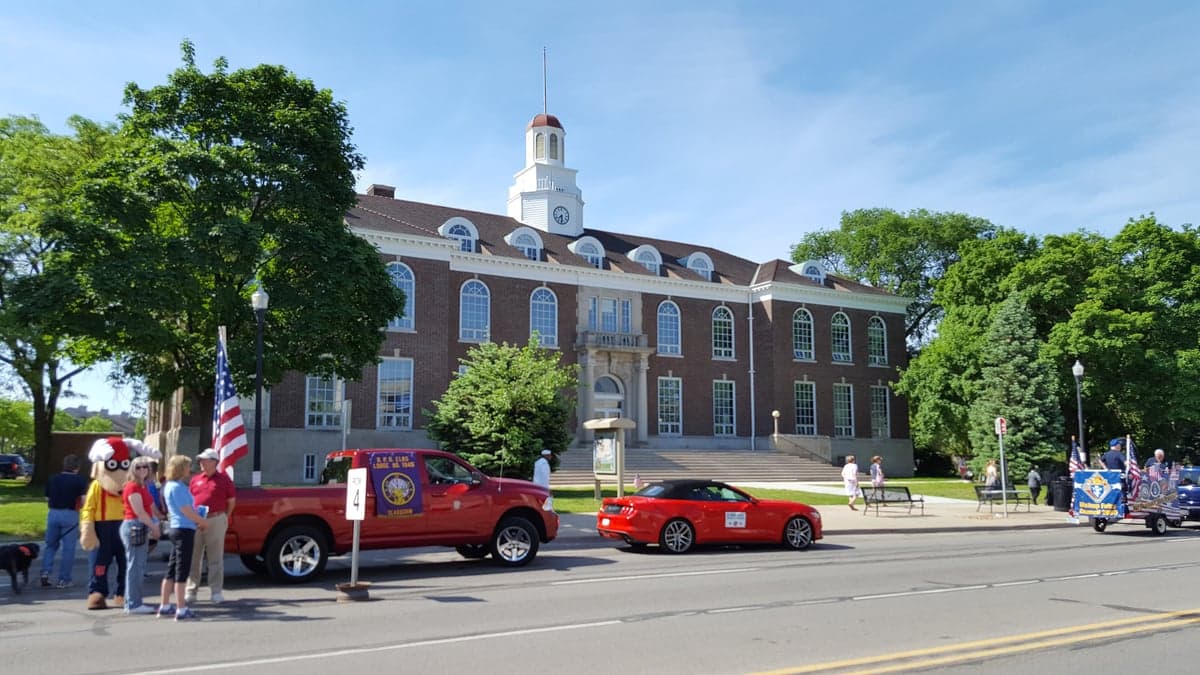
Photo: Wikipedia
Strategic Assessment of Dearborn, MI
Multiple tactical vulnerabilities. Population density, target proximity, or disaster risk are likely compounding. A retreat property and exit planning is required.
What does the Strategic Assessment tell us?
Our Strategic Assessment grades tactical survivability of an area. Major population centers, military targets, fallout zones, natural disasters, and border exposure all drive risk — lower exposure means a more defensible position in a crisis.
This is heavily inspired by Joel Skousen's Strategic Relocation book. Highly recommended you checkout the book ($)What does this tell us?
Our Strategic Assessment grades tactical survivability of an area. Major population centers, military targets, fallout zones, natural disasters, and border exposure all drive risk — lower exposure means a more defensible position in a crisis.
This is heavily inspired by Joel Skousen's Strategic Relocation book. Highly recommended you checkout the book ($)Strategic Pillars

Key Distances
Regional Safe Places
Below is our recommended "safe zones" in Michigan and the surrounding area based on our strategic heuristics. For most people, it's unrealistic to live in a “safe zone” full-time due to work, family or other personal reasons. They tend to be more rural. However, many of these areas are perfect for second homes and retreat properties that double as a vacation home or even a short-term rental.


Important Note: For informational purposes only. This does not mean nothing bad ever happens in the green zones. Please use common sense. This is based on public data and modeled with AI. We tried to take a conservative approach but mistakes happen. We update this regularly as new information becomes available.
Solar Generator Recommendations
Backup power matters more here than in safer locations. We've picked three solar generators across budgets and capacity tiers — start with the budget unit if you only need a few essentials, or step up if you want to run a fridge and HVAC for days at a time.

Jackery Portable Power Station Explorer 300
Budget OptionPower on the Go: Weighing only 11 lbs, it's convenient to set up and store with book-sized foldable solar panels

BLUETTI Portable Power Station AC180
Designed for both indoor and outdoor scenarios, AC180 is highly capable as it has a robost capacity and continuous output power.

EF ECOFLOW DELTA Pro Ultra Power Station
Upgraded PickEcoFlow DELTA Pro Ultra is a whole-home energy system designed to grow with your family. Integrated with the Smart Home Panel 2, it scales to meet your evolving energy needs — keeping your home powered, intelligent, and secure through every stage of life.
We earn a commission, at no additional cost to you.
Strategic Assessment Analysis
Dearborn, Michigan, presents a complex strategic picture for the conservative prepper or survivalist. While its location offers genuine advantages in terms of freshwater access and industrial resilience, its proximity to major urban centers and critical infrastructure creates significant vulnerabilities that cannot be ignored. For a relocator prioritizing self-sufficiency and security, Dearborn is a high-risk, high-reward proposition that demands a clear-eyed assessment of both its natural assets and its exposure to cascading failures.
Geographic position and natural advantages for long-term survival
Dearborn sits in southeastern Michigan, roughly 10 miles from the Detroit River and the Great Lakes system, which holds roughly 20% of the world's surface freshwater. This is a non-negotiable strategic asset in any long-term resilience plan. The region's flat terrain and clay-heavy soils are poor for large-scale agriculture, but the proximity to Lake Erie and Lake St. Clair means reliable water access for filtration and small-scale hydroponics. The area also benefits from a moderate climate with four distinct seasons, which reduces the risk of extreme heat events that plague southern states. The surrounding region, particularly to the west and northwest, offers rural escape routes into Washtenaw and Livingston counties, where farmland and forested areas provide fallback positions. Dearborn's own industrial history means a dense network of machine shops, metal fabricators, and automotive suppliers—assets that could be repurposed for manufacturing tools, parts, or defensive hardware in a prolonged disruption. The city's position along major rail lines and interstates (I-94, I-75, and I-275) is a double-edged sword: it facilitates supply movement but also makes the area a natural chokepoint for any large-scale evacuation or military movement.
Risks, exposures, and proximity to fallout-relevant landmarks
The most glaring vulnerability is Dearborn's location within the Detroit metropolitan area, home to over 4.3 million people. In a scenario involving civil unrest, mass casualty events, or a cascading infrastructure collapse, this population density becomes a liability. The city itself has roughly 110,000 residents, but it is surrounded by the urban core of Detroit to the east, the industrial corridor of Downriver communities to the south, and the densely populated suburbs of Wayne County to the north and west. Any major event in Detroit—whether a riot, a disease outbreak, or a supply chain collapse—will spill over into Dearborn within hours. The city is also within 15 miles of the Detroit Metropolitan Wayne County Airport (DTW), a major international hub that would be a primary target for any coordinated attack or a focal point for disease spread. Additionally, Dearborn sits near the confluence of several major natural gas pipelines and electrical transmission corridors that serve the entire southeastern Michigan grid. A single point of failure at the Fermi 2 nuclear plant (30 miles south) or the St. Clair power plant (40 miles northeast) could blackout the region for weeks. The city's own infrastructure—aging water mains, combined sewer overflows, and a reliance on the Detroit Water and Sewerage Department—makes it vulnerable to systemic failure. For the prepper, the key takeaway is that Dearborn is not a bug-out location; it is a location that will be affected by any regional disaster within hours.
Practical resilience for a relocator: food, water, energy, and defensibility
For a single individual or family willing to invest in hardening a property, Dearborn offers some practical advantages. The city's housing stock includes many older brick homes with basements, which provide natural thermal mass and shelter from severe weather. A well-prepared household can install a rainwater catchment system (Michigan has no state-level restrictions on rainwater harvesting) and a backup generator, though natural gas is the most common fuel for home heating and cooking. The local soil is not ideal for traditional gardening, but raised beds with imported topsoil or hydroponic setups in a basement can produce a significant portion of a family's vegetables. Dearborn's ethnic diversity means a wide variety of international grocery stores (particularly Middle Eastern markets) that stock bulk grains, legumes, and spices—ideal for long-term food storage. The city also has a strong network of mosques and community centers that could serve as mutual aid hubs in a crisis, though this may not align with every relocator's cultural comfort zone. Defensibility is a challenge: most homes are on small lots with close neighbors, and the street grid is open. A single-family home on a corner lot with a fenced backyard offers the best option for creating a perimeter. The local police department is well-funded relative to surrounding communities, but response times in a widespread event will be measured in hours, not minutes. For energy independence, solar panels are viable but require battery storage to handle Michigan's overcast winters. Wood-burning stoves are legal and practical, though sourcing firewood locally may become competitive in a crisis.
The overall strategic picture for Dearborn is one of calculated risk. It is not a retreat location for those seeking isolation or a low-profile existence. It is a location for the prepper who wants to leverage industrial infrastructure and freshwater access while accepting the inherent dangers of urban proximity. The city's strengths—water, industrial capacity, and community networks—are real but require active investment to realize. Its weaknesses—population density, infrastructure fragility, and proximity to high-value targets—are structural and cannot be mitigated by individual preparation alone. For the conservative relocator who values self-reliance and is willing to maintain a low profile while building a hardened home base, Dearborn offers a viable but demanding option. For anyone seeking a simpler, more defensible setup, the rural counties to the west—Livingston, Washtenaw, or even the thumb region—provide a better balance of security and sustainability. Dearborn is a high-maintenance asset, not a safe harbor.

* Values derived from national, state, county, city and local statistics and may differ in a specific area. Last updated: 2026-04-29T18:39:55.000Z
Narrative content on this page is AI-generated and may contain mistakes. Verify any details that matter before acting on them.
ReloMaps may earn a commission from affiliate links at no extra cost to you.

