 Popular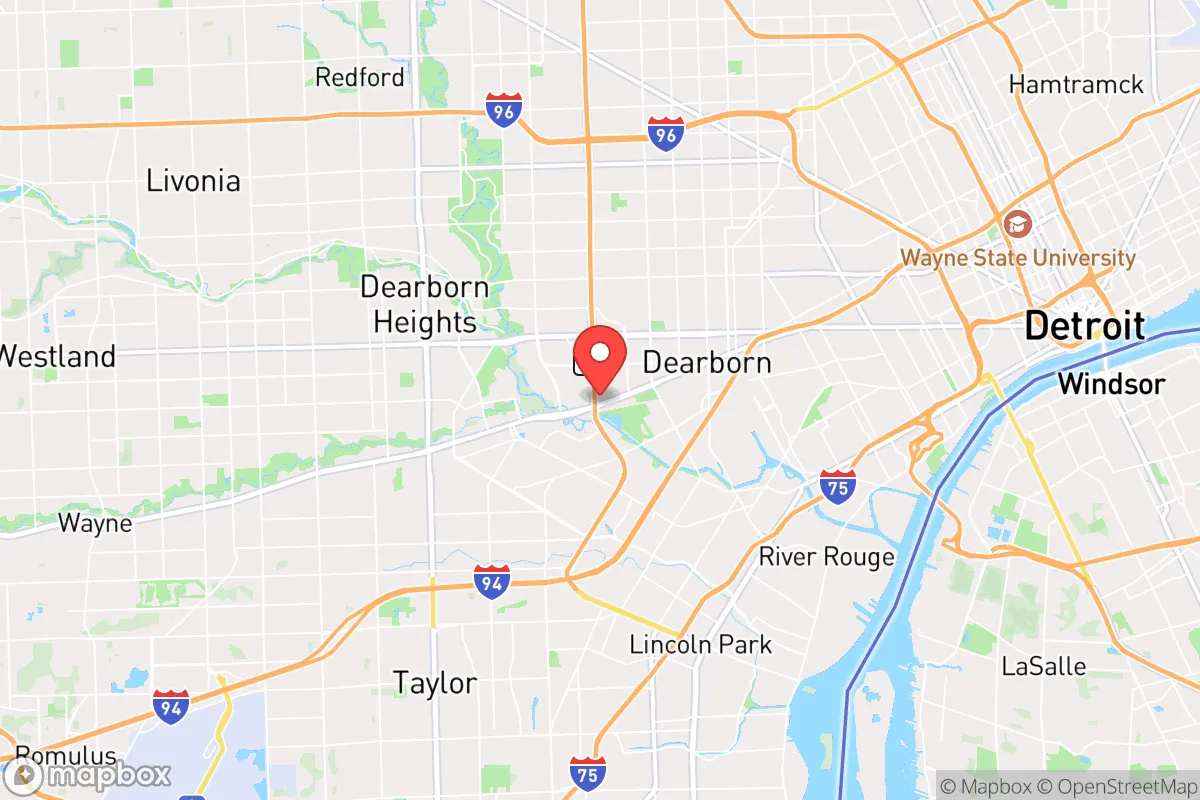
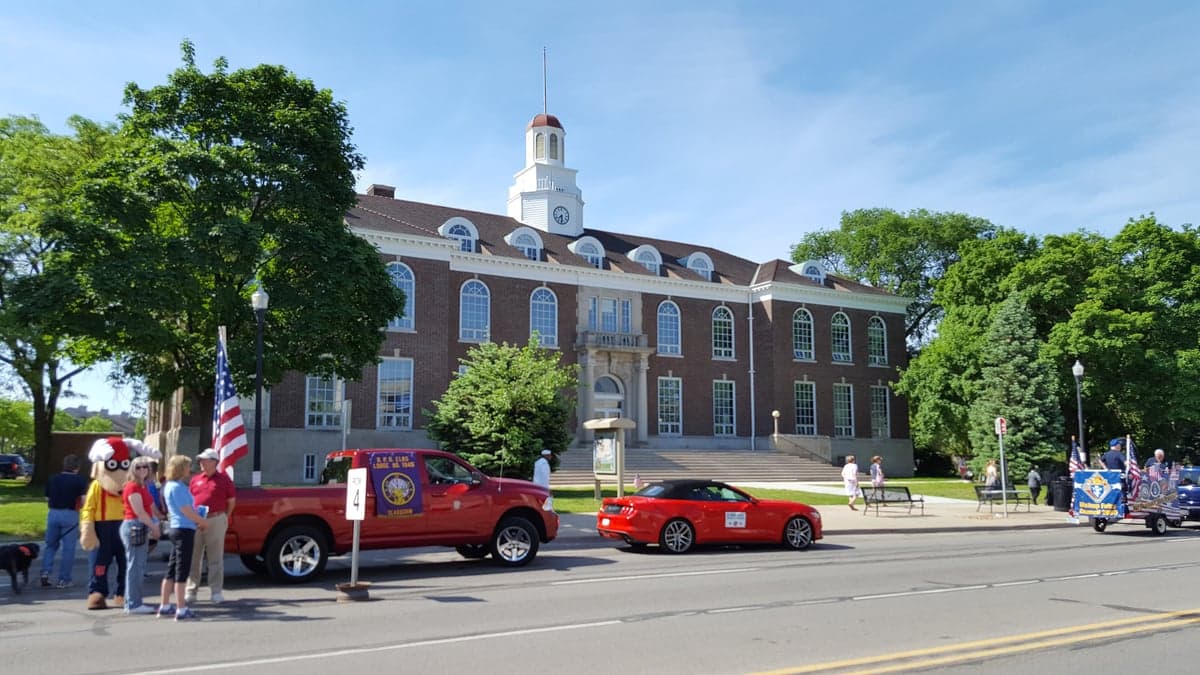
Photo: Wikipedia
Political ClimatePolitical Climate in Dearborn, MI
District shown is the primary district for this city’s centroid. Cities may span multiple districts.
Local Political AnalysisPolitical Analysis of Dearborn, MI
Look, I’ve lived in Dearborn my whole life, and I’ll tell you straight: this city leans hard blue, and it’s been that way for decades. The Cook PVI sits at D+21, which means Democrats have a massive 21-point advantage over the national average in presidential elections. That’s not a fluke—it’s baked into the local DNA, driven by a strong union presence, a large Arab American community that historically aligns with the Democratic Party on civil rights and foreign policy, and a base of public-sector workers who vote their paycheck. But here’s the thing: that lockstep loyalty has started to feel less like community pride and more like a rubber stamp for policies that chip away at personal freedoms. The trajectory isn’t toward moderation; it’s toward a progressive agenda that’s increasingly comfortable telling you how to live, what to teach your kids, and which businesses can operate.
How it compares
Drive 15 minutes west to Dearborn Heights, and you’ll feel the shift. That city is more politically mixed—still blue-leaning, but with a noticeable conservative streak, especially among older Polish and Arab residents who vote on pocketbook issues and family values. Head another 10 miles west to Livonia, and you’re in solidly Republican territory, where the local government pushes back on state mandates and keeps taxes lower. Even Allen Park and Taylor, just south, have a more balanced political climate. Dearborn, by contrast, is an island of deep-blue uniformity. The city council and school board are dominated by Democrats, and there’s almost no organized opposition. That lack of competition means bad ideas—like overreaching mask mandates that lasted longer than necessary, or zoning changes that let the city dictate what you can do with your own property—sail through without serious debate.
What this means for residents
For the average person, this political monoculture translates into a few concrete headaches. First, taxes are higher than in surrounding communities, and they keep creeping up to fund programs you might not support—like DEI initiatives in schools or expanded city bureaucracy. Second, your voice gets drowned out. If you’re a small-business owner who thinks the city’s licensing fees are too high, or a parent who doesn’t want critical race theory in your kid’s classroom, good luck finding a council member who shares your concerns. They’re all singing from the same hymnbook. Third, public safety priorities can feel skewed. While the city touts progressive criminal justice reforms, property crime rates have ticked up in some neighborhoods, and residents I talk to say they don’t always feel the police have their back. It’s not a dangerous city by any means, but the vibe has shifted from “we take care of our own” to “the government knows best.”
On the cultural side, Dearborn’s diversity is real and often a strength—you can get amazing food, hear multiple languages on the street, and celebrate holidays from Ramadan to Christmas. But that diversity is increasingly used as a cudgel to push a one-size-fits-all progressive agenda. The city’s leadership has embraced sanctuary city policies, which sounds noble until you realize it means local resources get stretched thin and federal immigration enforcement is actively obstructed. There’s also a growing push for “equity” zoning that could let the city override neighborhood character—think density mandates in single-family areas. If you value the right to live quietly, run a business without endless red tape, and raise your kids with traditional values, Dearborn is becoming a tougher place to do that. The long-term trend? More of the same, unless enough residents wake up and demand a real choice at the ballot box.

State Political ClimatePolitical Climate in Michigan
State Political AnalysisPolitical Environment in the State
Michigan has shifted from a reliably blue state to a true battleground over the past decade, but the trend line for conservatives is concerning: the state voted for Joe Biden by 2.8 points in 2020 and Kamala Harris by a similar margin in 2024, while Republicans held the state House and Senate only briefly in 2023. The dominant coalition is a mix of union labor, suburban moderates, and Detroit’s Black voters, but the real story is the steady leftward drift of the state government since Democrats took full control in 2023. For a conservative looking to relocate, Michigan offers a mixed bag — low taxes on property and no tax on Social Security, but a rapidly expanding regulatory state that feels increasingly like a smaller version of Illinois or California.
Urban vs. rural divide
The political map of Michigan is a textbook case of urban-rural polarization. The Detroit metro area, including Wayne, Oakland, and Macomb counties, delivers roughly 40% of the state’s vote, and it leans heavily Democratic — Wayne County went +38 for Biden in 2020. Grand Rapids (Kent County) has flipped from reliably red to purple, voting for Biden in 2020 and Harris in 2024, driven by an influx of young professionals and a growing Hispanic population. Meanwhile, the rural Upper Peninsula and northern Lower Peninsula are solidly Republican — Otsego County (Gaylord) voted +38 for Trump in 2024, and the Thumb region (Huron, Sanilac, Tuscola) is deep red. The key battlegrounds are the suburban “collar counties” around Detroit: Macomb County, once a Reagan Democrat stronghold, has trended right but still only went +2 for Trump in 2024, while Oakland County, once a GOP bastion, has become a Democratic stronghold (+14 for Biden). Livingston County (Howell) remains the state’s most reliably conservative suburban county, voting +35 for Trump, but it’s surrounded by blue territory. The divide isn’t just geographic — it’s cultural, with rural areas feeling ignored by a Lansing that increasingly caters to Detroit and Ann Arbor.
Policy environment
Michigan’s policy environment has shifted sharply left since 2023. The state income tax is a flat 4.25%, but Democrats passed a repeal of the “right-to-work” law in 2023, making Michigan the first state in decades to reverse such a law — a major blow to individual freedom in the workplace. Property taxes are capped at 5% annual increases under Proposal A, which is a genuine protection for homeowners, but the state’s regulatory posture is expanding fast: a new paid sick leave law and a minimum wage hike to $15/hour by 2028 were enacted in 2024. Education policy is a flashpoint — the state banned charter school expansion in 2023 and passed a comprehensive LGBTQ+ nondiscrimination law that conservatives argue threatens religious liberty and parental rights. Election laws were loosened in 2022 with Proposal 2, which expanded early voting and allowed same-day registration, but also removed voter ID requirements for absentee ballots — a move that worries election integrity advocates. Healthcare is dominated by the expansion of Medicaid under the Affordable Care Act, and the state has a “red flag” law (extreme risk protection orders) passed in 2023 that allows temporary gun confiscation without a criminal conviction. For a conservative, the policy trend is unmistakably toward more government control, not less.
Trajectory & freedom
Michigan is becoming less free by any objective measure, especially since the 2022 election gave Democrats a trifecta. The most alarming move for gun owners was the 2023 passage of universal background checks and the red flag law, which effectively ended Michigan’s status as a “shall-issue” state for concealed carry. Parental rights took a hit with the 2023 repeal of the “opt-out” provision for sex education, meaning parents can no longer easily pull their kids from controversial curriculum. On the economic freedom front, the repeal of right-to-work means union dues can now be mandatory again in many workplaces — a direct loss of personal choice. On the positive side, Michigan has no tax on Social Security benefits, and the state’s property tax cap remains a strong protection against runaway assessments. But the overall trajectory is clear: the state government is actively expanding its reach into personal decisions, from gun ownership to education to labor contracts. The 2024 passage of a “clean energy” mandate requiring 100% carbon-free electricity by 2040 will drive up energy costs and limit property rights for landowners near wind and solar projects.
Civil unrest & political movements
Michigan has been a hotspot for political activism on both sides. The 2020 “Wolverine Watchmen” kidnapping plot against Governor Gretchen Whitmer exposed a fringe extremist element, but it also highlighted the deep distrust of lockdown policies in rural areas. The 2020 protests at the Michigan State Capitol — where armed demonstrators gathered against COVID mandates — were a defining moment for the state’s conservative movement. Since then, the “Michigan Conservative Coalition” and local “Moms for Liberty” chapters have been active in school board races, particularly in Macomb and Livingston counties. On the left, the “Michigan United” and “Detroit Justice Center” groups have pushed for criminal justice reform and defunding police, though with limited success. Immigration politics are relatively quiet compared to border states, but Detroit and Ann Arbor are “sanctuary cities” that limit cooperation with ICE, which frustrates conservatives. Election integrity remains a live issue: the 2020 election saw widespread use of ballot drop boxes and expanded mail-in voting, and while no major fraud was proven, the 2022 Proposal 2 changes have kept the issue alive. A new resident in a rural area will notice the “Trump 2024” flags and “Let’s Go Brandon” bumper stickers, while in Ann Arbor or Grand Rapids, “Hate Has No Home Here” signs are common.
Projection
Over the next 5-10 years, Michigan is likely to continue its leftward drift, driven by in-migration from blue states like Illinois and California into the Grand Rapids and Ann Arbor areas, and by the growing political power of Detroit’s suburbs. The state’s population is aging and stagnant — Michigan lost a congressional seat after the 2020 census — but the areas that are growing (Grand Rapids, Traverse City, and the Detroit exurbs) are trending purple or blue. The Republican Party is increasingly confined to rural areas and the Thumb, which means statewide elections will be tough for conservatives unless the party can win back Macomb County and hold Livingston. The 2026 governor’s race will be a key test: if Democrats hold the seat, expect more progressive policies like a state-level “assault weapons” ban and a carbon tax. If a Republican wins, the trend could slow but not reverse, given the Democratic lean of the state House and Senate maps. For a conservative moving in now, the realistic expectation is that Michigan will look more like Illinois within a decade — higher taxes, more regulation, and a shrinking rural voice in Lansing.
Bottom line for a new resident: If you’re a conservative looking for a low-tax, high-freedom environment, Michigan is a state in transition — and not in your favor. The property tax cap and no Social Security tax are genuine advantages, but the expanding regulatory state, loss of right-to-work, and erosion of gun rights are real red flags. Your best bet is to settle in Livingston County or the rural Thumb, where local government is still friendly, but be prepared for a state government that will increasingly work against your values. If you’re a parent, pay close attention to school board elections and consider private or homeschool options, because the public school system is trending toward progressive curriculum mandates. Michigan is still a beautiful state with great outdoor recreation and a strong manufacturing economy, but the political climate is becoming less hospitable to conservatives by the year.
* Values derived from national, state, county, city and local statistics and may differ in a specific area. Last updated: 2026-04-29T18:39:55.000Z
Narrative content on this page is AI-generated and may contain mistakes. Verify any details that matter before acting on them.
ReloMaps may earn a commission from affiliate links at no extra cost to you.

