Photo: Wikipedia
Demographics of Del City, OK
Affluence Level in Del City, OK
A low-income area with significant economic hardship. Household wealth and educational attainment are well below national averages.
People of Del City, OK
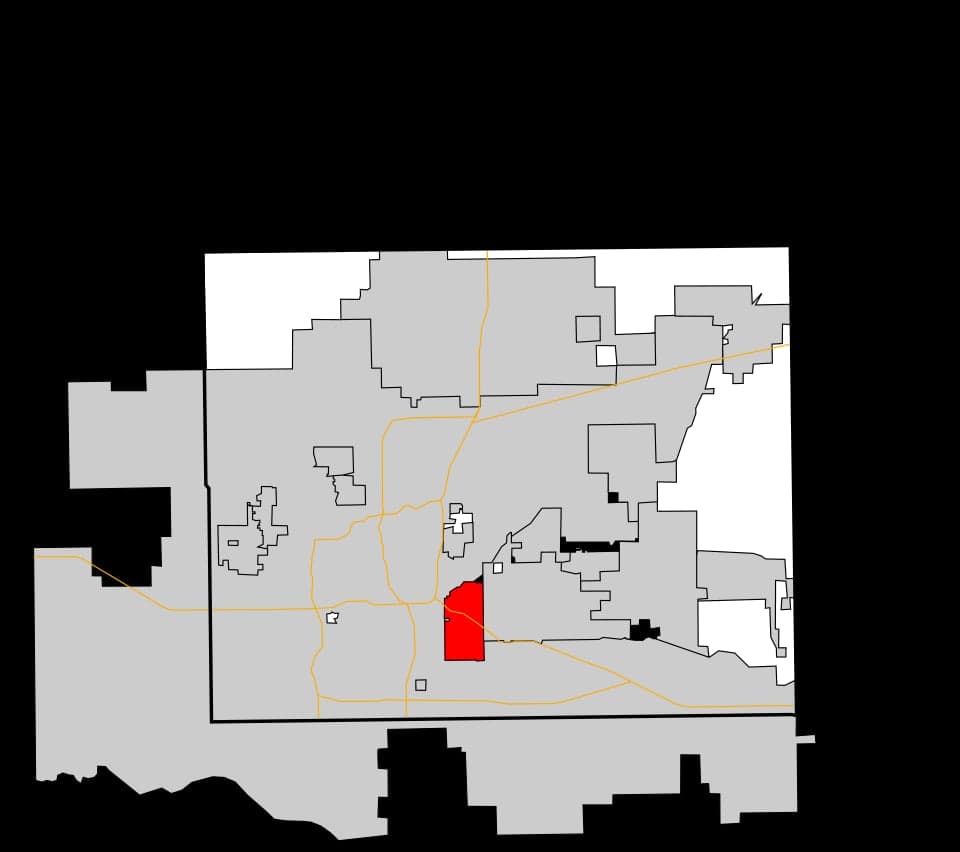
Del City, Oklahoma, is a working-class suburb of Oklahoma City with 21,561 residents, characterized by a predominantly non-white population that is roughly half White (49.8%), one-fifth Black (20.6%), and nearly 15% Hispanic. The city is notably less diverse in terms of foreign-born residents—just 2.8%—and has a low college attainment rate of 15.8%, reflecting its blue-collar roots. Its identity is shaped by a history of rapid post-war growth, military ties to Tinker Air Force Base, and a recent demographic shift from a once-majority White community to a majority-minority one.
How the city was settled and grew
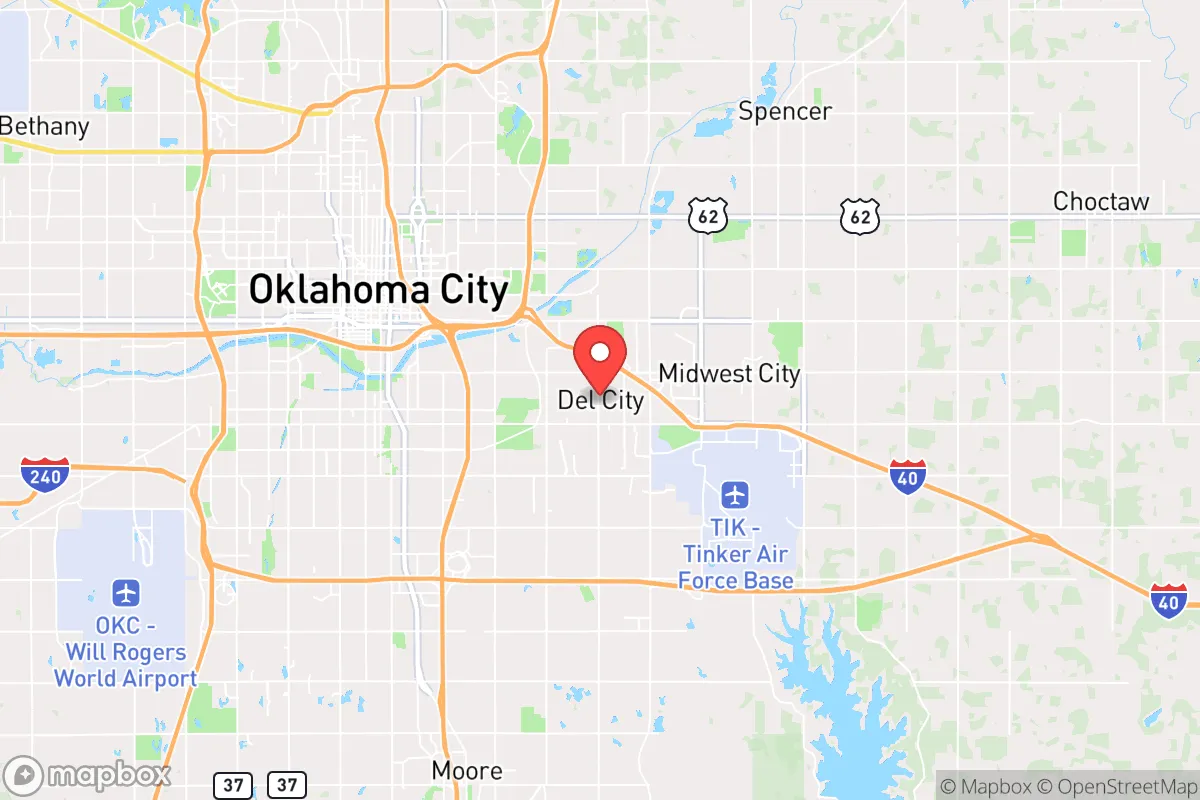
Del City was founded in 1946, making it a pure post-World War II suburb—there is no colonial or 19th-century settlement history. The land was originally part of the Unassigned Lands opened by the 1889 Land Run, but remained rural farmland until the 1940s. The city’s explosive growth was driven by the 1942 opening of Tinker Air Force Base, which drew thousands of defense workers and military personnel. The original subdivision, Del City Proper (centered around SE 29th Street and Sunnylane Road), was platted in 1946 by developer George E. "Del" City, who marketed affordable homes to returning WWII veterans and their families. These early residents were overwhelmingly White, native-born Oklahomans and transplants from the Midwest, drawn by steady base-related employment. The Sunset Hills neighborhood, built in the 1950s just north of SE 44th Street, absorbed a second wave of families as the base expanded during the Korean War. By 1960, Del City’s population had surged past 12,000, and it was nearly 98% White.
Modern era (post-1965)
The 1965 Hart-Cellar Act had little direct effect on Del City’s foreign-born population—even today, only 2.8% of residents are foreign-born. Instead, the city’s demographic transformation came from domestic migration. Starting in the 1970s, Black families began moving east from Oklahoma City’s historically segregated northeast side, settling in the Eastside Del City neighborhoods east of Sunnylane Road, particularly around SE 29th Street and Sooner Road. This was part of a broader pattern of Black suburbanization across the Oklahoma City metro. By 1990, Del City’s Black population had risen to roughly 12%, and by 2020 it reached 20.6%. Hispanic growth began later, accelerating after 2000, with families moving into the Westside Del City area west of I-35, near the Oklahoma City border. The Hispanic share rose from 5% in 2000 to 14.6% today, driven by construction and service jobs tied to the base and the broader metro economy. The White population, which was 85% as recently as 1990, has fallen to 49.8%, as older White families aged out or moved to newer suburbs like Choctaw and Mustang. The Asian population remains tiny at 1.0%, concentrated in the Del City Gardens apartment complex area near SE 44th Street. There is no measurable Indian-subcontinent population (0.0%).
The future
Del City’s population is likely to continue its trajectory toward a Black and Hispanic majority, with the White share falling below 40% by 2040. The city is not tribalizing into distinct ethnic enclaves—neighborhoods are relatively mixed, though the east side leans more Black and the west side more Hispanic. The foreign-born share (2.8%) is low and stable, suggesting that future growth will come from domestic migration and natural increase rather than immigration. The low college attainment rate (15.8%) and heavy reliance on Tinker Air Force Base employment mean the city’s demographic future is tied to the base’s stability. If base employment remains strong, Del City will likely retain its working-class character. If the base downsizes, the city could see population decline and further aging of its housing stock. The Highland Park neighborhood (south of SE 44th Street) is seeing some reinvestment from younger families priced out of Oklahoma City’s core, but overall, Del City is not gentrifying.
For a conservative-leaning mover—whether single or a parent—Del City offers a stable, affordable, and increasingly diverse working-class suburb with deep ties to Tinker Air Force Base. The population is native-born, family-oriented, and rooted in blue-collar values, but the city’s schools and amenities reflect its lower median income and modest tax base. It is not a place of rapid change or new development, but rather a mature suburb where the demographic shift is largely complete and the future looks like a continuation of the present.

* Values derived from national, state, county, city and local statistics and may differ in a specific area. Last updated: 2026-04-19T21:10:07.000Z
Narrative content on this page is AI-generated and may contain mistakes. Verify any details that matter before acting on them.
ReloMaps may earn a commission from affiliate links at no extra cost to you.

