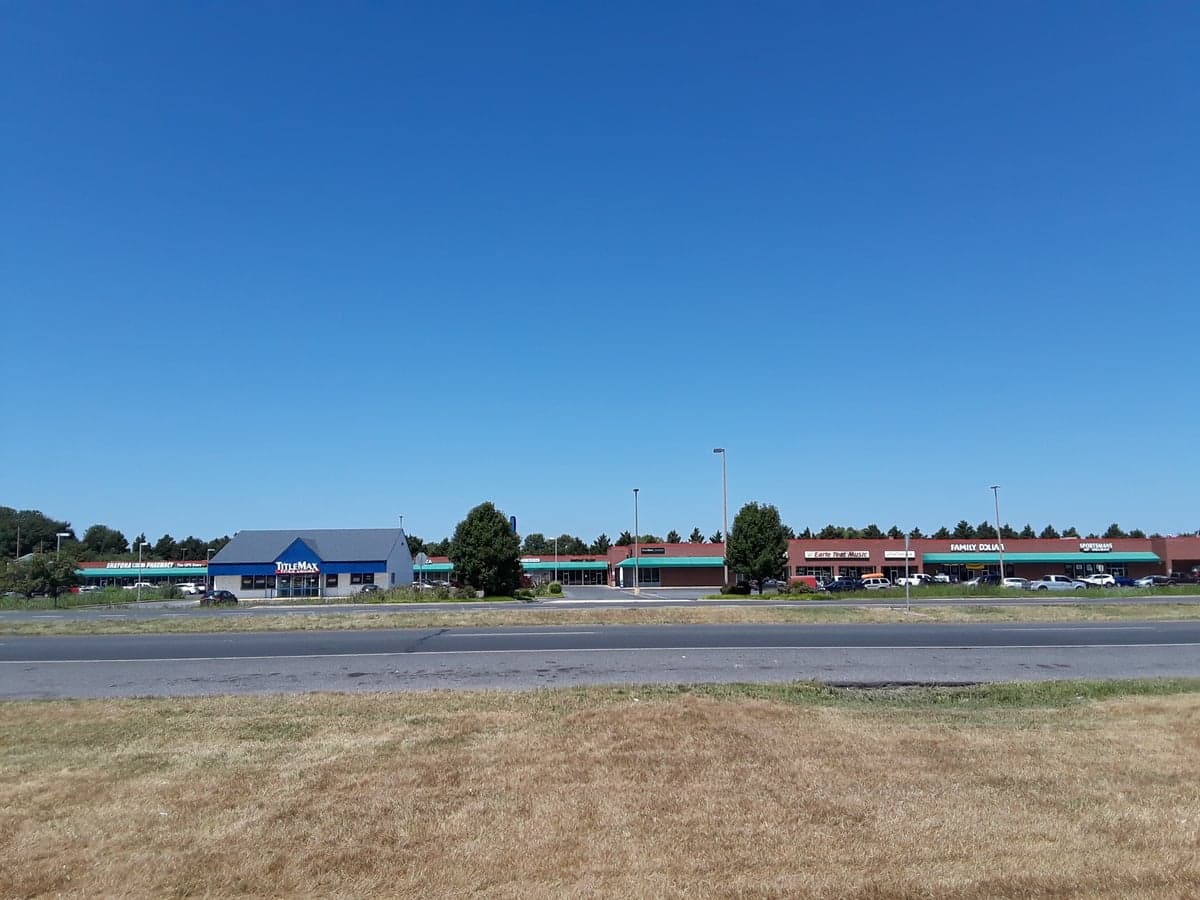
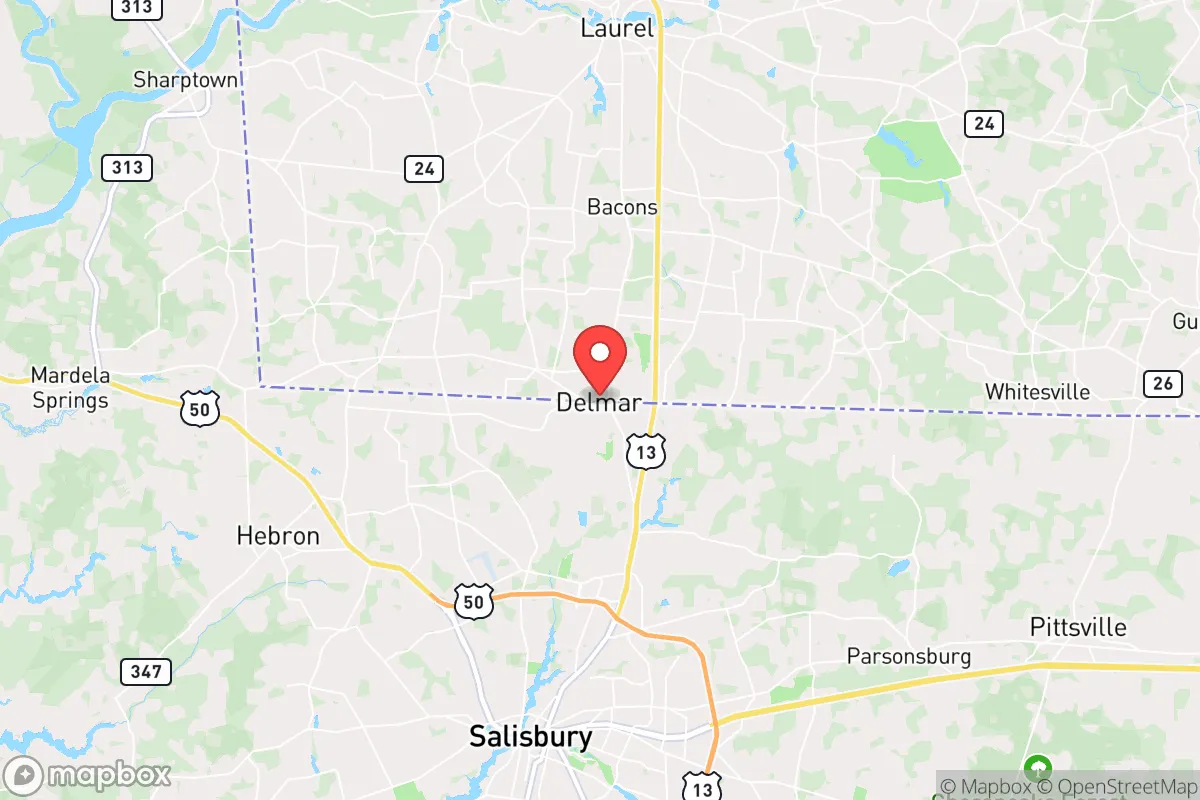
Photo: Wikipedia
Strategic Assessment of Delmar, DE
Multiple tactical vulnerabilities. Population density, target proximity, or disaster risk are likely compounding. A retreat property and exit planning is required.
What does the Strategic Assessment tell us?
Our Strategic Assessment grades tactical survivability of an area. Major population centers, military targets, fallout zones, natural disasters, and border exposure all drive risk — lower exposure means a more defensible position in a crisis.
This is heavily inspired by Joel Skousen's Strategic Relocation book. Highly recommended you checkout the book ($)What does this tell us?
Our Strategic Assessment grades tactical survivability of an area. Major population centers, military targets, fallout zones, natural disasters, and border exposure all drive risk — lower exposure means a more defensible position in a crisis.
This is heavily inspired by Joel Skousen's Strategic Relocation book. Highly recommended you checkout the book ($)Strategic Pillars

Key Distances
Regional Safe Places
Below is our recommended "safe zones" in Delaware and the surrounding area based on our strategic heuristics. For most people, it's unrealistic to live in a “safe zone” full-time due to work, family or other personal reasons. They tend to be more rural. However, many of these areas are perfect for second homes and retreat properties that double as a vacation home or even a short-term rental.
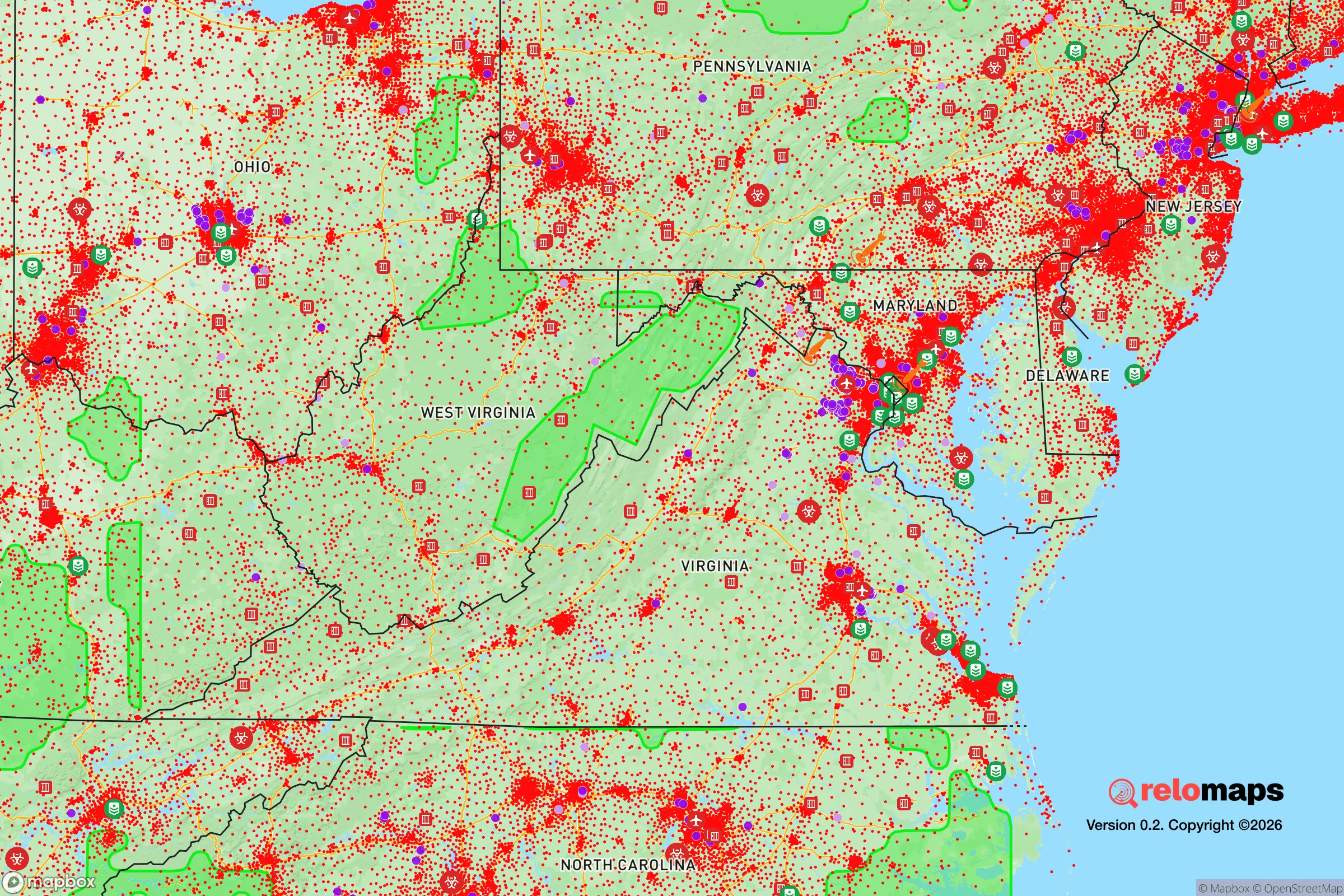
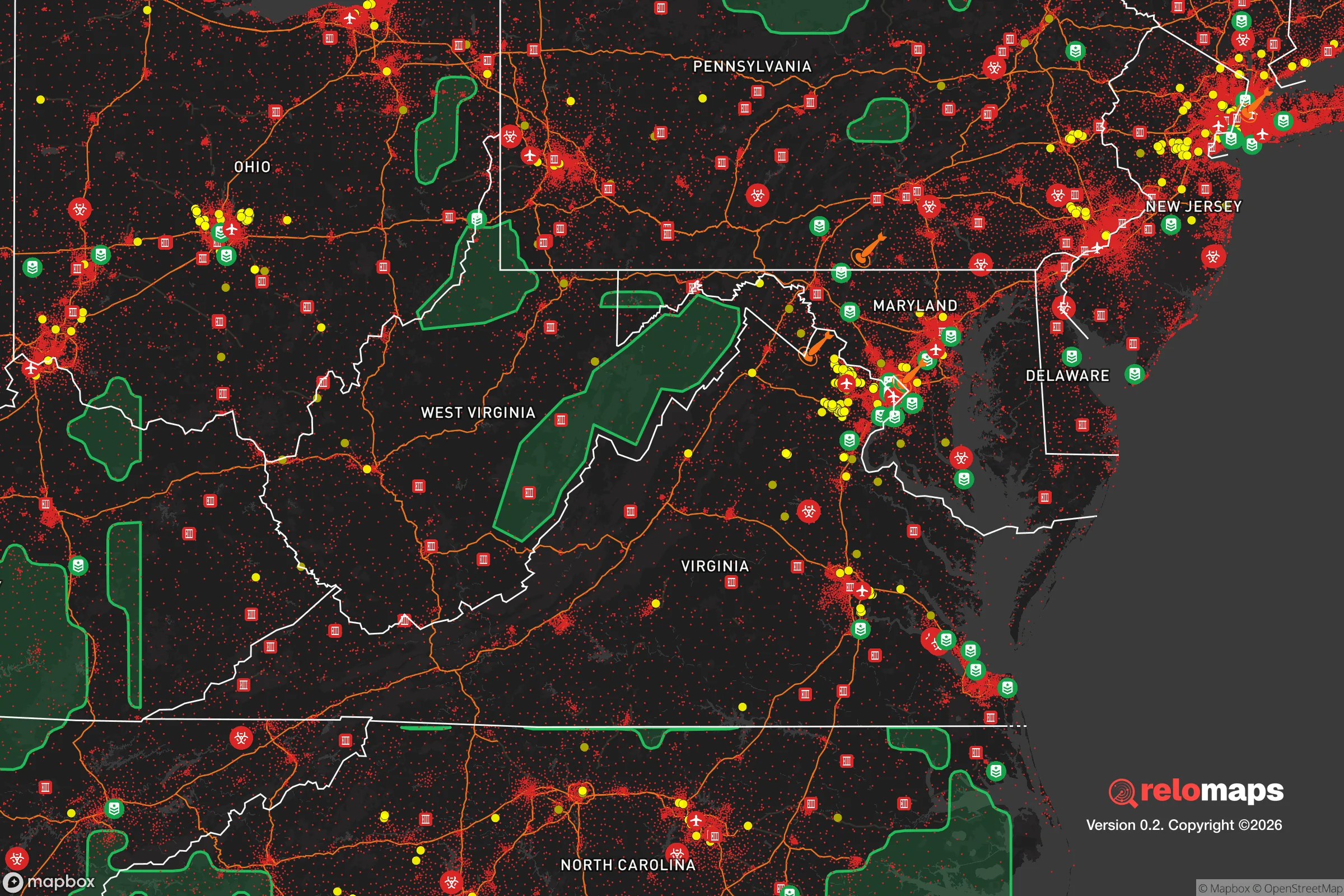


Important Note: For informational purposes only. This does not mean nothing bad ever happens in the green zones. Please use common sense. This is based on public data and modeled with AI. We tried to take a conservative approach but mistakes happen. We update this regularly as new information becomes available.
Solar Generator Recommendations
Backup power matters more here than in safer locations. We've picked three solar generators across budgets and capacity tiers — start with the budget unit if you only need a few essentials, or step up if you want to run a fridge and HVAC for days at a time.

Jackery Portable Power Station Explorer 300
Budget OptionPower on the Go: Weighing only 11 lbs, it's convenient to set up and store with book-sized foldable solar panels

BLUETTI Portable Power Station AC180
Designed for both indoor and outdoor scenarios, AC180 is highly capable as it has a robost capacity and continuous output power.

EF ECOFLOW DELTA Pro Ultra Power Station
Upgraded PickEcoFlow DELTA Pro Ultra is a whole-home energy system designed to grow with your family. Integrated with the Smart Home Panel 2, it scales to meet your evolving energy needs — keeping your home powered, intelligent, and secure through every stage of life.
We earn a commission, at no additional cost to you.
Strategic Assessment Analysis
Delmar, Delaware, sits in a strategic sweet spot that resilience-minded relocators should take seriously: it’s far enough from major urban centers to avoid the worst of cascading collapse scenarios, yet close enough to access critical supply chains and medical infrastructure when things are stable. The town’s position on the Maryland-Delaware border, roughly 30 miles from the Atlantic coast and 40 miles from the Philadelphia metro area, offers a buffer zone that many preppers overlook—close enough to monitor threats, far enough to not be in the blast radius. For a conservative-leaning individual or family looking to weather civic unrest, natural disasters, or economic shocks, Delmar provides a low-profile, agriculturally rich base with defensible geography and a community that still values self-reliance.
Geographic position and natural advantages for long-term survival
Delmar’s location in Sussex County places it within the Delmarva Peninsula, a region defined by flat, fertile farmland, dense woodlands, and a network of rivers and creeks that offer both water sources and natural barriers. The town itself sits at the intersection of U.S. Route 13 and Delaware Route 54, giving you two primary evacuation routes north toward Dover or south toward the Chesapeake Bay Bridge—though in a real crisis, those roads will clog fast. The area’s elevation is low, averaging about 50 feet above sea level, which means flooding is a concern near the Nanticoke River and its tributaries, but the majority of Delmar’s residential lots are on higher ground. The climate is temperate, with four distinct seasons, which allows for year-round gardening and livestock raising—critical for anyone serious about food independence. The soil is sandy loam, well-draining, and historically productive; you can grow corn, soybeans, and vegetables without heavy irrigation if you time your planting right. The proximity to the Atlantic also means you’re within a day’s drive of coastal resources like seafood, but you’re far enough inland to avoid the worst of hurricane storm surges—a major plus compared to beach towns like Rehoboth or Ocean City.
Risks, exposures, and proximity to fallout-relevant landmarks
No place is immune to risk, and Delmar has its share of vulnerabilities that a prepper must account for. The most obvious is the town’s proximity to the Indian River Power Plant, a coal and natural gas facility about 25 miles east near Millsboro. While not a nuclear reactor, it’s still a potential target for sabotage or a cascading failure during grid collapse—think long-term power outages or toxic releases. More concerning is the Salem-Hope Creek nuclear plant in New Jersey, roughly 60 miles northeast across the Delaware Bay. In a worst-case scenario—a dirty bomb, a meltdown, or a coordinated attack—Delmar is within the 50-mile ingestion pathway zone, meaning fallout could contaminate local water and crops. The prevailing winds from the southwest would push any airborne contamination away from Delmar in most weather patterns, but that’s cold comfort if you’re downwind during a release. On the civic unrest front, Delmar’s small population (around 2,000) and rural character make it a low-priority target for rioters or looters, but the town is bisected by U.S. 13, a major north-south corridor that could become a chokepoint for refugees fleeing Philadelphia, Baltimore, or Washington D.C. during a collapse. The nearby Salisbury, Maryland metro area (20 miles west) has a population of 33,000 and a regional airport, which could become a staging ground for FEMA or military operations—something to watch if you value staying off the grid.
Practical resilience for a relocator: food, water, energy, and defensibility
For a family or individual serious about self-sufficiency, Delmar offers a solid foundation with some gaps you’ll need to fill yourself. Water is the biggest concern: the town’s municipal supply comes from groundwater wells, but in a prolonged grid-down scenario, those pumps stop. You’ll need a private well if you’re buying property—most homes on the outskirts have them, but check the depth and yield. The Nanticoke River is a backup source, but it’s brackish in parts and requires filtration. Food production is a strength: the surrounding farmland is some of the most productive on the East Coast, and you can easily find 5-10 acre parcels for under $100,000. Local farmers markets in nearby Laurel and Seaford operate year-round, and you can barter with neighbors for eggs, meat, and produce. Energy independence is achievable: solar panels are common in Sussex County, and net metering is available through Delmarva Power. Pair that with a backup propane generator and a wood stove, and you can ride out weeks of grid failure. Defensibility is moderate: the flat terrain means you can’t rely on hills for cover, but the dense tree lines and agricultural ditches provide natural concealment. Your best bet is a property with a long driveway, a clear field of fire, and a neighbor who shares your mindset—community defense is more effective than going it alone. The local sheriff’s office is responsive but small; in a crisis, you’re on your own for the first 72 hours at least. Stockpile ammunition, medical supplies, and spare parts for your vehicle, because the nearest major hospital is in Salisbury, and it will be overwhelmed in a mass casualty event.
The overall strategic picture for Delmar is one of calculated trade-offs. You get a low-cost, low-profile base in a region that’s agriculturally rich and politically conservative—Sussex County voted +18 for Trump in 2020, and the local culture is still rooted in hunting, fishing, and church communities. You’re far enough from the major population centers to avoid the initial shockwave of a collapse, but close enough that you’ll see the fallout (literally and figuratively) within days. The nuclear risk is real but manageable with proper planning—a good HEPA filter, a basement or storm shelter, and a 30-day supply of stored water and food. The biggest threat is not a single event but a slow unraveling: supply chain disruptions, currency devaluation, or a pandemic that shuts down the Eastern Seaboard. In that scenario, Delmar’s agricultural base and low population density become your greatest assets. If you’re looking for a place to hunker down, build a network of like-minded neighbors, and raise a family with some semblance of normalcy while the world burns, Delmar is worth a hard look. Just don’t expect it to stay quiet forever—no place will.

* Values derived from national, state, county, city and local statistics and may differ in a specific area. Last updated: 2026-10-10T16:27:15.000Z
Narrative content on this page is AI-generated and may contain mistakes. Verify any details that matter before acting on them.
ReloMaps may earn a commission from affiliate links at no extra cost to you.

