Photo: Wikipedia
Demographics of Deming, NM
Affluence Level in Deming, NM
A below-average socioeconomic profile. Incomes, home values, and educational attainment trail the U.S., with higher poverty and unemployment.
People of Deming, NM
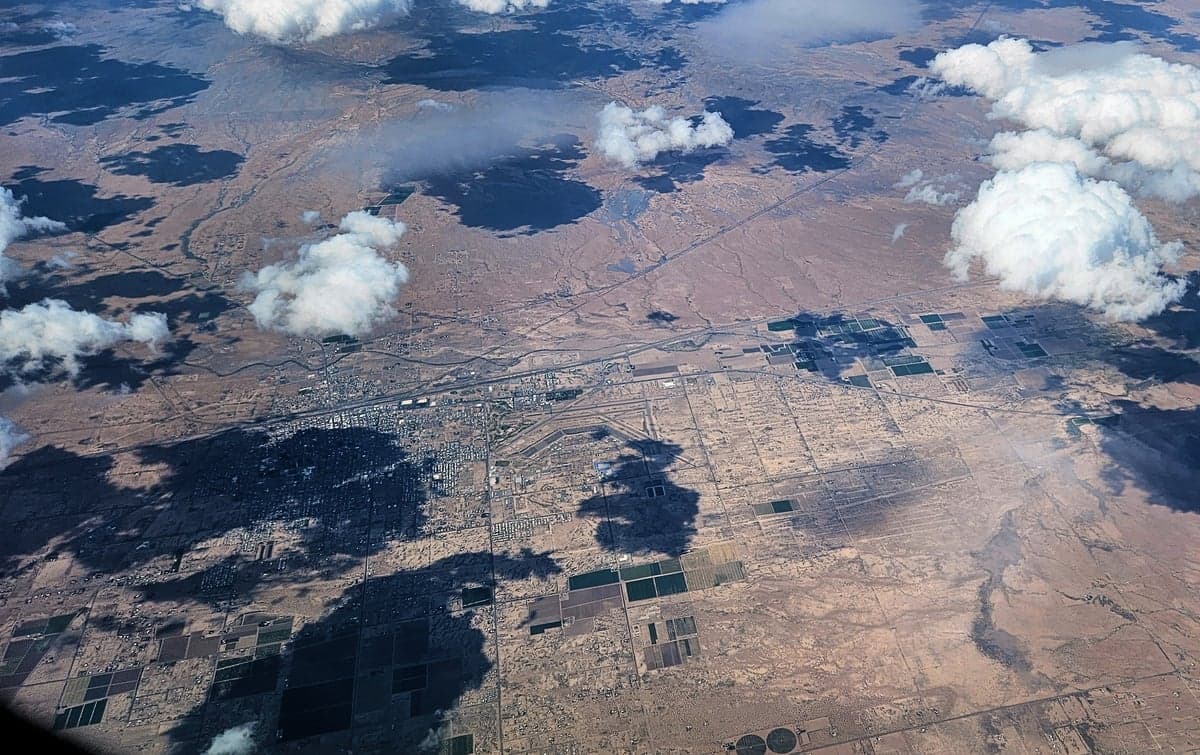
The people of Deming, New Mexico, today form a predominantly Hispanic community of 14,735 residents, with 72.3% identifying as Hispanic and 22.5% as non-Hispanic White. The city is characterized by a working-class, family-oriented culture, a low college attainment rate of 14.9%, and a foreign-born population of 10.9% that is overwhelmingly Mexican in origin. Deming’s identity is rooted in its role as a railroad and agricultural hub, with a slower pace of life and a strong sense of local tradition that sets it apart from larger, more transient Sun Belt cities.
How the city was settled and grew
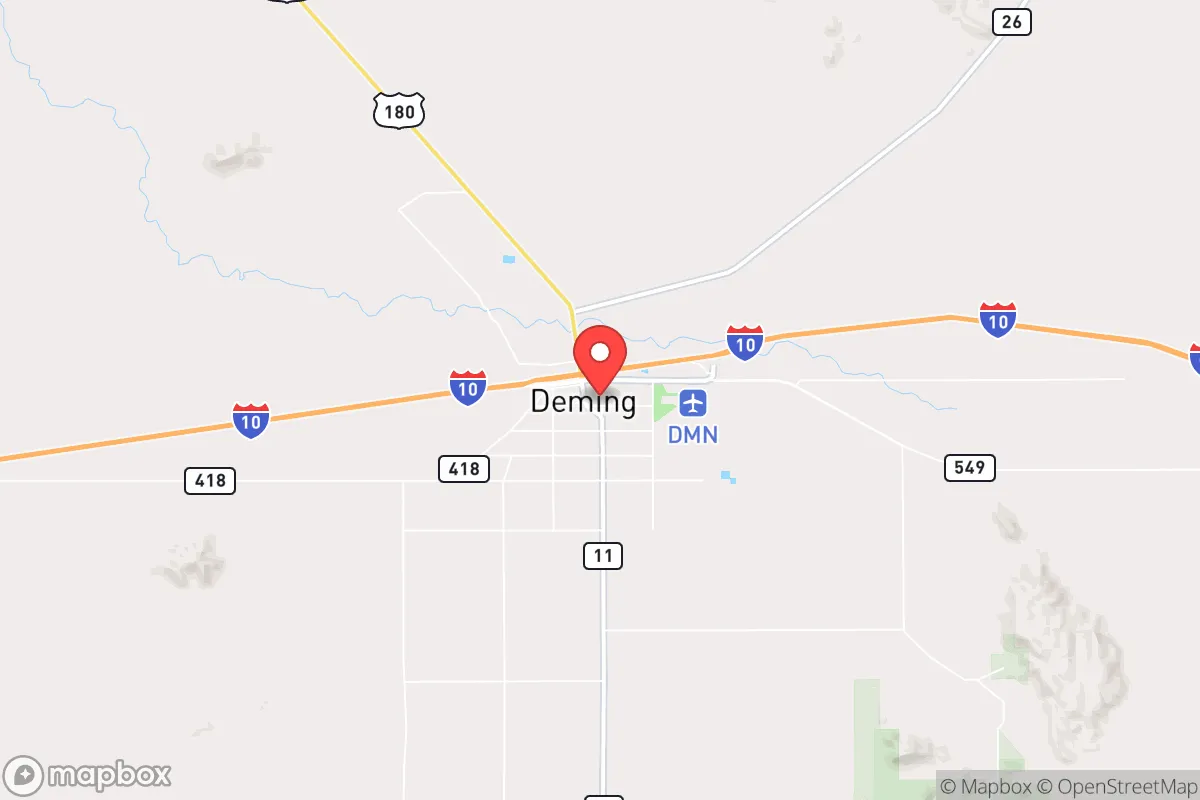
Deming was founded in 1881 as a railroad town, established when the Atchison, Topeka and Santa Fe Railway built a junction connecting the Southern Pacific and Santa Fe lines. The original population consisted of Anglo-American railroad workers, merchants, and speculators who arrived from the eastern U.S., settling in the Original Townsite around the depot and along Spruce Street. By the early 1900s, the railroad attracted Mexican laborers who built the tracks and worked in the roundhouses; these workers formed the first Hispanic enclave in Barrio Chihuahua, a neighborhood south of the tracks near the old depot. Agriculture—especially cotton and chili farming—drew additional Mexican and Mexican-American families during the 1910s and 1920s, many of whom settled in La Victoria, a district east of the downtown core that remains heavily Hispanic today. The city’s population grew steadily through the mid-20th century, reaching roughly 7,000 by 1960, with the Hispanic share rising as Anglo railroad families moved away and Mexican-American families expanded.
Modern era (post-1965)
After the 1965 Immigration and Nationality Act, Deming saw a sustained influx of Mexican immigrants, many from the states of Chihuahua and Durango, who came for agricultural work and later for jobs in the city’s growing service and manufacturing sectors. This wave settled primarily in Barrio Chihuahua and La Victoria, reinforcing those neighborhoods as predominantly Hispanic and Spanish-speaking. By the 1990s, the Hispanic share had risen above 60%, and by 2020 it reached 72.3%. The non-Hispanic White population, once the majority, declined in absolute numbers as older Anglo residents aged out and younger generations left for larger cities; today, Whites are concentrated in the West Deming area near the golf course and in newer subdivisions along Highway 180. The East/Southeast Asian community (1.4%) is small but visible, with a handful of Filipino and Vietnamese families who arrived in the 1980s and 1990s, mostly working in healthcare and retail, and living scattered across the city with no distinct ethnic enclave. The Black population (1.9%) is similarly dispersed, with no historic neighborhood concentration. The Indian subcontinent population is effectively zero (0.0%), and the Arab population is negligible.
The future
Deming’s population is projected to grow slowly, driven primarily by natural increase among Hispanic families and continued immigration from Mexico, though the foreign-born share (10.9%) has plateaued as second- and third-generation Mexican-Americans assimilate linguistically and economically. The city is not homogenizing into a single culture; rather, it is tribalizing along income and geography lines, with West Deming becoming more Anglo and affluent, while Barrio Chihuahua and La Victoria remain working-class Hispanic enclaves. The small East/Southeast Asian and Black communities are likely to remain stable but not expand significantly, as Deming lacks the job base to attract new diversity. Over the next 10–20 years, the Hispanic share will likely approach 80%, and the city will become more culturally Mexican-American, with English-Spanish bilingualism the norm. The non-Hispanic White population will continue to age and shrink, unless new retirees are drawn by low housing costs—a trend that could modestly slow the shift.
For someone moving to Deming now, the city is becoming a predominantly Hispanic, working-class community with a stable, family-centered character. New residents should expect a bilingual environment, a low cost of living, and a population that is culturally cohesive but geographically divided by income and ethnicity. The city offers a quiet, affordable alternative to larger New Mexico cities, but those seeking racial or ethnic diversity beyond the Hispanic-Anglo dynamic will find limited options.

* Values derived from national, state, county, city and local statistics and may differ in a specific area. Last updated: 2026-05-01T16:08:06.000Z
Narrative content on this page is AI-generated and may contain mistakes. Verify any details that matter before acting on them.
ReloMaps may earn a commission from affiliate links at no extra cost to you.

