Photo: Wikipedia
Political ClimatePolitical Climate in Deming, NM
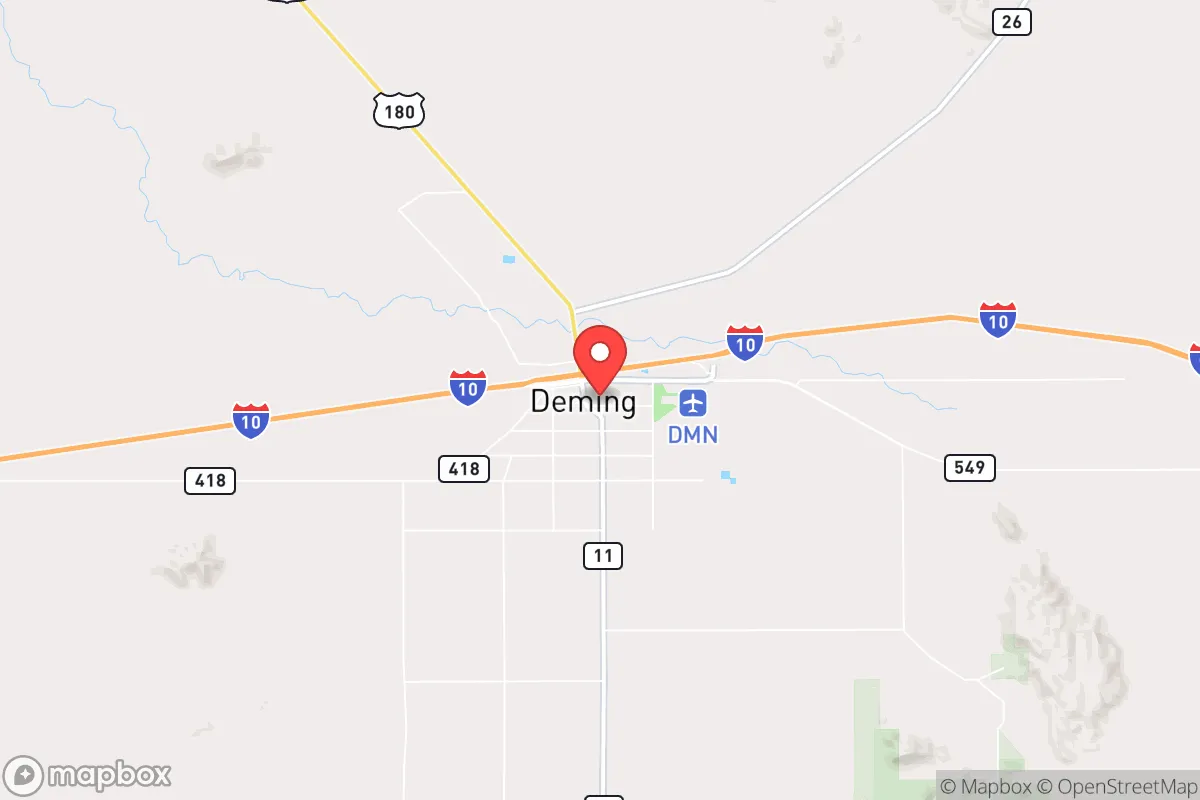
District shown is the primary district for this city’s centroid. Cities may span multiple districts.
Local Political AnalysisPolitical Analysis of Deming, NM
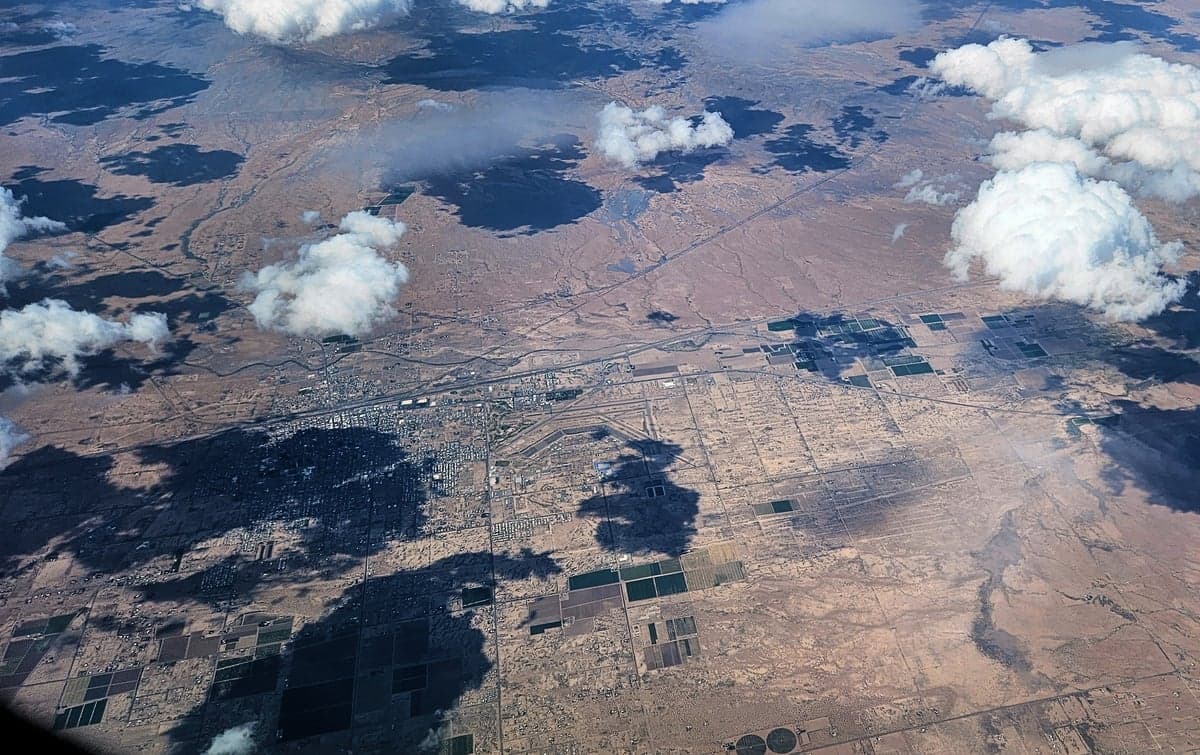
Deming, New Mexico, sits in a political no-man’s-land that’s been shifting under our feet for the last decade. The Cook PVI rating of EVEN tells you everything you need to know: this isn’t a deep-blue town like Santa Fe or a ruby-red stronghold like Hobbs. It’s a battleground, and for those of us who’ve lived here a while, the trend is worrying. Deming used to be reliably conservative—folks minded their own business, kept their guns, and didn’t expect the government to solve every little problem. But over the last five to ten years, we’ve seen a slow creep of progressive policies from the state level, and it’s starting to show up in local elections and everyday life. The county commission and city council are still mostly moderate, but the pressure from Santa Fe to adopt woke mandates—like vaccine passports, DEI training in schools, and stricter environmental regs on small businesses—is real. If you’re moving here hoping for a libertarian-leaning oasis, you’ll find it, but you’ll also find a community that’s fighting to keep that identity.
How it compares
Deming’s political climate is a strange middle ground compared to its neighbors. Drive 60 miles west to Lordsburg, and you’re in a town that’s even more conservative—ranchers and railroad workers who’ll tell you straight up that the Second Amendment isn’t up for debate. Head east to Las Cruces, and you’re in a college town that’s gone full progressive, with city council members pushing for sanctuary city status and defunding the police. Deming sits right in the middle, and that’s both a blessing and a curse. We don’t have the radical activism of Las Cruces, but we also don’t have the unified conservative front of places like Silver City’s outlying ranching communities. The surrounding Luna County is still red-leaning, but the city itself has become a magnet for retirees and remote workers from blue states, and they bring their voting habits with them. That’s why you’ll see a split ticket here more often than not—locals vote for lower taxes and school choice, while newcomers vote for expanded government programs and green energy subsidies.
What this means for residents
For a family or a small business owner, the practical effect is that you can’t take your freedoms for granted. Property taxes are still low compared to the rest of New Mexico, but the state legislature keeps eyeing our local revenue streams. The biggest red flag right now is the push for statewide rent control and stricter zoning laws—things that sound good on paper but end up killing the kind of affordable, owner-occupied housing that made Deming a great place to buy a home. On the plus side, the local sheriff’s office and most of the city police are still pro-Second Amendment, and you won’t get sideways looks for open carrying. But the school board has been a battleground lately, with parents fighting to keep critical race theory and gender ideology out of the curriculum. So far, common sense is winning, but it takes constant vigilance. If you’re the type who values personal liberty over government convenience, you’ll fit right in—just be ready to show up at town hall meetings and vote in every local election, because the other side certainly does.
One thing that sets Deming apart culturally is our deep-rooted independence. We don’t have the kind of HOA-heavy, rule-obsessed neighborhoods you see in Albuquerque or Santa Fe. People here still fix their own trucks, shoot on their own land, and don’t ask permission to build a shed. That’s the Deming I grew up in, and it’s still the Deming most of us want. But the long-term trend is concerning: as the state government gets more aggressive with mandates on water usage, energy production, and even what you can plant in your yard, the pressure on small towns like ours will only increase. If you’re considering a move here, do it soon, while the local culture is still intact. And when you get here, get involved—because the only way to keep Deming from turning into another Las Cruces is to make sure your voice is louder than the bureaucrats in Santa Fe.

State Political ClimatePolitical Climate in New Mexico
State Political AnalysisPolitical Environment in the State
New Mexico has been a reliably blue state in presidential elections since 2004, but don't let that fool you into thinking it's a monolith. The state's political lean is driven by a powerful coalition of urban progressives in Albuquerque and Santa Fe, combined with a large Hispanic electorate that has historically leaned Democratic but is increasingly up for grabs. Over the last 10-20 years, the state has shifted from a moderate, "blue dog" Democratic stronghold to a more aggressively progressive one, with the 2020 and 2022 cycles cementing a one-party rule that has many conservatives feeling like they're living in a colony of Santa Fe rather than a state that respects local control.
Urban vs. rural divide
The political map of New Mexico is a textbook case of the urban-rural chasm. The entire state's blue margin is generated by two counties: Bernalillo (Albuquerque) and Santa Fe (the capital). Santa Fe County alone delivers a 30-point Democratic margin, while Bernalillo County, home to 40% of the state's population, provides another 15-point cushion. Meanwhile, the rest of the state is deeply red. Lea County (Hobbs) and Eddy County (Carlsbad) vote Republican by 40+ points, driven by the oil and gas industry. Doña Ana County (Las Cruces) is a perennial swing county, often tipping the balance in close races. The rural areas—places like Ruidoso, Clovis, and Farmington—are solidly conservative, but their populations are too small to overcome the urban machine. What's changed recently is that the suburbs of Albuquerque, like Rio Rancho, have been trending redder, but not fast enough to flip the state.
Policy environment
For a conservative, the policy environment in New Mexico is a mixed bag that's getting worse. The state has a progressive income tax with a top rate of 5.9%, and while there's no sales tax on groceries, the gross receipts tax (GRT) is a hidden killer—it's applied to almost all business-to-business transactions, making the effective tax burden higher than the nominal rate. Property taxes are relatively low, which is a plus. But the regulatory posture is hostile to traditional industries: the 2021 Energy Transition Act pushed utilities toward a 100% carbon-free grid by 2045, and the state has effectively banned new oil and gas drilling on state trust lands through a 2023 executive order. Education policy is a flashpoint: the state has a universal school choice program (the 2023 Opportunity Scholarship Act), but it's administered through a bureaucracy that favors public schools, and parental rights in curriculum are weak. Healthcare is dominated by the state's Medicaid expansion, which covers nearly half the population. Election laws are a concern: New Mexico has no voter ID requirement, same-day registration, and automatic voter registration, which critics say invites fraud. The 2023 Voting Rights Act further centralized election control in Santa Fe, stripping local clerks of authority.
Trajectory & freedom
New Mexico is becoming less free, and the trend is accelerating. On gun rights, the state passed a "red flag" law in 2020 (HB 5) and a ban on carrying firearms at polling places and government buildings in 2023. The 2024 legislative session saw a push for a 14-day waiting period on all firearm purchases, which narrowly failed but will be back. On parental rights, the 2023 "Safe Schools for All Students" law mandates that schools adopt policies to support LGBTQ+ students, which effectively overrides parental notification about a child's gender identity. Medical autonomy took a hit with the 2021 legalization of recreational cannabis, which sounds like a freedom win, but the state's heavy regulation and high taxes have created a black market that law enforcement largely ignores. Property rights are under siege from the state's Land Use Planning Act (2023), which gives Santa Fe veto power over local zoning decisions, particularly around affordable housing mandates. The biggest freedom loss is economic: the state's minimum wage is $12.00 and indexed to inflation, and the 2022 Paid Family and Medical Leave Act imposes a mandatory payroll tax. The state is also a "sanctuary" for illegal immigration, with a 2019 law prohibiting state and local law enforcement from cooperating with federal immigration authorities.
Civil unrest & political movements
New Mexico has a history of civil unrest, but it's mostly low-grade and localized. The 2020 George Floyd protests in Albuquerque turned violent, with the toppling of a statue of Juan de Oñate and a week of property damage. The Oñate statue controversy is a recurring flashpoint, with activists demanding removal of Spanish colonial monuments across the state. On the right, the New Mexico Civil Guard and other militia groups have been active in border areas, particularly around Sunland Park and Columbus, where they've clashed with Border Patrol and left-wing counter-protesters. The state's sanctuary policies have made it a magnet for migrant caravans, and the town of Deming has seen repeated standoffs between local ranchers and federal agents over border enforcement. Election integrity is a live issue: the 2020 election saw a lawsuit over the state's use of ballot drop boxes, and the 2022 election was marred by a scandal in Otero County where a county commissioner refused to certify the primary results, citing concerns about Dominion voting machines. The state's Independent Party has been growing, pulling disaffected conservatives and moderates, but it hasn't broken the Democratic stranglehold.
Projection
Over the next 5-10 years, New Mexico is likely to become more progressive, not less. The demographic trends are clear: the state's population is aging and shrinking, but the growth is concentrated in Albuquerque and Santa Fe, where young, college-educated progressives are moving in from out of state. The oil and gas boom in the Permian Basin (Lea and Eddy counties) is bringing in conservative workers, but they're not voting in numbers sufficient to flip the state. The Hispanic vote, which was once a firewall for Democrats, is fracturing: younger Hispanics are more progressive, while older ones are drifting toward the GOP on cultural issues like abortion and parental rights. The state's in-migration is mostly from California and Colorado, which only reinforces the blue trend. A realistic projection: New Mexico will remain a solidly blue state for the next decade, with the GOP only competitive in the southern and eastern counties. The state will likely pass a state-level Equal Rights Amendment, further restrict gun rights, and expand the sanctuary policy. The only wild card is a potential economic collapse in the oil patch, which would devastate the rural economy and accelerate the urban-rural divide.
For a conservative moving to New Mexico, the bottom line is this: you'll find like-minded communities in the rural areas and suburbs, but you'll be fighting a losing battle at the state level. Your property taxes will be low, but your income will be taxed progressively, and your business will be strangled by GRT. You'll have to drive to Texas or Arizona for a gun-friendly environment, and you'll need to be vigilant about your children's curriculum. The state is beautiful, the people are friendly, and the cost of living is manageable, but the political trajectory is clear: New Mexico is doubling down on progressive governance, and if you value personal freedom and limited government, you'll need to be prepared to fight for it every election cycle.
* Values derived from national, state, county, city and local statistics and may differ in a specific area. Last updated: 2026-05-01T16:08:06.000Z
Narrative content on this page is AI-generated and may contain mistakes. Verify any details that matter before acting on them.
ReloMaps may earn a commission from affiliate links at no extra cost to you.

