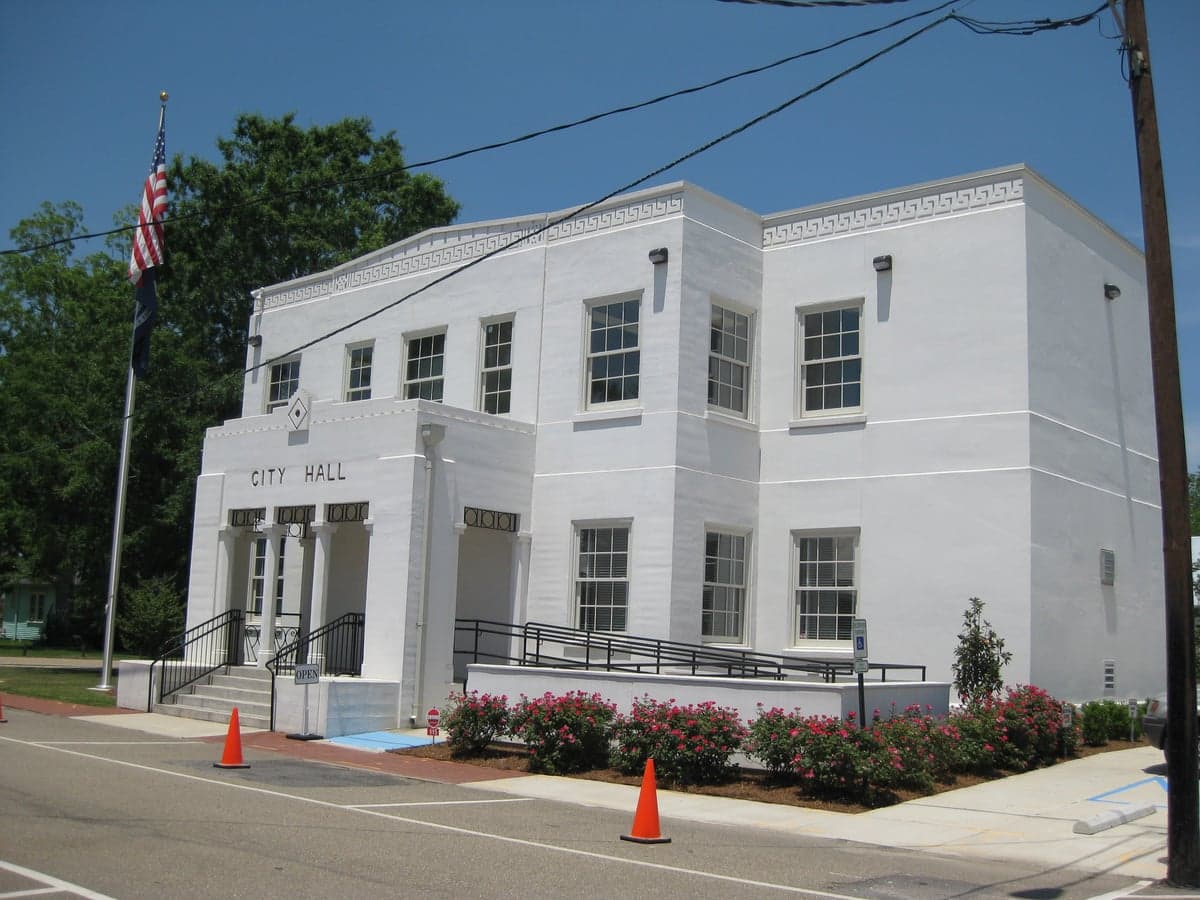
Photo: Wikipedia
Political ClimatePolitical Climate in Denham Springs, LA
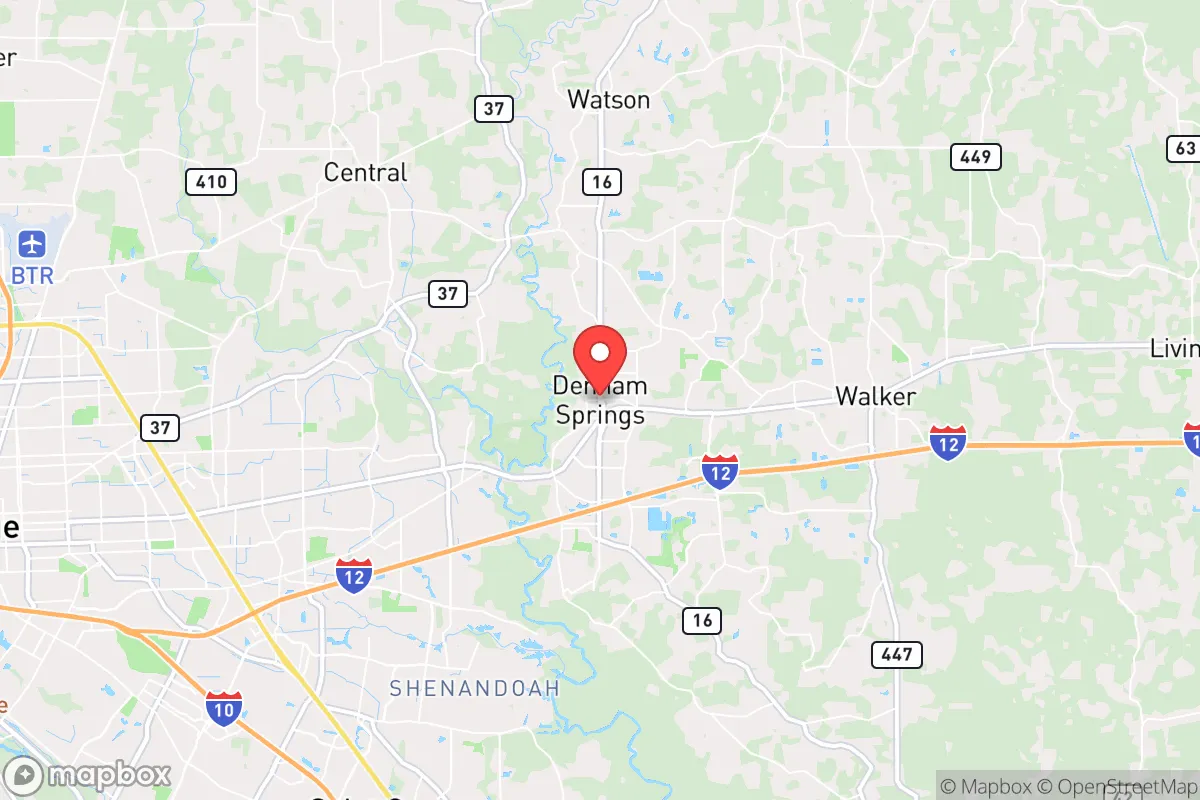
District shown is the primary district for this city’s centroid. Cities may span multiple districts.
Local Political AnalysisPolitical Analysis of Denham Springs, LA
Denham Springs is about as solidly conservative as it gets in Louisiana, and that's not changing anytime soon. The area carries a Cook PVI of R+18, meaning it votes nearly 20 points more Republican than the national average, and that number has only hardened over the last few cycles. In 2024, Livingston Parish—where Denham Springs sits—went for the GOP candidate by a margin closer to +40, with Trump pulling in over 70% of the vote. The shift here isn't toward the center; it's a slow, steady consolidation of folks who moved out of Baton Rouge specifically to get away from the crime, the taxes, and the progressive policies creeping into East Baton Rouge Parish. If you're looking for a place where the local government still respects the Second Amendment and doesn't try to micromanage your business or your family, this is it.
How it compares
Drive 15 minutes west into Baton Rouge, and you're in a completely different political world. East Baton Rouge Parish has been trending blue for years, with a Cook PVI of D+10 and a city council that's increasingly comfortable with tax hikes, zoning overreach, and social experiments. Denham Springs is the direct counterweight. Even within Livingston Parish, towns like Walker and Albany lean similarly conservative, but Denham Springs is the economic and cultural hub—the place where the local school board still pushes back against federal mandates and where the sheriff's office doesn't hesitate to cooperate with ICE. The contrast with nearby Gonzales in Ascension Parish is less stark—Ascension is also R+14—but Gonzales has seen more development pressure and a slight uptick in moderate candidates. Denham Springs has held the line.
What this means for residents
For the people who live here, the political climate translates into a daily life that feels a lot like the 1990s in the best way. Property taxes are low—Livingston Parish has one of the lowest millage rates in the metro area—and there's no city income tax. The local government doesn't get involved in your personal choices, whether that's homeschooling, carrying a firearm, or running a small business out of your garage. The downside is that the infrastructure and public services can feel a bit behind the times, because the prevailing attitude is "if it ain't broke, don't fix it with a new tax." But for most residents, that trade-off is worth it. The biggest concern I hear from longtime locals is the slow trickle of people moving in from Baton Rouge and New Orleans who bring their voting habits with them. So far, the numbers don't show a real shift, but you can feel the cultural friction at school board meetings and parish council hearings.
One thing that sets Denham Springs apart from other conservative suburbs is its deep-rooted suspicion of any federal or state overreach. During the COVID years, the mayor and parish president openly defied statewide mask mandates, and the school board refused to close schools for as long as they legally could. That's not just political theater—it's a reflection of a community that values personal responsibility over government directives. The annual "Denham Springs Antique Festival" and the heavy presence of local churches aren't just traditions; they're the social fabric that keeps the place from drifting toward the progressive norms you see in other parts of the country. If you're looking for a place where the government stays out of your way and your neighbors share your values, Denham Springs is still that place. But keep an eye on the newcomers—because the only real threat to this way of life is the slow erosion of the people who built it.

State Political ClimatePolitical Climate in Louisiana
State Political AnalysisPolitical Environment in the State
Louisiana has long been a reliably red state in federal elections, but its political climate is far more complex than a simple partisan label suggests. The state has voted for the Republican presidential candidate in every election since 2000, with Donald Trump winning by nearly 20 points in 2020 and again in 2024. However, the state’s political culture is deeply influenced by a unique blend of Cajun populism, Catholic social conservatism, and a strong independent streak that often resists top-down government control. Over the past two decades, the shift has been unmistakable: the once-dominant conservative Democrats of the “Blue Dog” era have all but vanished, replaced by a solid Republican majority in both the legislature and statewide offices. Yet, the state remains a place where local identity and family ties often trump party loyalty, and where the fight over personal freedom—especially around taxes, guns, and education—is the real story.
Urban vs. rural divide
The political map of Louisiana is a textbook study in the urban-rural split. The state’s two major metros—New Orleans and Baton Rouge—are the primary engines of Democratic votes. New Orleans, with its large African American population and progressive enclaves like the Marigny and Bywater, reliably delivers heavy Democratic margins. Baton Rouge, home to the state capital and Louisiana State University, is more competitive but still leans blue in city limits, especially in precincts around mid-city and the university. In contrast, the rest of the state is overwhelmingly Republican. The Acadiana region—including Lafayette, New Iberia, and Houma—is a conservative stronghold, driven by oil-and-gas workers, Cajun culture, and strong Catholic social values. The Florida Parishes (north of Lake Pontchartrain), including Mandeville and Covington, have become some of the most reliably red suburbs in the South, with many families fleeing New Orleans for lower taxes and better schools. The rural north, from Shreveport to Monroe, is deeply conservative, though Shreveport itself remains a blue island due to its sizable Black population and unionized industrial base. The real story is the suburban exodus from New Orleans and Baton Rouge into places like Denham Springs and Prairieville, where Republican registration has surged over the last decade.
Policy environment
Louisiana’s policy environment is a mixed bag for conservatives. On the plus side, the state has no personal property tax on vehicles or boats, and its homestead exemption (up to $75,000 of assessed value) keeps property taxes among the lowest in the country. The state income tax is a flat 3% for most earners, and the corporate tax rate is being phased down. However, the state’s sales tax is high—often over 10% in some parishes—and the tax burden on businesses can be unpredictable due to local levies. On education, Louisiana has a robust school choice program, including the Louisiana Scholarship Program and a growing charter school sector, especially in New Orleans, which is now almost entirely charter-based. Parents have real options, but the state’s public school system still ranks near the bottom nationally. On healthcare, the state expanded Medicaid under the Affordable Care Act, which remains a sore point for many conservatives who see it as federal overreach. Election laws are relatively secure: Louisiana requires a photo ID to vote, and absentee ballot rules were tightened after 2020. The state also has a strong “right-to-work” law, which has kept union influence limited outside of a few industrial sectors.
Trajectory & freedom
Over the past five years, Louisiana has moved decisively in the direction of expanding personal freedom, though not without setbacks. The biggest win for conservatives was the passage of Constitutional Carry (Act 222) in 2024, allowing any law-abiding adult to carry a concealed firearm without a permit. This was a major victory for gun rights advocates who had fought for years against New Orleans’ push for stricter local gun laws. On parental rights, the state passed the “Parents’ Bill of Rights” (Act 456) in 2023, requiring schools to notify parents about any changes to a child’s health or emotional well-being, including gender identity discussions. This has been a flashpoint in liberal-leaning school districts like those in Orleans and East Baton Rouge parishes. On medical freedom, Louisiana banned COVID-19 vaccine mandates for state employees and students in 2022, and the legislature has repeatedly blocked any attempt to revive them. However, the state’s medical marijuana program, while legal, remains tightly controlled and expensive, frustrating advocates of medical autonomy. On property rights, the state has a strong “right to farm” law that protects agricultural operations from nuisance lawsuits, but coastal erosion and flood insurance mandates continue to erode property freedom in southern parishes. The biggest threat to freedom remains the state’s high incarceration rate and a criminal justice system that still leans punitive, though recent reforms have reduced the prison population modestly.
Civil unrest & political movements
Louisiana has seen its share of political flashpoints. The most visible in recent years has been the “Don’t Tread on Me” movement in rural parishes, particularly around St. Tammany Parish and Livingston Parish, where residents have organized against COVID-19 mandates and school mask policies. These protests were large and sustained, often drawing hundreds to parish council meetings. On the left, the Black Lives Matter protests in New Orleans and Baton Rouge in 2020 were significant, with the Baton Rouge protests following the death of Alton Sterling leading to clashes with police and a heavy National Guard presence. Immigration politics are less heated than in border states, but the influx of migrants into New Orleans under the Biden administration has sparked local backlash, with the state legislature passing a law in 2024 requiring local law enforcement to cooperate with ICE. There is no sanctuary city policy in Louisiana, and the state has actively resisted any such efforts. Election integrity remains a live issue: the 2020 election saw no major fraud in Louisiana, but the legislature passed stricter voter ID laws and banned ballot drop boxes in 2022. The most visible political movement right now is the “Gumbo Coalition”—a loose alliance of conservative Cajun, evangelical, and suburban voters who are pushing for further tax cuts and school choice expansion.
Projection
Over the next five to ten years, Louisiana is likely to become more conservative, not less. The demographic trends are clear: the liberal strongholds of New Orleans and Baton Rouge are losing population, while the conservative suburbs and rural areas are growing. The in-migration from other states is small but heavily Republican, with many families moving from California and Texas to the Florida Parishes for lower housing costs and a slower pace of life. The state’s Hispanic population is growing, particularly in the Acadiana region, but these new arrivals tend to be more socially conservative and entrepreneurial, aligning with the GOP on economic issues. The biggest wildcard is the state’s vulnerability to hurricanes and coastal erosion, which could drive population shifts inland and further concentrate conservative voters. The legislature is expected to continue pushing for a flat income tax, further school choice expansion, and stronger protections for gun rights. The biggest threat to this trajectory is the state’s chronic underfunding of infrastructure and the potential for federal intervention on coastal restoration. A new resident moving in now should expect to find a state that is increasingly friendly to traditional values, low taxes, and personal liberty, but one that still struggles with poverty, poor public schools in rural areas, and a government that can be slow and inefficient.
Bottom line for a new resident: If you’re looking for a place where your rights are respected, your taxes are low, and your kids can go to a school that aligns with your values, Louisiana is a solid bet—especially if you stick to the suburbs and rural areas. Just be prepared for a state that still has its rough edges: high sales taxes, a slow-moving bureaucracy, and a climate that demands resilience. The political winds are blowing your way, but the state’s deep-seated problems won’t be solved overnight. Come for the freedom, stay for the gumbo, and keep an eye on Baton Rouge.
* Values derived from national, state, county, city and local statistics and may differ in a specific area. Last updated: 2026-04-21T01:25:21.000Z
Narrative content on this page is AI-generated and may contain mistakes. Verify any details that matter before acting on them.
ReloMaps may earn a commission from affiliate links at no extra cost to you.

