 Popular
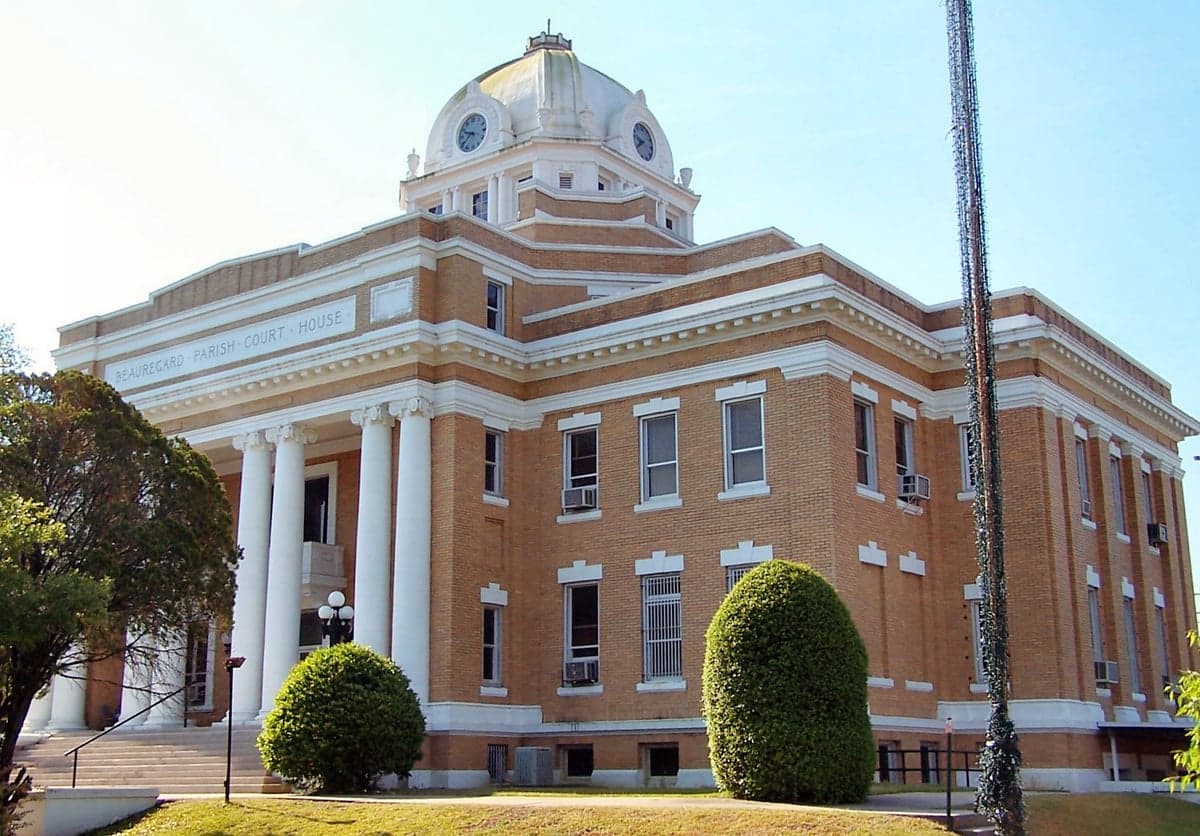
Photo: Wikipedia
Demographics of Deridder, LA
Affluence Level in Deridder, LA
A below-average socioeconomic profile. Incomes, home values, and educational attainment trail the U.S., with higher poverty and unemployment.
People of Deridder, LA
The people of DeRidder, Louisiana, today number 9,812, forming a community defined by its stark racial balance and low immigration. The city is 51.4% White and 29.9% Black, with a very small Hispanic population of 5.5% and minimal Asian (1.1%) and Indian (0.4%) communities. Only 0.9% of residents are foreign-born, and 22.8% hold a college degree, marking DeRidder as a predominantly native-born, working-class city with a strong military and timber heritage.
How the city was settled and grew
DeRidder was founded in the 1890s as a railroad town, emerging from the pine forests of Beauregard Parish. The Kansas City Southern Railway and the Texas and Pacific Railway both laid tracks through the area, turning a sparse settlement into a bustling timber and lumber hub. The original population was overwhelmingly White, drawn by jobs in sawmills and the railroad. The first wave of Black residents arrived in the early 1900s, also seeking work in the timber industry and domestic service. They settled in what became known as the Dunn Town neighborhood, a historically Black district east of the railroad tracks. A second Black enclave, North DeRidder, grew around the sawmills north of the downtown core. White workers and their families concentrated in the Downtown Historic District and the West Side, near the railroad depots and along the main commercial corridors. The city incorporated in 1903, and by 1910 the population had reached roughly 1,500, split roughly 70% White and 30% Black. The timber boom lasted through the 1920s, after which the local economy diversified into small manufacturing and agriculture, but the demographic pattern of a White majority and a significant Black minority was set.
Modern era (post-1965)
After the 1965 Hart-Cellar Act, DeRidder saw almost no new immigration. The foreign-born share has remained below 1% for decades. The major demographic shift since the 1970s has been domestic: the expansion of Fort Polk (now Joint Readiness Training Center and Fort Johnson) about 20 miles north brought military families and civilian contractors to the area. Many of these newcomers, predominantly White, settled in the South DeRidder and East DeRidder neighborhoods, which saw new subdivisions built in the 1980s and 1990s. The Black population, which had been concentrated in Dunn Town and North DeRidder, began a slow suburbanization within city limits, moving into formerly White areas like the West Side and parts of Downtown as older White residents moved to newer subdivisions or left the city entirely. The Hispanic population grew from negligible to 5.5% by 2020, driven by a small number of migrant workers in agriculture and construction, but they remain scattered without a distinct ethnic enclave. The Asian and Indian populations are tiny and largely tied to professional roles at the local hospital or the parish school system, living in the newer subdivisions of South DeRidder. The city's racial composition has shifted from roughly 70% White in 1970 to 51.4% White today, while the Black share has remained stable around 30%, and the White decline is largely due to out-migration of younger families to larger cities like Lake Charles and Baton Rouge.
The future
The population of DeRidder is likely to continue its slow decline, as it has from a peak of about 10,500 in 2000 to 9,812 today. The city is not homogenizing into a single identity; rather, it is tribalizing into distinct neighborhoods. Dunn Town and North DeRidder remain predominantly Black, while South DeRidder and East DeRidder are overwhelmingly White and military-affiliated. The small Hispanic population is not growing rapidly and shows no signs of forming a concentrated enclave. The Asian and Indian communities are too small to project meaningful trends. The next 10-20 years will likely see a continued slight decrease in the White share, a stable Black share, and a very gradual increase in Hispanic residents, but DeRidder will remain a biracial city with a tiny immigrant footprint. The out-migration of college-educated young adults (only 22.8% have a degree) will persist, as local job opportunities in timber, retail, and the military base do not require advanced education.
For someone moving in now, DeRidder is a stable, low-immigration, working-class city where racial lines are still geographically visible. It is not a place of rapid demographic change or new diversity. New residents, particularly those connected to Fort Johnson, will likely find community in the military-oriented subdivisions of South DeRidder, while those seeking a more established, historically Black neighborhood will look to Dunn Town. The city offers a quiet, affordable, and predictable environment, but one with limited economic dynamism and a population that is slowly shrinking.

* Values derived from national, state, county, city and local statistics and may differ in a specific area. Last updated: 2026-05-01T00:45:47.000Z
Narrative content on this page is AI-generated and may contain mistakes. Verify any details that matter before acting on them.
ReloMaps may earn a commission from affiliate links at no extra cost to you.

