 Popular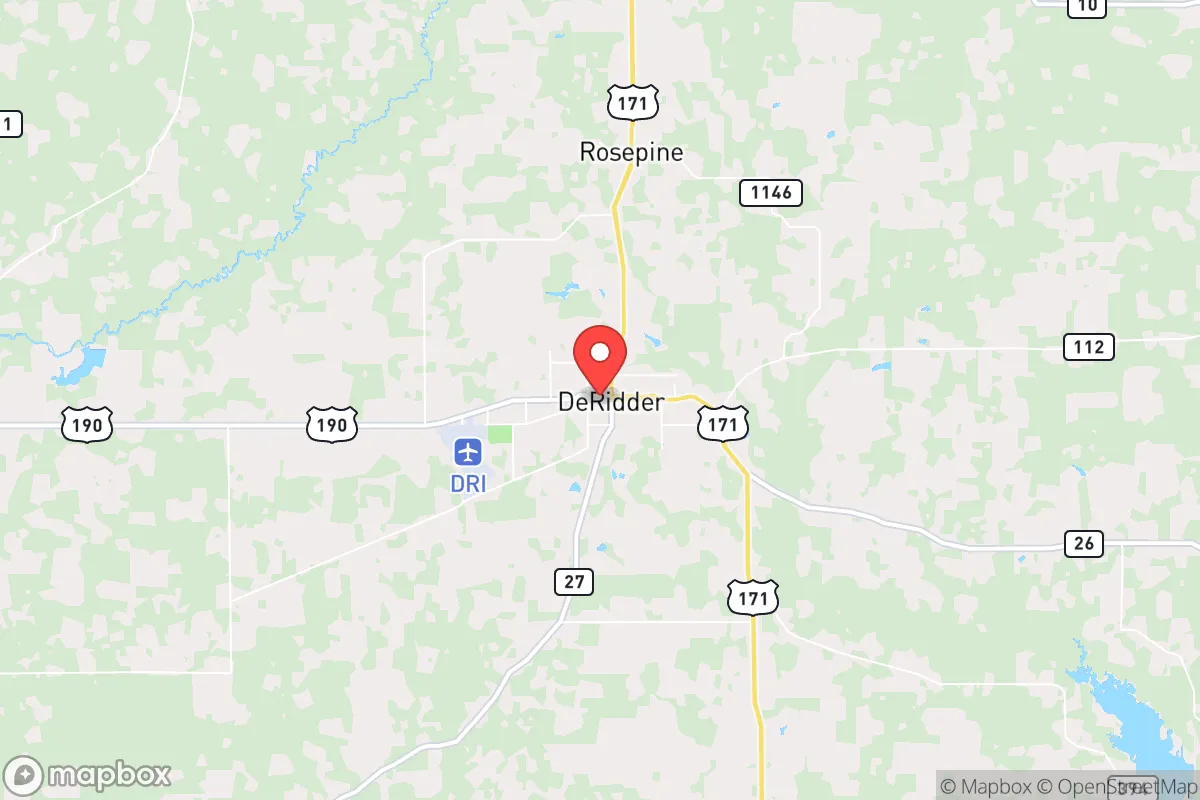
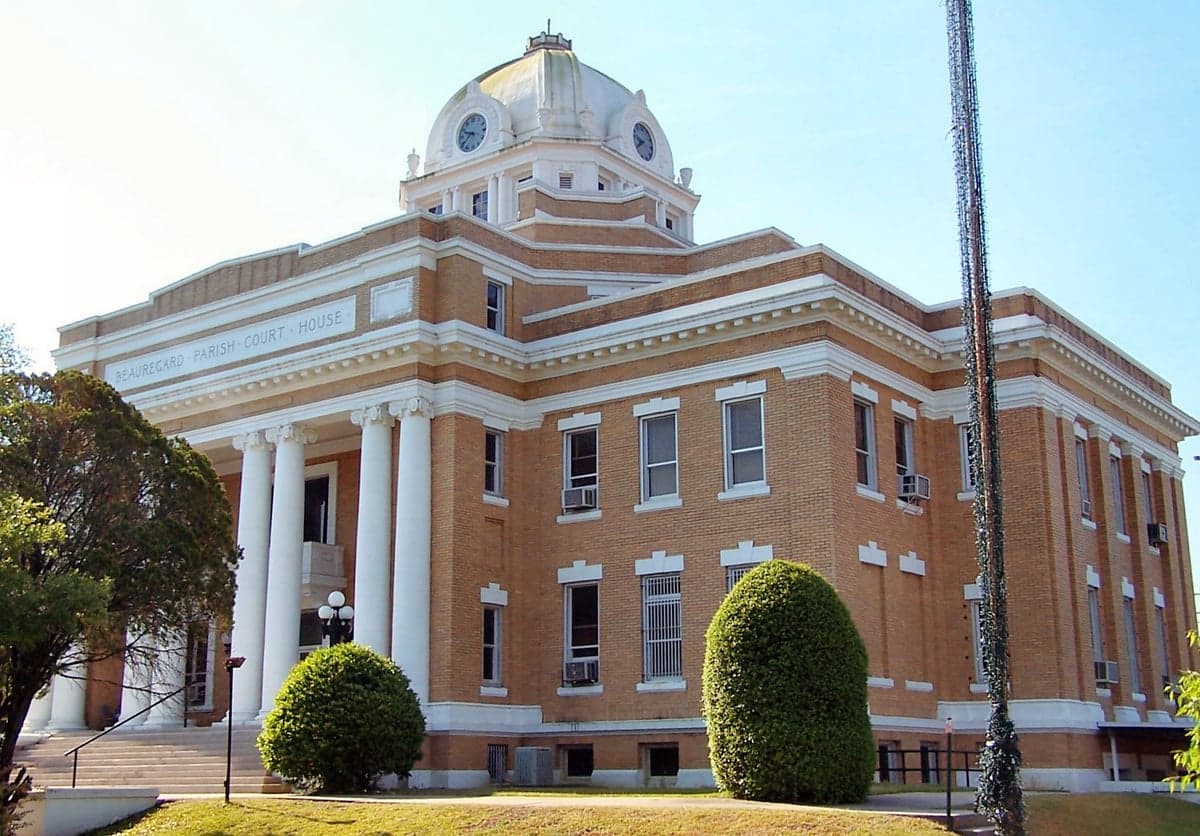
Photo: Wikipedia
Political ClimatePolitical Climate in Deridder, LA
District shown is the primary district for this city’s centroid. Cities may span multiple districts.
Local Political AnalysisPolitical Analysis of Deridder, LA
Deridder, Louisiana, sits deep in the heart of a solidly conservative region, and that’s not changing anytime soon. The Cook Partisan Voting Index (PVI) for this area is a rock-solid R+26, meaning it votes about 26 points more Republican than the national average. If you’ve been around here a while, you know that’s not just a number—it’s a reflection of how folks think about government, family, and personal responsibility. The political trajectory here has been steady, with no real signs of a leftward shift, though you do see the occasional ripple from national trends. But by and large, Deridder remains a place where conservative values aren’t just tolerated—they’re expected.
How it compares
Drive an hour east to Lake Charles, and you’ll find a similar conservative bent, though it’s a bit more mixed thanks to the industrial and port economy. Head south toward Jennings or Crowley, and you’re still in deep-red territory, but the vibe shifts—more Cajun, more Catholic, but still solidly right-leaning. The real contrast comes if you go north to Alexandria or west to the Texas border near Jasper. Those areas are also conservative, but Deridder feels more insulated from the coastal influences that sometimes soften the edges in bigger towns. Compared to Baton Rouge or New Orleans, which are blue islands in a red state, Deridder is a fortress of traditional values. There’s no ambiguity here: people vote their conscience, and that conscience is overwhelmingly pro-life, pro-Second Amendment, and skeptical of federal overreach.
What this means for residents
For someone moving here, the political climate means you can expect a government that mostly stays out of your business. Local officials tend to be accessible and share the community’s distrust of heavy-handed regulations. You won’t see the kind of progressive policy experiments you’d find in larger cities—no defunding police, no radical zoning changes, no push for sanctuary city status. That’s a relief for folks who’ve watched other parts of the country slide into chaos. The downside? If you’re hoping for a more progressive environment, you’ll feel out of step. But for those who value personal freedom, low taxes, and a community that looks out for its own, Deridder delivers. The school board, city council, and parish government all lean conservative, which means policies tend to favor local control over state or federal mandates.
One thing that stands out culturally is the strong sense of self-reliance. People here don’t look to the government to solve their problems—they handle things themselves, whether it’s through church, family, or local civic groups. That’s a dying trait in a lot of America, but it’s alive and well in Deridder. You’ll also notice a deep respect for the military and law enforcement, which is no surprise given the proximity to Fort Johnson (formerly Fort Polk). That military influence reinforces the conservative ethos: discipline, duty, and a healthy skepticism of bureaucracy. If you’re looking for a place where your rights aren’t up for debate and where the political winds don’t shift with every election cycle, Deridder is a safe bet. Just don’t expect it to change—because it won’t.

State Political ClimatePolitical Climate in Louisiana
State Political AnalysisPolitical Environment in the State
Louisiana has long been a reliably Republican state at the federal level, but with a stubborn Democratic stronghold in New Orleans and a few other urban pockets that keep statewide races competitive. Over the last 20 years, the state has shifted from a purple-ish, culturally conservative Democratic base to a solidly red tilt, with Republicans now holding every statewide elected office and supermajorities in both legislative chambers. However, the trajectory is not a simple straight line — the state’s deep cultural conservatism is increasingly at odds with a growing progressive activism in Baton Rouge and New Orleans, and the real story is how these two forces are colliding over taxes, education, and personal freedoms.
Urban vs. rural divide
The political map of Louisiana is a textbook case of the urban-rural chasm. New Orleans and its surrounding parishes (Orleans, Jefferson, St. Bernard) are the state’s Democratic engine, delivering margins of 60-80% for Democrats in presidential and gubernatorial races. Baton Rouge is a genuine battleground — East Baton Rouge Parish has trended blue in recent cycles, but the surrounding suburban and exurban areas like Livingston Parish and Ascension Parish are deeply red. Lafayette and Shreveport are more mixed: Lafayette leans Republican but with a strong independent streak, while Shreveport’s Caddo Parish is reliably Democratic due to its large African American population. The rural parishes — from the Florida Parishes (Tangipahoa, St. Tammany) to the Cajun country of Acadiana (Lafayette, Vermilion, St. Martin) — are overwhelmingly Republican. St. Tammany Parish, north of Lake Pontchartrain, is the state’s most reliably red suburban stronghold, often voting 70%+ Republican. The divide is stark: the state’s two biggest cities (New Orleans and Baton Rouge) produce nearly all the Democratic votes, while the rest of the state’s 64 parishes are a sea of red.
Policy environment
Louisiana’s policy environment is a mixed bag for a conservative. On the plus side, the state has no state property tax, a relatively low corporate tax rate (recently cut from 8% to 7.5%), and a flat income tax of 3% for individuals after the 2024 tax reform package. The state is a “right-to-work” state, and union membership is low. On the education front, Louisiana has a robust school choice program — the Louisiana Scholarship Program and the Student Scholarships for Educational Excellence Program allow public funds to follow students to private or parochial schools, a major win for parental rights. However, the state’s regulatory environment is still heavy compared to Texas or Florida; the state’s convoluted tax code and permitting processes can frustrate small business owners. Healthcare policy is a flashpoint: the state expanded Medicaid under the Affordable Care Act in 2016, a decision that many conservatives view as a federal overreach that has ballooned the state budget. Election laws are moderately secure — Louisiana requires a photo ID to vote, has no same-day registration, and conducts all-mail elections only in emergencies. The state’s constitution is notoriously long and detailed, making it difficult to enact sweeping policy changes without a constitutional convention.
Trajectory & freedom
Over the last five years, Louisiana has made notable strides in expanding personal liberty, but the direction is not uniformly positive. On the plus side, the state passed a constitutional carry law in 2024, allowing law-abiding citizens to carry a concealed firearm without a permit — a major win for Second Amendment advocates. The same year, the legislature passed a parental rights in education bill (HB 81) that requires schools to notify parents of any curriculum involving sexuality or gender identity and allows parents to opt their children out. The state also enacted a near-total abortion ban in 2022, with no exceptions for rape or incest, which aligns with the state’s strong pro-life culture. However, there are concerning trends. The state’s Medicaid expansion has created a dependency trap — roughly 1.5 million Louisianans are on Medicaid, and the program consumes a growing share of the state budget. The state’s property tax system is also a hidden burden: while there’s no state property tax, local parish governments levy high rates, especially in Orleans and East Baton Rouge parishes. The state’s business climate has improved under Governor Jeff Landry (elected 2023), who has pushed tort reform and reduced lawsuit abuse, but the state still ranks near the bottom in economic freedom indices due to high litigation costs and complex regulations.
Civil unrest & political movements
Louisiana has a history of political flashpoints that a new resident would notice. The most visible is the Confederate monument controversy in New Orleans, where the city removed four monuments in 2017 under Mayor Mitch Landrieu, sparking years of heated debate and legal battles. The state’s immigration politics are relatively quiet compared to border states, but there is growing tension in rural parishes over the influx of migrant labor in the agricultural and seafood industries. The “sanctuary city” issue has flared up in New Orleans, where the city council passed a resolution in 2023 declaring the city a “sanctuary” for transgender individuals — a symbolic move that drew sharp backlash from the state legislature, which responded with a bill (SB 7) prohibiting local governments from using public funds to promote gender transition procedures for minors. The state’s election integrity has been a topic of debate since 2020, with the legislature passing a voter ID law in 2022 that requires a photo ID for in-person voting and tightens absentee ballot rules. There have been no major protests or riots in recent years, but the Black Lives Matter protests in Baton Rouge and New Orleans in 2020 were significant, leading to calls for police reform that have largely stalled in the legislature. The secessionist movement is negligible in Louisiana — the state’s identity is more about cultural pride than political independence.
Projection
Over the next 5-10 years, Louisiana is likely to become more Republican at the state level, but with a growing progressive urban resistance. The demographic trends are clear: the state’s population is aging and slowly declining, with young, educated professionals leaving for Texas, Florida, and Tennessee. The in-migration is mostly retirees and remote workers from California and the Northeast, who tend to be more culturally conservative but fiscally moderate. The state’s Hispanic population is growing, particularly in the New Orleans metro and the sugar cane parishes, but it’s not yet a political force. The biggest wildcard is New Orleans: if the city continues to lose population (it’s down about 10% since 2020), its political influence will wane, making the state even redder. However, the state’s fiscal challenges — a massive unfunded pension liability, a crumbling infrastructure, and a reliance on oil and gas revenue — could force future tax increases or spending cuts that might alienate the conservative base. The coastal erosion crisis is also a long-term threat, potentially displacing tens of thousands of residents in the next decade, which could reshape the political map.
Bottom line for a new resident: If you’re a conservative looking for a low-tax, culturally traditional state with strong gun rights and school choice, Louisiana is a solid choice — but be prepared for a slower pace of life, a heavy regulatory hand in some areas, and a state government that is still learning how to be efficient. The urban-rural divide means you’ll find your tribe in the suburbs and rural areas, but you’ll have to live with the progressive policies of New Orleans and Baton Rouge if you work or do business there. The state is trending in the right direction on personal freedoms, but the fiscal and infrastructure challenges are real. Come for the culture, the food, and the low cost of living — just don’t expect a libertarian paradise.
* Values derived from national, state, county, city and local statistics and may differ in a specific area. Last updated: 2026-05-01T00:45:47.000Z
Narrative content on this page is AI-generated and may contain mistakes. Verify any details that matter before acting on them.
ReloMaps may earn a commission from affiliate links at no extra cost to you.

