 Popular
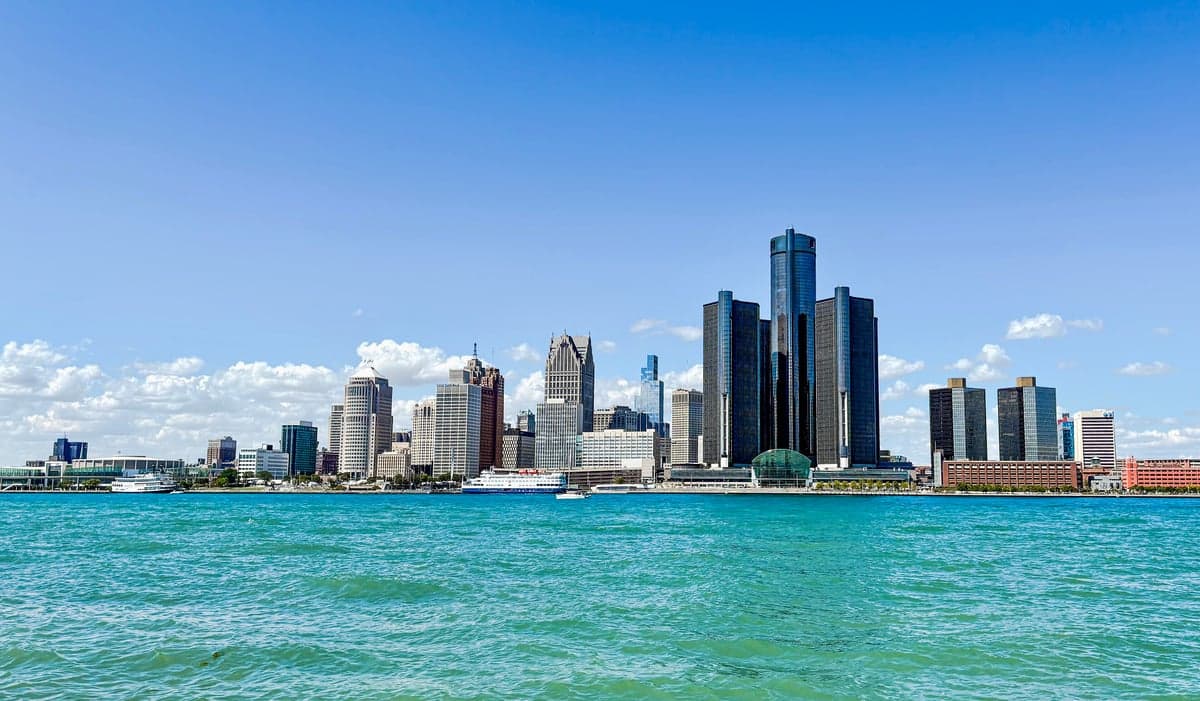
Photo: Wikipedia
Personal Sovereignty in Detroit, MI
Strong independent fundamentals that actively favor personal liberty and low regulation.
What does Personal Sovereignty tell us?
Personal Sovereignty measures your capacity for self-reliance and independence with minimal government friction. Higher scores mean fewer barriers between you and the way you want to live... but it assumes you have the space you need and good neighbors.
What does this tell us?
Personal Sovereignty measures your capacity for self-reliance and independence with minimal government friction. Higher scores mean fewer barriers between you and the way you want to live... but it assumes you have the space you need and good neighbors.
State Policy
Energy independence: Importer (20% of energy produced in-state)
Personal Liberty
Homesteading

Personal Liberty Analysis
Detroit presents a paradox for those prioritizing personal sovereignty: the city offers a low cost of entry and a gritty, hands-on environment where self-reliance is almost a necessity, yet it operates under Michigan’s increasingly centralized state government, which imposes notable constraints on individual autonomy. For the survivalist or prepper, Detroit is not a haven of libertarian freedom but a proving ground where you must navigate a dense regulatory web while exploiting the practical advantages of a depopulated urban landscape. The key question is whether the city’s cheap land and DIY culture outweigh the state’s encroachments on your rights to keep and bear arms, make medical decisions, and live without excessive bureaucratic interference.
Tax burden and regulatory posture: How Michigan’s state policies constrain autonomy
Michigan’s tax and regulatory environment is a mixed bag that leans toward the restrictive side for those seeking maximum personal sovereignty. The state imposes a flat 4.25% personal income tax on all earned income, which directly reduces your ability to control your own earnings—a non-negotiable for anyone serious about financial independence. Property taxes are a heavier burden: Detroit’s effective rate hovers around 2.5% to 3.0% of assessed value, among the highest in the Midwest, and the city’s notoriously flawed assessment system means you’ll likely spend time fighting overvaluations. Sales tax is a flat 6%, with no local add-ons, but that’s still a consumption tax you can’t avoid. On the regulatory side, Michigan is not a right-to-work state—organized labor still holds sway, and Detroit’s local ordinances add layers of permitting and licensing for everything from home-based businesses to vehicle storage. For the prepper, this means you’ll pay more to own property and earn income, and you’ll face more red tape than in, say, Texas or Florida. The state’s emergency powers were a flashpoint during COVID, with Governor Gretchen Whitmer’s unilateral orders shutting down businesses and limiting gatherings—a clear example of government overreach that soured many conservatives on Michigan’s governance. If you value minimal taxation and light-touch regulation, Detroit is not your first choice, but the low real estate prices can offset some of the fiscal drag.
Self-defense and gun law specifics: Navigating Michigan’s firearm restrictions in Detroit
Michigan’s gun laws have tightened in recent years, and Detroit’s urban environment adds practical complications for the armed citizen. The state requires a purchase license for handguns (issued by local police, which in Detroit can mean delays) and a background check for all firearm sales, including private transfers—a universal background check law passed in 2023. Concealed carry requires a permit (CPL) with a 16-hour training course, fingerprinting, and a $100 fee; Detroit’s police department has a reputation for slow processing, so plan for a 90-day wait. Open carry is legal without a permit, but in Detroit, it’s a magnet for police scrutiny and public unease—not a practical choice for daily life. The city itself is a high-crime environment (violent crime rates remain among the nation’s highest), so carrying a firearm is less a lifestyle choice and more a survival necessity. However, Michigan’s stand-your-ground law is solid: you have no duty to retreat in any place you have a legal right to be, and self-defense is a complete defense to homicide. Magazine capacity is not restricted, and there is no state-level assault weapons ban, though Detroit’s city council has passed symbolic resolutions against certain firearms—these are unenforceable under state preemption law. For the prepper, the bottom line is that you can defend yourself, but you’ll jump through more hoops than in constitutional carry states. The 2023 universal background check law is a clear erosion of privacy and a step toward federal-style registration, which should concern anyone who values the Second Amendment as a check on government power.
Self-reliance and homesteading viability: Lot sizes, zoning, and off-grid feasibility in Detroit
Detroit’s unique urban landscape offers surprising opportunities for self-reliance, but zoning and infrastructure realities impose hard limits. The city’s population decline has created a patchwork of vacant lots—over 40,000 parcels—many of which can be purchased for as little as $500 to $2,000 through the Detroit Land Bank Authority. Lot sizes vary wildly, but typical residential lots are 30 to 40 feet wide by 100 to 120 feet deep, enough for a substantial garden, a small chicken coop, or a workshop. Zoning is permissive in many neighborhoods: you can keep up to four chickens (no roosters) without a permit, and beekeeping is allowed. However, the city’s building codes are strict—you cannot legally live off-grid without a connection to the municipal water and sewer system, and the city actively enforces occupancy standards. Rainwater collection is legal but limited to 2,500 gallons of storage without a permit, and solar panels require electrical permits and inspections. The Detroit Future City framework encourages urban agriculture, but the city’s bureaucracy can be a headache for anyone trying to build a self-sufficient homestead. For the serious prepper, the biggest challenge is security: vacant lots attract squatters and criminal activity, so you’ll need to invest in fencing, lighting, and a robust neighborhood watch. The low property prices are a double-edged sword—they make entry cheap, but they also mean your investment is unlikely to appreciate quickly, and you’ll be surrounded by blight. If you’re willing to put in the sweat equity and navigate the red tape, Detroit offers a rare chance to own land in a major city, but it’s not a place where you can disappear into the woods and live off the grid.
Personal liberties: Parental rights, medical autonomy, speech, and property in Detroit
Michigan’s record on personal liberties is a mixed bag that should give conservative parents and medical autonomy advocates pause. Parental rights have been under assault: the state’s Department of Education has pushed LGBTQ-inclusive curriculum standards that some parents view as overreach, and there is no statewide parental bill of rights guaranteeing the right to opt your child out of controversial lessons. Detroit Public Schools Community District (DPSCD) has its own policies, and parents report feeling sidelined in decisions about their children’s education. Medical autonomy took a hit during COVID, with vaccine mandates for healthcare workers and school staff, and the state’s emergency powers allowed for broad restrictions on elective procedures. Michigan also has a right-to-die law (the Michigan Death with Dignity Act) that some conservatives oppose, but it’s limited to terminal cases. On the positive side, property rights are relatively strong: Michigan has no statewide rent control, and Detroit’s property tax foreclosure system, while aggressive, has been reformed to give owners more time to pay. Free speech is protected under the First Amendment, but Detroit’s city council has occasionally flirted with “hate speech” resolutions that, while unenforceable, signal a hostile attitude toward dissenting views. For the prepper, the biggest concern is government overreach during emergencies: the 2020 lockdowns showed that Michigan’s governor can shut down your business and restrict your movement with little legislative check. If you value the right to homeschool without interference, make your own medical choices, and speak your mind without fear of government retaliation, Detroit is a place where you’ll need to stay vigilant and organized with like-minded neighbors.
Overall, Detroit offers a unique but compromised form of personal sovereignty compared to other areas. The low cost of land and housing gives you a tangible asset base that is harder to achieve in high-tax coastal cities or booming Sunbelt metros, and the city’s DIY culture rewards those who can fix, build, and grow their own resources. However, Michigan’s state-level policies—especially on taxes, gun control, and emergency powers—place it firmly in the “blue state” column, meaning you’ll face more government intrusion than in states like Texas, Florida, or Tennessee. For the survivalist who values community and is willing to fight for their rights at the local level, Detroit can be a viable base of operations, but it is not a retreat from the state. If your priority is maximum autonomy with minimal government interference, you’re better off looking at rural Michigan’s Upper Peninsula or a red state entirely. Detroit is for those who see sovereignty as a daily struggle, not a given—and who are prepared to engage in that struggle head-on.

* Values derived from national, state, county, city and local statistics and may differ in a specific area. Last updated: 2026-04-30T00:21:54.000Z
Narrative content on this page is AI-generated and may contain mistakes. Verify any details that matter before acting on them.
ReloMaps may earn a commission from affiliate links at no extra cost to you.

