 Popular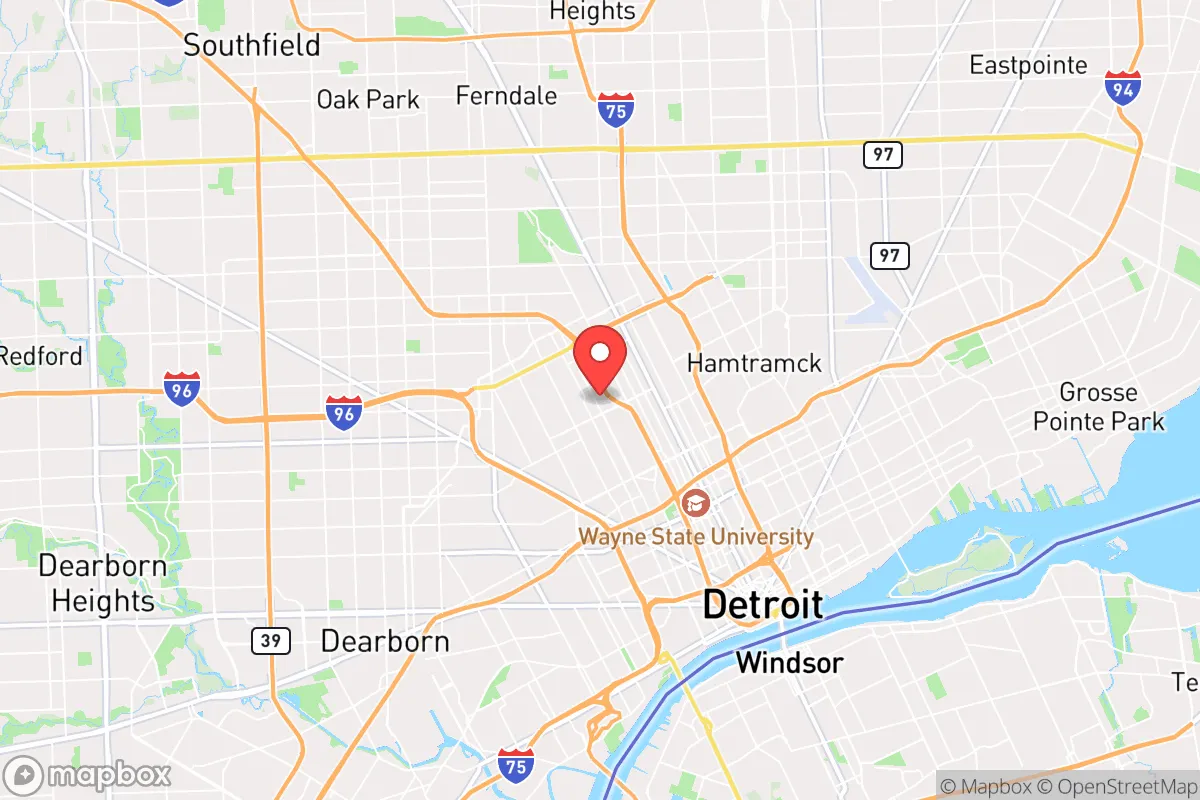
Photo: Wikipedia
Strategic Assessment of Detroit, MI
Multiple tactical vulnerabilities. Population density, target proximity, or disaster risk are likely compounding. A retreat property and exit planning is required.
What does the Strategic Assessment tell us?
Our Strategic Assessment grades tactical survivability of an area. Major population centers, military targets, fallout zones, natural disasters, and border exposure all drive risk — lower exposure means a more defensible position in a crisis.
This is heavily inspired by Joel Skousen's Strategic Relocation book. Highly recommended you checkout the book ($)What does this tell us?
Our Strategic Assessment grades tactical survivability of an area. Major population centers, military targets, fallout zones, natural disasters, and border exposure all drive risk — lower exposure means a more defensible position in a crisis.
This is heavily inspired by Joel Skousen's Strategic Relocation book. Highly recommended you checkout the book ($)Strategic Pillars

Key Distances
Regional Safe Places
Below is our recommended "safe zones" in Michigan and the surrounding area based on our strategic heuristics. For most people, it's unrealistic to live in a “safe zone” full-time due to work, family or other personal reasons. They tend to be more rural. However, many of these areas are perfect for second homes and retreat properties that double as a vacation home or even a short-term rental.


Important Note: For informational purposes only. This does not mean nothing bad ever happens in the green zones. Please use common sense. This is based on public data and modeled with AI. We tried to take a conservative approach but mistakes happen. We update this regularly as new information becomes available.
Solar Generator Recommendations
Backup power matters more here than in safer locations. We've picked three solar generators across budgets and capacity tiers — start with the budget unit if you only need a few essentials, or step up if you want to run a fridge and HVAC for days at a time.

Jackery Portable Power Station Explorer 300
Budget OptionPower on the Go: Weighing only 11 lbs, it's convenient to set up and store with book-sized foldable solar panels

BLUETTI Portable Power Station AC180
Designed for both indoor and outdoor scenarios, AC180 is highly capable as it has a robost capacity and continuous output power.

EF ECOFLOW DELTA Pro Ultra Power Station
Upgraded PickEcoFlow DELTA Pro Ultra is a whole-home energy system designed to grow with your family. Integrated with the Smart Home Panel 2, it scales to meet your evolving energy needs — keeping your home powered, intelligent, and secure through every stage of life.
We earn a commission, at no additional cost to you.
Strategic Assessment Analysis
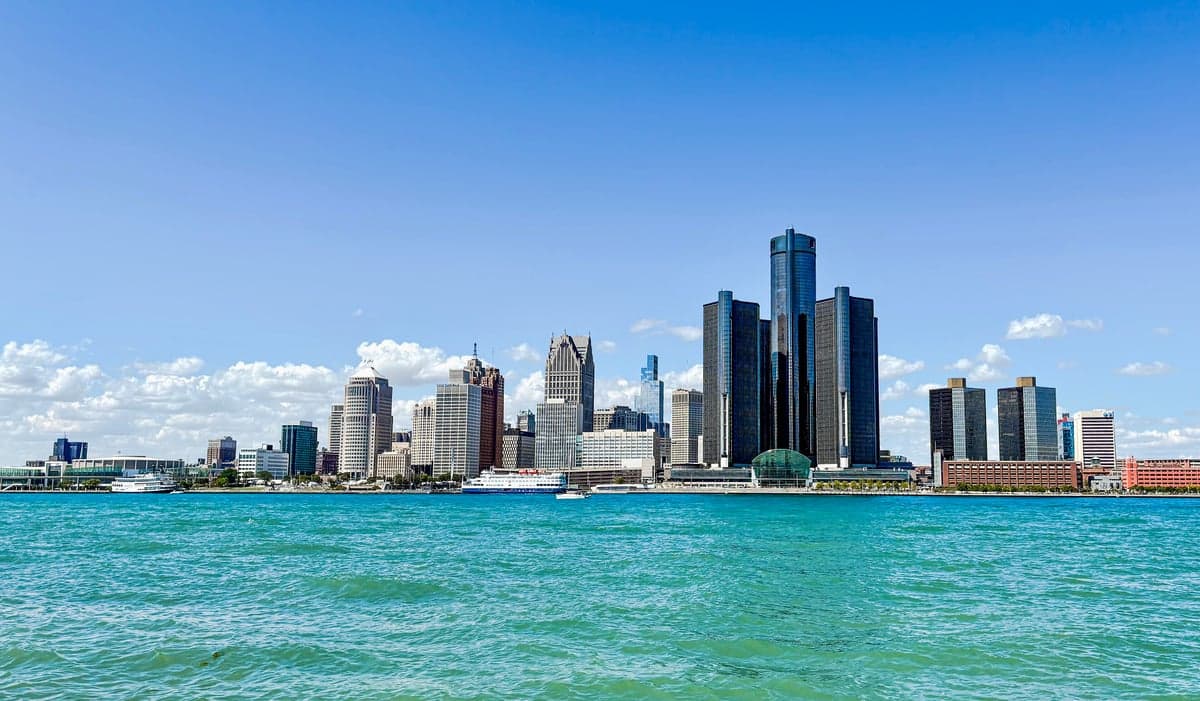
Detroit, Michigan, presents a deeply contradictory picture for the conservative prepper or strategic relocator. On one hand, its location on the Great Lakes offers a massive, defensible freshwater resource and a buffer against the worst coastal fallout scenarios. On the other, the city itself is a high-risk, high-density population center with a history of civic instability, making it a potential epicenter for unrest rather than a retreat. The real strategic value lies not in the city proper, but in the surrounding ring of smaller towns and rural counties within a 60-90 minute drive, where the natural advantages of the region can be leveraged without inheriting Detroit’s acute vulnerabilities.
Geographic position and natural advantages for long-term survival
Detroit’s most underrated asset is its position within the Great Lakes Basin, the largest surface freshwater system on the planet. The Detroit River connects Lake St. Clair to Lake Erie, providing a direct water route to the St. Lawrence Seaway and, critically, to the vast, sparsely populated Upper Peninsula. For a relocator, this means access to a water supply that is not dependent on the Colorado River or the Ogallala Aquifer—both of which are under severe stress. The region’s climate is also a double-edged sword: harsh winters act as a natural population filter, discouraging mass migration from warmer states, while the fertile, glacially-deposited soil in the surrounding counties (like Lapeer, St. Clair, and Lenawee) supports small-scale agriculture. The area’s flat terrain, while not ideal for defensible positions, allows for efficient farming and easy movement via secondary roads if interstates become clogged. Proximity to Canada is another factor—the Ambassador Bridge and Detroit-Windsor Tunnel are chokepoints, but the river itself offers a natural border that could be monitored or, in a worst-case scenario, used as a barrier against southward movement of unrest from Ontario.
Risks, exposures, and proximity to fallout-relevant landmarks
The downsides are significant and cannot be ignored. Detroit itself is a major metropolitan area with a population of roughly 630,000 inside city limits and over 4.3 million in the metro area. In a mass casualty event or grid-down scenario, this density becomes a liability. The city has a well-documented history of civil unrest—the 1967 riot, the 2013 bankruptcy, and ongoing issues with arson and abandoned property—which suggests that social cohesion is fragile. For a prepper, the key concern is proximity to high-value targets: Detroit is home to major automotive manufacturing plants (Ford, GM, Stellantis), a significant chemical corridor along the River Rouge, and the Detroit Metropolitan Airport (DTW), a major cargo hub. Any of these could be a focal point for looting, labor strikes, or targeted attacks. Additionally, the Fermi 2 nuclear power plant is located just 30 miles south in Monroe County. While not a Chernobyl-level risk, a containment failure or sabotage event would put much of the downwind area—including Detroit and its suburbs—in a dangerous plume zone. The city’s aging water infrastructure, including the massive Detroit Water and Sewerage Department system, is a single point of failure; a prolonged power outage would compromise water pressure and treatment, making the city unlivable within days.
Practical resilience for a relocator: food, water, energy, and defensibility
For a single individual or family looking to relocate with a prepper mindset, the smart play is not Detroit proper but the exurban ring. Towns like Oxford, Armada, or Manchester offer a balance of rural access and reasonable commute times to Detroit’s job market (if that remains a factor). Water is the primary advantage: a well on your property, combined with a hand pump or solar-powered pump, gives you independence from the municipal system. The Great Lakes mean that even in a drought, you have a backup source—though you’ll need a filtration system for surface water. Food resilience is strong: Michigan’s growing season is short (roughly 140-160 days), but the soil is rich, and you can supplement with hunting (deer, turkey, small game) and fishing in the numerous rivers and lakes. Energy is a mixed bag. The region’s grid is aging and prone to outages from ice storms and high winds. Solar is viable but less efficient in winter months; a backup generator running on propane or natural gas is almost mandatory. Defensibility is the weak point. The terrain is flat and open, with few natural chokepoints. Your best bet is a property with a long driveway, good sightlines, and a strong perimeter. Neighbors in these rural areas tend to be more self-reliant and armed—a cultural advantage over urban or suburban enclaves. The local sheriff’s departments in counties like Lapeer and St. Clair are generally conservative-leaning and responsive, but in a widespread collapse, you cannot rely on them for protection.
The overall strategic picture for Detroit is one of high risk with a narrow path to viability. The city itself is a liability—a potential flashpoint for unrest, a target for infrastructure attacks, and a drain on resources. However, the surrounding region offers some of the best freshwater access in the continental United States, a climate that discourages mass migration, and a cultural base of self-reliance in the rural counties. For a relocator willing to live 45-90 minutes from the city center, the trade-offs can work. You get the benefits of a major economic hub (hospitals, airports, supply chains) while maintaining a buffer zone. The key is to avoid the suburbs closest to Detroit—places like Dearborn, Warren, or Southfield—which combine high density with limited defensibility. Instead, focus on the outer ring where land is cheap, water is plentiful, and the neighbors are more likely to share your worldview. Detroit is not a bug-out destination; it’s a resource zone you live near, not in. If you can manage that distinction, the region offers a viable, if not ideal, base for long-term resilience.

* Values derived from national, state, county, city and local statistics and may differ in a specific area. Last updated: 2026-04-30T00:21:54.000Z
Narrative content on this page is AI-generated and may contain mistakes. Verify any details that matter before acting on them.
ReloMaps may earn a commission from affiliate links at no extra cost to you.

