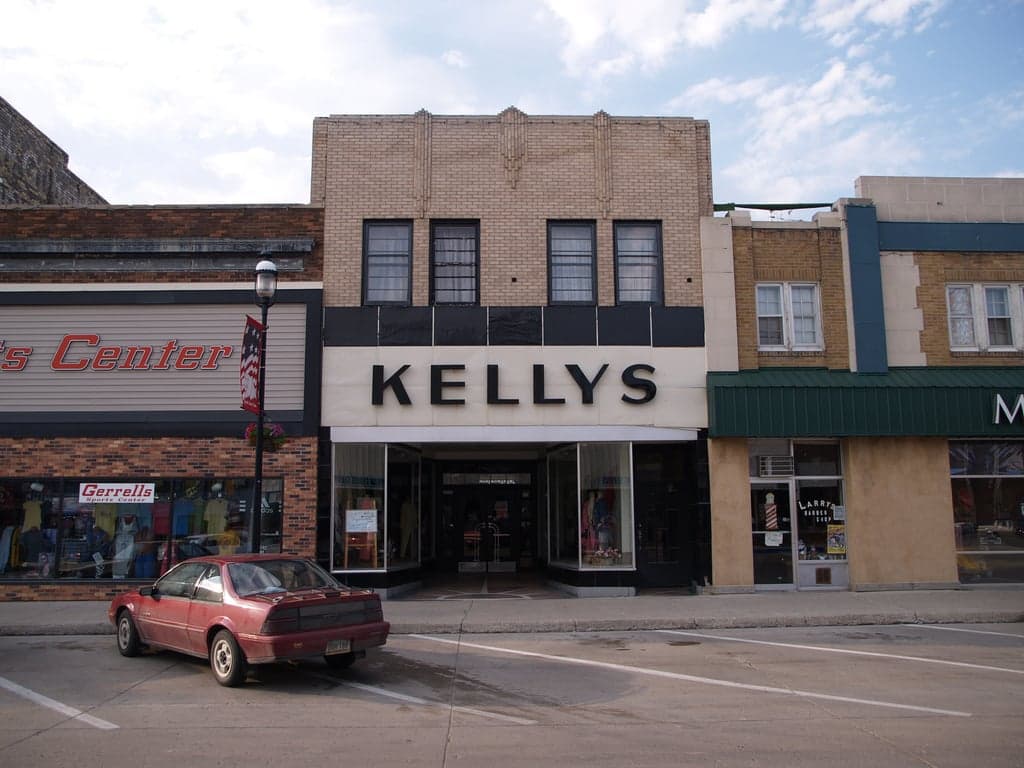
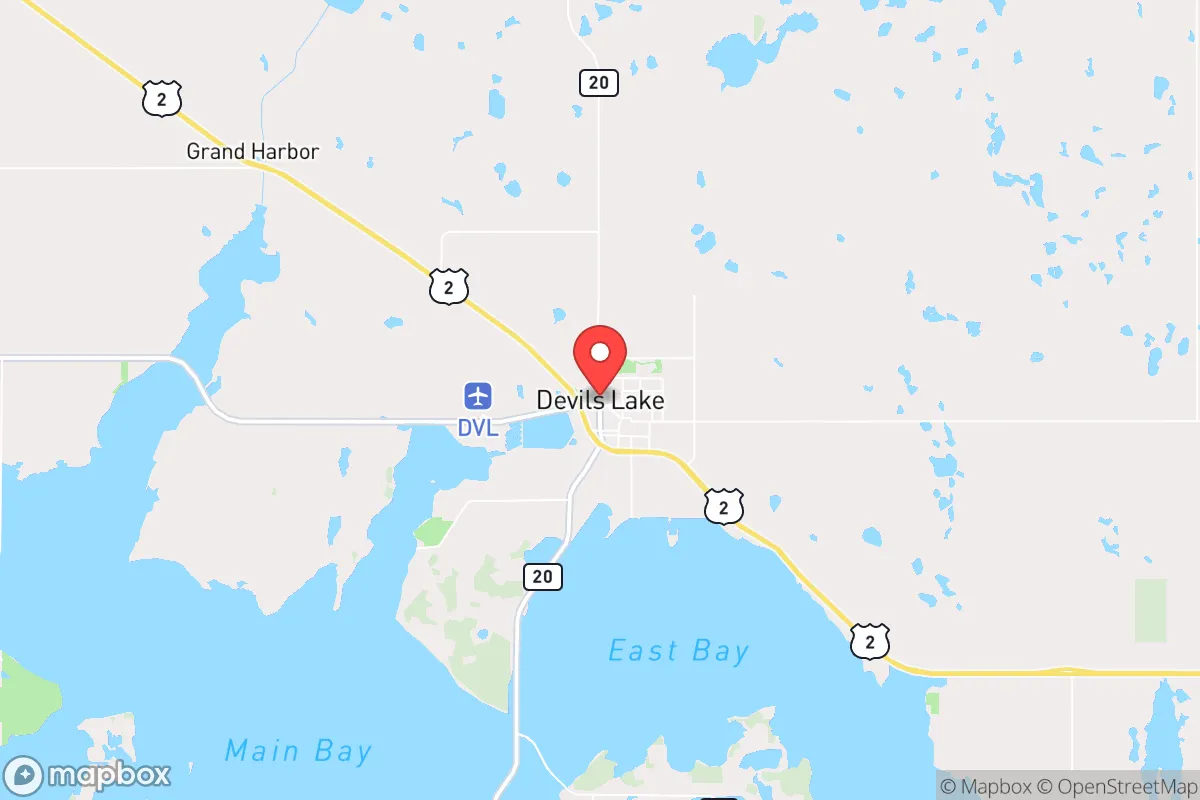
Photo: Wikipedia
Demographics of Devils Lake, ND
Affluence Level in Devils Lake, ND
A below-average socioeconomic profile. Incomes, home values, and educational attainment trail the U.S., with higher poverty and unemployment.
People of Devils Lake, ND
The people of Devils Lake, North Dakota, today number 7,170, forming a tight-knit, predominantly white community with a strong sense of place rooted in the lake's history and the region's agricultural economy. The city is characterized by a 77.5% white population, a very small foreign-born share of 0.5%, and a notable 24.8% college-educated cohort, reflecting a mix of long-established families and professionals drawn to the area's outdoor recreation and lower cost of living. Distinctive identity markers include a deep connection to the lake itself—a source of both livelihood and periodic flooding—and a resilient, self-reliant character shaped by the boom-and-bust cycles of farming and energy development.
How the city was settled and grew
Devils Lake was founded in 1882 as a railroad town on the Great Northern Railway, with the first wave of settlers being predominantly Scandinavian and German immigrants drawn by the promise of free land under the Homestead Act. These early arrivals—mostly Norwegian, Swedish, and German farmers—built the original core of the city around the railroad depot, an area now known as Downtown Devils Lake, where the first grain elevators, general stores, and churches were established. By the 1890s, a second wave of settlers, including Irish and Canadian homesteaders, pushed into the Lakewood Park neighborhood, which developed as a residential area for families working the surrounding wheat and barley fields. The city's growth was further fueled by the establishment of the Fort Totten Indian Agency nearby, which brought federal employees and traders into the area, though the city itself remained overwhelmingly white and rural. By 1920, the population had reached roughly 5,000, with the South Hill neighborhood emerging as a middle-class district for merchants and railroad workers, while the East End near the lake shore housed many of the Scandinavian fishing families who supplemented their farming income with commercial fishing on the lake.
Modern era (post-1965)
After the 1965 Immigration and Nationality Act, Devils Lake saw virtually no new international immigration, with the foreign-born share remaining below 1% through the present day. Instead, the city's modern demographic story is one of domestic in-migration from rural Ramsey County and the surrounding region, as younger families moved into town for jobs in healthcare, education, and the growing tourism sector. The Northcrest subdivision, developed in the 1970s and 1980s, became the primary destination for these new residents, offering affordable ranch-style homes on larger lots. The Westside neighborhood, near the Lake Region State College campus, absorbed a modest influx of faculty and staff, while also becoming a hub for the city's small Hispanic population (now 3.4%), many of whom work in the region's dairy and meatpacking industries. The Black (1.2%) and East/Southeast Asian (1.2%) populations remain very small and are largely concentrated in rental housing near the college and the hospital, reflecting the transient nature of professionals and students rather than established ethnic enclaves. The Indian subcontinent population (0.1%) is negligible, consisting of a handful of medical professionals at the local clinic.
The future
Devils Lake's population is projected to remain stable or decline slightly over the next decade, as the city continues to homogenize rather than diversify. The white population share is expected to hold steady near 77-78%, with the small Hispanic and Asian communities likely plateauing as they assimilate into the broader culture without forming distinct ethnic enclaves. The city's future demographic trajectory is tied to the health of the lake's tourism economy and the expansion of the Lake Region State College, which could attract a modest number of out-of-state students and faculty. However, without significant new immigration or a major employer relocation, the population will likely remain a predominantly white, aging cohort, with younger families continuing to move to larger cities like Grand Forks or Fargo for broader job opportunities. The Lakewood Park and South Hill neighborhoods are expected to see the most turnover as older residents age out and homes are purchased by younger families seeking affordable lake-adjacent living.
For someone moving in now, Devils Lake offers a stable, low-crime, and culturally homogeneous community where the pace of life is slow and the social fabric is built on church, school, and outdoor recreation. The city is not diversifying rapidly, nor is it shrinking dramatically—it is a place of continuity, where the descendants of Scandinavian and German homesteaders still form the core of the population, and where new arrivals are expected to integrate into existing institutions rather than reshape them. This makes it a predictable, safe choice for conservative-leaning families and individuals who value tradition, community, and a direct connection to the natural landscape.

* Values derived from national, state, county, city and local statistics and may differ in a specific area. Last updated: 2026-04-19T08:58:25.000Z
Narrative content on this page is AI-generated and may contain mistakes. Verify any details that matter before acting on them.
ReloMaps may earn a commission from affiliate links at no extra cost to you.

