
Political ClimatePolitical Climate in Diberville, MS
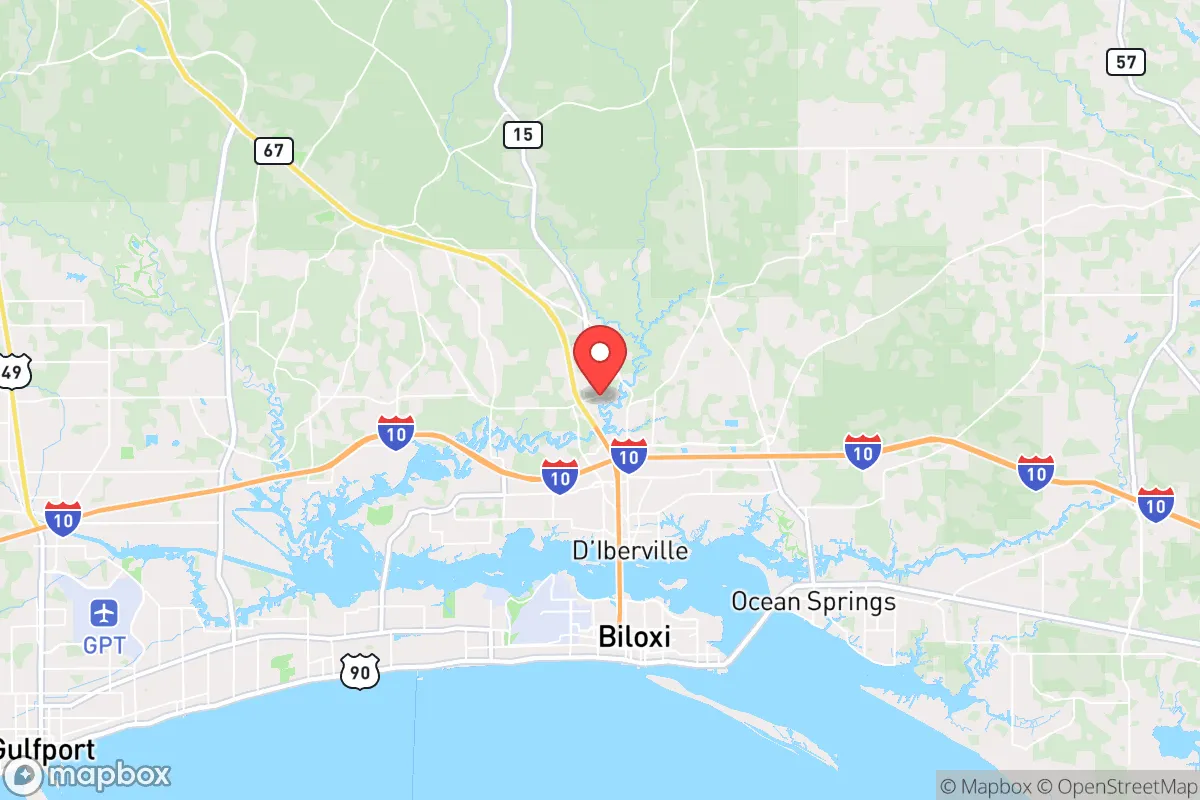
District shown is the primary district for this city’s centroid. Cities may span multiple districts.
Local Political AnalysisPolitical Analysis of Diberville, MS
Diberville is about as solidly conservative as it gets on the Mississippi Gulf Coast, and that’s been the case for as long as I can remember. The Cook PVI sits at R+21, which means Republicans have a 21-point advantage here over the national average—and that number feels about right when you look at local election results. We’re not seeing the kind of political drift you hear about in Hattiesburg or even parts of Ocean Springs; Diberville has stayed the course, and most folks I know plan to keep it that way.
How it compares
If you drive ten minutes west to Biloxi, you’ll find a more mixed political scene—some precincts lean blue, especially closer to the casinos and the downtown core. Head east to Ocean Springs, and you’ll get a slightly more moderate vibe, with a few progressive-leaning pockets near the arts district. But Diberville? We’re the quiet, consistent conservative anchor. The city council and mayor’s office have been reliably Republican for years, and the county-level races in Harrison County tend to reflect that same tilt. Compared to Gulfport, which has seen some competitive city council races with more liberal candidates, Diberville feels like a place where traditional values aren’t up for debate. The surrounding towns like St. Martin and Woolmarket lean similar, but Diberville is the most pronounced—it’s the kind of place where you can still count on the local government to keep taxes low and stay out of your business.
What this means for residents
For the people who live here, the political climate translates into a pretty straightforward daily life. You don’t see the kind of government overreach that makes you nervous—no heavy-handed zoning rules, no push for woke curriculum in the schools, no aggressive tax hikes disguised as “community improvements.” The city council tends to focus on practical stuff: keeping the roads paved, making sure the police have what they need, and not meddling in how you run your household or your small business. That said, there’s been a little chatter in recent years about some younger families moving in from out of state, and with them comes a different way of thinking. I’ve heard a few folks worry that if the trend continues, we might start seeing pressure for more progressive policies—like higher property taxes for “equity” programs or restrictions on things like short-term rentals. So far, it’s just talk, but it’s worth keeping an eye on. The long-term outlook is stable as long as the local elections stay focused on freedom and fiscal responsibility, not on chasing national trends.
One thing that sets Diberville apart culturally is the strong sense of personal responsibility. You don’t hear people demanding the government solve every problem—most folks here believe in handling things themselves, whether it’s fixing a fence or helping a neighbor after a storm. That’s reflected in the local policy too: the city keeps its hands off things like gun rights, property use, and school curriculum. There’s no push for mask mandates or vaccine passports like you saw in some coastal towns. It’s a place where the motto is basically “live and let live, but don’t expect a handout.” If that ever shifts toward a more progressive, government-first approach, you’ll see a real fight. For now, Diberville remains a conservative stronghold where personal freedoms come first, and that’s exactly how most of us want it.

State Political ClimatePolitical Climate in Mississippi
State Political AnalysisPolitical Environment in the State
Mississippi is one of the most reliably conservative states in the country, with a Republican trifecta that has held firm for over two decades. The state voted for Donald Trump by 16.5 points in 2024, and every statewide elected official is a Republican. Over the past 10-20 years, the shift has been steady but not dramatic — the GOP consolidated power in the early 2000s as white rural voters abandoned the Democratic Party, and the state has only drifted further right since. The dominant coalition is a mix of evangelical Christians, small-town business owners, and military veterans, with a growing libertarian streak on gun rights and taxation. The Democratic base is almost entirely African American, concentrated in the Delta and Jackson, but it lacks the suburban crossover appeal that has kept other Southern states competitive.
Urban vs. rural divide
The political map of Mississippi is starkly divided between its rural expanses and its few urban centers. Jackson (Hinds County) is the only reliably blue metro, voting for Biden by 38 points in 2020, but it is shrinking — the city lost 6% of its population between 2010 and 2020. The Gulf Coast, including Biloxi and Gulfport, leans Republican but is more moderate on economic issues due to the tourism and casino industries. The real conservative strongholds are the rural counties: DeSoto County (just south of Memphis) voted +32 for Trump, and Rankin County (east of Jackson) voted +36. The Golden Triangle region — Columbus, Starkville, West Point — is a mixed bag: Starkville (home to Mississippi State University) is a blue dot in a red sea, while Columbus and West Point are reliably conservative. The Delta counties (Bolivar, Washington, Sunflower) are the poorest and most Democratic, but their population is declining fast — they collectively lost 12% of residents from 2010 to 2020, further diluting the Democratic vote share statewide.
Policy environment
Mississippi’s policy environment is aggressively conservative on most fronts. The state has a flat income tax of 4%, with a phase-down to 3.99% by 2026, and no estate or inheritance tax. Sales tax is 7% on most goods, but groceries are taxed at a reduced rate. The regulatory posture is light — there is no state-level occupational licensing for dozens of trades, and the state has a right-to-work law. Education policy is a mixed bag: the state has a school choice program (the Mississippi Education Scholarship Account for special needs students) and a charter school law, but only a handful of charters exist, mostly in Jackson. Healthcare is a sore spot — Mississippi did not expand Medicaid under the ACA, leaving roughly 100,000 working poor in the coverage gap. Election laws are among the strictest in the South: voter ID is required, no-excuse absentee voting is not allowed, and early voting does not exist (though a 2024 bill to allow in-person absentee voting without an excuse is pending). The state also has a constitutional carry law (permitless carry for adults 21 and older) passed in 2016, and a fetal heartbeat law (2019) that bans abortion after six weeks, with no exceptions for rape or incest.
Trajectory & freedom
Mississippi is trending more free on most measures of personal liberty, but with some notable caveats. On gun rights, the state has expanded: the 2016 permitless carry law was followed by a 2023 law allowing firearms in churches and on public transportation. On parental rights, the Mississippi Parental Rights Act (2023) requires schools to notify parents of any medical or mental health services offered to their child, and prohibits instruction on sexual orientation or gender identity in K-3. On medical autonomy, the state has a medical marijuana program (passed by ballot initiative in 2020, implemented in 2022), but it is tightly regulated — only 24 dispensaries are allowed, and qualifying conditions are limited. On property rights, the state has a stand your ground law and no statewide zoning mandates, giving local governments broad control. The biggest freedom concern is taxation: while income tax is being cut, property taxes are high in some counties (especially in the Delta), and the state’s car tag tax is one of the highest in the South. The 2024 Mississippi Freedom Act (which would have eliminated the income tax entirely) failed in committee, but a phase-down is still on track.
Civil unrest & political movements
Mississippi has seen relatively little civil unrest compared to other states, but there are flashpoints. The Jackson water crisis (2022-2023) sparked protests and a federal takeover of the city’s water system, with activists blaming state-level neglect of the majority-Black capital. The Confederate flag debate was resolved in 2020 when the state legislature voted to remove the Confederate battle emblem from the state flag — a move that passed with bipartisan support but angered some rural conservatives. Immigration politics are muted because Mississippi has a very small foreign-born population (2.5%), but there is a sanctuary city ban (2019) that prohibits any local government from adopting sanctuary policies. Election integrity is a live issue: the 2023 governor’s race saw allegations of voter suppression in Hinds County, and the state has a voter roll purge law (2021) that removes inactive voters after four years of not voting. The most visible political movement on the right is the Mississippi Freedom Caucus, a group of hardline state legislators who have pushed for further tax cuts, school choice expansion, and a ban on transgender athletes in sports (passed in 2021). On the left, the Mississippi Poor People’s Campaign organizes around Medicaid expansion and criminal justice reform, but it has little legislative traction.
Projection
Over the next 5-10 years, Mississippi will likely become more conservative, not less. The state is losing population overall (down 0.2% from 2020 to 2023), but the growth is in the suburbs of Memphis (DeSoto County) and the Gulf Coast, both of which are reliably Republican. The Delta will continue to shrink, further diluting the Democratic vote. In-migration is minimal — Mississippi attracts retirees and remote workers from higher-tax states like California and Illinois, but the numbers are small compared to Texas or Florida. The biggest wild card is the medical marijuana program: if it expands, it could bring in younger, more libertarian-leaning residents who might shift the political center slightly on drug policy. But on social issues, expect no movement — the legislature is dominated by rural conservatives who have no interest in loosening abortion laws or expanding LGBTQ protections. The income tax phase-down will likely continue, but a full elimination is unlikely without a major economic boom. Someone moving in now should expect a state that is stable, predictable, and deeply conservative, with little risk of sudden political shifts.
Bottom line for a new resident: If you value low taxes, gun rights, school choice, and a government that stays out of your personal life on most issues, Mississippi is a solid bet. The trade-offs are poor healthcare access (especially in rural areas), a weak economy outside of a few sectors, and a political culture that can feel insular. You won’t find the rapid growth or cultural dynamism of a Texas or Florida, but you also won’t find the political chaos of a California or New York. The state is what it is — and for a conservative family or individual looking for a quiet, affordable place to live with minimal government overreach, that’s exactly the point.
* Values derived from national, state, county, city and local statistics and may differ in a specific area. Last updated: 2026-05-03T05:05:37.000Z
Narrative content on this page is AI-generated and may contain mistakes. Verify any details that matter before acting on them.
ReloMaps may earn a commission from affiliate links at no extra cost to you.

