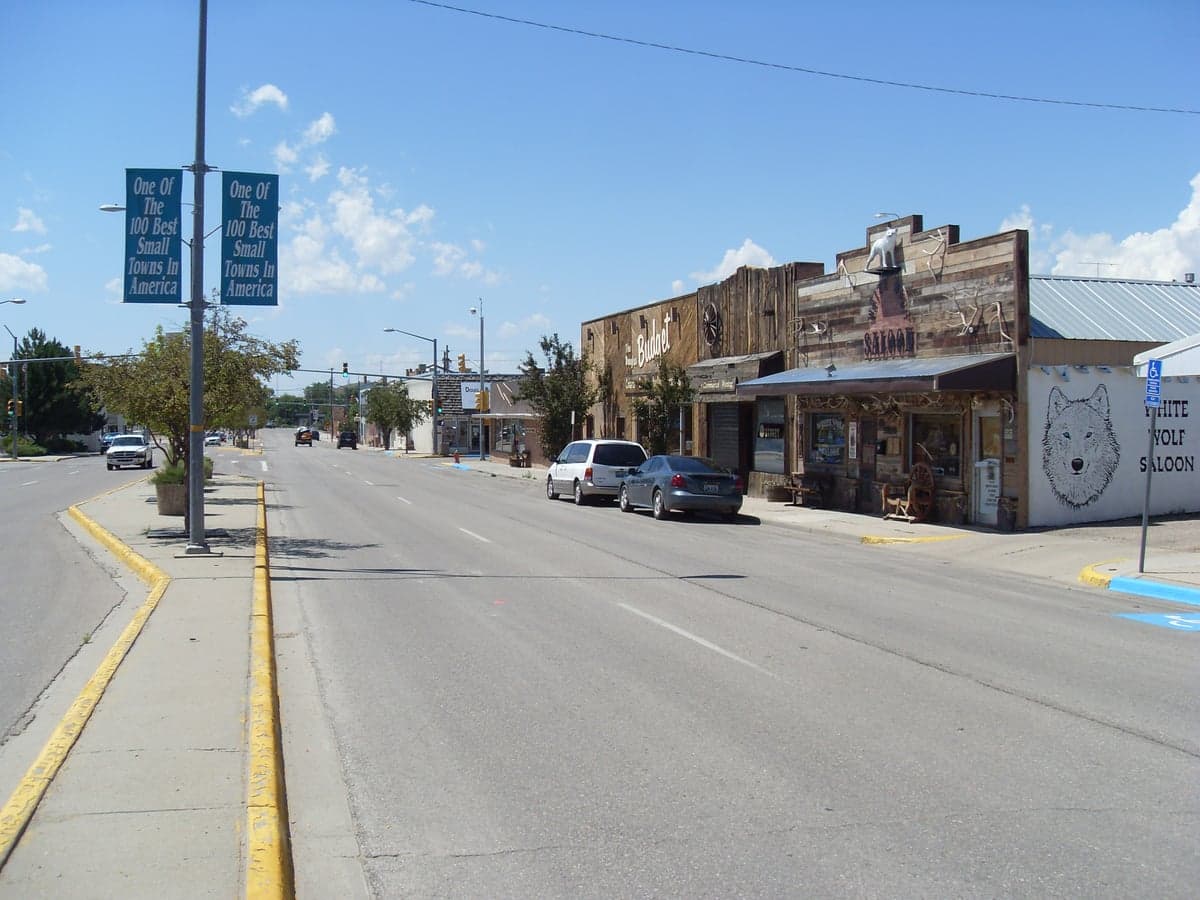
Photo: Wikipedia
Strategic Assessment of Douglas, WY
Strong survivability profile. Good buffer from population centers, with manageable environmental and tactical risks.
What does the Strategic Assessment tell us?
Our Strategic Assessment grades tactical survivability of an area. Major population centers, military targets, fallout zones, natural disasters, and border exposure all drive risk — lower exposure means a more defensible position in a crisis.
This is heavily inspired by Joel Skousen's Strategic Relocation book. Highly recommended you checkout the book ($)What does this tell us?
Our Strategic Assessment grades tactical survivability of an area. Major population centers, military targets, fallout zones, natural disasters, and border exposure all drive risk — lower exposure means a more defensible position in a crisis.
This is heavily inspired by Joel Skousen's Strategic Relocation book. Highly recommended you checkout the book ($)Strategic Pillars

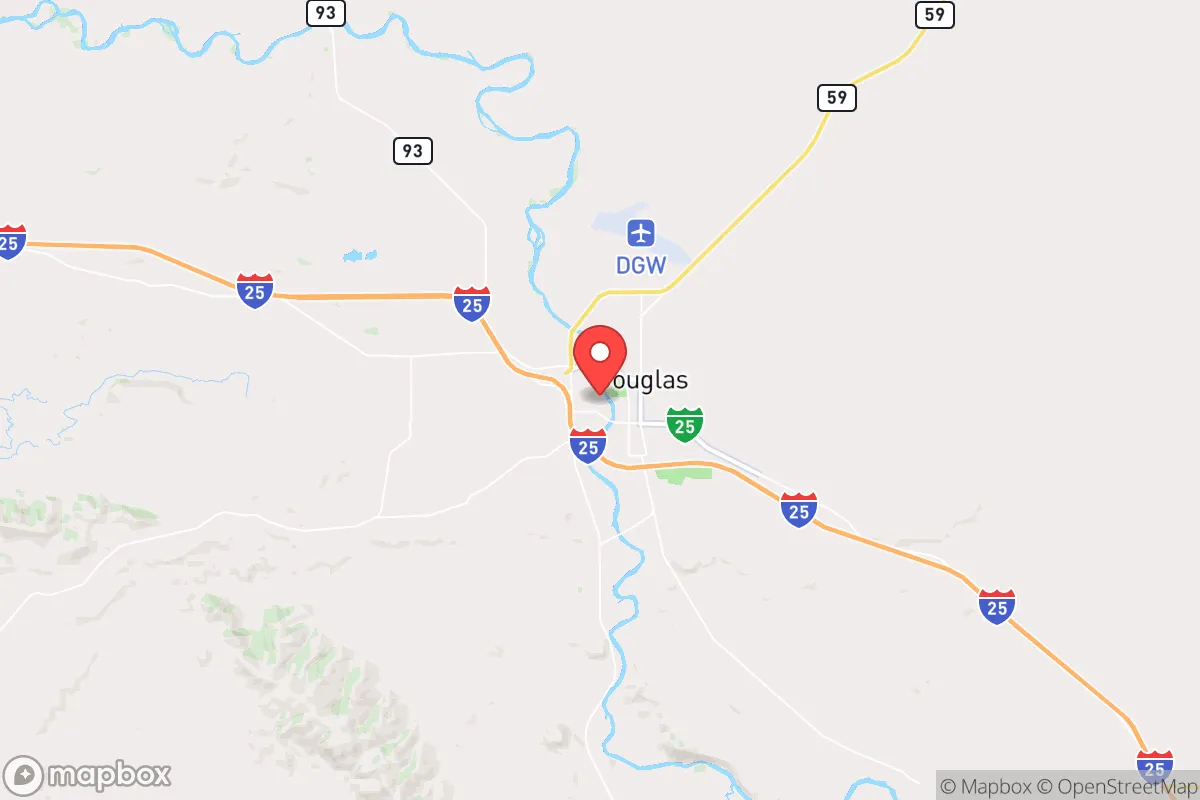
Key Distances
Regional Safe Places
Below is our recommended "safe zones" in Wyoming and the surrounding area based on our strategic heuristics. For most people, it's unrealistic to live in a “safe zone” full-time due to work, family or other personal reasons. They tend to be more rural. However, many of these areas are perfect for second homes and retreat properties that double as a vacation home or even a short-term rental.
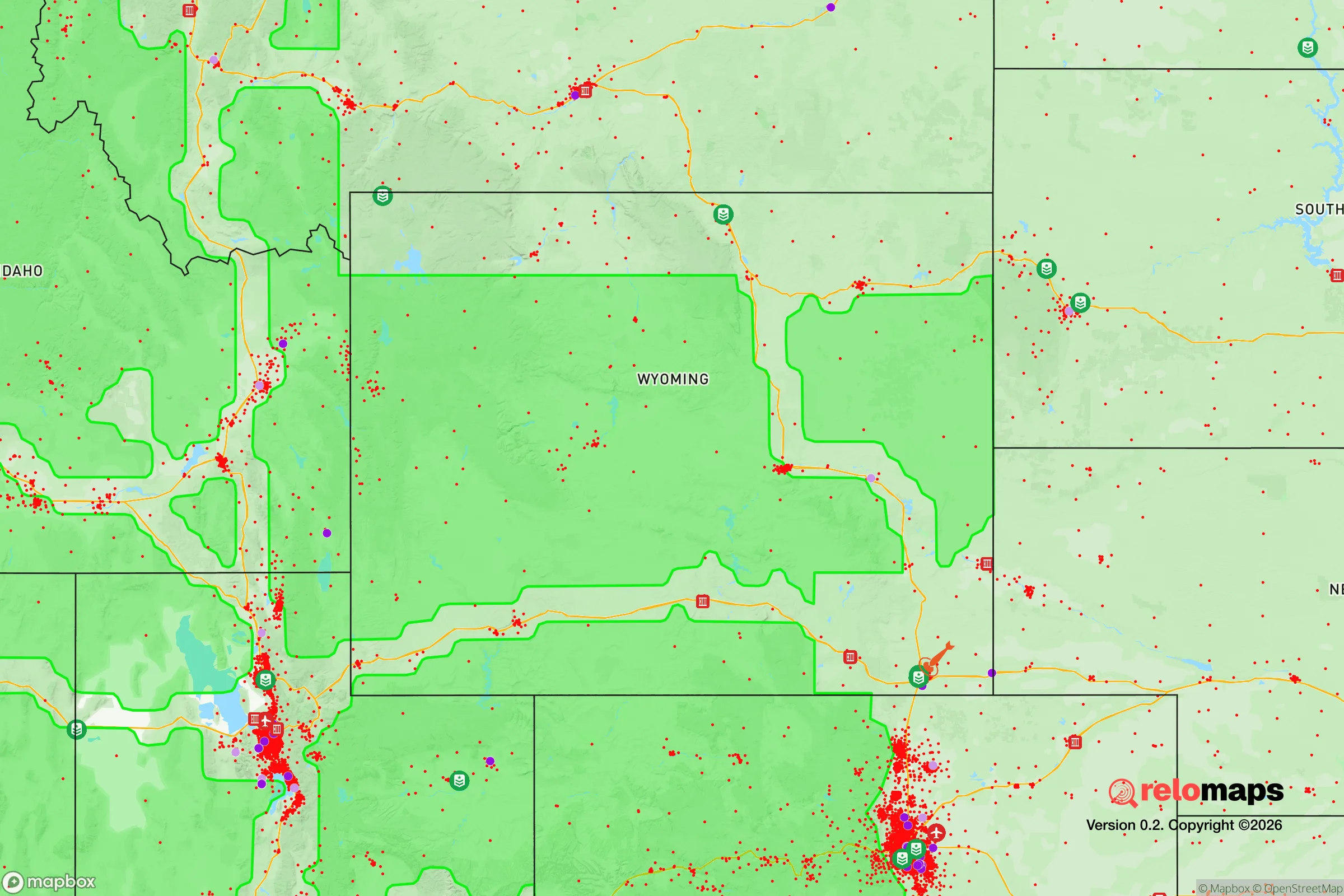
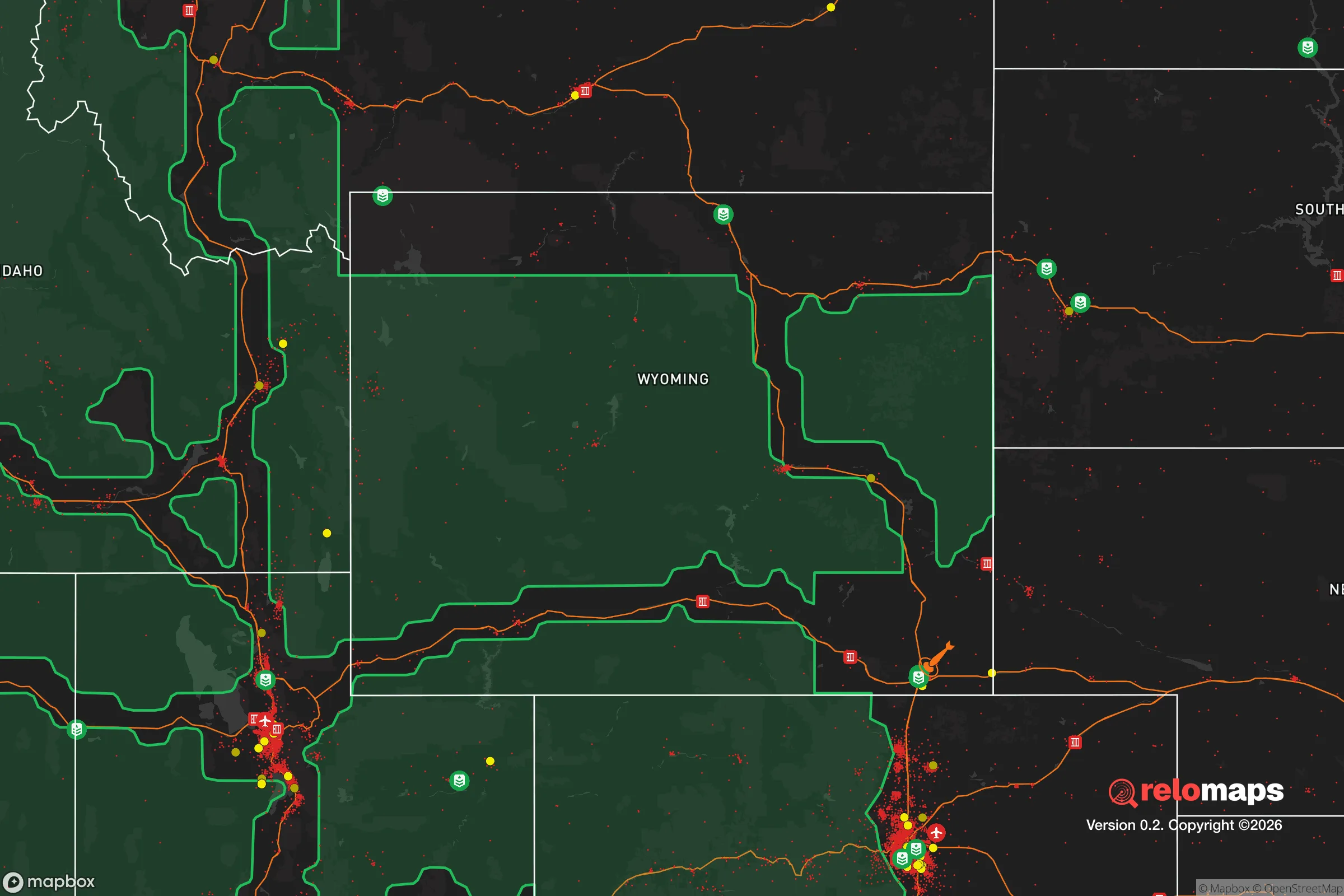


Important Note: For informational purposes only. This does not mean nothing bad ever happens in the green zones. Please use common sense. This is based on public data and modeled with AI. We tried to take a conservative approach but mistakes happen. We update this regularly as new information becomes available.
Solar Generator Recommendations
Backup power matters more here than in safer locations. We've picked three solar generators across budgets and capacity tiers — start with the budget unit if you only need a few essentials, or step up if you want to run a fridge and HVAC for days at a time.

Jackery Portable Power Station Explorer 300
Budget OptionPower on the Go: Weighing only 11 lbs, it's convenient to set up and store with book-sized foldable solar panels

BLUETTI Portable Power Station AC180
Designed for both indoor and outdoor scenarios, AC180 is highly capable as it has a robost capacity and continuous output power.

EF ECOFLOW DELTA Pro Ultra Power Station
Upgraded PickEcoFlow DELTA Pro Ultra is a whole-home energy system designed to grow with your family. Integrated with the Smart Home Panel 2, it scales to meet your evolving energy needs — keeping your home powered, intelligent, and secure through every stage of life.
We earn a commission, at no additional cost to you.
Strategic Assessment Analysis
Douglas, Wyoming, sits as a quiet, hard-to-reach node on the high plains, offering a combination of geographic isolation and logistical connectivity that makes it a serious candidate for a strategic relocation. For those thinking in terms of resilience—civic unrest, supply chain disruptions, or larger-scale national instability—this town of roughly 6,500 people checks several boxes that more crowded, politically volatile areas simply cannot. Its position along the North Platte River, its distance from major population centers, and its status as a regional transportation hub give it a baseline of survivability that is worth a hard look.
Geographic isolation and the strategic value of the high plains
Douglas sits in Converse County, roughly 50 miles east of Casper and 130 miles north of Cheyenne. That distance from the Front Range urban corridor—Denver, Colorado Springs, Fort Collins—is a major asset. In a scenario where civil unrest or mass casualty events cascade from larger cities, Douglas is far enough off the main arteries to avoid the initial shockwave. The town is served by Interstate 25, but the surrounding terrain is open, semi-arid plains and rolling hills, not dense forest or mountain passes that could become chokepoints. This openness is a double-edged sword: it provides clear lines of sight and makes approach detection easier, but it also offers little natural cover. The North Platte River runs through town, providing a reliable surface water source that is not dependent on fragile municipal infrastructure. The area's elevation—around 4,800 feet—means a shorter growing season and harsher winters, but also lower population density and less competition for resources. The nearby Thunder Basin National Grassland and Medicine Bow National Forest offer additional buffer zones and potential foraging or timber resources, though they are not heavily forested.
Risk exposure, fallout proximity, and what to watch for
No location is risk-free, and Douglas has its own set of exposures. The most significant is its proximity to the Wyoming Interstate 25 corridor, which could become a movement route for displaced populations or military convoys during a crisis. The town itself is not a primary target for any strategic strike—there are no major military bases, nuclear facilities, or high-value industrial plants within the immediate area. However, the nearby F.E. Warren Air Force Base near Cheyenne, which houses intercontinental ballistic missile silos, is roughly 130 miles south. In a nuclear exchange scenario, that base and its associated missile fields could be primary targets. Douglas sits outside the likely blast zones, but fallout patterns depend entirely on wind direction. The prevailing winds in this region are from the west and southwest, meaning that a strike on Cheyenne or the missile fields could push fallout northeast—away from Douglas in most scenarios. Still, a worst-case wind shift could put the town in a downwind plume. The Bridger Coal Mine and Jim Bridger Power Plant near Rock Springs, about 150 miles west, are industrial targets of lower strategic value. The Wyoming State Capitol in Cheyenne is a symbolic target, but again, Douglas is far enough removed. The real risk is not a direct hit but the secondary effects: refugees, supply chain collapse, and the breakdown of law enforcement capacity in a rural county with limited personnel.
Practical resilience: food, water, energy, and defensibility
For a relocator thinking in terms of self-sufficiency, Douglas offers a workable baseline. The North Platte River is the primary water source, and it flows year-round. Municipal water comes from the river, but a private well or a river-access property would be far more resilient. The water table in the area is generally good, though well depths can vary. For food, the growing season is short—typically 110 to 120 frost-free days—but cold-hardy crops like potatoes, carrots, kale, and certain grains can work. Local ranching is the dominant agricultural activity, so beef and lamb are available from nearby producers. The Douglas Farmers Market operates seasonally, but for long-term resilience, establishing relationships with local ranchers and farmers before a crisis is key. The area's energy grid is served by Rocky Mountain Power, with coal and natural gas as primary sources. Solar potential is decent—the region gets over 260 sunny days per year—but winter snow cover can reduce output. A backup generator with a propane or diesel tank is a practical investment. Defensibility is moderate: the town's layout is spread out, with single-family homes on large lots. Rural properties outside city limits offer more standoff distance. The local Converse County Sheriff's Office has about 20 sworn deputies for the entire county, so response times in a crisis would be slow. A tight-knit neighborhood or a small group of like-minded families would be the most effective security arrangement. The Douglas Municipal Airport is a general aviation field that could serve as an evacuation or resupply point, but it is not a major cargo hub.
The overall strategic picture for a conservative relocator
Douglas, Wyoming, is not a fortress, but it is a solid, low-profile option for someone who wants to be out of the blast radius of major cities and political flashpoints. The town's political leanings are reliably conservative—Converse County voted heavily Republican in recent elections—and the local culture is self-reliant, rural, and suspicious of federal overreach. That cultural alignment matters when you are building a network of trusted neighbors. The trade-offs are real: harsh winters, limited medical infrastructure (the local hospital is a critical access facility with 25 beds), and a long drive to any major supply center. But for a single individual or a family willing to invest in off-grid capabilities—solar, well water, food storage, and a solid vehicle—Douglas offers a defensible position with room to breathe. The key is to arrive before the crisis, not during it. If you are looking for a place that is far enough from the chaos to buy you time, but close enough to a highway to move if needed, this high plains town deserves a spot on your short list.

* Values derived from national, state, county, city and local statistics and may differ in a specific area. Last updated: 2026-04-21T11:35:01.000Z
Narrative content on this page is AI-generated and may contain mistakes. Verify any details that matter before acting on them.
ReloMaps may earn a commission from affiliate links at no extra cost to you.

