
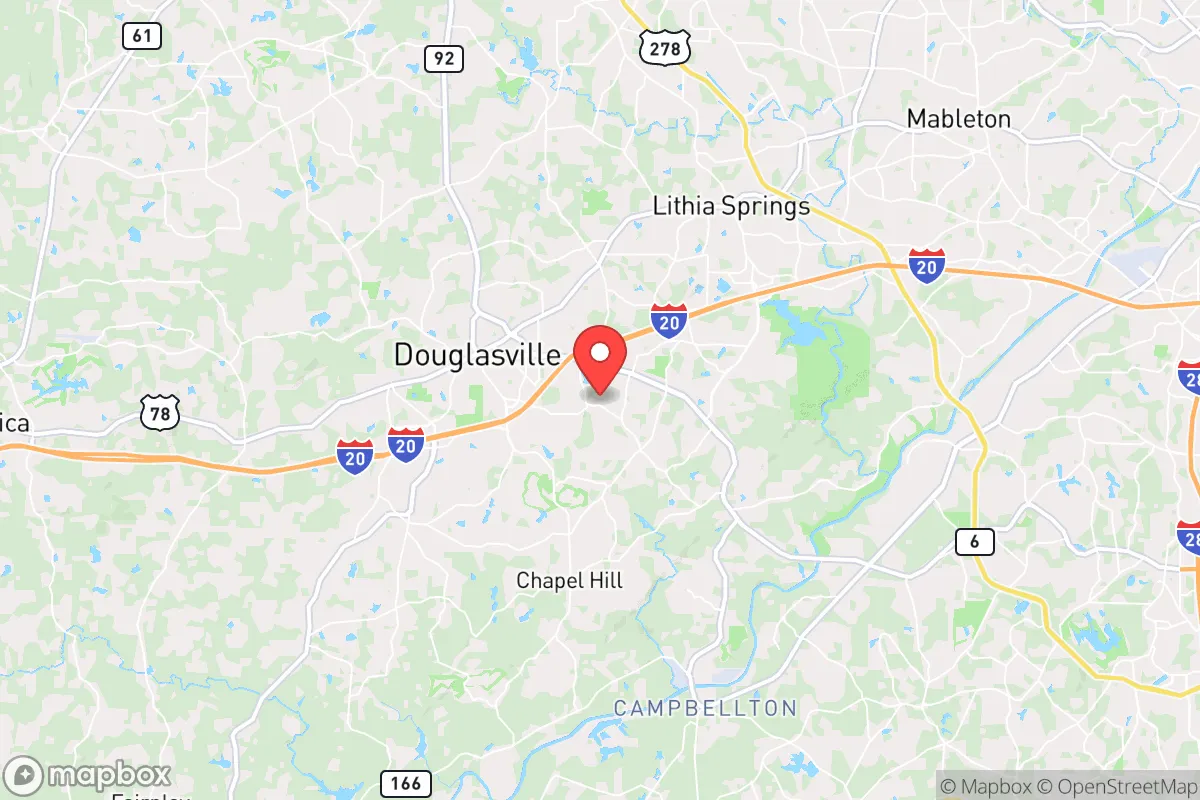
Photo: Wikipedia
Quality of Life in Douglasville, GA
A high quality of life with strong walkability, manageable living costs, healthy neighborhood signals, and solid amenity access.
What does Quality of Life tell us?
Quality of Life blends cost of living, nearby amenities, socioeconomic signals, and neighborhood character. City-level scores represent the whole municipality; individual neighborhoods can differ.
What does this tell us?
Quality of Life blends cost of living, nearby amenities, socioeconomic signals, and neighborhood character. City-level scores represent the whole municipality; individual neighborhoods can differ.
Cost of Living
20% above national average
The Real Cost of Living in Douglasville, GA for 2026
| Tier | Individual | Family (4) |
|---|---|---|
| Survival | $23k | $44k |
| Comfortable | $61k | $90k |
| Luxury | $120k+ | $186k+ |
| Elite (Top 5%) | $141k+ | $219k+ |
86%
The Area Signal
A metric tracking the socioeconomic signals of the area.
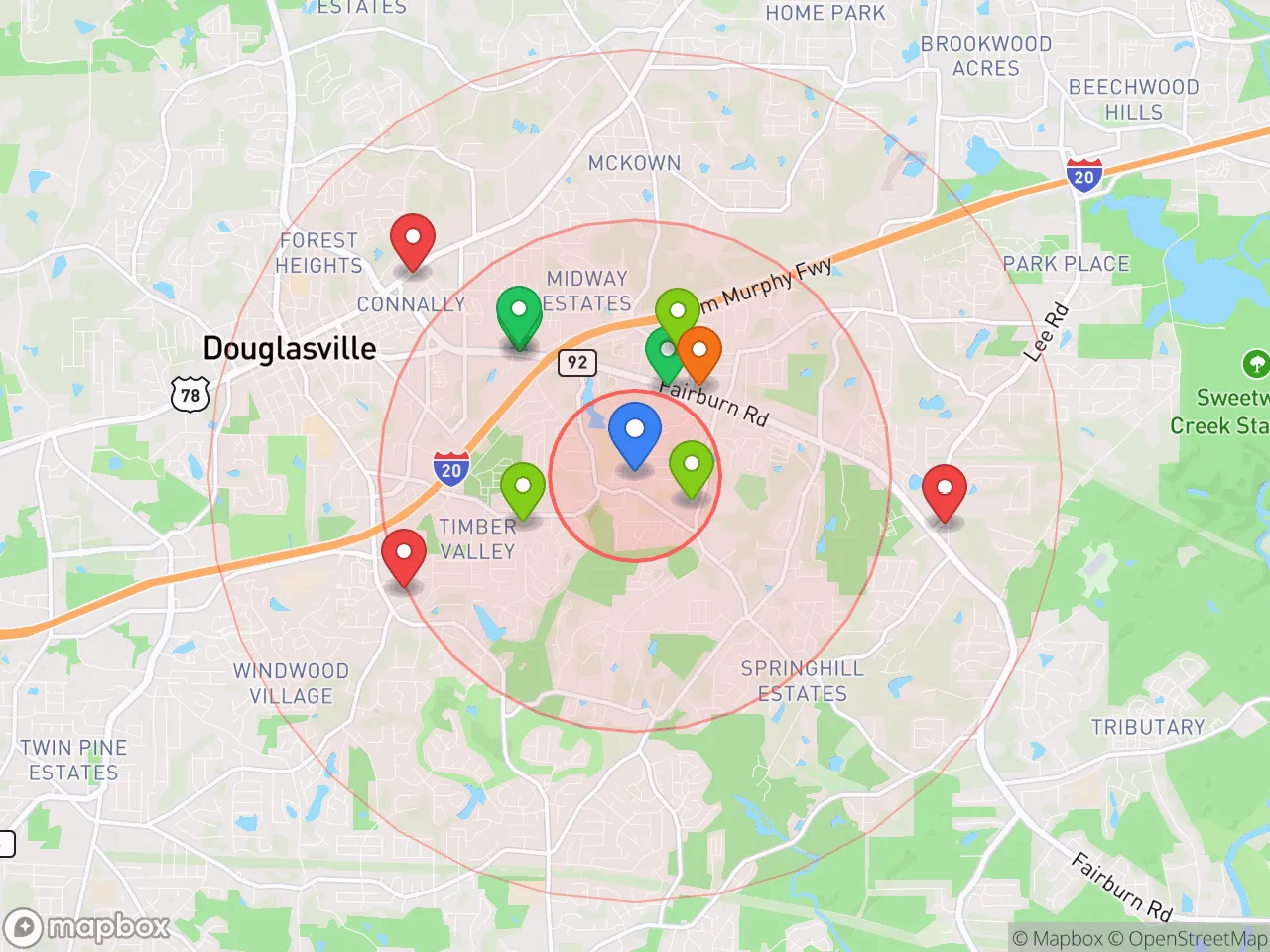
Hobbies
Explore the areaGroceries
6 within 10 miles
Gas
20 within 10 miles
Hospital
20 within 20 miles
Airport
ATL — Hartsfield–Jackson Atlanta International
Post Office
USPS — Douglasville, GA
Critical Amenities
Quality-of-Life Analysis
Douglasville, Georgia, presents a quality-of-life profile that blends suburban comfort with the economic gravity of metro Atlanta, attracting a mix of young families, long-term homeowners, and professionals who commute to the city. The area’s affluence is moderate compared to intown neighborhoods, with a median household income that supports a solidly middle-to-upper-middle-class lifestyle, though the cost of living here runs above the national average. Residents tend to value space, newer housing stock, and access to both retail corridors and outdoor recreation, making it a pragmatic choice for those who want Atlanta’s job market without its core density.
Cost of living and housing affordability compared to Atlanta and surrounding suburbs
Douglasville’s cost of living index sits at 120, meaning everyday expenses are roughly 20% higher than the U.S. average, though this is notably lower than intown Atlanta’s index of around 130–140. The median home value of $313,500 is significantly more attainable than the Atlanta metro median of roughly $400,000, and it undercuts closer-in suburbs like Smyrna or Marietta by $50,000 to $100,000. Renters face a median monthly rent of $1,457, which is about $200 less than the metro average and competitive with other west-side options like Austell or Lithia Springs. The trade-off for this relative affordability is a longer average commute of 32 minutes—driven largely by the I-20 corridor into downtown Atlanta—which residents accept in exchange for larger lots and newer construction. Property taxes in Douglas County run around 1.1% of assessed value, slightly below the Georgia state median, which helps keep monthly housing costs manageable for both buyers and long-term owners.
Schools, shopping, and daily life for families and professionals
Daily life in Douglasville revolves around a mix of big-box retail along Thornton Road and Chapel Hill Road, plus the historic downtown square, which hosts a farmers market and seasonal festivals like the Douglasville Art Walk. The Douglas County School System operates 35 schools, with Chapel Hill High School and Alexander High School consistently ranking among the top performers in the district, though overall graduation rates hover near 82%—below the state average of 84%. For recreation, Hunter Park and Deer Lick Park offer sports fields, walking trails, and a splash pad, while the nearby Sweetwater Creek State Park provides 2,500 acres of hiking and kayaking within a 15-minute drive. The area’s dining scene leans toward chain restaurants and local Southern spots like Mack’s Bar-B-Q, with limited fine-dining options, which pushes some residents toward Smyrna or downtown Atlanta for date-night outings. Healthcare access is solid, with WellStar Douglas Hospital providing emergency and specialty care, though complex cases often require a trip to WellStar Kennestone in Marietta.
Douglasville works best for people who prioritize space and a slower pace over walkability and cultural density. Families with school-age children will find affordable homes and decent schools, while remote workers or those with flexible schedules can sidestep the worst of the I-20 congestion. Professionals who need to be in an Atlanta office five days a week should weigh the 32-minute commute carefully, as peak-hour traffic can stretch that to 45–60 minutes. Retirees on fixed incomes may find the cost-of-living index challenging, but the area’s lower home prices and proximity to medical facilities make it a viable option for those downsizing from pricier intown neighborhoods.

Crime in Douglasville, GA
Crime rates similar to the national median for U.S. locations.
Violent CrimeViolent Crime Analysis
Property CrimeProperty Crime Analysis
Crime Analysis
Douglasville, Georgia, reports a violent crime rate of 491.3 incidents per 100,000 residents and a property crime rate of 3,588.6 per 100,000, figures that place it above both the national and Georgia state averages for safety. As a western suburb of Atlanta, Douglasville’s crime statistics reflect the pressures of being part of a large metropolitan area where progressive judicial policies in the broader region can contribute to higher recidivism and reduced public safety. These numbers indicate that residents face a notably higher risk of both violent and property crime compared to typical American suburbs.
Crime in context
Douglasville’s violent crime rate of 491.3 per 100,000 is roughly 40% higher than the national average of approximately 380 per 100,000 and significantly exceeds Georgia’s statewide rate of about 400 per 100,000. Property crime in Douglasville, at 3,588.6 per 100,000, is nearly double the national average of roughly 1,950 per 100,000 and well above Georgia’s average of around 2,500 per 100,000. These elevated rates are consistent with trends seen in many Atlanta-adjacent communities, where the influence of progressive district attorneys in the metro area—who often prioritize diversion programs and reduced sentencing—can lead to more offenders cycling back onto the streets. For context, Douglasville’s violent crime is comparable to larger cities like Memphis or Baltimore when adjusted for population, while its property crime rate mirrors that of high-theft urban corridors.
What residents experience
For daily life in Douglasville, the high property crime rate means residents frequently deal with vehicle break-ins, package theft, and residential burglaries, particularly in areas near major thoroughfares like I-20 and Thornton Road. Violent crime, while less common, includes aggravated assault and robbery, often concentrated around commercial districts and apartment complexes. The progressive judicial philosophy common in the Atlanta metro area—where judges and district attorneys may favor plea deals and early release over incarceration—directly impacts Douglasville by reducing the deterrent effect of prosecution. This approach, while sympathetic to offenders, results in more criminals remaining in the community, undermining justice for victims and increasing the likelihood of repeat offenses. Residents report that police response times can be slow in outlying neighborhoods, and community trust in the justice system is strained by perceptions that offenders face minimal consequences.
Neighborhood-level variation is significant in Douglasville. Areas west of I-20, such as the Chapel Hill and Fairburn Road corridors, tend to have lower crime rates, while the downtown core and neighborhoods near the Douglasville Mall experience higher incident densities. Gated communities and newer subdivisions in the southern part of the city report fewer property crimes, but no area is immune to the spillover effects of metro Atlanta’s lenient justice policies. Prospective residents should research specific street-level crime maps and consider that Douglasville’s safety challenges are deeply tied to the broader progressive judicial environment of the region, which prioritizes offender rehabilitation over public protection.
* Values derived from national, state, county, city and local statistics and may differ in a specific area. Last updated: 2026-04-30T13:12:51.000Z
Narrative content on this page is AI-generated and may contain mistakes. Verify any details that matter before acting on them.
ReloMaps may earn a commission from affiliate links at no extra cost to you.

