
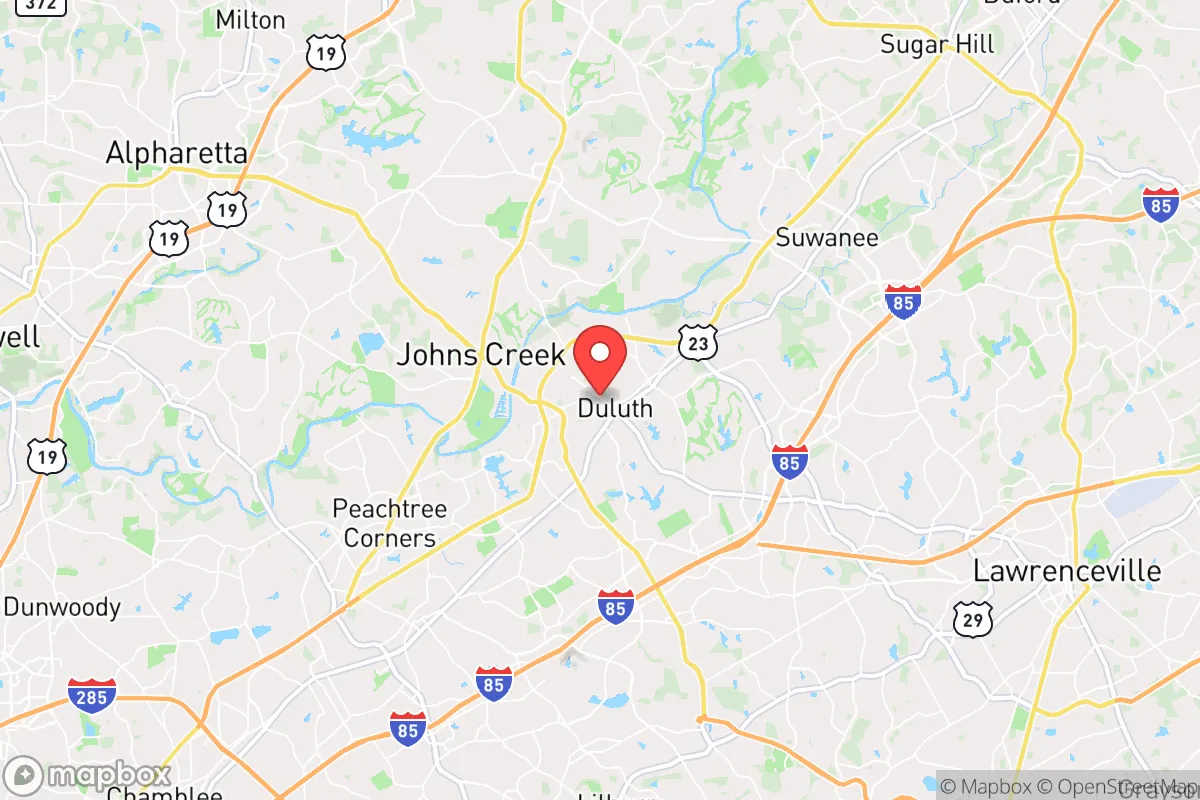
Photo: Wikipedia
Personal Sovereignty in Duluth, GA
Viable for self-reliance. Generally workable, though some barriers may limit total independence.
What does Personal Sovereignty tell us?
Personal Sovereignty measures your capacity for self-reliance and independence with minimal government friction. Higher scores mean fewer barriers between you and the way you want to live... but it assumes you have the space you need and good neighbors.
What does this tell us?
Personal Sovereignty measures your capacity for self-reliance and independence with minimal government friction. Higher scores mean fewer barriers between you and the way you want to live... but it assumes you have the space you need and good neighbors.
State Policy
Energy independence: Importer (12% of energy produced in-state)
Personal Liberty
Homesteading

Personal Liberty Analysis
For the strategic-minded individual or family evaluating Duluth, Georgia through a lens of personal sovereignty, the environment presents a mixed but generally favorable picture. Located in Gwinnett County, a rapidly diversifying suburban hub northeast of Atlanta, Duluth offers a baseline of state-level protections that are among the strongest in the Southeast for gun rights and property autonomy, yet it sits within a county that has seen increasing local government activity and tax expansion. The core tension here is between Georgia’s robust constitutional framework—which heavily favors individual liberty—and the creeping regulatory and fiscal pressures of a growing metropolitan area. For those prioritizing self-reliance, preparedness, and minimal government overreach, Duluth is a viable option only if you understand exactly where the state’s protections end and local ordinances begin.
Tax burden and regulatory posture in Gwinnett County
Georgia’s state-level tax environment is a clear positive for sovereignty-minded residents. There is no state income tax on Social Security benefits, and the flat state income tax rate is set to decline to 4.99% by 2027, with further reductions possible. Property taxes in Gwinnett County, however, are a different story. The county’s millage rate, combined with school and city taxes, results in an effective property tax rate around 1.2% to 1.4% of assessed value—higher than many rural Georgia counties but still below the national average. The key regulatory concern is Gwinnett’s active zoning and development code. The county has a reputation for strict land-use regulations, particularly in unincorporated areas and within Duluth city limits. Homestead exemptions are available but require proactive filing, and the county’s tax assessor has been aggressive in reappraisals, meaning property tax bills can rise significantly without a vote. For a prepper or survivalist, the biggest regulatory hurdle is the county’s building code and permitting process, which can delay or complicate additions like storm shelters, workshops, or auxiliary structures. There is no county-level income tax, which is a plus, but sales tax in Duluth is 8.9% (state plus local option), making large purchases like generators or bulk supplies more expensive than in lower-tax rural areas.
Self-defense and gun law specifics in Duluth and Georgia
Georgia is a “constitutional carry” state, meaning no permit is required to carry a concealed or open handgun for anyone legally allowed to possess a firearm. This is a bedrock sovereignty protection. Duluth itself has no local gun ordinances that exceed state law, so the city cannot ban carry in parks or restrict magazine capacity. The state preempts all local firearm regulations, which is a critical safeguard against the kind of patchwork restrictions seen in states like California or New York. Stand-your-ground and castle-doctrine laws are fully in effect, with no duty to retreat in any place where you are legally present. For those concerned about self-defense in a home invasion or civil unrest scenario, Georgia law provides strong civil and criminal immunity for justified use of force. The only notable limitation is that private businesses can post “no guns” signs, and those signs carry the force of law in Georgia (a violation can lead to trespassing charges). Magazine capacity, firearm types (including AR-15s), and suppressor ownership are all legal under state law, though suppressors require a federal tax stamp. For the survivalist, Georgia’s firearm laws are among the most permissive in the nation, and Duluth’s compliance with state preemption means no local surprises.
Self-reliance and homesteading viability: lot sizes, zoning, and off-grid feasibility
This is where Duluth’s suburban character creates the most friction for a sovereignty-focused lifestyle. The typical residential lot in Duluth ranges from 0.2 to 0.5 acres, with newer subdivisions often featuring smaller lots and strict HOA covenants. Raising livestock, keeping chickens, or maintaining a substantial garden is heavily restricted within city limits. Duluth’s zoning code permits backyard chickens only on lots of one acre or more, and roosters are prohibited. Larger livestock like goats or pigs are not allowed on standard residential lots. Off-grid living is effectively impossible within city limits: the city requires connection to municipal water and sewer, and solar panels are permitted but must comply with HOA aesthetic guidelines in many neighborhoods. Rainwater collection is legal under Georgia state law (HB 1031), but local HOAs can restrict visible barrels or systems. For the prepper seeking true self-reliance—growing food, storing water, generating power independently—Duluth’s zoning and HOA environment is a significant obstacle. The best option is to look at unincorporated Gwinnett County just outside Duluth’s city limits, where lot sizes can reach 1-3 acres and county zoning is more permissive for outbuildings, gardens, and alternative energy. Even there, however, the county requires permits for structures over 200 square feet and has setback requirements that limit dense self-sufficient setups.
Personal liberties: parental rights, medical autonomy, speech, and property
Georgia has been a battleground for parental rights, and the current legal landscape is favorable. The state’s “Parents’ Bill of Rights” (HB 1178, passed in 2022) gives parents explicit authority over their children’s education, healthcare, and religious upbringing. This includes the right to opt out of any school curriculum or activity, and the right to access all educational and medical records. Duluth’s public schools (Gwinnett County Public Schools) are large and diverse, but parental rights are legally protected, and the district has not been aggressive in overriding parental consent for sensitive topics. Medical autonomy is more nuanced: Georgia does not have a state-level right-to-try law for terminally ill patients that is as expansive as some other states, but it does allow for the use of investigational drugs under federal law. Vaccine mandates are prohibited for public employees and contractors, and there is no state-level vaccine passport requirement. Free speech protections are strong, with no local hate speech ordinances that would chill political or religious expression. Property rights are protected by Georgia’s “private property rights” act, which limits eminent domain to traditional public uses (not economic development). For the sovereignty-minded, the biggest concern is the potential for future local ordinances on noise, light pollution, or “public health” emergencies that could restrict movement or assembly. Gwinnett County has not enacted any such measures since 2020, but the political shift in the county (from reliably red to competitive) means vigilance is warranted.
Overall, Duluth offers a solid foundation of state-level sovereignty protections—especially in gun rights, parental authority, and tax structure—but the local environment in Gwinnett County introduces friction for those seeking maximum self-reliance. Compared to deep-blue metro areas like Atlanta proper or coastal California, Duluth is a clear win for personal liberty. Compared to rural north Georgia counties like Pickens or Gilmer, however, Duluth falls short in homesteading feasibility, regulatory burden, and community homogeneity. For the single individual or family who values constitutional carry, low state income tax, and strong parental rights, but is willing to navigate HOA restrictions and suburban zoning, Duluth is a strategic compromise. For the serious prepper who wants to live off-grid, raise livestock, and minimize government interaction, the surrounding exurbs or rural counties are a better fit. The key takeaway: Duluth’s sovereignty is real but bounded—know the local rules before you buy, and always check the HOA covenants before signing.

* Values derived from national, state, county, city and local statistics and may differ in a specific area. Last updated: 2026-04-30T06:49:37.000Z
Narrative content on this page is AI-generated and may contain mistakes. Verify any details that matter before acting on them.
ReloMaps may earn a commission from affiliate links at no extra cost to you.

