Photo: Wikipedia
Demographics of Duluth, GA
Affluence Level in Duluth, GA
An upper-middle-class area. Household wealth, education levels, and homeownership run ahead of national benchmarks.
People of Duluth, GA
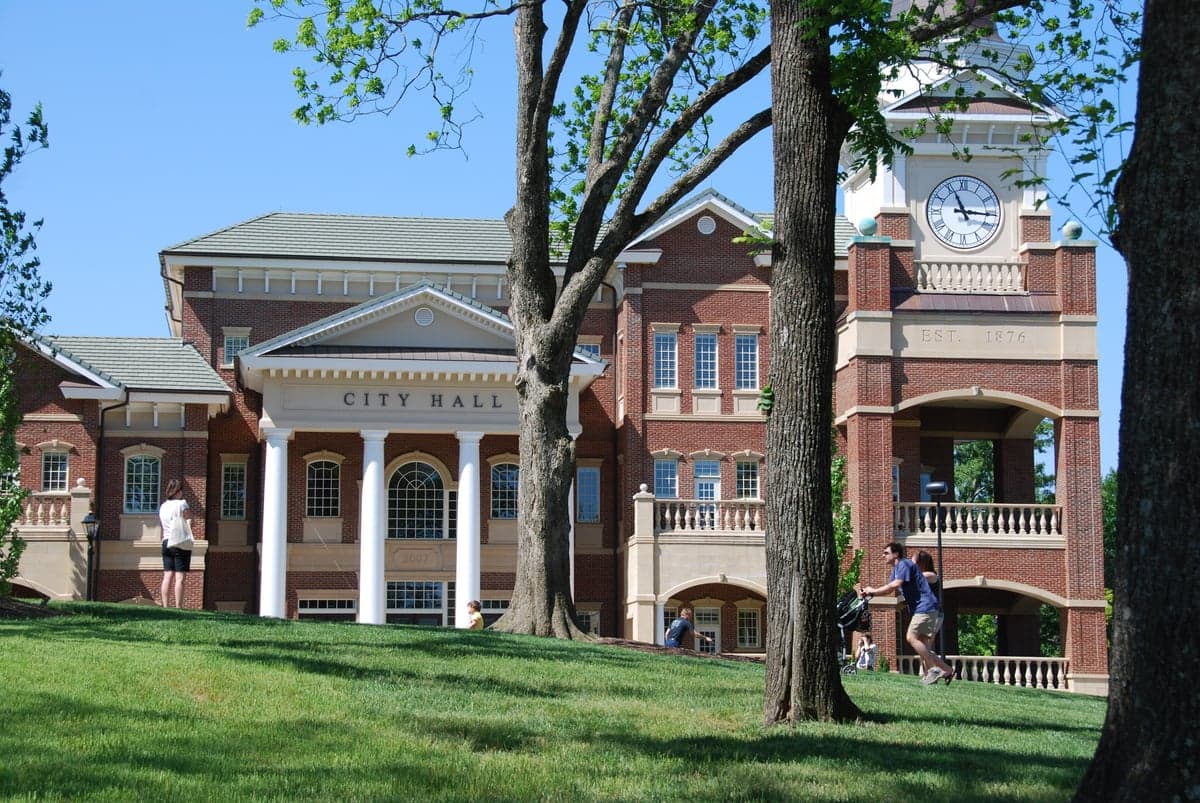
Duluth, Georgia, is a city of roughly 32,000 residents that has transformed from a small railroad town into one of metro Atlanta’s most ethnically diverse suburbs. Its population today is a mosaic: no single racial or ethnic group holds a majority, with White residents at 33.2%, Black residents at 23.0%, East and Southeast Asian communities at 16.8%, Hispanic residents at 15.2%, and Indian-subcontinent residents at 6.6%. Over half of adults hold a college degree, and the city’s identity is shaped by a blend of long-established Southern families, second-ring suburbanites, and a substantial immigrant population drawn by jobs, schools, and affordable housing.
How the city was settled and grew
Duluth’s origins trace to the 1820s, when the area was part of the Cherokee Nation. After the Cherokee removal via the Trail of Tears in the 1830s, white settlers from the Carolinas and Virginia moved in, drawn by land lotteries and the promise of cotton farming. The city’s modern footprint began in 1871 with the arrival of the Richmond & Danville Railroad (later the Southern Railway). The railroad depot, located near what is now the Old Town Duluth neighborhood, turned the settlement into a shipping point for cotton and timber. By 1900, Duluth was a small, predominantly white farming community of a few hundred people. The first significant non-white population arrived during the early 20th century: Black families, many former sharecroppers, settled in the Rogers Bridge area along the Chattahoochee River, working on farms and in the railroad yards. This neighborhood remained a distinct Black enclave through the Jim Crow era. The city incorporated in 1921 with fewer than 500 residents, and its population grew slowly through the mid-20th century, reaching roughly 2,000 by 1960.
Modern era (post-1965)
Duluth’s demographic transformation began in earnest after the 1965 Immigration and Nationality Act and accelerated with Atlanta’s suburban boom in the 1980s and 1990s. The construction of Interstate 85 and Georgia 120 made Duluth a commuter suburb for jobs in Atlanta and Gwinnett County’s growing tech and logistics sectors. The first major wave of new residents were white middle-class families moving from inside the Perimeter to larger homes in subdivisions like River Plantation and Sweetwater, built in the 1970s and 1980s. By 1990, Duluth’s population had jumped to over 9,000, and the city began attracting Asian immigrants, particularly Korean and Chinese families, drawn by the Gwinnett County school system and a growing network of ethnic churches and businesses. These communities concentrated in the Pleasant Hill Road corridor, which today anchors a dense cluster of Asian supermarkets, restaurants, and professional services. In the 2000s, a second wave of Black residents arrived, many from inside Atlanta and from other parts of the South, settling in newer subdivisions like Rivermont and the Berkley Lake area. Hispanic growth, primarily Mexican and Central American, accelerated after 2000, with families moving into apartments and starter homes along the Peachtree Industrial Boulevard corridor. The Indian-subcontinent population, largely professionals in IT and healthcare, grew rapidly after 2010, clustering in the Old Peachtree Road area near the Gwinnett County line. By 2020, Duluth had become a majority-minority city, with White residents falling below 40% for the first time.
The future
Duluth’s population is projected to continue diversifying, though the pace of change is slowing. The White share is expected to stabilize around 30-32% as older residents age in place and younger white families continue to move to exurbs further north. The East and Southeast Asian population, currently the fastest-growing segment, is likely to plateau as the Pleasant Hill Road corridor reaches saturation and second-generation families move to newer suburbs like Suwanee and Johns Creek. The Indian-subcontinent community, still relatively small at 6.6%, is growing steadily and may double its share within a decade as tech employers expand in Gwinnett County. Hispanic growth is expected to continue but at a slower rate, with families moving into established neighborhoods like Rogers Bridge and the area around Bunten Road. The Black population is stable, with most growth coming from natural increase rather than new in-migration. The city is not homogenizing; instead, it is tribalizing into distinct enclaves, with each group maintaining its own commercial and religious institutions. The Pleasant Hill Road area remains overwhelmingly East and Southeast Asian, while Old Town Duluth is increasingly white and affluent, and the Rogers Bridge area retains a Black plurality. For a new resident, Duluth offers a genuinely multicultural environment where no single group dominates, but where neighborhoods still feel distinct. The city’s future is one of stable diversity, with strong schools and a growing tax base, but also with the challenge of integrating these separate communities into a shared civic identity.
For a conservative-leaning mover, Duluth represents a place where traditional suburban values—good schools, low crime, and stable property values—coexist with a high degree of ethnic diversity. The city is not a melting pot but a mosaic of distinct communities, each with its own character. New arrivals should expect to find their own niche, whether in a predominantly white subdivision, a Korean church community, or a Hispanic neighborhood, while still sharing the same city services and school district. The population is stable and growing modestly, and the city’s trajectory points toward continued diversification without rapid upheaval.

* Values derived from national, state, county, city and local statistics and may differ in a specific area. Last updated: 2026-04-30T06:49:37.000Z
Narrative content on this page is AI-generated and may contain mistakes. Verify any details that matter before acting on them.
ReloMaps may earn a commission from affiliate links at no extra cost to you.

