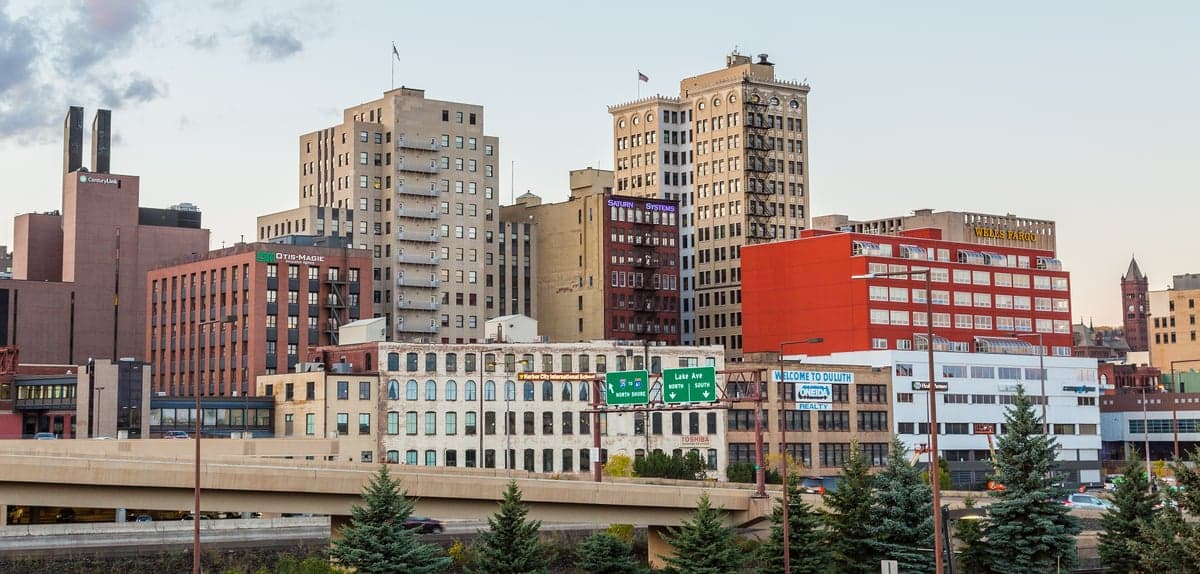
Photo: Wikipedia
Strategic Assessment of Duluth, MN
Workable tactical position. Some exposure to population density or targets, but generally defensible in a crisis.
What does the Strategic Assessment tell us?
Our Strategic Assessment grades tactical survivability of an area. Major population centers, military targets, fallout zones, natural disasters, and border exposure all drive risk — lower exposure means a more defensible position in a crisis.
This is heavily inspired by Joel Skousen's Strategic Relocation book. Highly recommended you checkout the book ($)What does this tell us?
Our Strategic Assessment grades tactical survivability of an area. Major population centers, military targets, fallout zones, natural disasters, and border exposure all drive risk — lower exposure means a more defensible position in a crisis.
This is heavily inspired by Joel Skousen's Strategic Relocation book. Highly recommended you checkout the book ($)Strategic Pillars

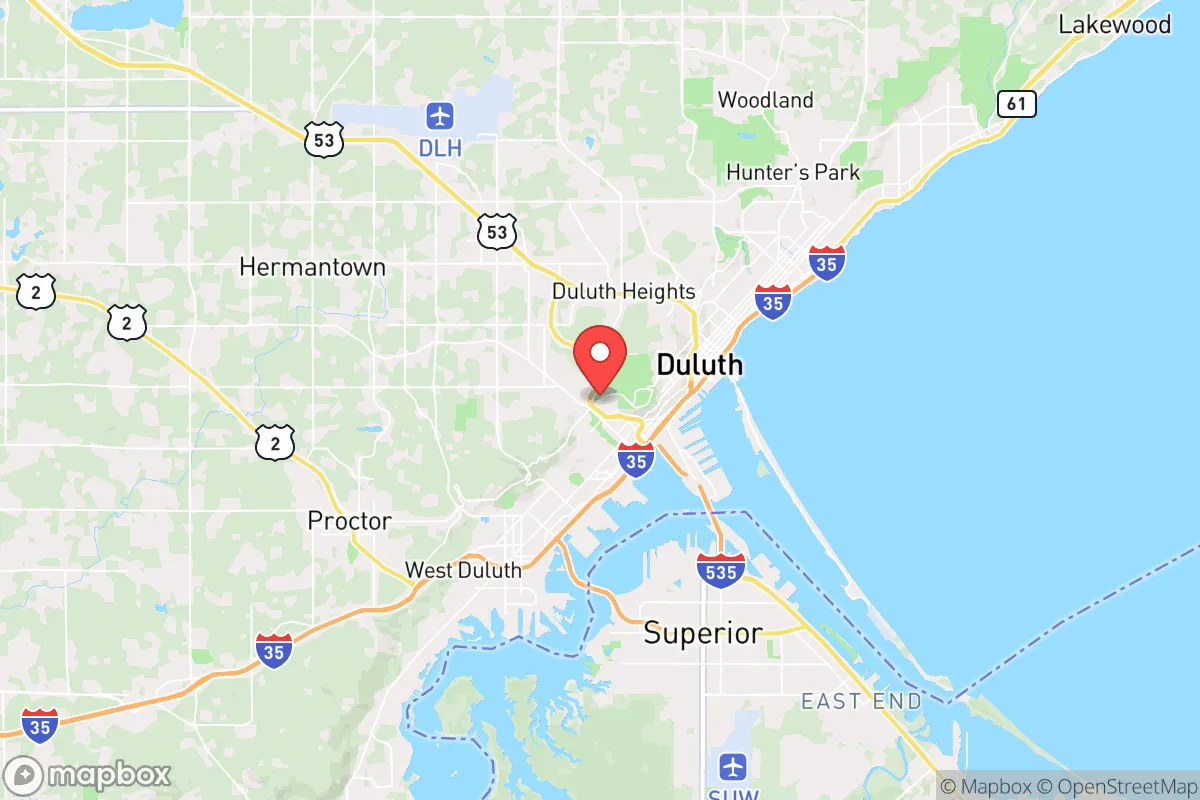
Key Distances
Regional Safe Places
Below is our recommended "safe zones" in Minnesota and the surrounding area based on our strategic heuristics. For most people, it's unrealistic to live in a “safe zone” full-time due to work, family or other personal reasons. They tend to be more rural. However, many of these areas are perfect for second homes and retreat properties that double as a vacation home or even a short-term rental.
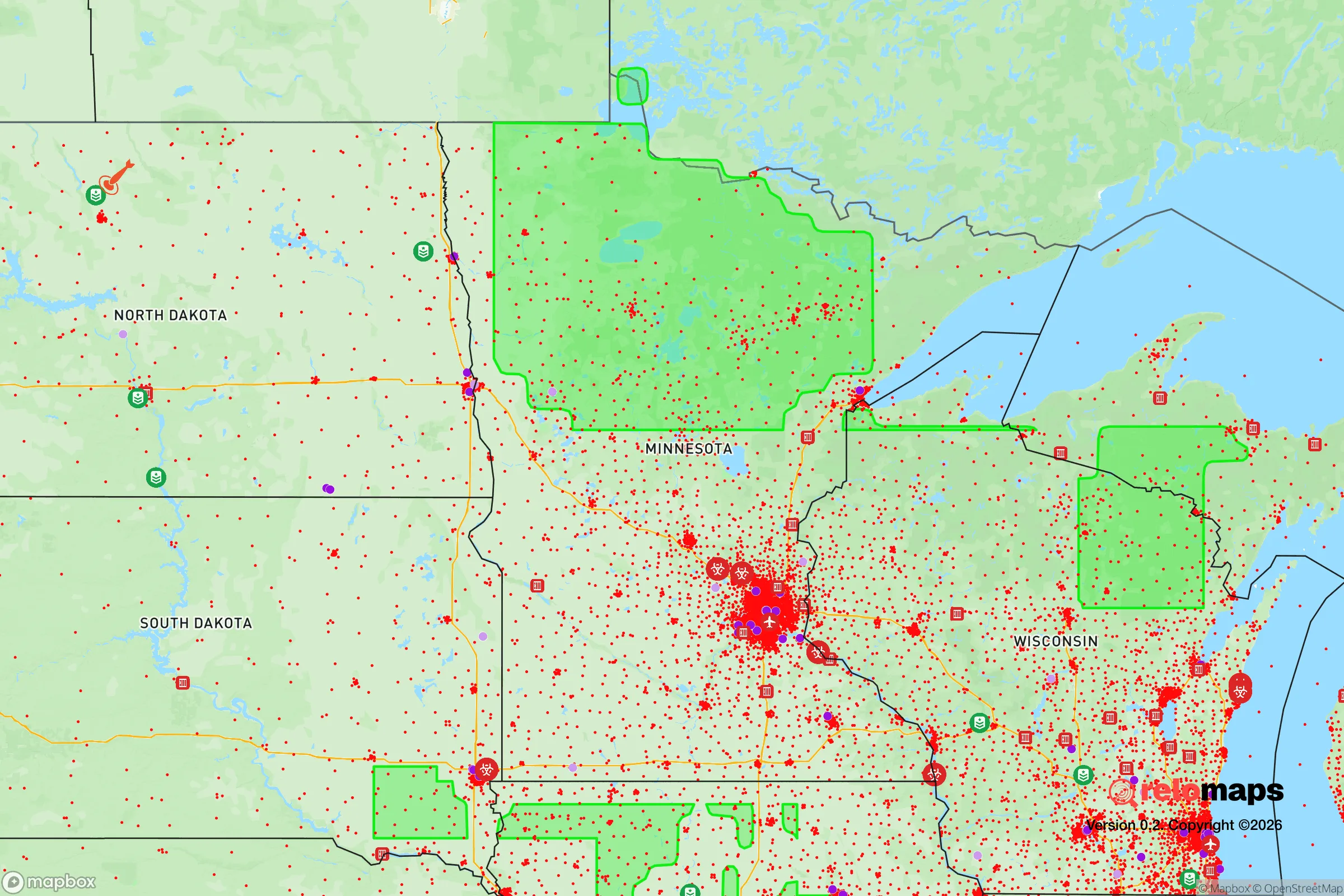
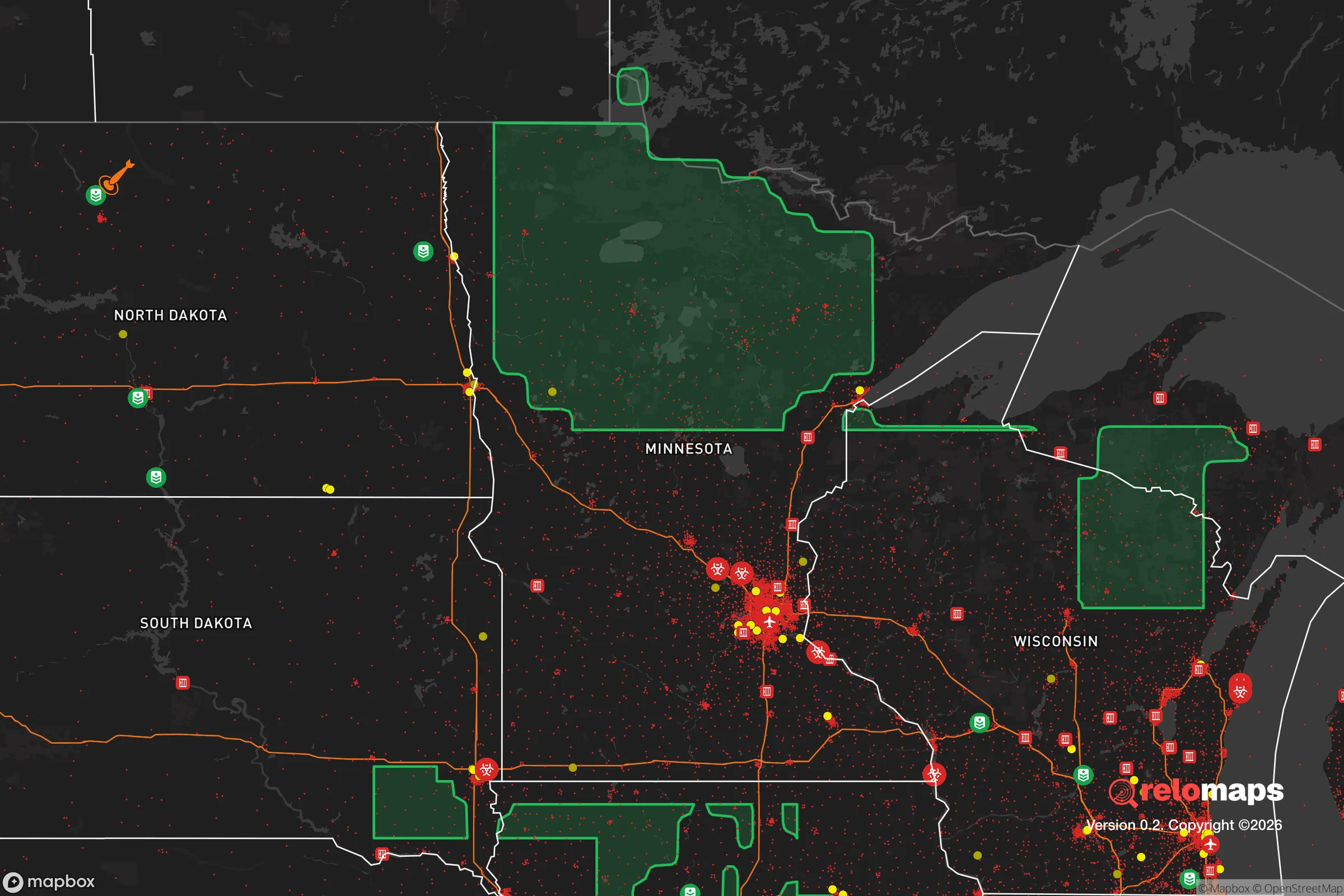


Important Note: For informational purposes only. This does not mean nothing bad ever happens in the green zones. Please use common sense. This is based on public data and modeled with AI. We tried to take a conservative approach but mistakes happen. We update this regularly as new information becomes available.
Solar Generator Recommendations
Backup power matters more here than in safer locations. We've picked three solar generators across budgets and capacity tiers — start with the budget unit if you only need a few essentials, or step up if you want to run a fridge and HVAC for days at a time.

Jackery Portable Power Station Explorer 300
Budget OptionPower on the Go: Weighing only 11 lbs, it's convenient to set up and store with book-sized foldable solar panels

BLUETTI Portable Power Station AC180
Designed for both indoor and outdoor scenarios, AC180 is highly capable as it has a robost capacity and continuous output power.

EF ECOFLOW DELTA Pro Ultra Power Station
Upgraded PickEcoFlow DELTA Pro Ultra is a whole-home energy system designed to grow with your family. Integrated with the Smart Home Panel 2, it scales to meet your evolving energy needs — keeping your home powered, intelligent, and secure through every stage of life.
We earn a commission, at no additional cost to you.
Strategic Assessment Analysis
Duluth, Minnesota, sits as a strategic outlier in the Upper Midwest—a city of roughly 87,000 that functions as a regional hub while remaining physically and culturally insulated from the chaos of major metropolitan corridors. Its position on the western tip of Lake Superior, coupled with a rugged topography of hills and forests, offers a combination of natural barriers and resource access that is rare in the continental United States. For a relocator operating from a survivalist or prepper mindset, Duluth presents a compelling case: it is far enough from the Twin Cities (150 miles south) to avoid the immediate fallout of a major urban collapse, yet close enough to serve as a resupply or retreat node if the grid holds. The city’s economic anchor—the Port of Duluth-Superior, the largest inland port in the country by tonnage—means bulk commodities like grain, iron ore, and coal move through here, not just consumer goods. That industrial backbone provides a layer of material resilience that most towns its size lack.
Geographic position and natural advantages for long-term security
Duluth’s geography is its primary strategic asset. The city is built on a steep hillside overlooking Lake Superior, which provides a natural defensive elevation advantage—any approach from the east or south is visible from the ridgeline. The lake itself is a massive freshwater resource: Superior holds 10% of the world’s surface freshwater, and Duluth sits at its westernmost point, meaning the city controls the outflow of the St. Louis River and has direct access to the lake’s unfiltered water. In a grid-down scenario, gravity-fed water from the hillside reservoirs could continue serving lower elevations for days, and the lake is a near-limitless backup source if you have a manual pump or filtration system. The surrounding region—the Northwoods of Minnesota and Wisconsin—is sparsely populated, with vast tracts of state and national forest (Superior National Forest, Boundary Waters Canoe Area Wilderness) within a two-hour drive. This creates a buffer zone that is difficult to traverse quickly, slowing any mass movement of people fleeing southern or urban disasters. The climate is a double-edged sword: harsh winters with average January lows around 7°F and lake-effect snow that can dump 80+ inches annually. But that same cold is a deterrent to unprepared populations and a natural preservative for stored food and supplies. For a prepper, the cold is manageable with proper gear and shelter; the alternative—a warm climate with no natural barriers—is far riskier.
Risks, exposures, and proximity to fallout-relevant landmarks
No location is a fortress, and Duluth has specific vulnerabilities that a strategic relocator must weigh. The most obvious is its proximity to the Twin Cities metro (3.7 million people). In a major civic unrest event, mass casualty incident, or economic collapse, the Twin Cities would likely become a source of refugee flow north along I-35, the only major highway connecting Duluth to the south. That corridor is a chokepoint—if it becomes clogged or contested, Duluth could be isolated or overrun. The city also sits within 200 miles of the Canadian border, which sounds like an escape route but is actually a double-edged sword: in a national emergency, border crossings could be sealed or militarized, and the nearest major Canadian city (Thunder Bay, 140 miles northeast) is itself a small, resource-limited town. Duluth is not near any major nuclear power plants (the closest is Prairie Island, 150 miles south), but it is within the fallout plume range of the Twin Cities’ industrial infrastructure—refineries, chemical plants, and rail yards—if a conventional or terrorist attack targeted that region. The port itself is a strategic target: it handles 35-40 million tons of cargo annually, including taconite pellets for steel production and grain for export. In a war or major conflict scenario, the port could be a high-value target for sabotage or disruption. Additionally, the city’s reliance on a single major highway (I-35) and a single rail line (BNSF) for resupply means that a single bridge or tunnel failure (there are several aging structures) could sever the city from the outside world for weeks.
Practical resilience for a relocator: food, water, energy, and defensibility
For a relocator looking to establish a sustainable household, Duluth offers a mix of strengths and gaps. Water is the strongest asset: Lake Superior is an unfiltered, untreated source that requires only basic filtration (e.g., a Berkey or Sawyer system) to be potable. The city’s municipal water system draws from the lake and is gravity-fed to most of the lower elevations, meaning it could continue flowing even without power for a time. Food security is moderate: The growing season is short (roughly 100-120 frost-free days), so year-round gardening is not viable without a greenhouse or indoor setup. However, the region has a strong hunting and fishing culture—white-tailed deer, moose, and small game are abundant in the surrounding forests, and Lake Superior offers lake trout, whitefish, and salmon. For long-term storage, the cold climate allows for natural refrigeration in unheated basements or root cellars for much of the year. Energy is a vulnerability: Duluth’s grid is tied to the larger MISO (Midcontinent Independent System Operator) network, which has shown strain during extreme cold events (e.g., the 2021 Texas-style polar vortex that caused rolling blackouts in the Midwest). Natural gas is the primary heating fuel for most homes, and a prolonged grid failure would leave residents without heat in deadly winter conditions. Wood stoves are common in rural areas but less so in the city proper. Solar is viable but limited by winter cloud cover and short daylight hours; a hybrid system with battery storage and a backup generator is advisable. Defensibility is high for a small group. The city’s hillside layout creates natural sightlines and chokepoints on the few roads leading into the core neighborhoods (e.g., the steep climb up Mesaba Avenue or 21st Avenue West). The surrounding forests and lakes provide cover and concealment for a retreat property within 30-45 minutes of the city. The local population is predominantly Scandinavian and German-descended, with a strong culture of self-reliance and low crime rates (violent crime is roughly half the national average). That social cohesion is a force multiplier in a crisis—neighbors are more likely to organize than to loot.
The overall strategic picture for Duluth is one of calculated trade-offs. It is not a bug-out location for the unprepared—the winters alone will filter out anyone who arrives without proper gear, food stores, and a heating plan. But for a relocator who is willing to invest in a wood stove, a water filtration system, and a modest food cache, Duluth offers a rare combination of natural resource abundance, geographic isolation from major population centers, and a functional industrial port that could serve as a trading hub in a post-collapse economy. The biggest risk is the I-35 corridor and the potential for a mass exodus from the Twin Cities; anyone settling here should have a secondary retreat property north or west of town (e.g., near Ely or Virginia, MN) that is off the main highway. If you can handle the cold and the isolation, Duluth is one of the few places in the Midwest where you can be both a participant in a regional economy and a prepper with a viable long-term plan. It is not a fortress, but it is a defensible position with a lake full of water and a forest full of game—and in the world we are looking at, that is more than most places can offer.

* Values derived from national, state, county, city and local statistics and may differ in a specific area. Last updated: 2026-04-24T13:56:08.000Z
Narrative content on this page is AI-generated and may contain mistakes. Verify any details that matter before acting on them.
ReloMaps may earn a commission from affiliate links at no extra cost to you.

