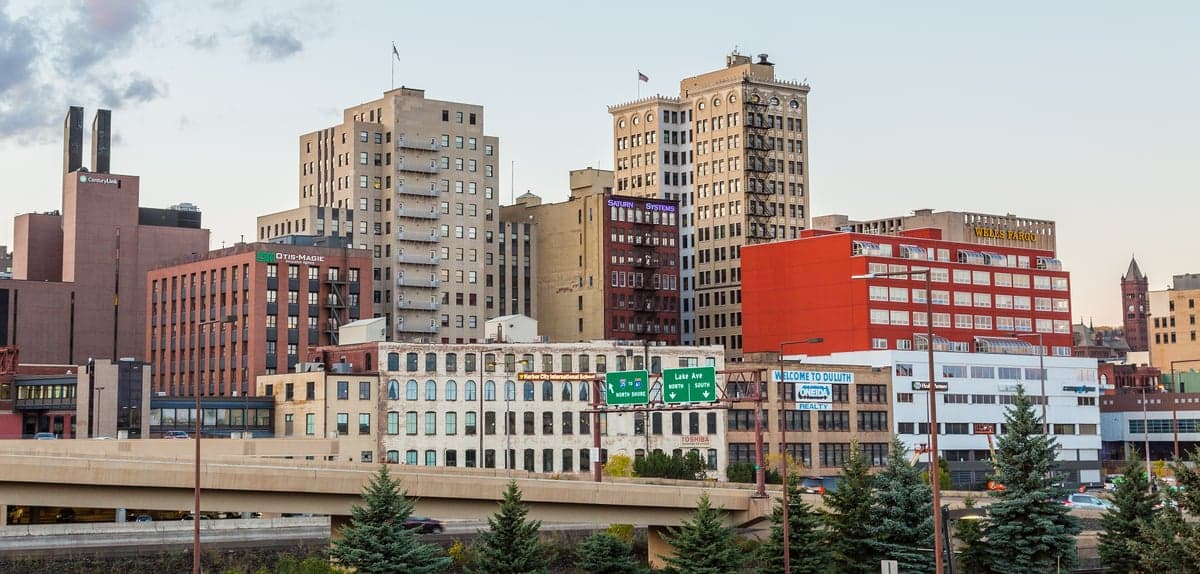
Photo: Wikipedia
Political ClimatePolitical Climate in Duluth, MN
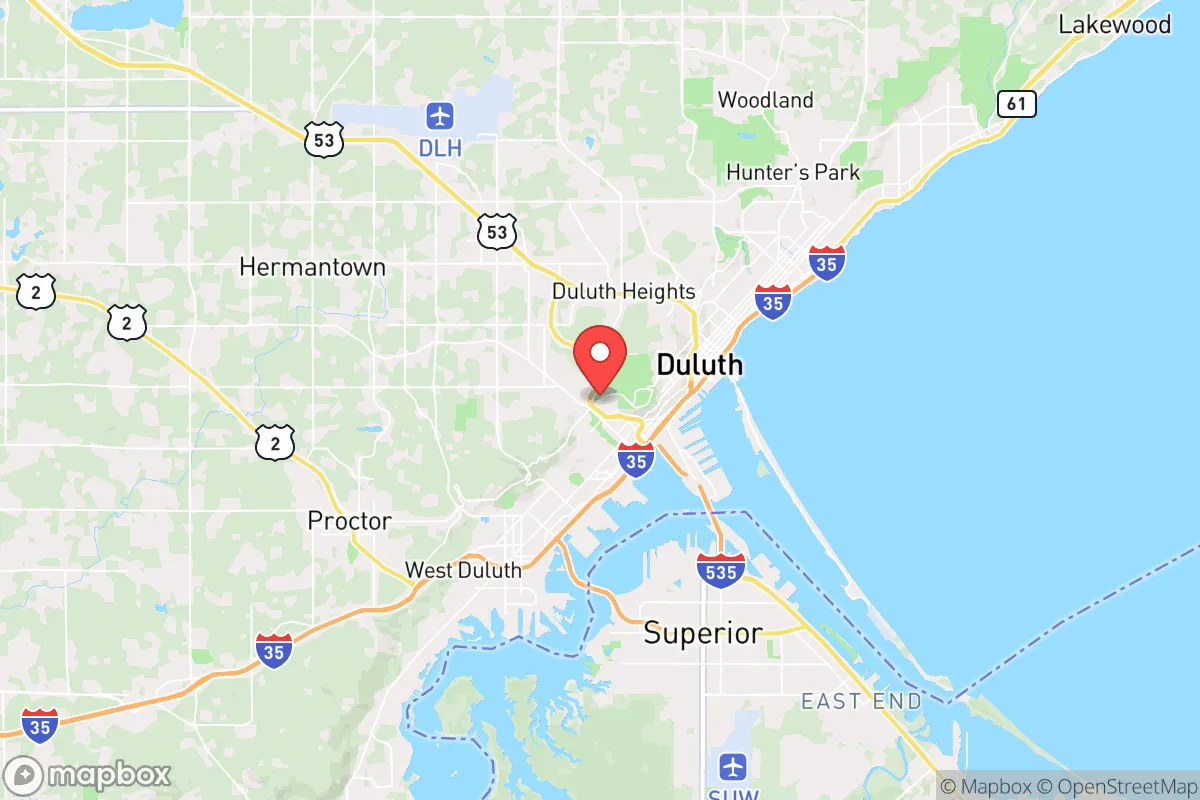
District shown is the primary district for this city’s centroid. Cities may span multiple districts.
Local Political AnalysisPolitical Analysis of Duluth, MN
Duluth used to be a place where a person could mind their own business and live their life without a bunch of government interference, but that's changing fast. The city sits in St. Louis County, which has a Cook PVI of R+7, meaning the district as a whole leans Republican by a solid margin. However, Duluth itself has been trending blue for years, and the local politics are increasingly dominated by progressive activists who seem to think they know what's best for everyone. If you're looking for a place where personal freedoms and common sense still hold weight, you might want to keep an eye on the surrounding towns like Hermantown or Proctor, which tend to be more grounded.
How it compares
Drive just 20 minutes south to Cloquet or west to Hibbing, and you'll feel like you're in a different country politically. Those communities still vote reliably conservative, with folks who believe in low taxes, the Second Amendment, and keeping government out of your backyard. Duluth, on the other hand, has become a haven for progressive policies that feel like they're imported from Minneapolis or Madison. The city council has pushed through things like rent control proposals and environmental regulations that make it harder for small businesses to survive. Meanwhile, the county as a whole still leans red, which creates a constant tug-of-war between the city's liberal agenda and the more sensible values of the surrounding area. It's a stark reminder that Duluth's political climate is increasingly out of step with the rest of the region.
What this means for residents
If you value personal freedom, the trend in Duluth is concerning. The local government has shown a willingness to get involved in things that should be left to individuals and families. For example, there's been talk of stricter gun control measures, even though crime rates in the city are manageable compared to larger metros. You'll also see a push for higher property taxes to fund social programs that many residents didn't ask for. The school board has become a battleground over curriculum and parental rights, with some members pushing for policies that prioritize ideology over academics. For a long-time resident, it feels like the city is slowly chipping away at the very liberties that made Duluth a great place to raise a family. If you're considering a move here, you'll want to look closely at the local elections and consider whether you're willing to fight to keep your rights intact.
One of the biggest cultural distinctions is the city's relationship with the outdoors and industry. Duluth has a proud history of mining, shipping, and timber—blue-collar work that built the community. But the current political leadership seems more interested in catering to environmental activists than supporting the working families who keep the economy running. You'll see policies that restrict development near Lake Superior or push for renewable energy mandates that drive up costs. It's a far cry from the Duluth of 20 years ago, when a person could buy a modest home, work a union job, and not have to worry about the city council meddling in their daily life. If this progressive shift continues, the long-term outlook is for more regulation, higher taxes, and a growing divide between the city and the rest of the county. For those who value personal responsibility and limited government, it's a trend worth watching closely.

State Political ClimatePolitical Climate in Minnesota
State Political AnalysisPolitical Environment in the State
Minnesota has shifted from a reliably purple swing state to a solidly blue one over the past two decades, with Democrats now controlling all three levers of state government. The state voted for Hillary Clinton by 1.5 points in 2016, then Joe Biden by 7 points in 2020, and Kamala Harris by 4 points in 2024 — a clear leftward drift. The dominant coalition is the DFL (Democratic-Farmer-Labor Party), powered by the Twin Cities metro, while Greater Minnesota has become increasingly Republican but lacks the population to counterbalance the urban core. For a conservative considering relocation, the trajectory is concerning: the state that once prided itself on moderation now routinely passes progressive legislation with little resistance.
Urban vs. rural divide
The political map of Minnesota is starkly divided between the Twin Cities metro and the rest of the state. Minneapolis and St. Paul are deep blue strongholds, with precincts routinely delivering 80-90% Democratic margins. The inner-ring suburbs — places like Edina, Bloomington, and St. Louis Park — have flipped from moderate Republican to reliably Democratic over the past decade. Even outer-ring suburbs like Lakeville and Woodbury, once GOP bastions, are now competitive or trending blue. Meanwhile, Greater Minnesota is overwhelmingly Republican: counties like Stearns (St. Cloud), Olmsted (Rochester), and Carver (Chanhassen) are GOP strongholds, but they lack the population density to offset the metro. The Iron Range in northeastern Minnesota, historically a DFL stronghold due to union mining, has shifted rightward in recent cycles, with St. Louis County (Duluth) becoming more competitive. The net result is a state where Democrats can win statewide by running up the score in the metro while losing the rest of the state by 20+ points.
Policy environment
Minnesota’s policy environment has become aggressively progressive under unified DFL control. The state has a progressive income tax with a top rate of 9.85% — one of the highest in the nation — and a statewide sales tax of 6.875% that local jurisdictions can add to. Property taxes are above average, particularly in the metro. In 2023, the legislature passed a clean energy mandate requiring 100% carbon-free electricity by 2040, a paid family and medical leave program funded by a new payroll tax, and a driver’s license for all law allowing undocumented immigrants to obtain licenses. Education policy is dominated by teachers unions, with per-pupil spending among the highest in the nation but declining test scores. The state has no right-to-work law, and union density remains high. Election laws have been loosened: Minnesota now has automatic voter registration, same-day registration, and no-excuse absentee voting, which critics argue reduces election integrity. For a conservative, the policy environment feels like a one-party state where the legislature enacts a progressive wish list with little debate.
Trajectory & freedom
Minnesota is becoming less free by any measure of personal liberty. The 2023 legislative session was a watershed: the DFL passed a red flag law (extreme risk protection orders), expanded background checks for private gun sales, and banned the sale of assault weapons to anyone under 21. Parental rights took a hit with the trans refuge law, which allows minors to receive gender-affirming care without parental consent if they are deemed mature enough by a provider — a direct challenge to parental authority. Medical autonomy was further restricted by the codification of abortion rights into state law, removing any parental notification requirements for minors. Property rights are under pressure from the clean energy mandate, which forces counties to approve wind and solar projects regardless of local opposition. On the positive side for conservatives, Minnesota has no state-level occupational licensing for many trades compared to neighboring states, and the right to keep and bear arms is still protected by the state constitution, though the legislature is chipping away at it. The trajectory is clear: each session brings new restrictions on gun ownership, parental rights, and economic freedom.
Civil unrest & political movements
Minnesota has been a flashpoint for civil unrest since the George Floyd protests in 2020, which caused over $500 million in property damage in Minneapolis and St. Paul. The Minneapolis City Council’s failed attempt to defund the police in 2020 led to a spike in violent crime that has only recently begun to recede. Organized activist movements on the left include MNDFL (Minnesota Democratic-Farmer-Labor Party) progressive caucuses that push for rent control, police reform, and environmental justice. On the right, the Minnesota Gun Owners Caucus and Minnesota Family Council are active in legislative battles. Immigration politics are contentious: the driver’s license for all law has made Minnesota a sanctuary state in practice, and the Minneapolis-St. Paul metro has seen a surge in Somali and Hmong immigrant populations, creating cultural tensions in some suburbs. Election integrity remains a hot-button issue: the 2020 election in Minnesota was conducted with widespread mail-in voting due to a pandemic emergency order, and the state’s lack of voter ID requirements continues to be a point of contention. A new resident would notice the political polarization in daily life — from yard signs to school board meetings — and the lingering aftermath of 2020 in boarded-up storefronts in some Minneapolis neighborhoods.
Projection
Over the next 5-10 years, Minnesota will likely continue its leftward drift. Demographic trends favor Democrats: the Twin Cities metro is growing while Greater Minnesota stagnates or declines. The 2024 election results showed Democrats losing ground among rural voters but gaining in the suburbs, a pattern that will persist. In-migration patterns are mixed: Minnesota is losing population to states like Florida, Texas, and Arizona, but gaining from the coasts. The DFL’s trifecta is likely to hold for the foreseeable future, meaning more progressive legislation: expect a state-level public option for healthcare, rent control statewide, and further gun restrictions. The state’s budget surplus has evaporated, and the new payroll taxes for paid leave will hit small businesses hard. For a conservative moving in now, the realistic expectation is that Minnesota will become more like Illinois or California — high taxes, heavy regulation, and a one-party state — but with a stronger rural counterbalance that keeps things from going completely off the rails. The 2026 gubernatorial election will be a key test: if a Republican can win back the governor’s mansion, it would slow the progressive agenda, but the legislature is likely to remain DFL-controlled due to gerrymandered districts and metro dominance.
For a conservative considering Minnesota, the bottom line is this: the state offers excellent schools, a strong economy, and beautiful natural resources, but the political climate is hostile to conservative values. You will pay high taxes, face increasing restrictions on gun ownership, and see your parental rights challenged by state law. If you’re willing to fight for your values at the local level — in school boards, city councils, and county commissions — there are still communities like Rochester, St. Cloud, and the exurbs of the Twin Cities where conservative voices are strong. But if you’re looking for a state where your vote reliably counts and your freedoms are expanding, Minnesota is not that place. It’s a state in transition, and the transition is not in your favor.
* Values derived from national, state, county, city and local statistics and may differ in a specific area. Last updated: 2026-04-24T13:56:08.000Z
Narrative content on this page is AI-generated and may contain mistakes. Verify any details that matter before acting on them.
ReloMaps may earn a commission from affiliate links at no extra cost to you.

