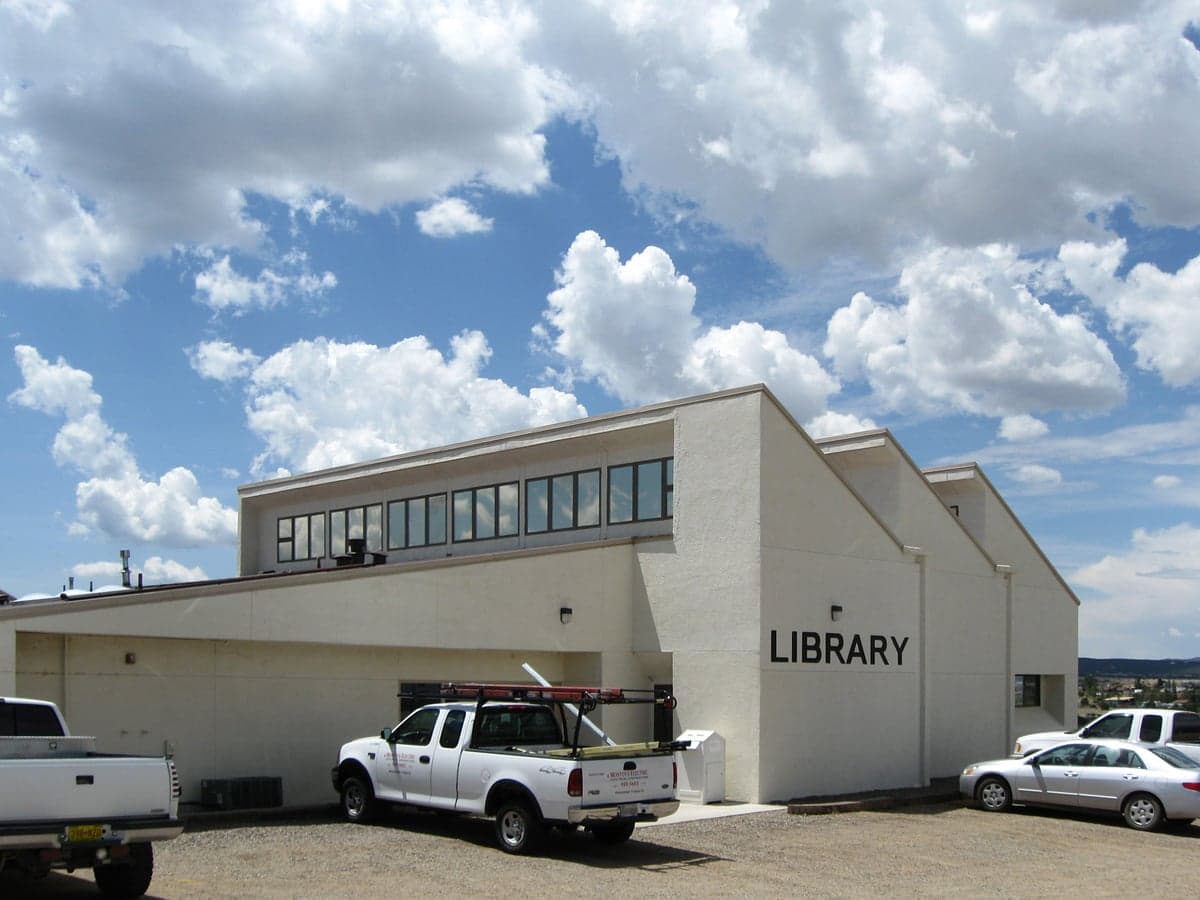
Photo: Wikipedia
Political ClimatePolitical Climate in Edgewood, NM
District shown is the primary district for this city’s centroid. Cities may span multiple districts.
Local Political AnalysisPolitical Analysis of Edgewood, NM
Edgewood, New Mexico, sits in a bit of a political tug-of-war, and if you’ve been around here long enough, you’ve felt the shift. The area’s Cook PVI of D+7 tells you it leans Democratic overall, but that number doesn’t capture the real story on the ground. A decade ago, this was a reliably conservative pocket—folks minded their own business, kept their guns, and didn’t expect the county to meddle in their lives. Now, you’re seeing more progressive transplants from Albuquerque and Santa Fe, and with them, a slow creep of policies that feel less like community improvement and more like government overreach. The trajectory is concerning: what was once a quiet, self-reliant community is increasingly being pulled into the orbit of big-government thinking.
How it compares
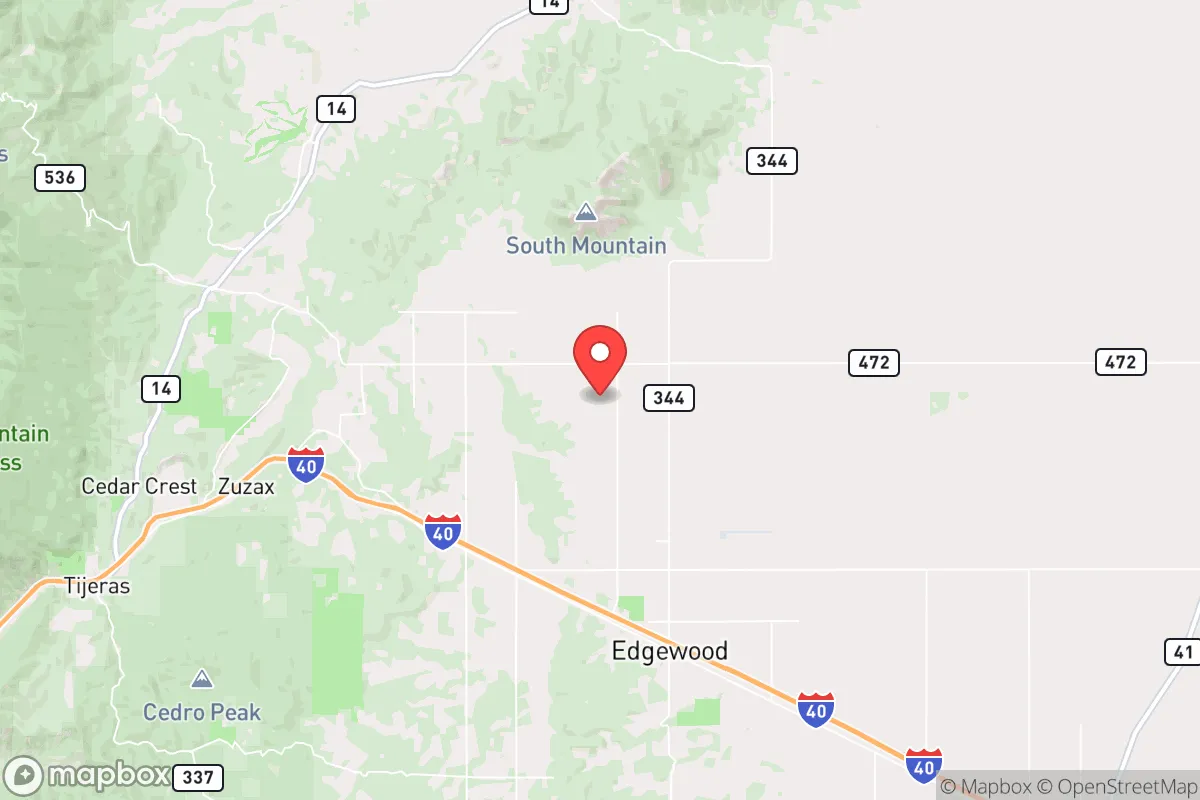
To really get Edgewood’s political climate, you have to look at the neighbors. Head west 20 minutes to Albuquerque, and you’re in deep blue territory—Bernalillo County votes reliably progressive, with all the tax hikes and regulatory red tape that come with it. Drive east toward Moriarty or Estancia, and you hit the conservative stronghold of Torrance County, where folks still wave the Gadsden flag and vote against any new bond measures. Edgewood is the buffer zone, but it’s tilting. Santa Fe County to the north is even more liberal, so the pressure from both sides is real. The contrast is stark: in Edgewood, you can still have a conversation about property rights without being called a name, but that’s getting harder every election cycle as the urban influence spreads.
What this means for residents
For those of us who value personal freedom, the trend is a red flag. The D+7 lean means local officials are more likely to push zoning restrictions, higher impact fees, and environmental mandates that hit small landowners hardest. You’re seeing it in the push for tighter building codes and water-use regulations—stuff that sounds reasonable on paper but ends up costing you time and money just to put a fence up or drill a well. If you’re a gun owner, watch out: New Mexico’s state-level red flag laws and magazine capacity limits are already on the books, and Edgewood’s progressive tilt makes it harder to push back locally. The school board is another battleground—there’s a quiet but persistent effort to bring in curriculum that emphasizes social justice over basics, and that’s a hard sell for families who moved here to escape that kind of thing. Property taxes have crept up about 15% in the last five years, and while some of that is market-driven, a chunk is from new county initiatives that many residents didn’t vote for.
On the cultural side, Edgewood still has its old-school character—rodeo events, church potlucks, and a general distrust of anyone who wants to “improve” things from a government desk. But the long-term outlook is shaky. If the current trajectory holds, expect more mandates on everything from short-term rentals to solar panel permits, all wrapped in the language of sustainability but really just more control. For now, you can still live your life without too much hassle, but the writing’s on the wall. If you’re considering a move here, come for the space and the views, but keep an eye on the ballot box—because that’s where the fight for Edgewood’s soul is happening.

State Political ClimatePolitical Climate in New Mexico
State Political AnalysisPolitical Environment in the State
New Mexico has long been a reliably blue state in presidential elections, voting Democratic by margins of 10-11 points in 2020 and 2024, but the picture is far more complicated than a simple partisan label. The dominant political coalition is a fragile alliance of urban progressives in Albuquerque and Santa Fe, unionized government workers, and a heavily Democratic-leaning Hispanic electorate in the northern counties and along the southern border. Over the past 10-20 years, the state has shifted leftward on social and cultural issues, even as its rural and oil-rich southeastern counties have become some of the most conservative in the nation. For a conservative considering relocation, the state presents a stark choice: live in a blue metro with high taxes and progressive policies, or settle in a red rural area that feels like a different country politically.
Urban vs. rural divide
The political map of New Mexico is a study in extremes. The state's two largest metros—Albuquerque (Bernalillo County) and Santa Fe (Santa Fe County)—are deep blue strongholds, with Santa Fe County routinely voting 75-80% Democratic. These cities drive the state's overall lean, powered by a large government workforce, a dominant university presence (University of New Mexico), and a cultural scene that leans hard left. In contrast, the southeastern corner—Hobbs, Carlsbad, and Roswell in Lea, Eddy, and Chaves counties—votes 70-80% Republican, fueled by the oil and gas industry and a ranching heritage. The Las Cruces area (Doña Ana County) is a purple battleground, trending blue but with a significant conservative Hispanic population. The rural north, including Taos and Los Alamos, is a mix of liberal artists and scientists, while the eastern plains (Clovis, Portales) lean red. The divide is so sharp that a resident of Hobbs and a resident of Santa Fe live under effectively different governments.
Policy environment
New Mexico's policy environment is a mixed bag that leans heavily toward progressive intervention. The state has a progressive income tax with rates from 1.7% to 5.9%, and a gross receipts tax (essentially a sales tax) that can exceed 9% in some cities. Property taxes are relatively low, but the state has aggressively expanded government programs: it offers free tuition for in-state college students through the Lottery Scholarship and the new Opportunity Scholarship, and it has one of the most generous Medicaid expansions in the country. On education, the state has seen a bitter fight over school choice—a 2023 bill to create a private school voucher program was defeated, and the state's public schools remain among the lowest-ranked nationally. Healthcare is heavily regulated, with a state-run insurance exchange and strict certificate-of-need laws that limit competition. Election laws are among the most accessible in the nation: same-day registration, no-excuse absentee voting, and automatic voter registration are all in place. For a conservative, the policy environment feels like a one-party state where the legislature and governor (Michelle Lujan Grisham, a Democrat) have little interest in limiting government's reach.
Trajectory & freedom
Over the past five years, New Mexico has become less free by almost any measure important to conservatives. In 2021, the legislature passed a red flag law (HB 87) allowing courts to temporarily seize firearms from individuals deemed a threat, a move that gun rights advocates see as a violation of due process. In 2023, the governor signed a ban on carrying firearms in public parks and playgrounds in Albuquerque, which was later struck down by a state court. On parental rights, the state has moved in the opposite direction of Texas and Arizona: in 2023, the legislature passed a law protecting access to abortion and gender-affirming care for minors, overriding parental consent requirements in some cases. The state also expanded its sanctuary policies in 2024, limiting cooperation between local law enforcement and federal immigration authorities. On the tax front, the state has actually cut personal income taxes slightly (from 4.9% top rate to 5.9% after a 2023 reform), but overall the trajectory is toward more regulation, more government spending, and less individual autonomy. The one bright spot for conservatives is the oil and gas industry, which remains largely unregulated compared to states like Colorado, but that could change as the legislature eyes new environmental rules.
Civil unrest & political movements
New Mexico has seen its share of political flashpoints. In 2020, Albuquerque and Santa Fe saw large Black Lives Matter protests, some of which turned violent with property damage and clashes with police. The state has a long history of immigration activism, with groups like El Paso's Border Network for Human Rights organizing protests against ICE and border enforcement. In 2023, the governor's temporary ban on carrying firearms in public parks sparked armed protests at the state capitol in Santa Fe, with Second Amendment advocates openly carrying rifles in response. The sanctuary state status has created tension between urban counties and rural sheriffs, with several sheriffs (including in Lea and Eddy counties) publicly refusing to enforce certain state immigration policies. There's also a growing secessionist movement in the southeastern oil patch, with some residents calling for the creation of a new state called "New Mexico's 51st State" or aligning with Texas. Election integrity remains a hot-button issue: in 2022, a Republican candidate for state land commissioner refused to concede, citing irregularities, though no widespread fraud was found. A new resident would notice that political activism is more visible in Santa Fe and Albuquerque, while rural areas are quieter but deeply resentful of state mandates.
Projection
Over the next 5-10 years, New Mexico is likely to continue its leftward drift, driven by demographic shifts and in-migration. The state is seeing an influx of remote workers from California and Colorado, particularly to Santa Fe and Taos, who tend to be liberal and support higher taxes and more regulation. The Hispanic population, historically more moderate, is trending younger and more progressive, especially in urban areas. The oil and gas industry in the southeast will remain a conservative bulwark, but its political influence is waning as the state's economy diversifies toward government, healthcare, and tech. The 2026 gubernatorial election will be a key test: if a Republican can't win in a midterm year, the state will be locked in as a one-party blue state for the foreseeable future. For a conservative moving in now, the realistic expectation is that Albuquerque and Santa Fe will become more like Denver or Portland, while rural areas will become more isolated and resentful. The state's freedom ranking (currently near the bottom in the Cato Institute's index) is unlikely to improve.
For a conservative considering New Mexico, the bottom line is this: you can find a like-minded community in the southeastern oil patch or the eastern plains, but you will be living under a state government that is actively hostile to your values on guns, parental rights, and taxes. If you work in oil and gas, the trade-off might be worth it for the low property taxes and high wages. If you're a remote worker or retiree, you'll likely find the political climate in Santa Fe or Albuquerque suffocating. The state's natural beauty and low cost of living are real draws, but they come with a political price tag that is only going up. Do your homework on the specific county and city—Hobbs and Carlsbad feel like Texas, while Santa Fe feels like a smaller Berkeley. Choose accordingly.
* Values derived from national, state, county, city and local statistics and may differ in a specific area. Last updated: 2026-05-01T09:02:29.000Z
Narrative content on this page is AI-generated and may contain mistakes. Verify any details that matter before acting on them.
ReloMaps may earn a commission from affiliate links at no extra cost to you.

