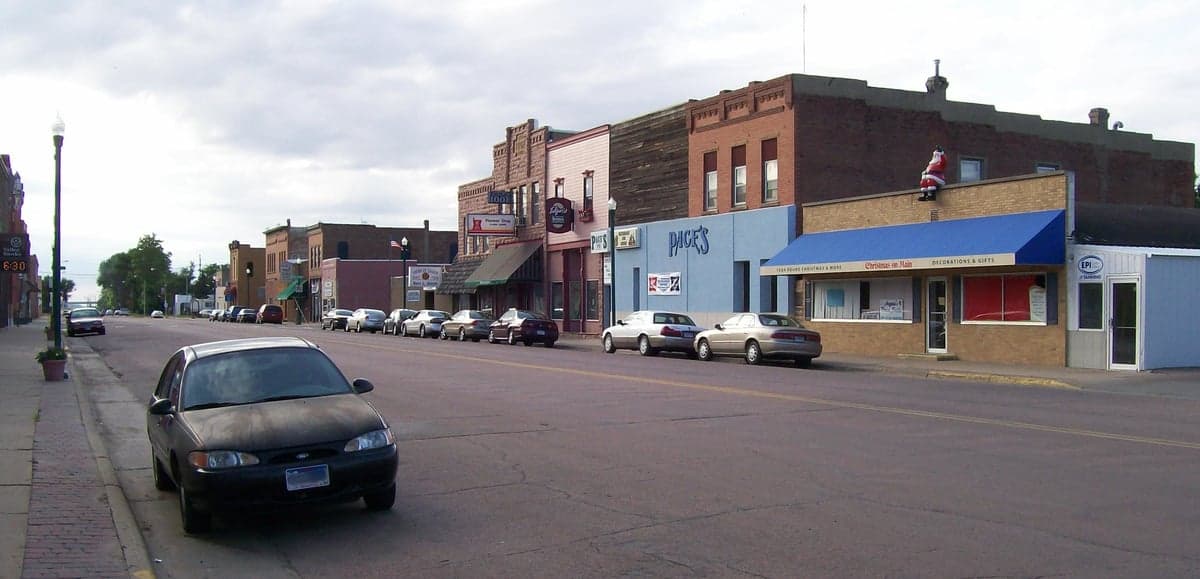
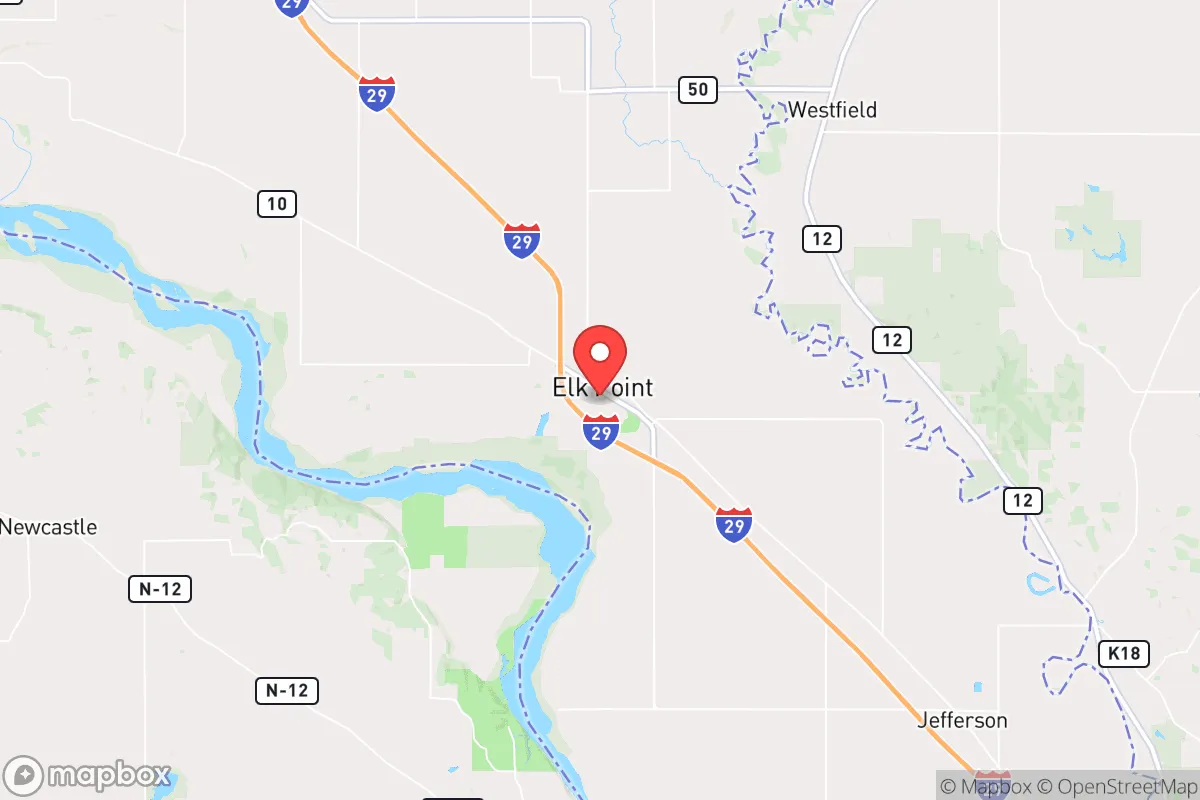
Photo: Wikipedia
Political ClimatePolitical Climate in Elk Point, SD
District shown is the primary district for this city’s centroid. Cities may span multiple districts.
Inherited from parent state — no local data available.
Local Political AnalysisPolitical Analysis of Elk Point, SD
Elk Point, South Dakota, is about as reliably conservative as small-town America gets, with a Cook PVI of R+15 that puts it deep in the red column. That number isn't just a statistic—it reflects a community where folks have voted overwhelmingly Republican in every major election for decades, and where the local culture still prizes self-reliance, limited government, and a healthy skepticism of federal overreach. If you're looking for a place where your rights aren't constantly being second-guessed by bureaucrats, Elk Point has been a solid bet, though like everywhere else, you can feel the winds of change blowing in from the coasts.
How it compares
Elk Point sits in Union County, which is a bit of an outlier in southeastern South Dakota—most of the counties around here lean red, but Elk Point is noticeably more conservative than its immediate neighbors. Drive 15 minutes north to Vermillion, home of the University of South Dakota, and you'll find a much bluer vibe, with younger voters and academics pushing progressive policies on housing, zoning, and even local taxes. Head east across the Missouri River into Iowa, and towns like Sioux City have a more mixed political landscape, with union influence and a growing Hispanic population shifting things leftward. But Elk Point? It's still the kind of place where the county commission meetings are short, the Second Amendment is a given, and the idea of a mask mandate or a vaccine passport would get laughed out of the room. That R+15 rating isn't just a number—it's a firewall against the kind of government overreach that's creeping into bigger cities.
What this means for residents
For the people who live here, Elk Point's political climate means fewer headaches from the state or feds. Property taxes are low, business regulations are minimal, and there's no city council trying to ban gas stoves or impose "equity" training on local contractors. The schools still teach traditional values, and the local sheriff isn't going to enforce any gun control laws that don't sit right with the Constitution. That said, there's a quiet concern among longtime residents that the area's growth—new subdivisions, a few chain stores creeping in from Sioux City—could bring in folks who don't share the same priorities. If you value your personal freedoms and don't want some out-of-touch politician telling you how to live your life, Elk Point is still a refuge. But keep an eye on the county commission races; a couple of bad elections could shift the balance toward the kind of progressive nonsense that's ruining bigger towns.
One thing that sets Elk Point apart culturally is its strong sense of community self-governance. The local churches, the volunteer fire department, and the annual town festivals are all run by neighbors, not by government committees. There's no HOA telling you what color to paint your fence, and the city council rarely meddles in private property decisions. That's the kind of freedom that's getting harder to find, and it's why folks here are wary of any talk about "regional planning" or "sustainability initiatives"—code words for more rules and less liberty. If you're thinking about moving here, just know that the political climate is a feature, not a bug. It's a place where you can still raise a family without the government breathing down your neck, and where the biggest political debate is usually about whether to fix the potholes on Main Street or leave 'em as a natural speed bump.

State Political ClimatePolitical Climate in South Dakota
State Political AnalysisPolitical Environment in the State
South Dakota is a deeply conservative state, with a Republican lean that has only intensified over the past two decades. The state hasn't voted for a Democratic presidential candidate since 1964, and in 2024, Donald Trump carried it by a massive 30-point margin. The dominant coalition is a mix of rural traditionalists, libertarian-leaning ranchers, and a growing number of conservative refugees from blue states, all united around low taxes, gun rights, and limited government. The trajectory is clear: South Dakota is becoming more Republican and more ideologically rigid, with the state legislature pushing a steady stream of culture-war bills and tax cuts that make it a magnet for those fleeing progressive governance.
Urban vs. rural divide
The political map is stark. The state's only real population center, Sioux Falls (Minnehaha County), is a Republican stronghold but with a slightly more moderate, business-friendly flavor. It's the economic engine, home to Sanford Health and a growing financial services sector, and it votes about 60% Republican. Rapid City (Pennington County) is even redder, driven by a large military and veteran population tied to Ellsworth Air Force Base. The real firepower, however, is in the rural counties. Places like Harding County in the northwest routinely deliver 85-90% Republican margins. The only blue dot of note is Brookings, home to South Dakota State University, which occasionally flips to Democrats in local races but is still solidly red at the presidential level. The divide isn't really urban vs. rural in the typical sense—it's more about how deep the red goes. Sioux Falls is red; the rest of the state is crimson.
Policy environment
South Dakota's policy environment is a conservative dream. There is no state income tax, a fact that drives a steady stream of relocations from high-tax states like California and Illinois. Property taxes are moderate, and the state has a right-to-work law. The regulatory posture is aggressively pro-business, with minimal zoning and environmental red tape. On education, the state has a robust school choice movement, including a new Education Savings Account program passed in 2024 that lets parents use public funds for private or homeschool expenses. Healthcare is a mixed bag: the state did expand Medicaid under Trump-era waivers, but the legislature is hostile to abortion, passing a near-total ban in 2023 (HB 1215) that only allows exceptions for the life of the mother. Election laws are tight—voter ID is required, and there's no same-day registration. The state also passed a law in 2024 banning ranked-choice voting, a preemptive strike against progressive electoral reforms.
Trajectory & freedom
South Dakota is becoming more free in the traditional conservative sense, but with some worrying caveats. The 2023 legislative session was a banner year for liberty: the state passed a constitutional carry law (no permit needed to carry a concealed firearm), a parental rights in education bill (SB 127) that requires schools to notify parents of any curriculum involving sexuality, and a transgender sports ban (HB 1080). In 2024, they added a law banning gender-affirming care for minors (HB 1080). On the tax front, the legislature cut the state's sales tax on groceries from 4.5% to 4.2% in 2023, with more cuts planned. However, there are red flags. Governor Kristi Noem's administration has been criticized for government overreach during COVID, including a state of emergency that lasted far longer than necessary. More recently, a 2024 law (SB 201) gives the state broad power to override local zoning for "critical infrastructure" projects, which libertarians see as a threat to property rights. The freedom trajectory is positive on cultural and fiscal issues, but the state's appetite for executive power is concerning.
Civil unrest & political movements
South Dakota is remarkably stable compared to the coasts. There have been no major riots or sustained protest movements. The most visible flashpoint is the Pine Ridge Indian Reservation and the broader Native American community, which has a long history of tension with state authorities. In 2023, there were protests in Rapid City over the death of a Native man in police custody, but they were small and quickly dissipated. The state has seen a surge in anti-vaccine mandate activism, with large rallies at the state capitol in Pierre in 2021 and 2022. The South Dakota Freedom Caucus, a hardline conservative group in the legislature, has become a powerful force, pushing bills on election integrity and school choice. There's also a growing secessionist sentiment in the western part of the state, where some ranchers talk about joining Wyoming or forming a new state called "West Dakota," though it's mostly talk. Immigration politics are quiet—the state has a tiny foreign-born population (about 4%), and there's no sanctuary policy. The biggest political movement is simply in-migration: conservatives from blue states are flooding into places like Spearfish and Box Elder, changing the culture from "conservative" to "activist conservative."
Projection
Over the next 5-10 years, South Dakota will become even more conservative. The in-migration from states like California, Illinois, and Minnesota is accelerating, and these new arrivals are not moderates—they're fleeing progressive policies and want to push the state further right. The state's population is projected to grow by about 10% by 2030, with most of that growth in the Sioux Falls and Rapid City areas. This will likely lead to more tax cuts, more school choice expansion, and more preemptive laws against progressive ideas like carbon taxes or gun control. The risk is that the state's infrastructure—roads, housing, water—will struggle to keep up with growth, potentially creating a backlash against development. The biggest wildcard is the Native American vote, which is growing but still suppressed by low turnout and gerrymandering. If Democrats ever figure out how to mobilize that vote, they could flip a few legislative seats, but they'll never win statewide. Expect South Dakota to remain a deep red fortress for the foreseeable future.
For a conservative moving here, the bottom line is this: you'll find a state that respects your gun rights, your religious liberty, and your wallet. The government is small but not absent—watch out for executive overreach and local zoning fights. The culture is welcoming to traditional families, and the schools are increasingly parent-friendly. Just be prepared for long winters and a political scene that's more about how far right to go than whether to go right at all. If you're looking for a place where your values are the norm, not the exception, South Dakota is it.
* Values derived from national, state, county, city and local statistics and may differ in a specific area. Last updated: 2026-04-19T08:15:44.000Z
Narrative content on this page is AI-generated and may contain mistakes. Verify any details that matter before acting on them.
ReloMaps may earn a commission from affiliate links at no extra cost to you.

