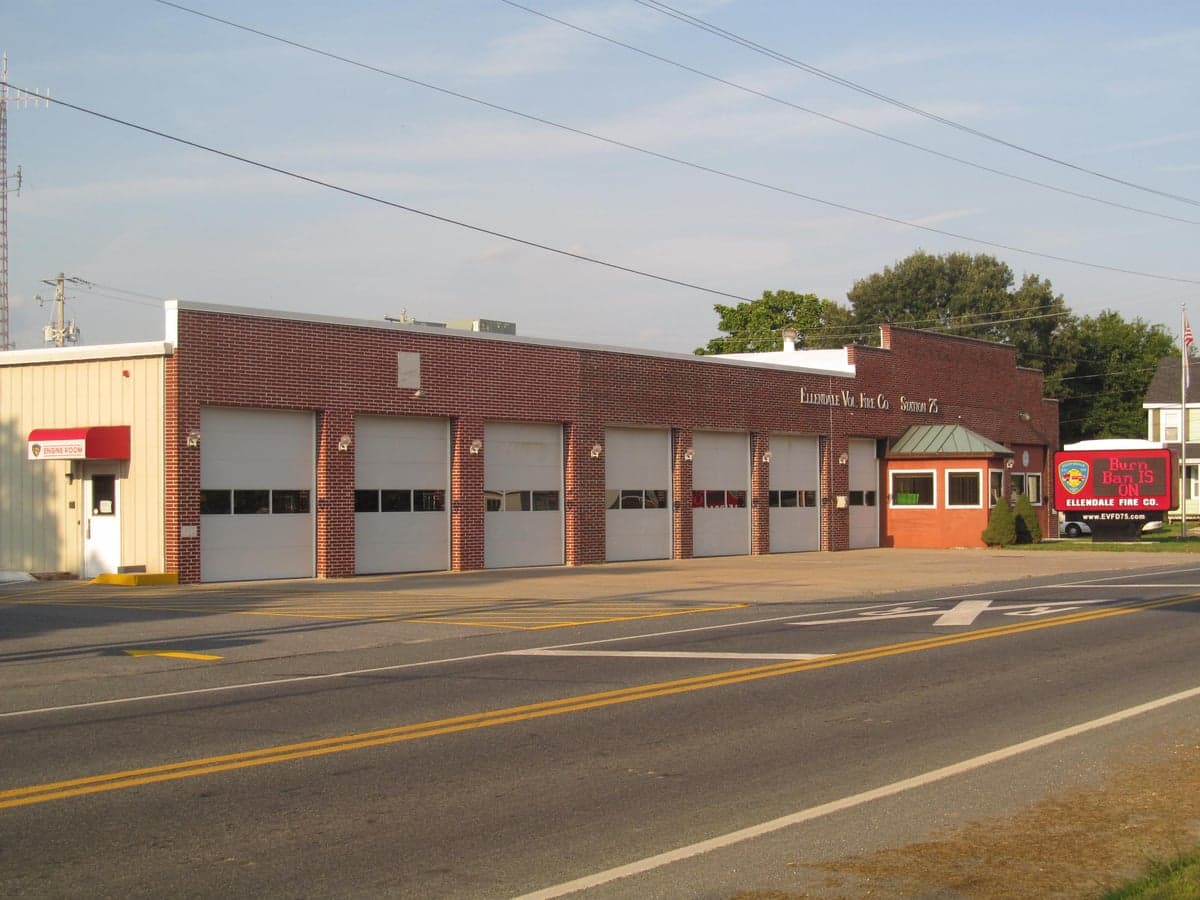
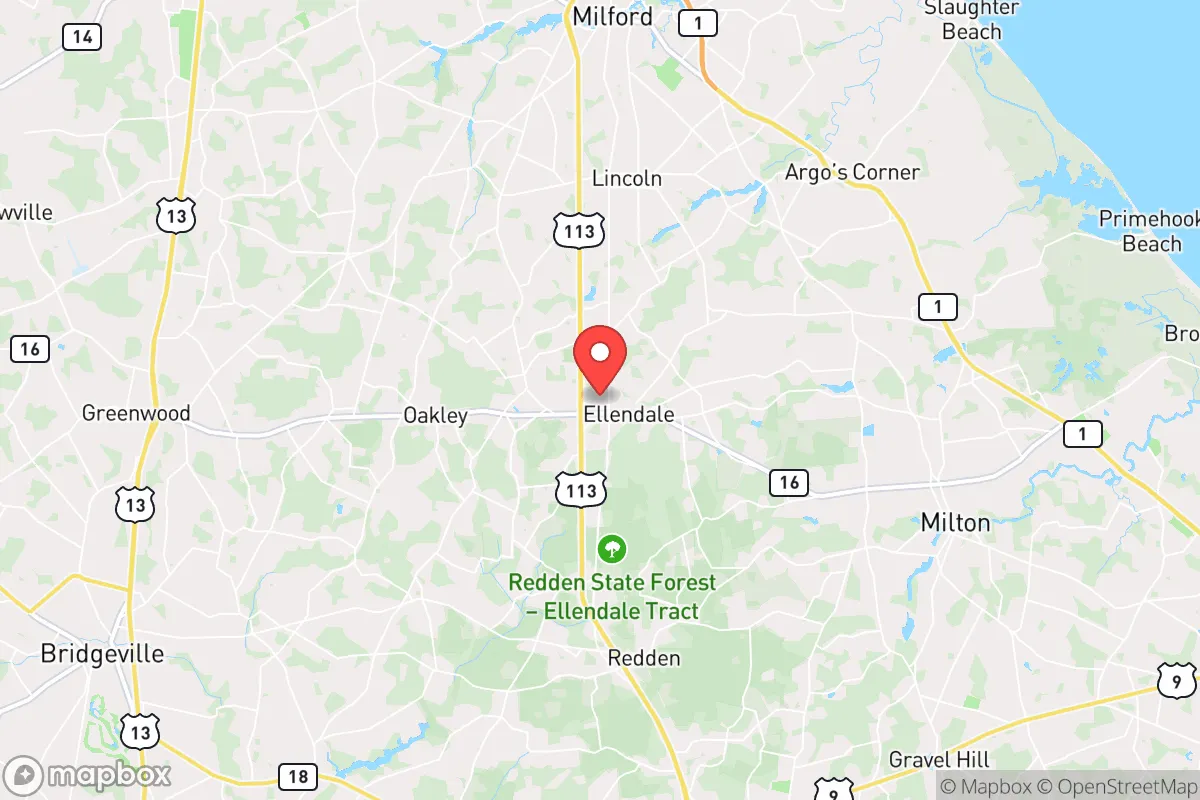
Photo: Wikipedia
Demographics of Ellendale, DE
Affluence Level in Ellendale, DE
A middle-class area roughly in line with national averages across income, home values, education, and employment.
People of Ellendale, DE
Ellendale, Delaware, is a small, tightly-knit community of 675 residents where Hispanic and White populations each form a substantial plurality, with a significant Black minority, creating a demographic profile that is notably more diverse than much of rural Sussex County. The town’s character is defined by its quiet, residential streets, a strong sense of local history, and a population density that feels both intimate and isolated. Distinctive markers include a high proportion of families and a lower-than-average college attainment rate (13.5%), reflecting a community built on local trades, agriculture, and service industries rather than a commuter or professional class.
How the city was settled and grew
Ellendale’s human history begins in the mid-19th century, not with colonial settlement but as a deliberate railroad town. Founded in 1857 along the new Delaware Railroad line, the town was named after Ellen, the wife of a local landowner, and was platted to attract commerce and residents. The original population was overwhelmingly White, drawn from nearby farms and small towns in Sussex County, with many working in the railroad yards, grain mills, and the early canning industry that processed local produce. The historic Railroad Avenue corridor became the commercial and social spine, where the first homes and businesses were built by these Anglo-American families. A second early wave came in the late 1800s as the town became a shipping hub for the region’s peach and strawberry farms, attracting a small number of Black families who settled in the area now known as West Street, working as farm laborers and domestic help. By 1900, Ellendale was a classic rural railroad hamlet, with a population that was nearly all White and a handful of Black households clustered near the agricultural edges.
Modern era (post-1965)
The post-1965 era brought the most dramatic demographic transformation to Ellendale, driven by two forces: the decline of the railroad and the rise of the poultry industry, and later, Hispanic immigration. As the railroad faded, the canneries and poultry plants in nearby towns like Harbeson and Bridgeville became the dominant employers. Beginning in the 1980s and accelerating through the 2000s, a wave of Hispanic immigrants—primarily from Mexico and Central America—moved into Ellendale to work in these processing plants and on surrounding farms. They settled heavily in the Maple Avenue and Pine Street neighborhoods, where older, affordable housing stock was available. This influx reshaped the town’s identity: by the 2020 Census, the Hispanic share had risen to 38.8%, making it the largest single ethnic group. The Black population, which had grown modestly through the mid-20th century as families moved from the rural South, now stands at 19.3%, concentrated in the South Railroad Avenue area. The White population, once nearly universal, has declined to 36.3%, with many long-time families aging in place or moving to larger towns like Milford. The foreign-born share remains low at 5.0%, indicating that most Hispanic residents are U.S.-born or long-settled, and the town has seen virtually no East/Southeast Asian or Indian subcontinent immigration.
The future
Ellendale’s population trajectory points toward continued diversification, but within a framework of slow growth and economic stability. The town is not homogenizing into a single cultural bloc; rather, it is tribalizing into distinct, stable enclaves. The Hispanic community on Maple and Pine Streets is growing through natural increase and family reunification, while the White population is aging and slowly declining. The Black community on South Railroad Avenue is stable but not expanding. With limited new housing construction and no major employers within the town limits, Ellendale is unlikely to attract significant new waves of immigrants or domestic migrants. The next 10-20 years will likely see the Hispanic share edge toward 45-50%, with White and Black shares continuing a gradual decline. The town’s character will remain that of a working-class, family-oriented community, but with an increasingly Hispanic cultural flavor in its daily life, local businesses, and community events.
For someone moving in now, Ellendale offers a quiet, affordable base in Sussex County with a genuine small-town feel and a population that is more diverse than the surrounding rural areas. The trade-off is limited economic opportunity within the town itself, a low college attainment rate, and a demographic landscape that is shifting but not rapidly changing. It is a place where neighbors know each other, where the poultry plant whistle still marks the day, and where the future looks like a more Hispanic version of its past.

* Values derived from national, state, county, city and local statistics and may differ in a specific area. Last updated: 2026-04-23T00:41:31.000Z
Narrative content on this page is AI-generated and may contain mistakes. Verify any details that matter before acting on them.
ReloMaps may earn a commission from affiliate links at no extra cost to you.

