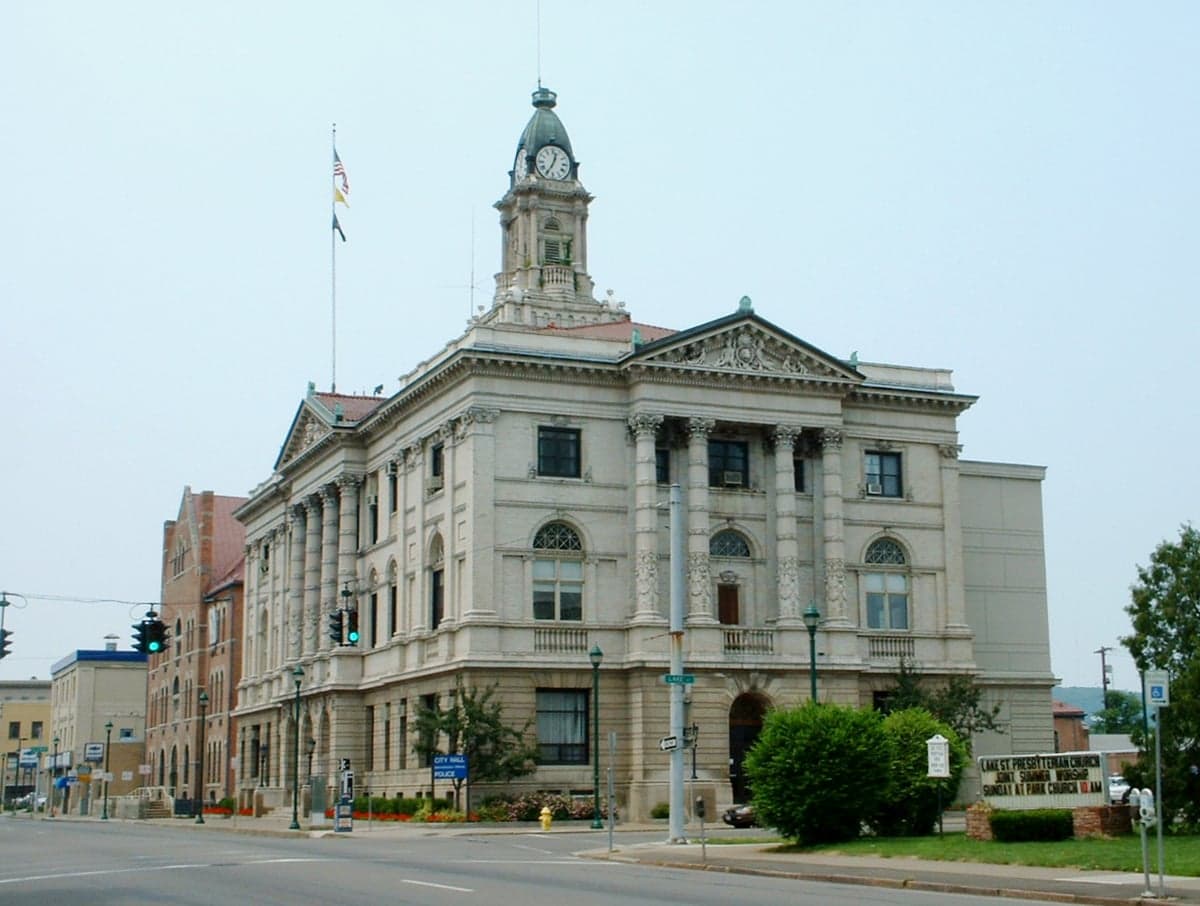
Photo: Wikipedia
Personal Sovereignty in Elmira, NY
Moderate friction. Expect trade-offs in some aspect of personal liberty and independence.
What does Personal Sovereignty tell us?
Personal Sovereignty measures your capacity for self-reliance and independence with minimal government friction. Higher scores mean fewer barriers between you and the way you want to live... but it assumes you have the space you need and good neighbors.
What does this tell us?
Personal Sovereignty measures your capacity for self-reliance and independence with minimal government friction. Higher scores mean fewer barriers between you and the way you want to live... but it assumes you have the space you need and good neighbors.
State Policy
Energy independence: Importer (12% of energy produced in-state)
Personal Liberty
Homesteading

Personal Liberty Analysis
Elmira, New York, sits in a region where personal sovereignty is a mixed bag—strong in some areas like property rights and self-reliance potential, but heavily constrained by state-level overreach in taxation, gun control, and medical mandates. For a conservative individual or family with a survivalist mindset, the Chemung County seat offers a relatively low-cost land base and a community that leans red in a blue state, but you’ll be fighting Albany every step of the way on core freedoms. The key question isn’t whether you can live autonomously here—it’s whether the state’s regulatory grip will strangle your efforts before you get started.
Tax burden and regulatory posture: how much the state takes and controls
New York’s tax burden is among the highest in the nation, and Elmira is no exception. Property taxes in Chemung County average around 2.5% of assessed home value, which is roughly double the national median. For a $150,000 home—common in the area—that’s about $3,750 annually, a significant bite for anyone trying to minimize government dependency. State income tax rates range from 4% to 10.9%, and while Elmira’s cost of living is below the national average, the combined tax load eats into any savings from cheap land. Regulatory posture is equally aggressive: New York’s building codes, environmental regulations, and business licensing requirements are among the most restrictive in the Northeast. For a prepper looking to build a workshop, install a backup generator, or run a small homestead business, expect permit delays and inspection hurdles. The state’s Climate Leadership and Community Protection Act pushes for net-zero emissions by 2050, which translates into tighter rules on wood stoves, diesel generators, and even livestock waste management. If you value minimal government interference in your daily operations, Elmira’s local officials are often more pragmatic than Albany, but state law overrides local discretion on most regulatory matters.
Self-defense and gun law specifics: what you can and cannot do
New York’s gun laws are among the most restrictive in the country, and Elmira residents must navigate a thicket of state mandates. The Concealed Carry Improvement Act (CCIA) of 2022 requires a pistol permit for any concealed carry, and the application process involves a background check, character references, and a 16-hour training course. Open carry is effectively banned in most public spaces. Magazine capacity is capped at 10 rounds, and the state maintains a list of “assault weapons” that includes many common semi-automatic rifles. For a survivalist, this means your AR-15 or standard-capacity handgun is likely illegal unless you owned it before the ban and registered it. Stand-your-ground laws do not exist in New York; you have a duty to retreat before using deadly force, even in your own home, if a safe retreat is possible. Castle doctrine is weak—you can defend your home, but only if you reasonably believe the intruder intends to cause death or serious injury, and you must not have provoked the situation. For parents, this creates a chilling effect: if someone breaks in while your family is asleep, you must mentally calculate retreat options before acting. Ammunition sales are tracked, and private transfers require a background check through a licensed dealer. In short, Elmira’s local sheriff may be pro-2A, but state law ties his hands. If self-defense is a priority, you’ll need to invest in legal counsel and secure storage to stay compliant while maintaining readiness.
Self-reliance and homesteading viability: lot sizes, zoning, and off-grid feasibility
Elmira’s rural outskirts offer genuine homesteading potential, but zoning and state codes impose limits. Outside the city limits, Chemung County allows agricultural zoning on parcels as small as 2 acres, and many properties in the 5- to 10-acre range are available for under $10,000 per acre. This makes it feasible to raise chickens, goats, or a small vegetable operation without needing a massive land investment. However, off-grid living faces significant hurdles. New York’s building code requires connection to the electrical grid for new construction, and solar panels must be grid-tied unless you obtain a special exemption. Rainwater collection is legal but regulated—you can’t use it for potable water without a permit and filtration system. Composting toilets are allowed, but only if they meet state sanitation standards, which often means a costly approved model. For a prepper, this means you can’t simply buy land and go fully off-grid without navigating a permit process that can take months. Livestock regulations are moderate: you can keep up to 10 chickens without a permit in most rural zones, but pigs and cattle require a farm operation license. Beekeeping is allowed but must be registered with the state. The biggest practical advantage is the low population density—Chemung County has about 80,000 people spread over 408 square miles, so neighbors are sparse, and local enforcement of state codes is often lax unless someone complains. If you’re willing to work within the system and keep a low profile, self-reliance is achievable, but it’s not the free-for-all you’d find in a state like Texas or Idaho.
Personal liberties: parental rights, medical autonomy, speech, and property
Parental rights in New York have been under sustained assault. The state’s Child Protective Services (CPS) has broad authority to investigate families for educational neglect, medical neglect, or “emotional harm,” and the threshold for intervention is low. Homeschooling is legal but requires annual submission of an Individualized Home Instruction Plan (IHIP) with detailed curriculum, quarterly reports, and standardized testing—a far cry from the minimal oversight in states like Indiana or Alaska. Medical autonomy is similarly constrained: New York mandates vaccines for school attendance (with limited religious exemptions), and during the COVID-19 pandemic, the state imposed some of the strictest mandates in the country, including vaccine requirements for healthcare workers and public employees. While those mandates have been lifted, the precedent remains. For a parent who wants to make medical decisions without state interference, Elmira offers no safe harbor. Free speech is protected under the First Amendment, but New York has a hate speech law that can be used to prosecute “incitement” or “harassment” based on protected characteristics, which some conservatives view as a tool to chill political speech. Property rights are stronger: eminent domain is rarely used for private development, and zoning boards generally respect existing uses. You can build a fence, install security cameras, and post no-trespassing signs without much hassle. However, the state’s Environmental Conservation Law allows for wetlands regulations that can restrict building on your own land if a stream or marsh is present. Overall, personal liberties in Elmira are a patchwork—strong on property, weak on medical and parental autonomy, and subject to the whims of Albany’s progressive legislature.
Compared to other areas in the Northeast, Elmira offers a relatively affordable entry point for a self-reliant lifestyle, but the sovereignty ceiling is low. You’ll have more freedom than in New York City or Buffalo, but far less than in rural Pennsylvania, Ohio, or the South. The state’s tax burden, gun restrictions, and medical mandates create a constant friction that a survivalist must budget for—both financially and mentally. If you’re willing to fight for every inch of autonomy and keep a low profile, Elmira can work as a base of operations. But if you’re looking for a place where the government stays out of your life, you’ll find that freedom is always one state law away from being revoked.

* Values derived from national, state, county, city and local statistics and may differ in a specific area. Last updated: 2026-05-01T18:48:56.000Z
Narrative content on this page is AI-generated and may contain mistakes. Verify any details that matter before acting on them.
ReloMaps may earn a commission from affiliate links at no extra cost to you.

