
Photo by Joris Beugels on Unsplash
Demographics of Emmonak, AK
Affluence Level in Emmonak, AK
A below-average socioeconomic profile. Incomes, home values, and educational attainment trail the U.S., with higher poverty and unemployment.
People of Emmonak, AK
The people of Emmonak, Alaska, are overwhelmingly Alaska Native, primarily Yup’ik, with a population of 945 as of the most recent estimates. The city is 0.6% White, 7.4% Black, and 0.0% Hispanic, Asian, or Indian subcontinent, reflecting a community that has remained culturally and ethnically distinct from broader American demographic trends. With a foreign-born population of 0.0% and a college-educated rate of 16.9%, Emmonak is a tight-knit, subsistence-based village where Yup’ik language and traditions remain central to daily life, rather than a destination for external migration or economic diversification.
How the city was settled and grew
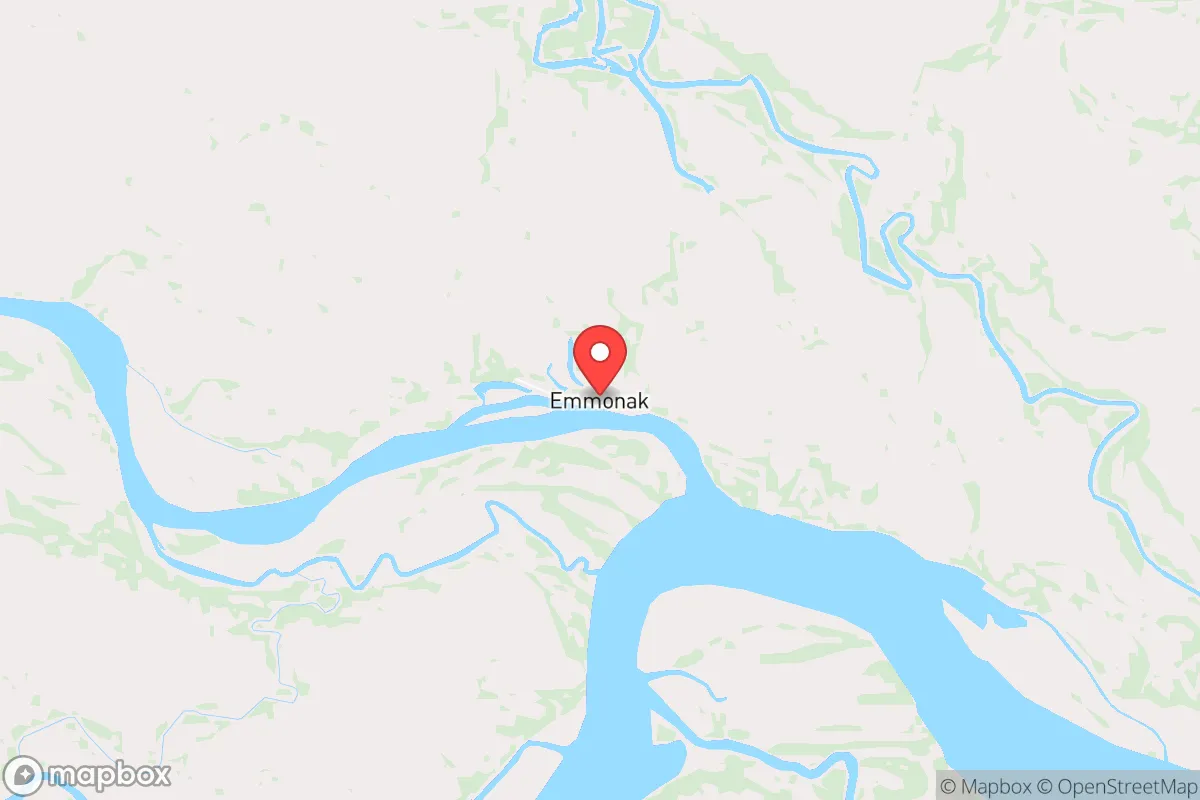
Emmonak was not founded by colonial settlers or industrial pioneers but evolved from a traditional Yup’ik fishing and trading site on the Yukon River delta. The area’s original inhabitants—the Yup’ik people—occupied seasonal fish camps and semi-permanent villages along the river for centuries before European contact. The modern community began to coalesce in the late 19th and early 20th centuries as the Alaska Commercial Company and later the Bureau of Indian Affairs established a school and trading post, drawing families from smaller, dispersed camps into a centralized settlement. The original core of the village, now referred to as Old Town Emmonak, sits on the south bank of the Yukon River and was built by Yup’ik families who relocated from outlying fish camps like those at Kwiguk and Pastolik. A second wave of consolidation occurred in the 1940s and 1950s when the federal government encouraged further centralization for school access, leading to the development of New Town, a cluster of homes and the school on higher ground north of Old Town. The population remained almost entirely Yup’ik through this period, with no significant White or other non-Native settlement.
Modern era (post-1965)
After the Alaska Native Claims Settlement Act (ANCSA) of 1971, Emmonak incorporated as a city and the native village corporation, Yukon Delta Fisheries Development Association, became a key economic driver. The population grew modestly from around 600 in 1970 to the current 945, but the ethnic composition remained overwhelmingly Yup’ik. The 7.4% Black population is a notable outlier for a rural Alaska village, likely reflecting a small number of individuals—perhaps a few families—who moved to Emmonak for work in the fishing industry or through marriage, rather than a sustained migration wave. These residents are concentrated in the Airport Road area, where newer, more affordable housing was built in the 1990s. The 0.6% White population is almost entirely transient—teachers, health aides, and public safety officers—who live in staff housing near the Emmonak School and the Yukon-Kuskokwim Health Corporation clinic. No Hispanic, Asian, or Indian subcontinent communities exist in Emmonak, and the foreign-born population remains zero. The village has not experienced the suburbanization or ethnic diversification seen in Anchorage or Fairbanks; instead, it has remained a culturally homogeneous Yup’ik community, with Yup’ik spoken as the primary language in most homes.
The future
Emmonak’s population is likely to remain stable or grow slowly, driven by high birth rates among Yup’ik families rather than in-migration. The village is not homogenizing or tribalizing into distinct enclaves—it is already a single, cohesive Yup’ik community. The small Black and White populations are unlikely to grow significantly, as there are no economic or social pull factors for external migrants. The 16.9% college-educated rate is low by national standards but typical for rural Alaska villages, and out-migration for education and jobs in Bethel or Anchorage may offset natural increase. Over the next 10-20 years, Emmonak will likely remain a Yup’ik-majority village with a subsistence-based economy, a strong cultural identity, and minimal demographic change. The Boardwalk neighborhood, a newer subdivision built after a 2009 flood, may absorb any modest growth, but the overall character will not shift.
For someone moving in now, Emmonak is not a place of demographic transition or diversity but a stable, traditional Yup’ik community where outsiders are a small, temporary presence. The population is heading toward cultural continuity rather than change, and newcomers should expect to integrate into a village where Yup’ik language and subsistence practices define daily life, not a melting pot of American diversity.

* Values derived from national, state, county, city and local statistics and may differ in a specific area. Last updated: 2026-04-19T19:19:11.000Z
Narrative content on this page is AI-generated and may contain mistakes. Verify any details that matter before acting on them.
ReloMaps may earn a commission from affiliate links at no extra cost to you.

