
Photo by Joris Beugels on Unsplash
Political ClimatePolitical Climate in Emmonak, AK
District shown is the primary district for this city’s centroid. Cities may span multiple districts.
Inherited from parent state — no local data available.
Local Political AnalysisPolitical Analysis of Emmonak, AK
Emmonak, Alaska, has long been a place where folks value their independence and traditional ways of life, and that’s reflected in its political leanings. The area carries a Cook PVI of R+6, meaning it’s reliably Republican by a solid margin, but it’s not the kind of red you see in the Lower 48—it’s more of a “leave us alone” red. Over the past decade, I’ve watched the community hold steady against outside pressures, but there’s a creeping concern that progressive policies from Juneau and Washington are starting to chip away at the local character. The trajectory here is cautious: most residents still vote conservative, but the younger generation is getting exposed to more urban ideas through social media and school programs, which has me a little worried about the long haul.
How it compares
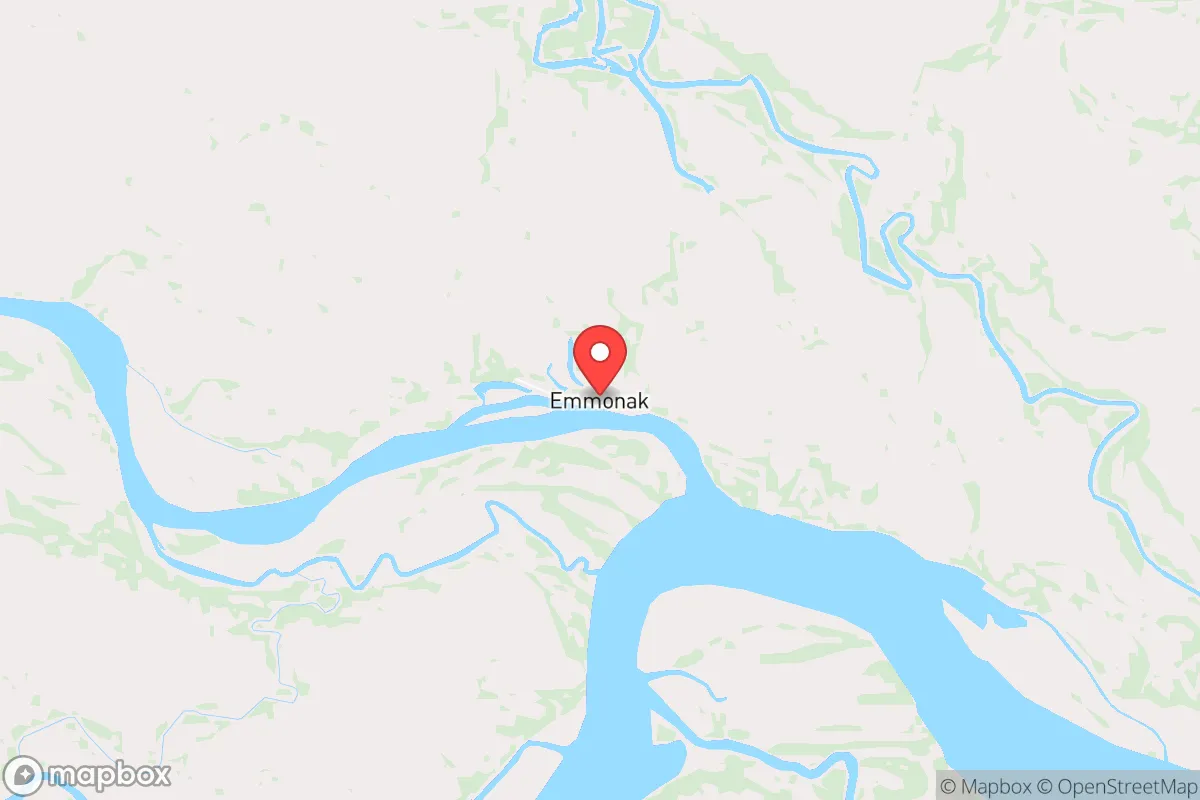
When you look at Emmonak next to other towns in the Yukon-Kuskokwim Delta, it’s actually more conservative than some of its neighbors. For instance, Bethel, about 130 miles to the southeast, leans much more left-leaning—it’s a regional hub with a lot of government and nonprofit workers who bring in a progressive vibe. Emmonak, by contrast, is a subsistence-based community where hunting, fishing, and trapping are still the backbone of daily life, and that keeps folks grounded in traditional values. Up the river, places like St. Marys and Mountain Village are similar to Emmonak politically, but even they’ve seen a shift toward more liberal candidates in local elections lately. The difference here is that Emmonak’s isolation—no road access, only air or river travel—has helped preserve a “mind your own business” attitude that resists the kind of government overreach you see in bigger towns.
What this means for residents
For those of us living here, the political climate directly affects how we live our lives. The R+6 lean means local leaders tend to push back on state mandates that feel like they’re meddling in our personal freedoms—like restrictions on subsistence harvests or new regulations on snowmachine use. But there’s a real tension now: the state government keeps trying to impose stricter environmental rules on the Kuskokwim River, which is our lifeline for salmon and whitefish. That’s a classic example of overreach that hits us hard, and it’s why most folks here vote Republican—not because they love the party, but because they see it as the only shield against bureaucrats who don’t understand our way of life. If the political tide shifts further left, I’m worried we’ll lose the ability to make our own choices about how we feed our families and pass on traditions to our kids.
One thing that sets Emmonak apart is the strong cultural pull of Yup’ik traditions, which often align with conservative values like self-reliance and community responsibility. There’s no real appetite here for the kind of progressive social experiments you see in Anchorage or Fairbanks—things like heavy-handed diversity mandates or climate policies that ignore rural realities. The local school board and tribal council still prioritize practical issues like fuel costs and infrastructure over ideological battles, but I’ve noticed more outside groups pushing for changes in how we talk about land use and resource management. It’s a slow shift, but if we don’t keep an eye on it, Emmonak could end up looking a lot like Bethel in a generation—and that’s a future I’d rather not see.

State Political ClimatePolitical Climate in Alaska
State Political AnalysisPolitical Environment in the State
Alaska has long been a unique political outlier — a state where libertarian-leaning individualism, resource extraction culture, and a deep suspicion of federal overreach create a political climate that leans Republican, but in a distinctly Alaskan way. The state hasn’t voted for a Democrat for president since 1964, and in 2024, Donald Trump carried it by 13 points. But don’t mistake that for a straight red-state playbook: Alaska’s politics are shaped by a strong independent streak, a small but concentrated progressive bloc in Anchorage and Juneau, and a rural Native population that often votes its own interests. Over the past 20 years, the biggest shift has been the slow erosion of the old moderate Republican establishment — think Lisa Murkowski and the late Ted Stevens — replaced by a more populist, Trump-aligned wing, while Democrats have consolidated power in the urban core.
Urban vs. rural divide
The political map of Alaska is a study in contrasts. Anchorage, home to about 40% of the state’s population, is the swing region — its sprawling suburbs like Eagle River and Chugiak lean conservative, while the downtown and midtown precincts vote reliably blue. In 2022, Anchorage’s mayoral race saw a moderate conservative win, but the city council has a progressive majority that has pushed zoning changes and mask mandates. Juneau, the capital, is a deep-blue enclave dominated by state government workers and environmental activists — think Portland-lite, but with more rain. Fairbanks is the conservative heartland of the Interior, with a strong military and mining presence that votes heavily Republican. The Mat-Su Borough (Wasilla, Palmer) is the state’s fastest-growing region and a conservative stronghold — Sarah Palin’s home turf — where property rights and gun culture are sacrosanct. Rural villages in the Bush, like Barrow (Utqiaġvik) and Bethel, tend to vote Democratic due to tribal affiliation and reliance on federal programs, but they’re culturally conservative on social issues. The divide isn’t just urban vs. rural — it’s coastal vs. Interior, with the oil-rich North Slope and the fishing communities of Kodiak and Homer adding their own wrinkles.
Policy environment
Alaska’s policy environment is a mixed bag for conservatives. On the plus side, there’s no state income tax and no statewide sales tax — the state funds itself through oil revenue and a Permanent Fund dividend that pays residents an annual check (around $1,700 in 2024). That’s a huge freedom win. Property taxes are low, and there’s no estate tax. But the regulatory posture is schizophrenic: the state has some of the most permissive gun laws in the country (constitutional carry, no waiting periods, no permit needed), yet it also has a powerful state bureaucracy that can slow-roll resource projects. Education policy is a flashpoint — the state’s school funding formula is underfunded, and there’s been a push for parental rights and school choice, but the teachers’ union in Anchorage is strong. Healthcare is a mess: Alaska has the highest per-capita healthcare costs in the nation, and the state expanded Medicaid under the ACA in 2015, which many conservatives see as a federal overreach that’s hard to unwind. Election laws are relatively clean — Alaska uses a top-four primary and ranked-choice voting for general elections, a system passed by ballot initiative in 2020 that has drawn fire from conservatives who see it as a way to dilute the Republican vote. A repeal effort is underway for 2026.
Trajectory & freedom
On the freedom front, Alaska is a tale of two trends. Gun rights are expanding — in 2023, the legislature passed a law prohibiting state and local enforcement of federal gun bans, a direct challenge to the ATF. Parental rights got a boost in 2024 with a law requiring school districts to notify parents of any changes to a student’s health or well-being, including gender identity discussions. But there’s a dark side: the state’s medical autonomy took a hit in 2022 when the Anchorage Assembly passed a mask mandate for public transit, and the state’s vaccine mandate for healthcare workers (later rescinded) caused a lot of bad blood. Property rights are under pressure from the federal government — 60% of Alaska is federal land, and the Biden administration’s restrictions on oil drilling in the Arctic National Wildlife Refuge and the National Petroleum Reserve have been a gut punch to the state’s economy. The Permanent Fund dividend has been cut multiple times by the legislature to fund government spending, which feels like a tax by another name. Overall, Alaska is still freer than most states, but the trend is toward more government control, especially in Anchorage and Juneau.
Civil unrest & political movements
Alaska doesn’t see the kind of street protests you’d find in Portland or Seattle, but there are real flashpoints. The Pebble Mine controversy in the Bristol Bay region has been a decades-long battle between resource developers and environmentalists, with protests and lawsuits on both sides. In 2020, Anchorage saw Black Lives Matter protests that turned into clashes with counter-protesters, and the city’s progressive mayor at the time was criticized for not protecting property. The Alaska Independence Party, which advocates for secession from the United States, still has a small but vocal following — it’s more of a libertarian protest vote than a serious movement. Election integrity has been a hot topic since the 2020 ranked-choice voting system was implemented; conservatives have organized recall efforts against legislators who supported it, and there’s a strong push to repeal it in 2026. Immigration politics are muted — Alaska has a small foreign-born population — but the state has seen a surge of in-migration from California and Washington since 2020, which has shifted the political balance in Anchorage and Juneau. You’ll notice a lot of “Don’t California My Alaska” bumper stickers.
Projection
Over the next 5-10 years, Alaska is likely to become more polarized, not less. The Mat-Su Borough and Fairbanks will continue to harden as conservative strongholds, while Anchorage and Juneau drift leftward as new arrivals from the Lower 48 bring their politics with them. The big wild card is the oil economy — if federal restrictions ease and new drilling opens up, the state’s fiscal health improves, which could slow the push for new taxes. But if oil revenues continue to decline, the state will face a choice: cut spending (which conservatives want) or implement a state income tax (which progressives are already floating). The ranked-choice voting system is likely to survive a repeal attempt, which means Alaska will remain a place where moderate Republicans and independents hold the balance of power. The biggest threat to freedom is the federal land issue — if the federal government continues to lock up resources, the state’s economy will stagnate, and more people will leave. In-migration from blue states will continue to dilute the conservative vote, but the state’s culture of self-reliance and suspicion of government is deeply rooted.
For a new resident, the bottom line is this: Alaska is still one of the most politically free states in the country, especially if you value gun rights, low taxes, and personal autonomy. But the freedom is uneven — you’ll feel it more in Wasilla or Fairbanks than in downtown Anchorage. The state’s politics are in flux, with a growing progressive urban core and a resurgent populist conservative movement in the suburbs and rural areas. If you’re moving here for freedom, pick your location carefully, get involved in local politics to protect what you’ve got, and brace for a fight over the state’s future. The Alaska you remember from 20 years ago is still here, but it’s under pressure — and the next decade will decide whether it stays that way.
* Values derived from national, state, county, city and local statistics and may differ in a specific area. Last updated: 2026-04-19T19:19:11.000Z
Narrative content on this page is AI-generated and may contain mistakes. Verify any details that matter before acting on them.
ReloMaps may earn a commission from affiliate links at no extra cost to you.

