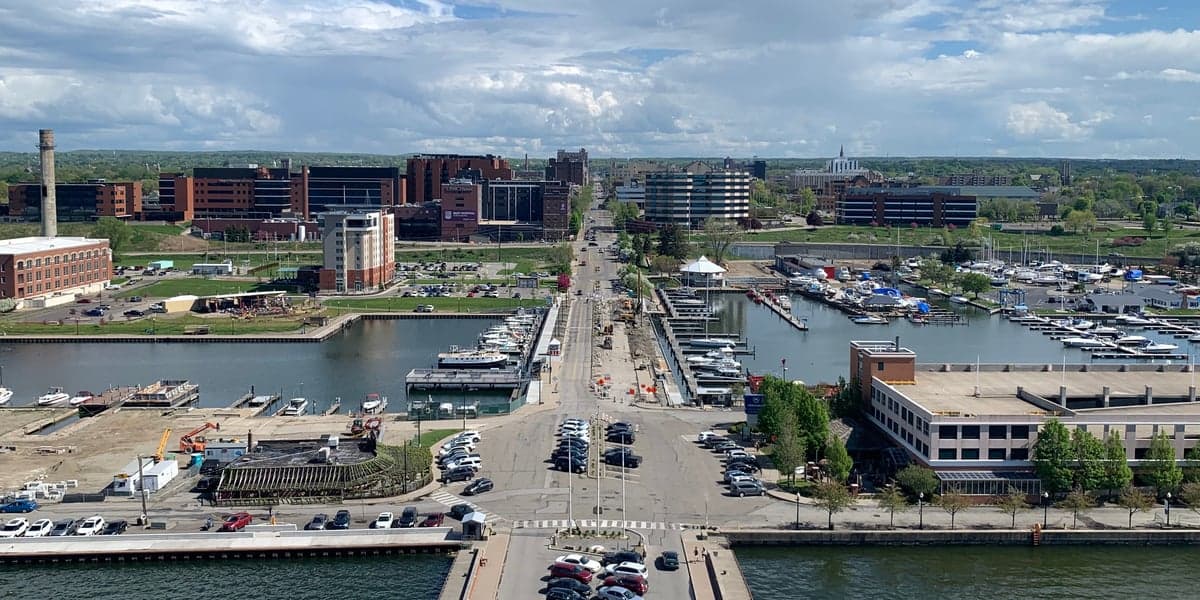
Photo: Wikipedia
Strategic Assessment of Erie, PA
Meaningful friction. Expect exposure to either population pressure, blast zones, or natural disaster risk. Consider buying a retreat property.
What does the Strategic Assessment tell us?
Our Strategic Assessment grades tactical survivability of an area. Major population centers, military targets, fallout zones, natural disasters, and border exposure all drive risk — lower exposure means a more defensible position in a crisis.
This is heavily inspired by Joel Skousen's Strategic Relocation book. Highly recommended you checkout the book ($)What does this tell us?
Our Strategic Assessment grades tactical survivability of an area. Major population centers, military targets, fallout zones, natural disasters, and border exposure all drive risk — lower exposure means a more defensible position in a crisis.
This is heavily inspired by Joel Skousen's Strategic Relocation book. Highly recommended you checkout the book ($)Strategic Pillars

Key Distances
Regional Safe Places
Below is our recommended "safe zones" in Pennsylvania and the surrounding area based on our strategic heuristics. For most people, it's unrealistic to live in a “safe zone” full-time due to work, family or other personal reasons. They tend to be more rural. However, many of these areas are perfect for second homes and retreat properties that double as a vacation home or even a short-term rental.
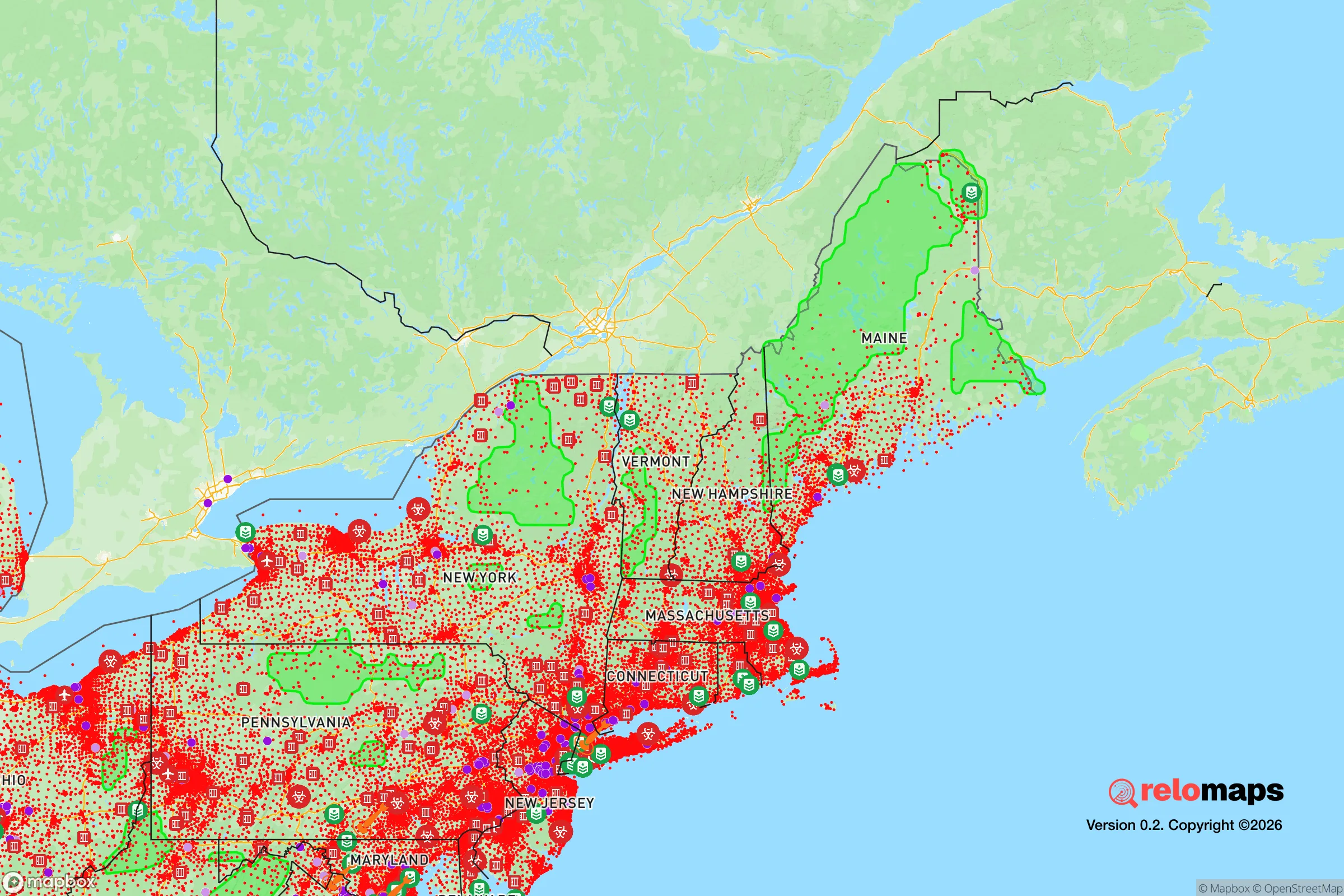
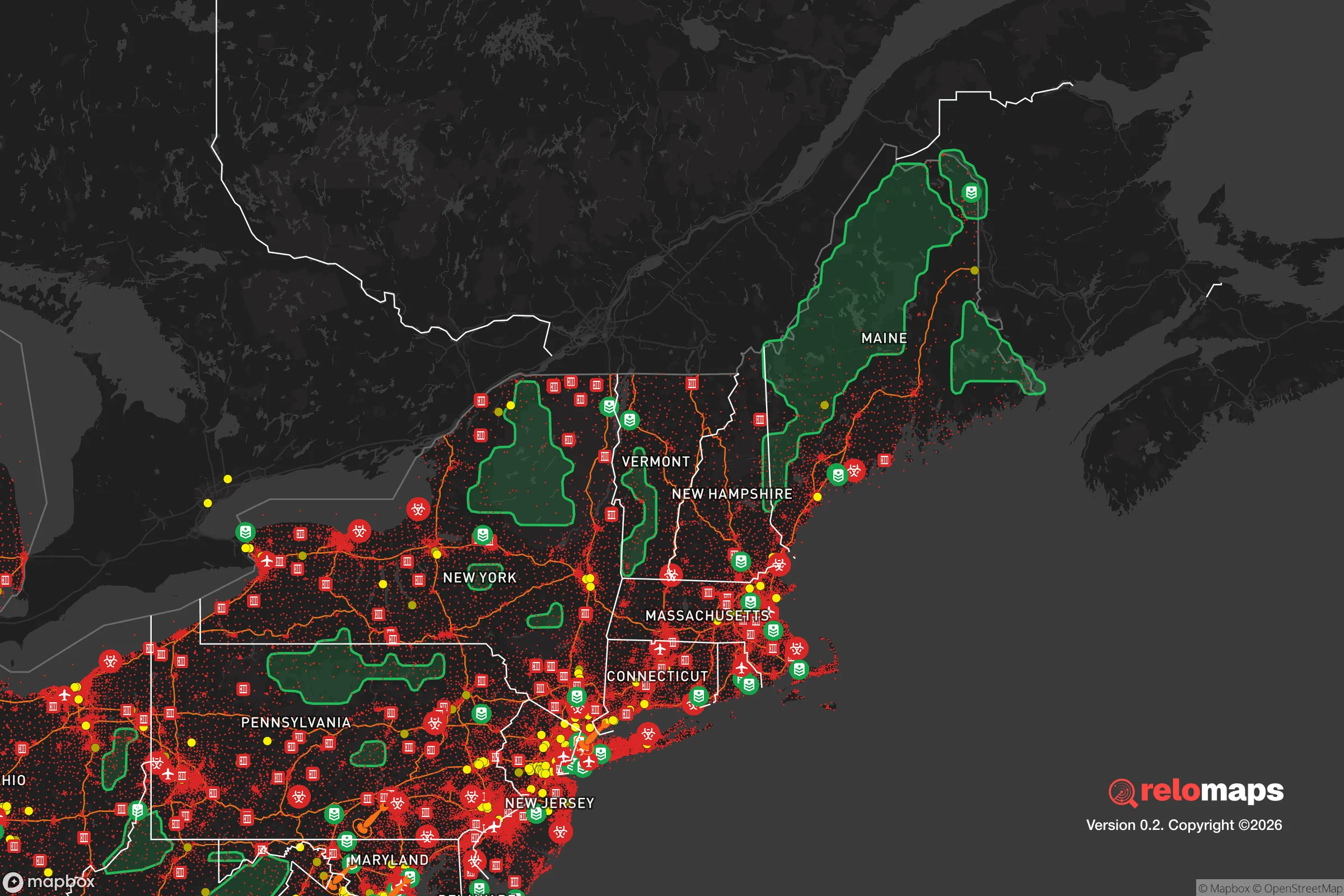


Important Note: For informational purposes only. This does not mean nothing bad ever happens in the green zones. Please use common sense. This is based on public data and modeled with AI. We tried to take a conservative approach but mistakes happen. We update this regularly as new information becomes available.
Solar Generator Recommendations
Backup power matters more here than in safer locations. We've picked three solar generators across budgets and capacity tiers — start with the budget unit if you only need a few essentials, or step up if you want to run a fridge and HVAC for days at a time.

Jackery Portable Power Station Explorer 300
Budget OptionPower on the Go: Weighing only 11 lbs, it's convenient to set up and store with book-sized foldable solar panels

BLUETTI Portable Power Station AC180
Designed for both indoor and outdoor scenarios, AC180 is highly capable as it has a robost capacity and continuous output power.

EF ECOFLOW DELTA Pro Ultra Power Station
Upgraded PickEcoFlow DELTA Pro Ultra is a whole-home energy system designed to grow with your family. Integrated with the Smart Home Panel 2, it scales to meet your evolving energy needs — keeping your home powered, intelligent, and secure through every stage of life.
We earn a commission, at no additional cost to you.
Strategic Assessment Analysis
Erie, Pennsylvania, often flies under the radar in strategic relocation discussions, but its position on the southern shore of Lake Erie offers a unique blend of industrial resilience and geographic insulation that deserves a hard look. For those thinking in terms of long-term preparedness—civic unrest, supply chain disruptions, or larger-scale societal shocks—Erie presents a mixed bag: it has genuine natural advantages in water and energy, but it also sits uncomfortably close to some major risk vectors. The city’s population has hovered around 94,000, down from its peak, which means infrastructure is underutilized and housing is affordable, but it also means the local economy has been through a wringer and hasn’t fully bounced back. This isn’t a polished suburban enclave; it’s a working-class Great Lakes town with grit, and that grit matters when the lights go out elsewhere.
Geographic position and natural advantages for long-term security
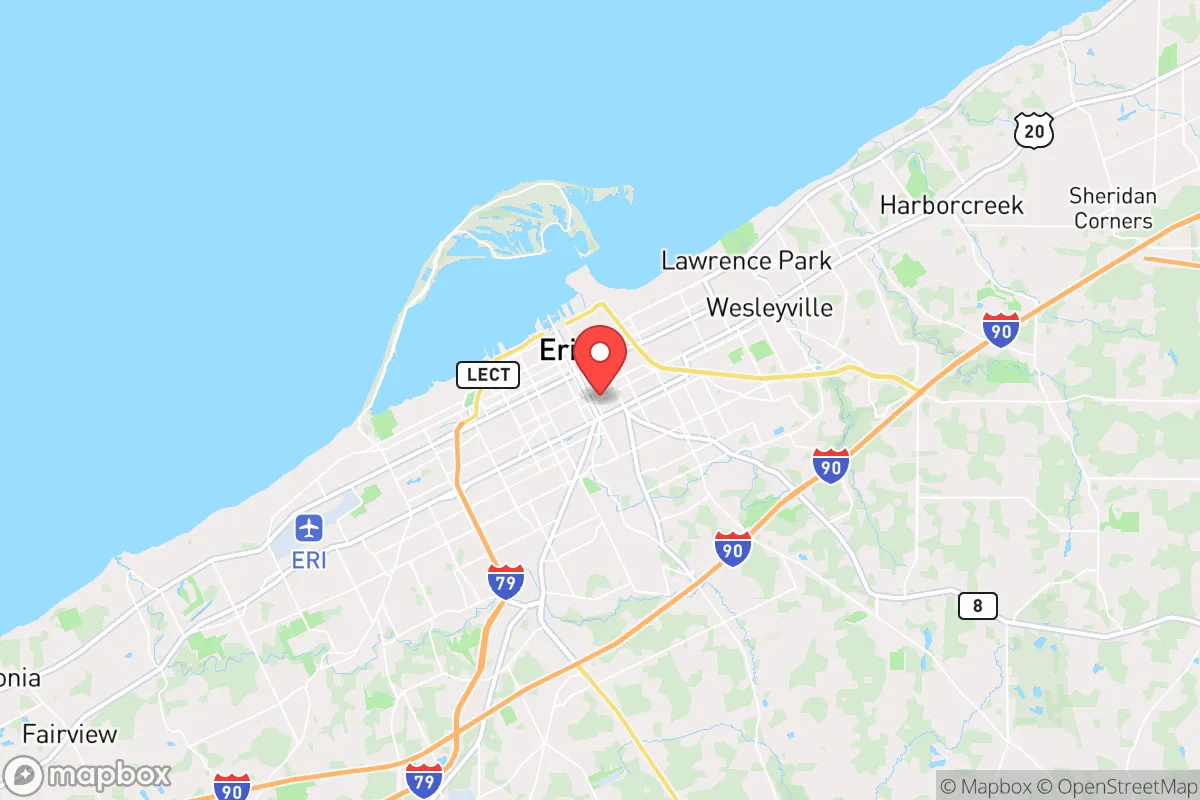
Erie’s single most important asset is Lake Erie itself, one of the largest freshwater bodies on the planet. In a scenario where municipal water systems fail or become contaminated, having a massive, unfrozen (most of the year) source of potable water within walking distance of much of the city is a strategic trump card. The lake also moderates the climate, giving Erie a longer growing season than inland areas at the same latitude—useful if you’re planning any kind of food production. The city sits at the northwestern corner of Pennsylvania, roughly 100 miles from Cleveland, 90 miles from Buffalo, and 120 miles from Pittsburgh. That’s close enough to tap into regional resources if things are stable, but far enough that you’re not in the immediate blast radius of a major metropolitan collapse. The surrounding terrain is mostly rolling farmland and hardwood forest, offering decent cover and hunting potential. The Presque Isle peninsula, a 3,200-acre state park, provides a natural barrier against lake storms and a recreational buffer, but also a potential chokepoint if you need to control access from the water. For a prepper, the combination of abundant fresh water, arable land, and moderate population density is a solid foundation—provided you can manage the risks that come with being a regional hub.
Risks, exposures, and proximity to fallout-relevant landmarks
Here’s where the analysis gets sobering. Erie is not a remote bunker location. It’s a port city with a history of heavy industry, and that legacy creates specific vulnerabilities. The most glaring risk is proximity to the Perry Nuclear Power Plant, located just 35 miles northeast in North Perry, Ohio, on the lake shore. In a major seismic event or a targeted attack, that plant becomes a primary fallout concern. The prevailing winds in the region blow from the west and southwest, meaning a release from Perry would push contamination directly toward Erie and into Pennsylvania. Additionally, the city itself sits on a major rail corridor (CSX and Norfolk Southern lines) and is bisected by Interstate 90, a key east-west artery. In a mass evacuation scenario from the Northeast or Midwest, Erie would become a chokepoint and a target for looting or refugee flow. The city’s industrial past has left behind brownfields and former manufacturing sites—nothing that would cause a Chernobyl-level event, but enough legacy pollution that you wouldn’t want to be drinking shallow groundwater in certain neighborhoods. On the human threat side, Erie has struggled with opioid addiction and poverty; the poverty rate hovers around 20%. In a prolonged crisis, that population could become desperate or mobilized. The city’s police force, while professional, is stretched thin—about 150 officers for a city of 94,000. Defensibility is moderate: the bay and lake provide a natural barrier to the north, but the city is wide open from the south and east, with no significant geographic obstacles. If you’re looking for a place that’s off the grid and invisible, Erie is not that place. It’s a visible, known node on the Great Lakes map.
Practical resilience for a relocator: food, water, energy, and defensibility
Let’s get tactical. Water is Erie’s strongest card. Lake Erie holds 116 cubic miles of water, and the city’s water treatment plant draws from an intake crib miles offshore, reducing contamination risk from shoreline runoff. In a grid-down scenario, you could theoretically gravity-feed from the lake if you’re on the north side of town, but most residents will need to plan for manual pumping or filtration. The city’s water infrastructure is aging—some pipes date to the 1920s—but the raw supply is virtually limitless. Food is a mixed picture. Erie County has about 1,200 farms, mostly dairy and row crops (corn, soybeans, hay). There are also several Amish and Mennonite communities in the surrounding counties (Crawford, Warren) that practice low-tech, resilient agriculture. In a collapse, those communities will be your best bet for barter and trade, but they’re also insular and may not welcome outsiders. For energy, Erie benefits from the Lake Erie wind resource—offshore wind potential is significant, though not yet developed. On the ground, natural gas is plentiful thanks to the Marcellus Shale formation, and there are several gas-fired power plants in the region (e.g., the Erie West Power Plant). In a prolonged outage, natural gas supplies could be disrupted, but propane and heating oil are widely available for backup. Solar potential is moderate—Erie gets about 160 sunny days per year, less than the national average, but still workable with proper panel tilt. Defensibility is the weak link. The city is flat and sprawling, with few natural chokepoints. The best defensive positions are the bluffs overlooking the lake on the west side and the Presque Isle peninsula, but those are also the most desirable real estate and would be contested. For a single individual or a family, the smart play is to secure a property on the outskirts—say, in the rural townships of Millcreek or Fairview to the west, or in the wooded hills of southern Erie County—where you have space for a garden, a well, and a buffer from the city’s potential chaos. Urban prepping in Erie itself is possible but risky; you’d need a strong community network and a fortified dwelling.
The overall strategic picture for Erie is one of calculated trade-offs. It’s not a survivalist paradise—you’re too close to nuclear infrastructure, major transport corridors, and a struggling urban core to call it a retreat. But it’s also not a death trap. The lake gives you water security that 90% of the country lacks. The surrounding farmland and Amish networks offer a food safety net that suburban sprawl can’t match. And the region’s industrial heritage means there’s a skilled workforce and machine shops that could be invaluable for repairs and fabrication in a post-grid world. For a conservative-minded relocator who wants to be prepared without going full off-grid hermit, Erie offers a middle path: you can live in a real city with hospitals, schools, and infrastructure, while maintaining a retreat property within a 30-minute drive that has its own well, septic, and solar. The key is to avoid the trap of thinking Erie itself is the safe zone. Treat the city as a resource node—a place to trade, work, and access medical care—but base your actual homestead in the surrounding countryside. If you do that, Erie’s location on the Great Lakes becomes a strategic asset rather than a liability. Just keep an eye on the wind direction from Perry, and have a plan for the I-90 corridor if things go sideways. It’s not a perfect answer, but in an imperfect world, it’s a solid one.

* Values derived from national, state, county, city and local statistics and may differ in a specific area. Last updated: 2026-05-02T00:27:13.000Z
Narrative content on this page is AI-generated and may contain mistakes. Verify any details that matter before acting on them.
ReloMaps may earn a commission from affiliate links at no extra cost to you.

