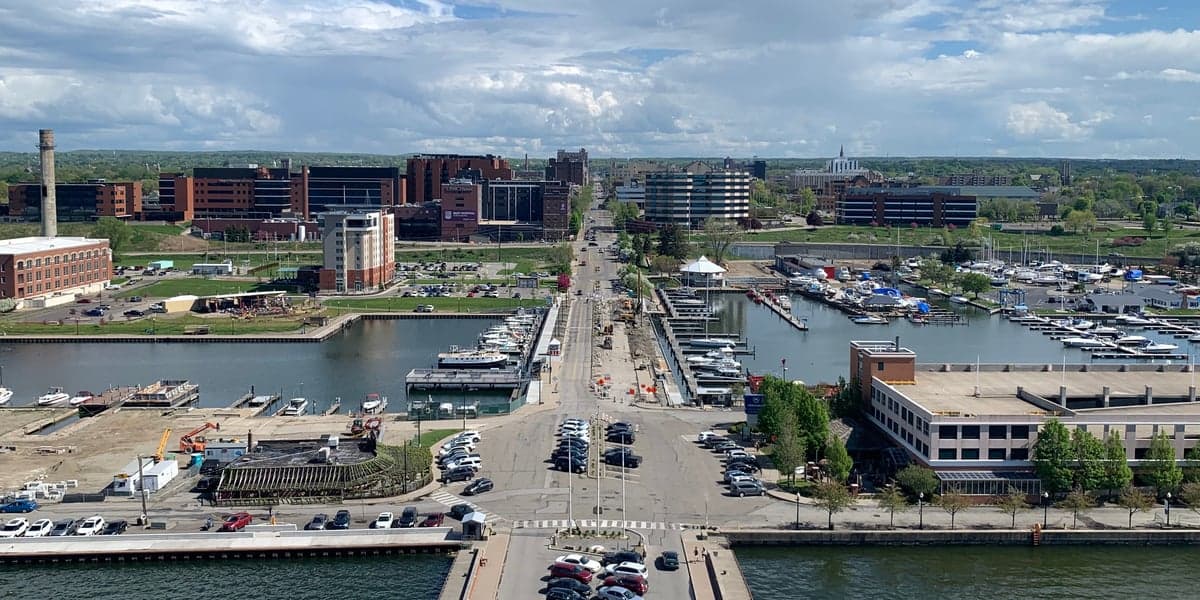
Photo: Wikipedia
Political ClimatePolitical Climate in Erie, PA
District shown is the primary district for this city’s centroid. Cities may span multiple districts.
Local Political AnalysisPolitical Analysis of Erie, PA
Erie, Pennsylvania, has long been a bellwether for the state’s political mood, but the ground has shifted under our feet in a way that’s hard to ignore. The Cook PVI now rates the district at R+11, meaning it leans 11 points more Republican than the national average. That’s a stark contrast to the blue-collar, union-heavy Democratic stronghold it was even a decade ago. The real story, though, isn’t just about party labels—it’s about a growing unease with government overreach and a quiet pushback against progressive policies that many locals feel are being forced on them from Harrisburg and Washington.
How it compares
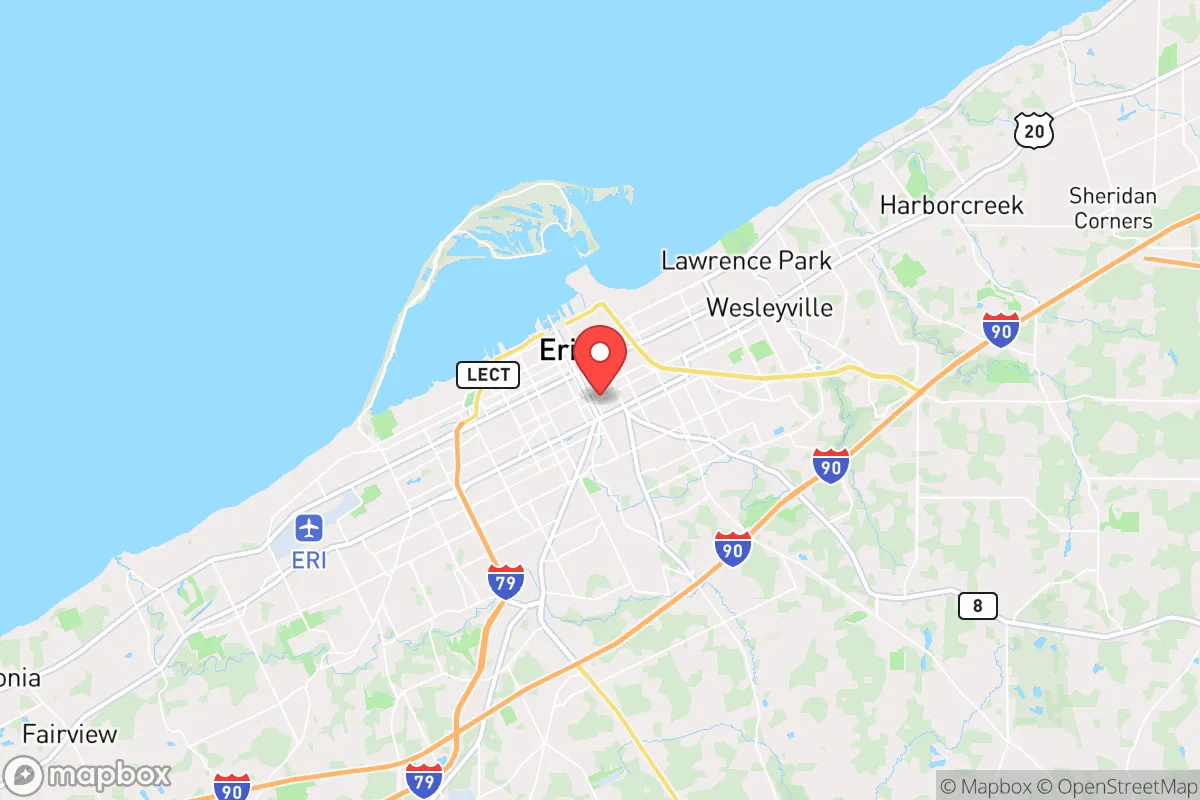
Drive 30 minutes south to Meadville, and you’ll find a reliably red, rural conservatism that’s been steady for generations. Head east to Warren, and it’s a similar story—hunting, fishing, and a deep skepticism of any new regulation. But Erie itself is a different animal. The city proper still votes blue in local races, thanks to a concentrated population of union workers and newer arrivals from places like Buffalo and Cleveland. The surrounding townships—Millcreek, Fairview, Harborcreek—are where the real shift is happening. These are the folks who used to split tickets but now vote straight Republican, fed up with mask mandates, school board battles over curriculum, and property tax hikes that never seem to fund what they promised. The contrast isn’t just between Erie and its neighbors; it’s between the old Erie that trusted the system and the new Erie that’s watching its freedoms erode one ordinance at a time.
What this means for residents
For the average family here, the political climate translates directly into daily life. You’re seeing more neighbors at county commission meetings, not just to complain about potholes, but to push back against zoning changes that feel like a backdoor to more government control. The school board elections have become battlegrounds over parental rights—whether you have a say in what your kid reads or whether a teacher can push a political agenda without your consent. The biggest red flag for many is the creeping influence of state-level progressive policies, like the push for electric vehicle mandates or renewable energy quotas that would hammer the local manufacturing base. People here remember when Erie was a place where you could buy a house on a factory salary and raise a family without constant interference. That memory is fading, and the R+11 rating reflects a population that’s voting to hold the line.
There’s also a cultural distinction that’s hard to put into numbers but easy to feel. Erie has a strong, independent streak—it’s a lake town, a fishing town, a place where people still wave at each other on the road. The progressive push for things like sanctuary city status or defunding the police has been met with fierce resistance, not because people are cruel, but because they see it as a threat to the community they’ve built. If you’re looking for a place where personal freedoms are still respected and government stays out of your business, Erie’s suburbs and exurbs are holding that line. The city itself may be a toss-up in the next few cycles, but the surrounding area is digging in. Long-term, I see Erie County becoming a patchwork—blue in the urban core, red everywhere else—with the red growing louder and more organized. The question is whether the progressives in Harrisburg will listen before they lose the whole region for good.

State Political ClimatePolitical Climate in Pennsylvania
State Political AnalysisPolitical Environment in the State
Pennsylvania is a classic purple state that has been drifting leftward over the past 20 years, though it still retains a strong conservative backbone in its rural and exurban regions. The state voted for Joe Biden by just 1.2 points in 2020 after going for Donald Trump by 0.7 points in 2016, and the 2024 race was again decided by razor-thin margins. The dominant coalitions are the urban progressive machine centered on Philadelphia and Pittsburgh, and the more traditional, working-class conservative base in the central and northern counties. Over the last decade, the Philadelphia suburbs have shifted sharply left, while the rural west and north have become even more Republican, creating a political landscape that feels like two different countries sharing a border.
Urban vs. rural divide
The political map of Pennsylvania is a textbook case of the urban-rural chasm. Philadelphia and its collar counties—Montgomery, Delaware, Chester, and Bucks—are the engine of the Democratic vote, with Philadelphia itself delivering over 600,000 votes for Biden in 2020. Pittsburgh and its immediate suburbs in Allegheny County are also reliably blue, though the surrounding counties like Washington, Westmoreland, and Butler have become deeply red. The real battlegrounds are the "collar counties" like Bucks and Chester, which were once Republican strongholds but have flipped decisively Democratic as professionals and suburbanites moved in. Meanwhile, places like Lancaster, York, and Lebanon counties remain solidly conservative, with Lancaster County voting +15 for Trump in 2020. The rural northern tier—counties like Tioga, Bradford, and Potter—are among the most Republican in the entire Northeast, often delivering 70%+ margins for the GOP. The divide is so stark that a drive from the liberal enclave of State College to the conservative stronghold of Bellefonte is a 15-minute trip that feels like crossing a political ocean.
Policy environment
Pennsylvania's policy environment is a mixed bag for conservatives. The state has a flat income tax rate of 3.07%, which is relatively low and hasn't changed in years, but property taxes are among the highest in the nation, averaging around 1.5% of home value. There is no state sales tax on clothing or groceries, which helps families. The regulatory posture is moderate—not as heavy as New York or New Jersey, but not as light as Texas or Florida. Education policy is a flashpoint: the state has a massive funding disparity between wealthy suburban districts and poorer rural ones, and the 2023 Commonwealth Court ruling that the school funding system is unconstitutional has opened the door to potential tax hikes. Healthcare is dominated by UPMC and Penn Medicine, which gives them near-monopoly power in their regions. Election laws are a sore spot: Pennsylvania has no-excuse mail-in voting (passed in 2019 under Act 77), which conservatives argue has eroded election integrity, and the state's voter ID laws are among the weakest in the country—you don't need a photo ID to vote in person. The state also has a Democratic governor, Josh Shapiro, who has vetoed several conservative bills, including a 2023 bill that would have banned gender transition procedures for minors.
Trajectory & freedom
Pennsylvania is becoming less free by the year, especially for conservatives who value gun rights, parental rights, and limited government. On the positive side, the state is a "shall issue" state for concealed carry, and there is no permit required to open carry. However, in 2022, Governor Shapiro signed an executive order requiring universal background checks on all firearm sales, including private transfers, which gun rights advocates see as an infringement. The state also has a "red flag" law that allows courts to temporarily confiscate firearms from individuals deemed a risk, passed in 2023. On parental rights, the state has not passed a Parents Bill of Rights, and school districts in progressive areas like Philadelphia and Pittsburgh have implemented policies that allow students to change their gender identity without parental consent. Medical autonomy took a hit in 2023 when the state expanded Medicaid coverage for gender transition procedures, including for minors, which many conservatives view as government overreach. Property rights are generally respected, but the state's Act 47 program allows municipalities to impose additional taxes and regulations on distressed communities, which can feel like a backdoor infringement. The overall trajectory is concerning: the state is moving toward more government control, not less.
Civil unrest & political movements
Pennsylvania has seen its share of political flashpoints. The 2020 election was a firestorm, with Trump's campaign challenging the state's mail-in ballot procedures and the Supreme Court ultimately rejecting the challenge. The "Stop the Steal" movement was particularly active in central Pennsylvania, with rallies in Harrisburg and Lancaster. On the left, the Black Lives Matter protests in Philadelphia in 2020 were among the largest in the country, with widespread property damage and looting. The city's progressive district attorney, Larry Krasner, has been a lightning rod, with conservatives accusing him of being soft on crime—he was impeached by the state House in 2022 but acquitted by the Senate. Immigration politics are less heated than in border states, but Philadelphia is a sanctuary city, and the state has a law that prohibits local police from asking about immigration status. There have been no serious secession or nullification movements, but the rural-urban divide has fueled talk of splitting the state into two—a "Pennsylvania" and a "West Pennsylvania"—though it's mostly barstool talk. Election integrity remains a live issue, with the 2024 election again seeing disputes over mail-in ballot deadlines and signature verification.
Projection
Over the next 5-10 years, Pennsylvania is likely to continue its slow leftward drift, driven by the growth of the Philadelphia suburbs and the influx of out-of-state transplants from New York and New Jersey. The rural areas will continue to shrink and age, making it harder for conservatives to win statewide elections. The 2024 election results showed that the GOP can still win if they turn out the base in places like Luzerne and Erie counties, but the trend lines are not favorable. The state's population is projected to grow slightly, but mostly in the southeastern corner, which will only amplify the urban-rural divide. For a conservative moving in now, expect to see more progressive policies on education, healthcare, and gun control, especially if Democrats hold the governor's mansion. The state's tax structure is unlikely to change dramatically, but property taxes could rise if the school funding lawsuit forces a redistribution of wealth from rural to urban districts. The best bet for conservatives is to settle in the red counties like Lancaster, York, or Butler, where local government is still friendly to traditional values.
For a new resident, the bottom line is that Pennsylvania offers a mix of low income taxes and high property taxes, a decent regulatory environment, and a political climate that is increasingly hostile to conservative values. If you're moving here, choose your county carefully—the difference between living in Bucks County and Lancaster County is the difference between living in a blue state and a red state. The state is not yet lost, but the battle lines are drawn, and the fight for freedom is ongoing. If you value gun rights, parental control, and limited government, you'll need to be politically active to keep Pennsylvania from becoming another New Jersey.
* Values derived from national, state, county, city and local statistics and may differ in a specific area. Last updated: 2026-05-02T00:27:13.000Z
Narrative content on this page is AI-generated and may contain mistakes. Verify any details that matter before acting on them.
ReloMaps may earn a commission from affiliate links at no extra cost to you.

