Photo: Wikipedia
Political ClimatePolitical Climate in Eunice, LA
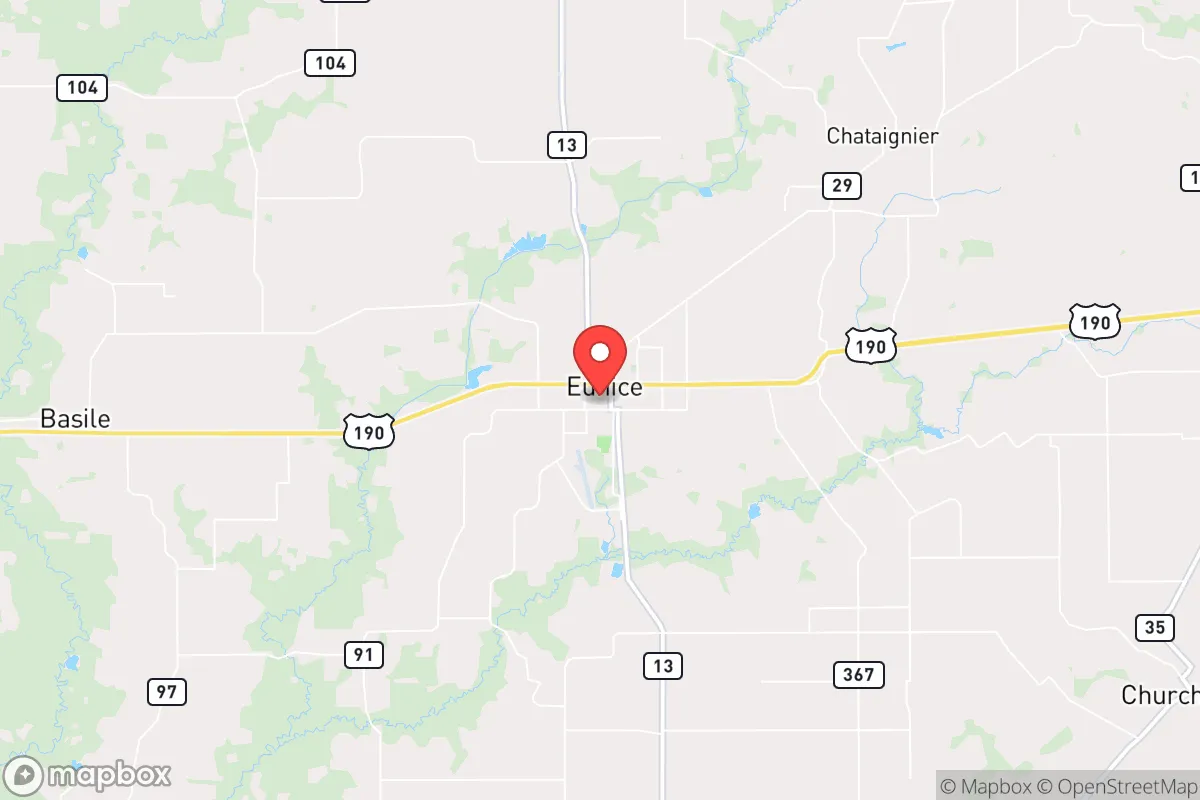
District shown is the primary district for this city’s centroid. Cities may span multiple districts.
Local Political AnalysisPolitical Analysis of Eunice, LA
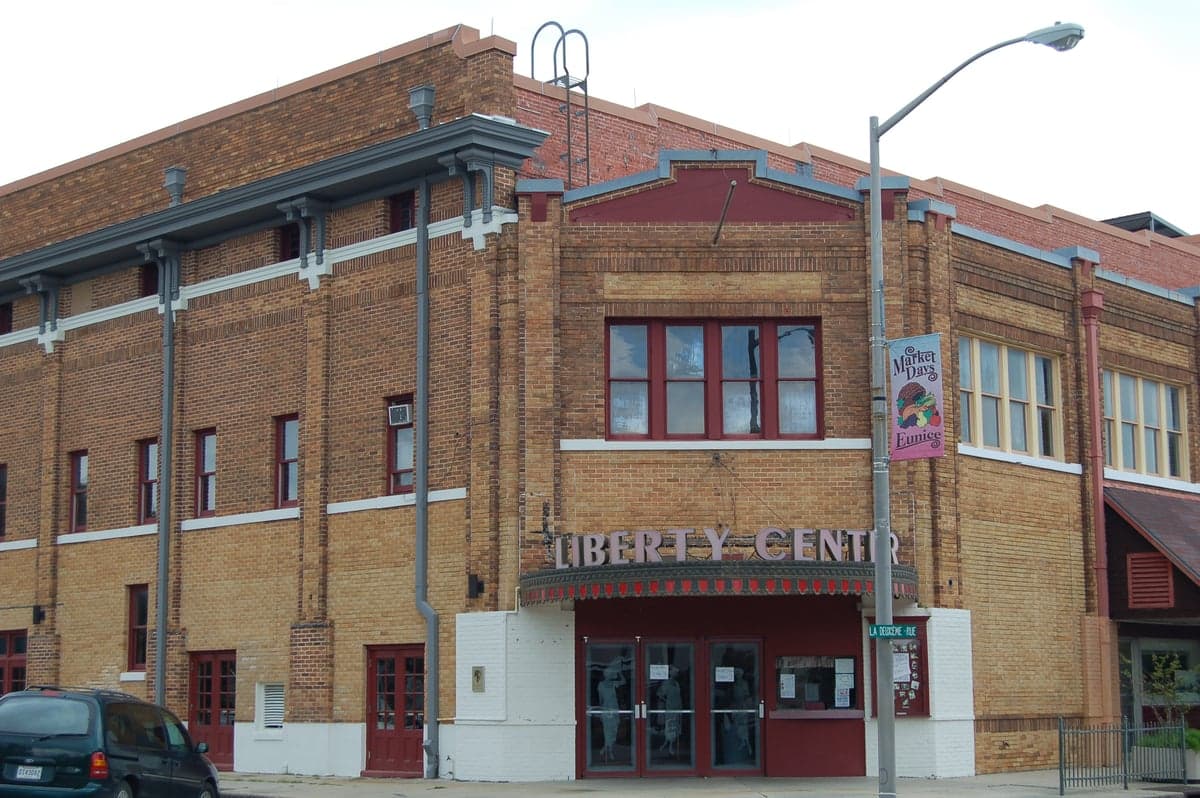
Eunice, Louisiana, sits in a unique political pocket. While the surrounding Acadiana region has deep conservative roots, Eunice itself is a bit of an outlier, carrying a Cook PVI of D+8. That means, on paper, it leans more Democratic than the rest of the state. But don't let that number fool you into thinking it's some progressive stronghold. This is still a place where folks wave the flag, go to church on Sunday, and value their privacy. The real story is that the local Democratic tradition here is an old-school, blue-dog kind—fiscally cautious, socially traditional, and deeply skeptical of any government telling them how to live their lives. Over the last decade, though, you've seen that loyalty start to fray as national party shifts make local folks uneasy.
How it compares
Drive twenty minutes north to Ville Platte, and you'll find a similar blue-dog vibe, but head east toward Opelousas or west toward Jennings, and the politics get noticeably redder. Those towns vote more in line with the statewide trend, which has been solidly Republican for years. The real contrast is with Lafayette, about 40 miles southeast. Lafayette has seen a younger, more transient population bring in a more progressive, college-town energy. In Eunice, that kind of change is viewed with a wary eye. People here remember when you didn't lock your doors, and they see the cultural shifts in bigger cities as a direct threat to that way of life. The D+8 rating is less about embracing new ideas and more about a stubborn, generational attachment to the local Democratic party that handled the parish's business for decades—a party that's now unrecognizable to many of its old guard.
What this means for residents
For someone living here, the political climate means a constant, low-grade tension. You see it in local school board meetings and city council votes. There's a real fear that the progressive policies sweeping other parts of the country—think overreaching health mandates, heavy-handed zoning, or curriculum changes that don't reflect local values—could eventually trickle down. The biggest concern is government overreach into personal freedoms. Whether it's talk of stricter gun laws or state-level interference in how a small business operates, the attitude is "leave us alone." The local economy is built on agriculture, oil and gas, and small family-run shops. Any policy that adds red tape or raises costs is seen as an attack on that way of life. You'll hear folks say, "We don't need Baton Rouge or Washington telling us how to run our crawfish ponds or our churches."
What daily life is like for families
For families, this political backdrop means a lot of things stay the same, which is exactly how most want it. The schools still say the Pledge of Allegiance, the local festivals are centered around faith and food, and the biggest political debates are usually about potholes or drainage, not social experiments. The concern for the long term is that as younger people leave for bigger cities and new folks move in from places like California or Texas, the political balance could tip. There's a quiet worry that the next census or redistricting could dilute the local voice even further. For now, though, daily life is insulated. You can still have a conversation with your neighbor without worrying about their politics, because most agree on the fundamentals: freedom, family, and being left alone to live your life the way you see fit.

State Political ClimatePolitical Climate in Louisiana
State Political AnalysisPolitical Environment in the State
Louisiana has long been a reliably Republican state at the federal level, but its political climate is far more nuanced than a simple red-state label suggests. The state has voted for the GOP presidential candidate in every election since 2000, with Donald Trump carrying it by nearly 20 points in 2020 and again in 2024. However, the state’s political culture is a unique blend of Deep South conservatism, Cajun libertarianism, and a lingering populist streak that keeps state-level races competitive. Over the past two decades, the GOP has solidified its dominance in the legislature and statewide offices, but the Democratic Party still holds significant power in a few key parishes, particularly around New Orleans and Baton Rouge. The trajectory has been a slow but steady march rightward, with the biggest shifts happening in the suburbs and exurbs.
Urban vs. rural divide
The political map of Louisiana is a textbook example of the urban-rural split that defines American politics today. The Democratic strongholds are concentrated in the state’s two major urban centers: New Orleans (Orleans Parish) and Baton Rouge (East Baton Rouge Parish). Orleans Parish voted over 80% for Joe Biden in 2020, making it one of the most reliably blue urban cores in the South. Baton Rouge is more competitive but still leans Democratic, driven by the state capital’s government workforce and Louisiana State University’s academic community. The rest of the state is overwhelmingly Republican. The Acadiana region around Lafayette and Lake Charles is deeply conservative, with Lafayette Parish voting +30 points for Trump. The Florida Parishes north of Lake Pontchartrain—St. Tammany, Tangipahoa, and Washington—are some of the most reliably red areas in the state, with St. Tammany Parish often delivering 70%+ for GOP candidates. The rural parishes of north Louisiana, like Ouachita (Monroe) and Caddo (Shreveport), are also solidly Republican, though Shreveport itself remains a blue island. The key battlegrounds are the suburban parishes surrounding New Orleans and Baton Rouge, such as Jefferson, St. Charles, and Livingston, which have been trending harder right over the last decade as conservative families flee the urban cores.
Policy environment
Louisiana’s policy environment is a mixed bag for conservatives. On the plus side, the state has no personal property tax, and its homestead exemption is generous, protecting the first $75,000 of a home’s value from property tax. The state income tax is a flat 4.25% as of 2025, down from a progressive 6% in the early 2020s, thanks to a tax reform package pushed by Governor Jeff Landry. Sales taxes are high, averaging around 9.5% with local add-ons, but the overall tax burden is moderate. The state is a right-to-work state with a strong anti-union posture, and it has some of the weakest environmental regulations in the country, which is a boon for the oil and gas industry. On the education front, Louisiana has a robust school choice program, including the Louisiana Scholarship Program and a growing charter school sector, especially in New Orleans. However, the state’s public school system ranks near the bottom nationally, and the teacher’s union remains a powerful force in Baton Rouge. Healthcare policy is a sore spot: the state expanded Medicaid under the Affordable Care Act in 2016, a decision that many conservatives view as a costly federal dependency. Election laws are generally sound, with voter ID requirements in place, though the state has not gone as far as Georgia or Texas in tightening absentee ballot rules.
Trajectory & freedom
Louisiana is on a clear trajectory toward greater personal freedom in several key areas, but the picture is uneven. The biggest win for conservatives in recent years was the passage of Constitutional Carry (Act 54) in 2024, allowing law-abiding citizens to carry a concealed firearm without a permit. This was a major victory for gun rights advocates and a sign that the legislature is responsive to the Second Amendment community. On parental rights, the state passed the Parents’ Bill of Rights (Act 466) in 2023, which requires schools to notify parents of any changes to a child’s mental, emotional, or physical health, and prohibits schools from hiding information about a child’s gender identity. This law is one of the strongest in the South and has drawn national attention. On the medical autonomy front, Louisiana has not gone as far as some states in restricting COVID-19 mandates, but Governor Landry signed an executive order in 2024 banning vaccine passports for state services. Property rights are generally strong, with no statewide zoning in many rural parishes, though coastal erosion and flood insurance mandates remain a heavy-handed federal intrusion. The biggest threat to freedom in Louisiana is the state’s reliance on federal funding—over 40% of the state budget comes from Washington—which creates a long-term dependency that limits the state’s ability to chart its own course.
Civil unrest & political movements
Louisiana has a history of political volatility, but large-scale civil unrest has been relatively rare compared to other states. The most notable flashpoint in recent memory was the Alton Sterling protests in Baton Rouge in 2016, which led to several nights of clashes between protesters and police, and ultimately the ambush killing of three law enforcement officers. That event left a deep scar on the state’s political psyche and hardened the divide between urban activists and rural conservatives. More recently, the Take ‘Em Down NOLA movement in New Orleans has pushed for the removal of Confederate monuments, leading to heated city council debates but little street-level violence. On the right, the Louisiana Republican Party has become more organized and assertive, with groups like the Louisiana Family Forum driving the parental rights and anti-abortion agenda. Immigration politics are less heated here than in border states, but there is growing concern in parishes like Calcasieu (Lake Charles) about the influx of migrants from Central America, which has strained local resources. Election integrity was a major issue in 2020 and 2022, with the state legislature passing a series of bills to tighten voter ID laws and limit mail-in ballot access, though no widespread fraud was ever proven. The state’s unique jungle primary system, where all candidates regardless of party run on the same ballot, keeps the political culture less polarized than in states with closed primaries.
Projection
Over the next five to ten years, Louisiana is likely to become even more conservative at the state level, but the demographic trends are concerning for long-term GOP dominance. The state is losing population—it was one of only three states to lose a congressional seat after the 2020 census—and the people leaving are disproportionately young, educated, and moderate. The ones moving in are often retirees from the Midwest and Northeast, who tend to be conservative but also bring higher expectations for services like healthcare and infrastructure. The urban cores of New Orleans and Baton Rouge will continue to shrink and become more Democratic, while the suburbs and exurbs will grow and become more Republican. The biggest wildcard is the coastal erosion crisis, which is already forcing the relocation of entire communities in Plaquemines and Terrebonne parishes. If the federal government steps in with massive relocation funding, it could bring a wave of new residents and federal oversight that shifts the political calculus. For now, expect the state to continue its rightward drift on cultural issues—abortion, guns, parental rights—while struggling with the economic realities of a shrinking tax base and aging infrastructure.
For a conservative considering a move to Louisiana, the bottom line is this: you will find a state that largely respects your values on guns, family, and local control, but you will also have to accept a lower level of public services and a higher crime rate in the urban areas than you might be used to. The best bet is to target the suburban parishes like St. Tammany or Livingston, where the schools are decent, the taxes are manageable, and the politics are reliably red. Avoid Orleans Parish unless you are prepared for high taxes, crime, and a progressive city government that is often at odds with the state. The state’s political climate is stable and trending in the right direction, but it is not a paradise—it is a place where freedom comes with a dose of reality.
* Values derived from national, state, county, city and local statistics and may differ in a specific area. Last updated: 2026-05-01T08:40:52.000Z
Narrative content on this page is AI-generated and may contain mistakes. Verify any details that matter before acting on them.
ReloMaps may earn a commission from affiliate links at no extra cost to you.

