Photo: Wikipedia
Demographics of Eureka, MT
Affluence Level in Eureka, MT
A low-income area with significant economic hardship. Household wealth and educational attainment are well below national averages.
People of Eureka, MT
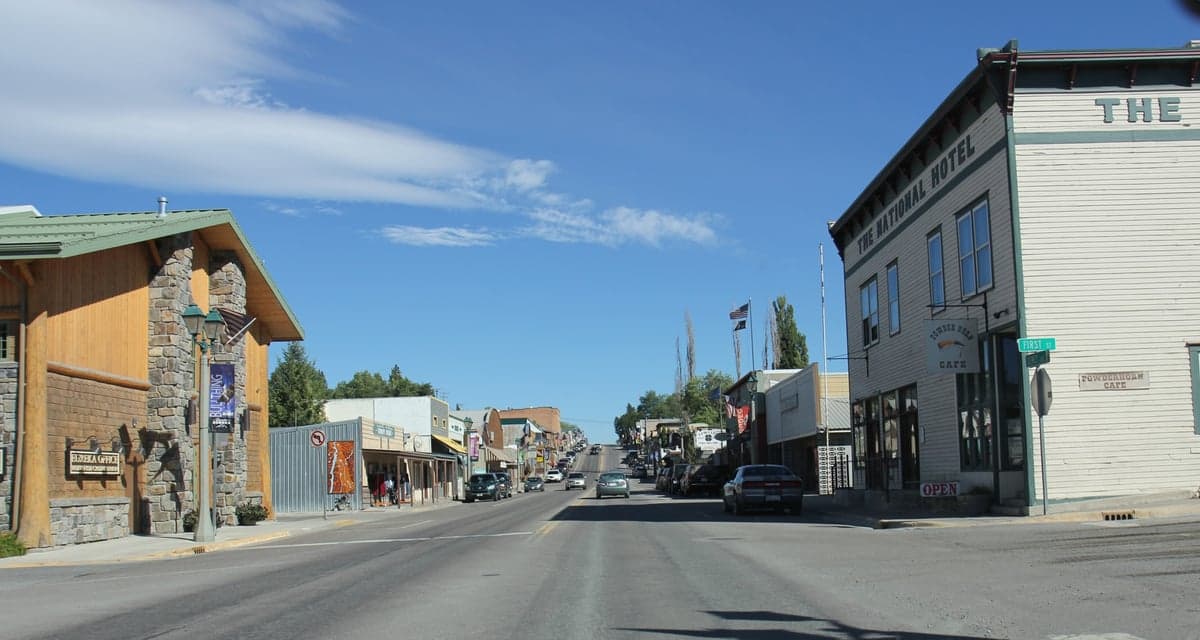
Eureka, Montana, is a small, predominantly white community of 2,009 residents, characterized by its rural, working-class character and a strong sense of local identity rooted in the region's logging and railroad history. With a population that is 87.7% white and a foreign-born rate of just 1.0%, it remains one of the least ethnically diverse towns in Lincoln County. The town's distinctive identity is shaped by its remote location near the Canadian border, a deeply ingrained self-reliance, and a demographic profile that has seen minimal change over the past several decades.
How the city was settled and grew
Eureka's human history begins not with indigenous settlement, but with the arrival of European-American homesteaders and industrial workers in the late 19th century. The town was officially founded in 1887 as a railroad camp for the Great Northern Railway, which was pushing a line through the Tobacco Valley. The first wave of settlers were primarily of Northern European descent—Scandinavian, German, and Irish immigrants—drawn by the promise of work in the timber industry and the railroad. These early residents built their homes in what is now the Historic Downtown District, centered around Dewey Avenue and First Street, where the original saloons, boarding houses, and general stores served the transient railroad and logging crews. A second, smaller wave arrived in the early 1900s, consisting of Finnish and Swedish homesteaders who took up land claims in the surrounding valley, establishing the North Eureka area as a cluster of small farms and family-run logging operations. By the 1920s, the population had stabilized around a core of railroad workers, loggers, and their families, with the South Hill neighborhood developing as a residential area for the more established merchant class and railroad foremen.
Modern era (post-1965)
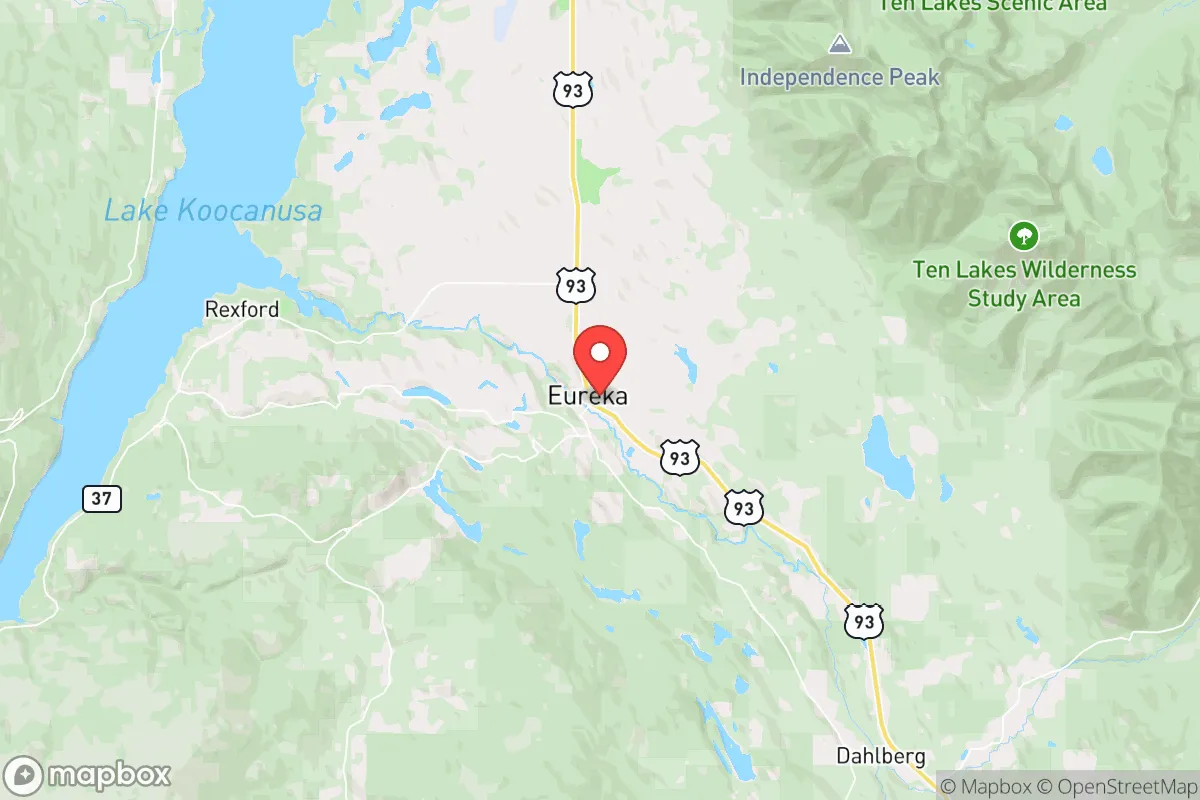
The post-1965 era in Eureka was defined not by immigration from abroad, but by a slow, steady domestic in-migration of retirees and second-home buyers from western Montana and the Pacific Northwest. The 1970s and 1980s saw the decline of the railroad as a major employer, but the timber industry remained the economic backbone. New residents during this period were overwhelmingly white and often drawn by the area's low cost of living and recreational opportunities—hunting, fishing, and snowmobiling. These newcomers tended to settle in the Lake Koocanusa area, a newer subdivision of lakefront and near-lake properties developed in the 1980s and 1990s, creating a distinct enclave of seasonal and retirement homes. The West Side neighborhood, west of the railroad tracks, absorbed a smaller number of working-class families who moved in for jobs at the local sawmill or the Stimson Lumber Company. The 2000 U.S. Census recorded a population of 1,017, which grew to 2,009 by 2020—a near-doubling driven almost entirely by white domestic migration. The Hispanic population, at 4.0%, is the only non-white group of any measurable size, and is concentrated in a handful of families who work in the service industry and agriculture, primarily in the East Eureka area along Highway 37.
The future
Eureka's demographic future points toward continued homogeneity and slow, modest growth. The town's extremely low college attainment rate (7.4%) and lack of major employers outside of timber, government, and tourism suggest it will not attract significant numbers of new residents from outside the region. The foreign-born population is negligible and unlikely to grow, as there are no industries or institutions—such as a university or a large agricultural processing plant—that typically draw immigrant labor. The Hispanic population, while small, is stable and may see slight growth through natural increase, but it will remain a minor share of the total. The most likely demographic shift is an aging of the population, as the Lake Koocanusa retirement enclave continues to attract older, white retirees from elsewhere in Montana and the Pacific Northwest. The town is not tribalizing into distinct ethnic enclaves; rather, it is homogenizing further, with the small Hispanic community assimilating into the broader white working-class culture. The next 10-20 years will likely see Eureka remain a predominantly white, rural, and aging community, with little change in its racial or ethnic makeup.
For someone moving in now, Eureka offers a stable, culturally uniform environment where the population is overwhelmingly white, native-born, and rooted in the region's timber and railroad heritage. The town is not diversifying, and its future is one of slow, incremental growth driven by domestic retirees rather than new immigrant communities. This is a place where the social fabric is tight-knit and traditional, and where newcomers will find a community that values self-sufficiency and a quiet, rural lifestyle above all else.

* Values derived from national, state, county, city and local statistics and may differ in a specific area. Last updated: 2026-04-30T03:00:54.000Z
Narrative content on this page is AI-generated and may contain mistakes. Verify any details that matter before acting on them.
ReloMaps may earn a commission from affiliate links at no extra cost to you.

