Photo: Wikipedia
Political ClimatePolitical Climate in Eureka, MT
District shown is the primary district for this city’s centroid. Cities may span multiple districts.
Local Political AnalysisPolitical Analysis of Eureka, MT
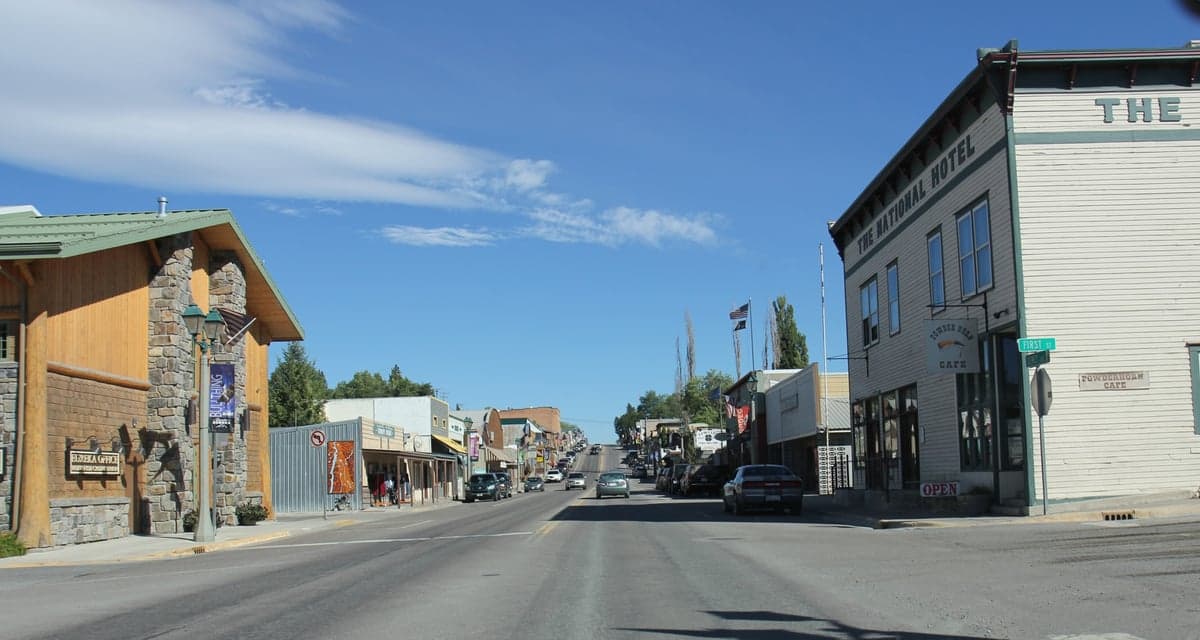
Eureka, Montana, sits in a reliably conservative pocket of the state, with a Cook PVI of R+5 that reflects the area’s long-standing preference for limited government and individual liberty. This isn’t a place that swings with national trends; it’s a community where folks have voted consistently for candidates who prioritize local control, gun rights, and keeping government out of their daily lives. Over the past decade, the political lean has held steady, though you can feel a subtle shift as more people move in from out of state—some are looking for the same freedom we value, but a few bring big-city ideas that don’t always fit here. The trajectory is still solidly red, but it’s worth keeping an eye on newcomers who might not understand why we like things the way they are.
How it compares
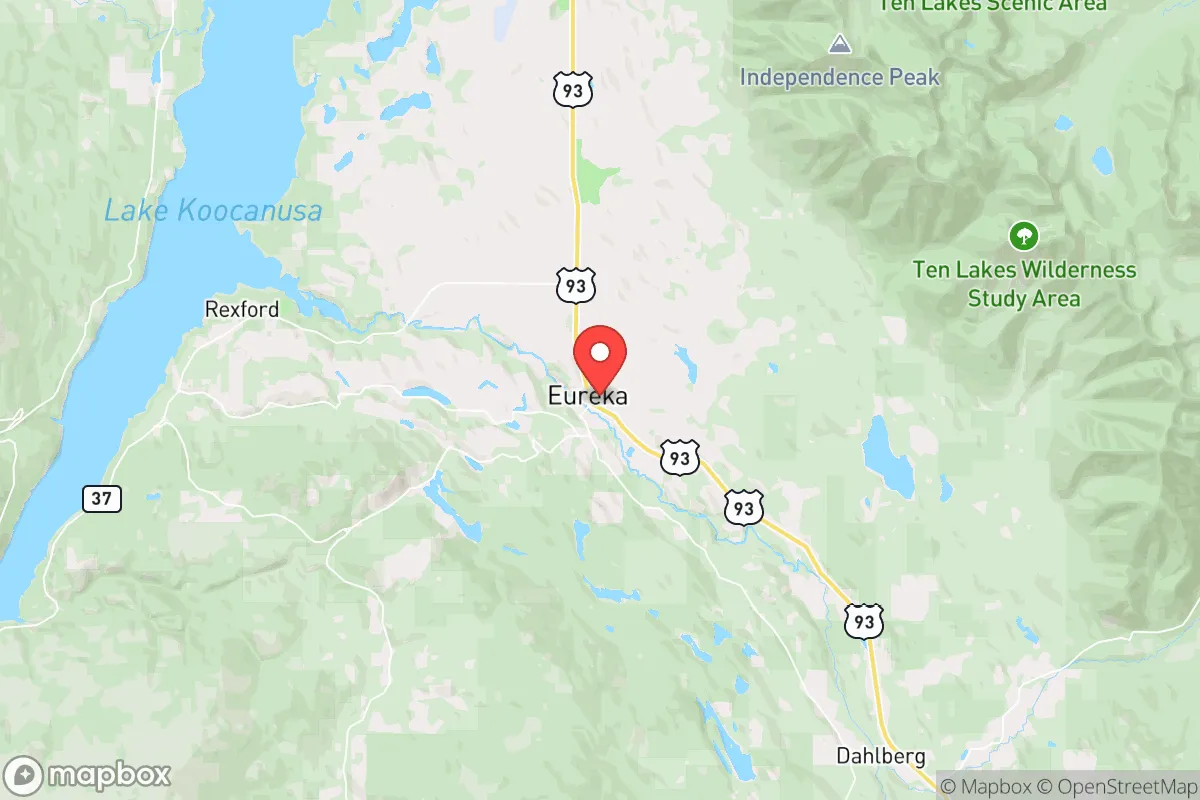
Compared to nearby towns, Eureka is a bit of a conservative anchor in a region that’s mostly on the same page. Head south to Libby, and you’ll find a similar mindset—both communities lean right, with a focus on resource-based jobs and self-reliance. But drive over to Whitefish or Kalispell, and the contrast is stark. Those towns have seen a lot of growth from out-of-state transplants, and their politics have gotten more mixed, with some progressive influence creeping into local elections and school boards. Eureka hasn’t gone that route yet. The surrounding Lincoln County is still reliably conservative, but the closer you get to the Flathead Valley, the more you see the kind of government overreach—like stricter land-use rules and higher taxes—that we’ve managed to avoid here. It’s a reminder that our small-town values aren’t guaranteed; they have to be defended.
What this means for residents
For the people who live here, the political climate means a lighter touch from government. You don’t have to worry about overbearing regulations on your property or your business, and the local sheriff’s office isn’t interested in enforcing federal overreach on things like gun laws or land use. That’s a big deal for families who want to raise kids with a sense of independence, or for retirees who came here to escape the bureaucracy of bigger cities. The downside is that as the area grows, there’s pressure to adopt policies that sound good on paper but end up restricting personal freedoms—like zoning changes that tell you what you can do with your own land. Most residents here are wary of that, and they vote accordingly. If you value being left alone to live your life, this is still one of the best places in Montana for that.
One thing that sets Eureka apart is its cultural resistance to the kind of progressive ideology that’s taken hold in places like Missoula or Bozeman. You won’t see a lot of talk about defunding the police or radical environmental policies that shut down logging and mining—those ideas are seen as threats to both our way of life and our local economy. The community is tight-knit, and there’s a shared understanding that freedom means taking responsibility for yourself, not relying on the government to solve every problem. That said, the long-term outlook depends on who moves in next. If the influx of new residents keeps coming from states with heavy-handed governments, we might see more fights over school curriculum, property rights, and local ordinances. For now, though, Eureka remains a place where conservative values aren’t just tolerated—they’re the norm.

State Political ClimatePolitical Climate in Montana
State Political AnalysisPolitical Environment in the State
Montana has long been a reliably Republican state at the presidential level, voting for the GOP candidate in every election since 1968 except for Bill Clinton’s 1992 win. However, the state’s political identity is more complex than a simple red-state label. The dominant coalition is a mix of libertarian-leaning ranchers, conservative small-town residents, and a growing number of out-of-state transplants, many of whom are fleeing progressive policies elsewhere. Over the last 10-20 years, the state has seen a slow but steady rightward shift in statewide elections, even as its fastest-growing counties—like Gallatin (Bozeman) and Missoula—have become more Democratic. This tension between a libertarian-conservative heritage and an influx of new, often more progressive, residents is the defining political story of modern Montana.
Urban vs. rural divide
The political map of Montana is a textbook case of the urban-rural split. The state’s two largest population centers, Missoula and Bozeman, are blue islands in a sea of red. Missoula County, home to the University of Montana, has voted Democratic in every presidential election since 1992, often by double digits. Gallatin County (Bozeman) flipped from red to blue in 2020, driven by an influx of tech workers and remote professionals who brought their coastal voting habits with them. In contrast, the rural eastern two-thirds of the state—places like Miles City, Glendive, and the Hi-Line—vote Republican by margins of 70% or more. The state’s capital, Helena (Lewis and Clark County), is a political bellwether, often swinging between parties. The real political battleground is now the suburban and exurban fringe of these growing cities, particularly in areas like the Bitterroot Valley (Ravalli County) and the Flathead Valley (Kalispell), where conservative transplants are settling alongside longtime residents, creating a more reliably Republican voting bloc that offsets the urban leftward drift.
Policy environment
Montana’s policy environment is among the most conservative in the nation, with a strong emphasis on limited government and individual liberty. The state has no sales tax, a flat income tax rate of 5.9% (recently reduced from 6.75%), and property taxes that are relatively low by national standards. The regulatory posture is business-friendly, with a right-to-work law and minimal zoning restrictions outside of incorporated cities. Education policy is a flashpoint: the state has a robust school choice movement, with a new Education Savings Account (ESA) program passed in 2023 that allows parents to use public funds for private or homeschool expenses. Healthcare is a mixed bag; Montana expanded Medicaid under the ACA, but the state legislature has consistently resisted further government expansion, and the state has some of the most restrictive abortion laws in the country post-Dobbs, with a near-total ban after 20 weeks. Election laws have been tightened in recent years, including voter ID requirements and restrictions on ballot harvesting, which conservatives argue protect election integrity. The state also has a strong tradition of citizen-led ballot initiatives, which have been used to legalize medical marijuana and recreational cannabis, as well as to impose term limits on state legislators.
Trajectory & freedom
Montana is currently in a tug-of-war between expanding and contracting personal freedom. On the positive side for conservatives, the 2023 legislative session was a landmark for liberty: the state passed constitutional carry (permitless concealed carry), banned vaccine mandates for both public and private employers, and enacted a Parents’ Bill of Rights that requires schools to notify parents of any curriculum involving sexuality or gender identity. Property rights were strengthened with a new law limiting the ability of counties to impose restrictive land-use regulations. However, there are concerning trends. The influx of new residents from California, Washington, and Oregon has brought with it a push for more government intervention, particularly in housing and environmental regulation. The city of Bozeman, for example, has implemented inclusionary zoning and rent control measures, which many see as a slippery slope toward socialist housing policy. Additionally, the state’s growing reliance on federal funding—especially for healthcare and infrastructure—creates a long-term vulnerability to federal overreach. The most significant threat to freedom in Montana is the cultural shift in its growing urban centers, where progressive activists are increasingly influential in local school boards and city councils.
Civil unrest & political movements
Montana has a relatively low level of visible civil unrest compared to coastal states, but the political temperature is rising. The most organized activist movements are on the right, particularly the Montana Freedom Caucus, which has successfully pushed for the state’s most conservative legislation. On the left, groups like the Montana Environmental Information Center and Indivisible Montana are active, especially in Bozeman and Missoula, where they have organized protests against pipeline projects and in favor of abortion access. Immigration politics are less of a flashpoint than in border states, but there has been a growing backlash against sanctuary policies; in 2023, the legislature passed a law banning sanctuary cities in Montana, a direct response to Missoula’s earlier consideration of such a policy. Election integrity remains a hot-button issue, with the state’s Republican Secretary of State, Christi Jacobsen, leading efforts to purge voter rolls and audit election equipment. The most visible flashpoint for a new resident would be the culture war in public schools, particularly in Bozeman and Missoula, where school board meetings have become heated over library books, curriculum content, and transgender policies. There is also a small but vocal secessionist movement in eastern Montana, where some ranchers have discussed joining neighboring states like Wyoming or South Dakota, feeling ignored by the state government in Helena.
Projection
Over the next 5-10 years, Montana is likely to become more politically polarized, not less. The demographic trends are clear: the state is growing fastest in its blue-leaning urban counties (Gallatin, Missoula, and to a lesser extent Lewis and Clark), while the rural counties are either stagnant or losing population. This means that while the state will remain Republican at the statewide level for the foreseeable future, the margin of victory will likely shrink. The state’s two U.S. House seats are currently held by Republicans, but the western district (which includes Missoula and Bozeman) is becoming competitive. The real danger for conservatives is that the state’s libertarian character could be eroded by the very people moving here to escape it. As more newcomers demand government services—better roads, more schools, expanded healthcare—the pressure to raise taxes and increase regulation will grow. The state’s flat income tax is already under attack from progressive groups who want a progressive income tax. Someone moving to Montana now should expect to find a state that is still very free, but where the fight to keep it that way is intensifying every year. The rural-urban divide will only deepen, and the state’s political future will be decided in the suburbs of Bozeman and Missoula.
For a new resident, the bottom line is this: Montana offers a level of personal freedom and limited government that is increasingly rare in the United States, but it is not immune to the cultural and political forces reshaping the nation. If you are moving here to escape the overreach of blue states, you will find a welcoming environment in most of the state, but you should be prepared to engage in the political process to keep it that way. The state’s small population means that individual voices still matter—your vote, your school board membership, and your presence at a county commission meeting can have an outsized impact. Choose your community wisely: the Flathead Valley and the eastern plains remain strongholds of conservative values, while the college towns are increasingly resembling their coastal counterparts. Montana is still a place where you can live free, but only if you’re willing to fight for it.
* Values derived from national, state, county, city and local statistics and may differ in a specific area. Last updated: 2026-04-30T03:00:54.000Z
Narrative content on this page is AI-generated and may contain mistakes. Verify any details that matter before acting on them.
ReloMaps may earn a commission from affiliate links at no extra cost to you.

