Photo: Wikipedia
Political ClimatePolitical Climate in Evanston, WY
District shown is the primary district for this city’s centroid. Cities may span multiple districts.
Inherited from parent state — no local data available.
Local Political AnalysisPolitical Analysis of Evanston, WY
Evanston, Wyoming, sits solidly in the red, with a Cook PVI of R+23 that reflects a deeply conservative community where folks have long valued personal liberty and limited government. The town’s political lean hasn’t wavered much over the decades—it’s always been a place where the Second Amendment is a given, taxes are low, and the federal government is viewed with a healthy dose of skepticism. But like a lot of small Western towns, Evanston is starting to feel the pressure of outside influences, and there’s a growing unease among long-time residents about whether the next decade will bring the same kind of progressive overreach that’s crept into places like Salt Lake City or Denver.
How it compares
Drive an hour south to Salt Lake City, and you’re in a completely different world—blue-leaning, with a bustling tech scene and a city council that’s been pushing zoning changes and climate mandates that would never fly here. Head east to Rock Springs, and you’ll find a similar conservative vibe, though it’s a bit more mixed with union-heavy energy workers who sometimes split tickets. Evanston, by contrast, is more uniformly Republican, with a strong ranching and railroad heritage that keeps the focus on property rights and local control. The nearest real contrast is Park City, Utah, about 90 minutes away, where the ski resort money has brought a wave of progressive politics that locals here see as a cautionary tale—higher taxes, stricter land use rules, and a general attitude that the government knows best.
What this means for residents
For the average Evanston resident, the political climate means you can pretty much live your life without the government breathing down your neck. There’s no city income tax, property taxes are among the lowest in the region, and you don’t need a permit to put a fence up on your own land. The local school board and city council are dominated by folks who believe in parental rights and local decision-making, not state or federal mandates. That said, there’s a real concern that as Wyoming’s population shifts—especially with remote workers moving in from California and Colorado—the political balance could tip. We’ve already seen a few new faces in town pushing for “complete streets” and bike lanes, which feels like a foot in the door for the kind of progressive agenda that’s turned places like Bozeman, Montana, into a bureaucratic mess. The worry is that if we’re not careful, Evanston could lose its character—the freedom to hunt, fish, and raise a family without a bunch of red tape.
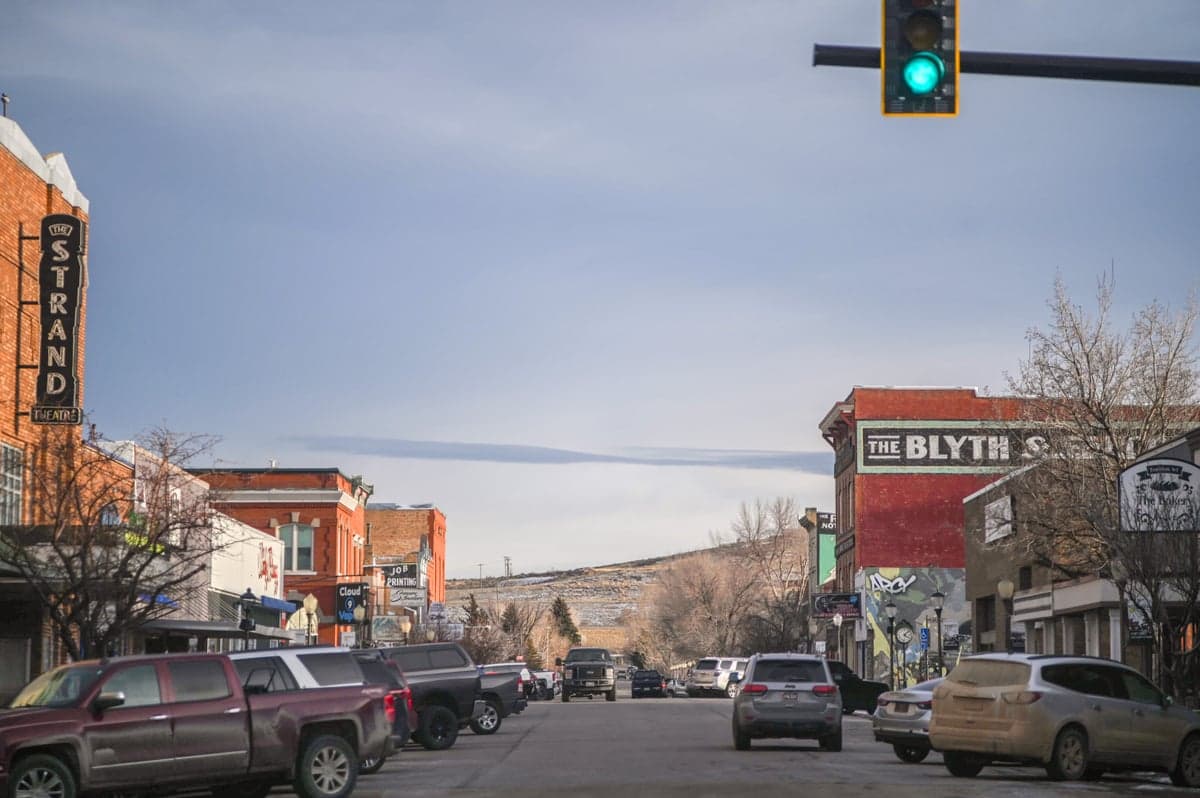
Culturally, Evanston still holds onto its Western independence. The annual Cowboy Days festival and the historic downtown reflect a community that’s proud of its rugged roots. But there’s a quiet tension brewing: the old-timers who remember when the Union Pacific was the biggest employer are watching the new arrivals with a wary eye. Policy-wise, the town has resisted adopting any kind of sanctuary city status or diversity, equity, and inclusion programs, which is a relief to most residents who see those as government overreach. The long-term outlook depends on whether Evanston can keep its small-town feel without being forced into the kind of top-down changes that have hollowed out so many rural communities. For now, it’s still a place where you can speak your mind without fear of being canceled, but the fight to keep it that way is just getting started.

State Political ClimatePolitical Climate in Wyoming
State Political AnalysisPolitical Environment in the State
Wyoming is, and has long been, one of the most reliably Republican states in the Union, with a partisan lean that is both deep and durable. In the 2024 presidential election, Donald Trump carried the state by roughly 46 points, a margin that has only widened over the past two decades as the state’s small but growing Democratic presence has been squeezed out of local and federal offices. The dominant coalition here is a blend of libertarian-leaning ranchers, energy-sector workers, and conservative families who value low taxes, minimal regulation, and a hands-off government approach. Over the last 10-20 years, the trajectory has been a steady march rightward, accelerated by an influx of remote workers and retirees from blue states who are fleeing progressive policies, and by the state’s own internal resistance to national Democratic trends.
Urban vs. rural divide
The political map of Wyoming is starkly divided between a handful of small urban centers and the vast, sparsely populated rural expanse. The only real population anchor is Cheyenne, the state capital, which leans Republican but is the most moderate part of the state—Laramie County voted for Trump by about 25 points in 2024, a full 20 points less than the state average. Casper, in Natrona County, is more conservative but still has a noticeable blue-collar Democratic streak from its mining and energy history, though it has shifted right in recent cycles. The real engine of Wyoming’s deep-red identity is the rural and small-town vote: counties like Sublette, Lincoln, and Niobrara routinely deliver 80-85% of their ballots to Republican candidates. Jackson Hole (Teton County) is the glaring exception—it is the only county that consistently votes Democratic, driven by a wealthy, environmentally-focused population of second-home owners and ski resort workers. But Teton County’s influence is limited by its small population and the fact that its liberal lean is largely confined to local issues; statewide, it is a footnote. The divide is less about urban vs. rural in the traditional sense and more about the handful of government and tourism hubs versus the rest of the state, where ranching, energy extraction, and a fierce independence define the culture.
Policy environment
Wyoming’s policy environment is a textbook example of small-government conservatism. There is no state income tax, and the sales tax is a low 4% (with local options pushing it to around 6% in some towns). Property taxes are among the lowest in the nation, though a recent 2024 legislative session saw a push to cap annual increases at 4% to protect homeowners from rising valuations. The regulatory posture is aggressively pro-business, especially in the energy sector—permitting for oil, gas, and coal operations is streamlined, and the state has actively fought federal overreach on public lands management. Education policy is a mixed bag: the state funds schools through a mineral trust fund, so per-pupil spending is decent, but there is a strong push for school choice and parental rights, with a 2023 law allowing parents to opt their children out of any curriculum they find objectionable. Healthcare is a sore spot—Wyoming has not expanded Medicaid, and the state’s rural hospitals struggle with funding, though a 2024 law created a state-based reinsurance program to stabilize the individual market. Election laws are solid: voter ID is required, same-day registration is allowed, and the state has resisted mail-in ballot expansions, maintaining a system that conservatives generally trust. The overall vibe is “leave us alone,” and the legislature has been consistent in that approach.
Trajectory & freedom
Wyoming is arguably becoming more free in several key areas, bucking national trends. The most notable recent legislation is the Wyoming Freedom Caucus-backed 2024 Second Amendment Protection Act, which explicitly nullifies any federal gun control measures that would infringe on state law, including bans on certain firearms or magazine capacities. This builds on the state’s already permissive concealed carry laws (no permit required since 2021). Parental rights were strengthened in 2023 with the Parents’ Bill of Rights, which requires schools to notify parents about any medical or mental health services provided to their children and prohibits classroom instruction on gender identity or sexual orientation in grades K-3. Medical autonomy is a mixed bag: Wyoming has no vaccine mandate for public school attendance, and a 2022 law prohibits discrimination against the unvaccinated, but the state has not passed a broad medical freedom law like some others. Property rights are strong—the state has a robust “right to farm” law protecting agricultural operations from nuisance lawsuits, and a 2023 law limits the use of eminent domain for carbon pipeline projects. Taxation freedom is expanding: a 2024 law phased out the state’s small inventory tax for businesses. The only area where freedom is arguably contracting is in the realm of local control—the legislature has preempted local ordinances on everything from plastic bag bans to short-term rental regulations, which some see as a necessary check on progressive city councils in places like Laramie and Jackson.
Civil unrest & political movements
Wyoming is not a hotbed of civil unrest, but there are visible political movements that a new resident would notice. The most prominent is the Wyoming Freedom Caucus, a hardline conservative faction that has grown in influence since 2022, often clashing with more establishment Republicans over budget priorities and federal overreach. They have been behind the most aggressive nullification bills and have pushed for a state constitutional amendment to allow for a state-led ballot initiative process (currently, Wyoming is one of a handful of states without one). On the left, the main flashpoint is Jackson Hole, where activist groups have organized around climate change and affordable housing, but these movements rarely spill over into the rest of the state. Immigration politics are relatively quiet—Wyoming has a small foreign-born population, and the legislature passed a 2023 law requiring all state contractors to use E-Verify, but there is no sanctuary city movement. Election integrity controversies have been minimal; the state uses paper ballots and has not adopted widespread mail-in voting, so trust in the system remains high. The most visible flashpoint a new resident might encounter is the tension between the energy industry and environmental groups over federal land management, particularly in the Powder River Basin coal country and the Green River Basin for trona mining. Protests are rare and usually small, but the rhetoric can be heated in county commission meetings.
Projection
Over the next 5-10 years, Wyoming is likely to become even more conservative, but with a growing libertarian streak that could create internal friction. The demographic shift is driven by in-migration from states like California, Colorado, and Washington—people who are fleeing high taxes, crime, and progressive policies but who may bring different expectations about public services and land use. This influx is concentrated in Laramie (home to the University of Wyoming) and the Sheridan area, which has become a magnet for remote workers and retirees. These newcomers tend to be fiscally conservative but socially moderate, which could push the state’s politics toward a more “leave me alone” libertarianism rather than the social conservatism of the rural ranching communities. The energy transition will be a major factor: as coal declines, the state’s budget will face pressure, and the legislature may need to consider new revenue sources (like a sales tax on services or a modest income tax), which could spark a major political battle. The Freedom Caucus is likely to resist any new taxes, potentially leading to budget cuts that could affect schools and roads. The wildcard is the federal government—if a future administration tightens regulations on public lands or energy extraction, Wyoming’s legislature will likely respond with more nullification efforts, possibly escalating to a constitutional showdown. A new resident moving in now should expect a state that is fiercely independent, increasingly polarized between the small cities and the rural counties, and likely to remain one of the most conservative places in the country for the foreseeable future.
For a new resident, the bottom line is this: Wyoming offers a high degree of personal freedom, low taxes, and a government that generally stays out of your life, but it comes with trade-offs. You will have limited access to healthcare, a thin job market outside of energy and government, and a political environment that can feel insular and resistant to change. If you value autonomy over convenience and are willing to adapt to a culture that prizes self-reliance, you will find a home here. If you expect the state to provide a lot of services or to accommodate progressive social norms, you will be frustrated. It is a place where your vote matters more than in almost any other state, and where the political climate is unlikely to shift dramatically in the next decade—so choose accordingly.
* Values derived from national, state, county, city and local statistics and may differ in a specific area. Last updated: 2026-04-21T11:28:45.000Z
Narrative content on this page is AI-generated and may contain mistakes. Verify any details that matter before acting on them.
ReloMaps may earn a commission from affiliate links at no extra cost to you.

