Photo: Wikipedia
Demographics of Evansville, WY
Affluence Level in Evansville, WY
A middle-class area roughly in line with national averages across income, home values, education, and employment.
People of Evansville, WY
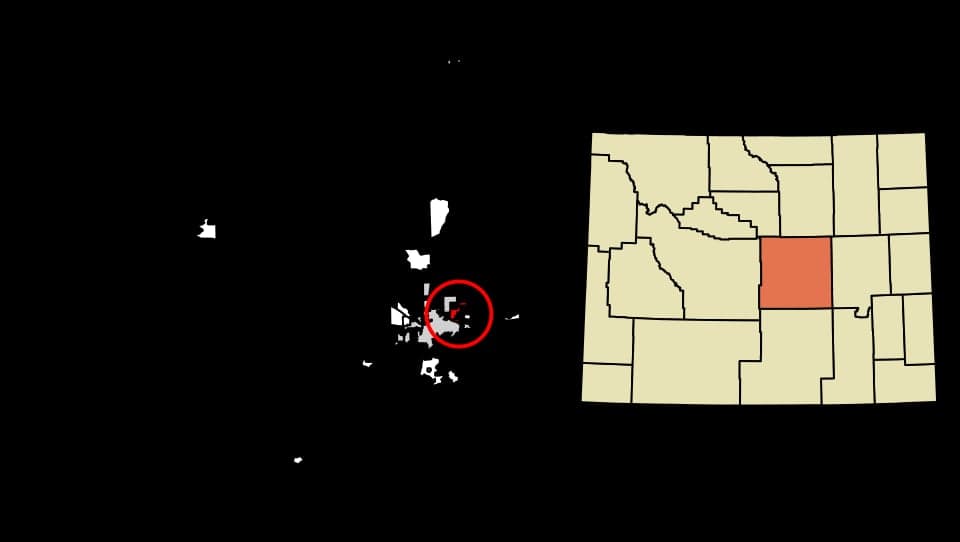
Evansville, Wyoming, is a small, working-class city of 2,766 residents that feels more like a tight-knit rural town than a suburb of nearby Casper. Its population is predominantly white (73.1%) with a significant Hispanic minority (17.5%), a small East/Southeast Asian community (2.7%), and a very low foreign-born rate of 2.4%. The city’s identity is rooted in energy-sector labor, family stability, and a no-frills, self-reliant character that appeals to those seeking affordable land and a slower pace within commuting distance of Casper’s jobs and services.
How the city was settled and grew
Evansville was founded in the late 19th century as a railroad and coal-mining camp along the Chicago and North Western Railway line. The original settlers were predominantly Anglo-American laborers from the Midwest and Great Lakes states, drawn by the promise of steady work in the region’s coal mines and the railroad yards. The earliest homes clustered around what is now Old Town Evansville, a grid of modest wood-frame houses along Evans Street and the rail corridor. By the 1910s, a small wave of European immigrants—mostly Irish, German, and Scandinavian miners—settled in the Railroad District near the depot, building simple cottages and boarding houses. The city incorporated in 1920 with fewer than 500 residents, and growth remained slow through the Great Depression and World War II, tied almost entirely to the boom-and-bust cycles of coal and the railroad. No significant land grants or homesteading programs shaped Evansville; it was always an industrial service town, not an agricultural settlement.
Modern era (post-1965)
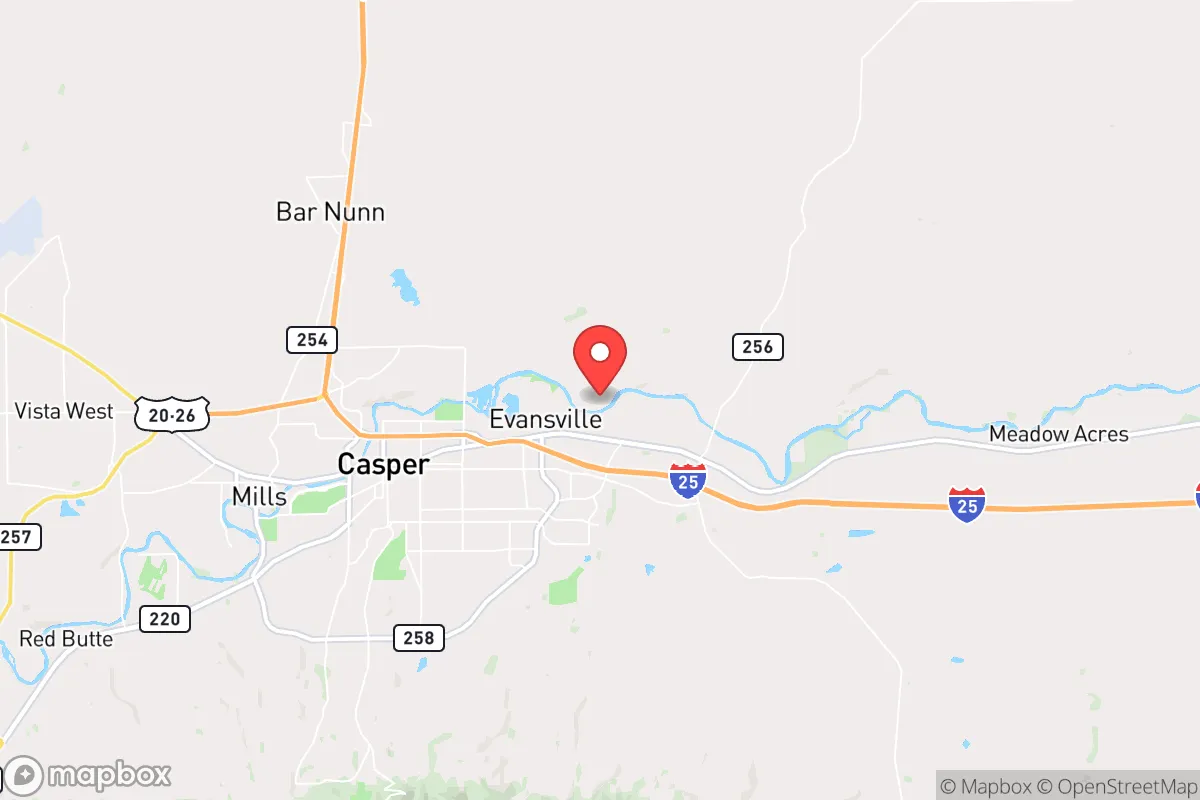
The post-1965 era brought two major demographic shifts to Evansville. The first was the gradual decline of coal and rail employment after the 1970s, which led to an out-migration of younger Anglo families and a hollowing out of the Northside neighborhood, where many railroad workers had lived. The second was the arrival of Hispanic laborers, beginning in the 1980s and accelerating through the 2000s, who came to work in the oil and gas fields of the Powder River Basin and in Casper’s construction and service sectors. These families settled primarily in the South Evansville area, south of Highway 20/26, where older, cheaper housing stock and rental properties were available. The Hispanic population grew from negligible in 1990 to 17.5% today, making Evansville one of the more ethnically diverse small cities in central Wyoming. The East/Southeast Asian community (2.7%) is a more recent addition, largely composed of Vietnamese and Filipino families who moved to the area for healthcare and manufacturing jobs in Casper; they are scattered across the Westside and Mountain View subdivisions, which were built in the 1990s and 2000s. The Black population remains very small at 1.6%, and the Indian-subcontinent population is effectively zero. The city’s college education rate is just 11.5%, reflecting its blue-collar, trade-oriented workforce.
The future
Evansville’s population is likely to remain stable or grow slowly, driven by two countervailing trends. The Hispanic community is growing organically through higher birth rates and continued in-migration from other parts of Wyoming and the Southwest; this group is concentrating in South Evansville and beginning to move into the Eastside as families seek larger lots. The Anglo population is aging and slowly declining, as younger white families often move to Casper or out of state for college and white-collar careers. The East/Southeast Asian community is small and plateauing, with little new immigration expected. The city is not tribalizing into stark enclaves—most neighborhoods remain mixed—but a subtle ethnic sorting is occurring along income and housing age lines. Over the next 10–20 years, Evansville will likely become more Hispanic (projected 25–30% by 2040) while remaining overwhelmingly working-class and politically conservative. The foreign-born share will rise modestly but stay below 5%, as most Hispanic residents are U.S.-born or long-term legal residents.
For someone moving in now, Evansville offers a stable, affordable, and safe environment with a clear blue-collar identity. It is not a place of rapid change or cosmopolitan diversity, but a community where family, work, and neighborly familiarity still define daily life. The city is becoming slightly more Hispanic and slightly less white, but the core character—self-reliant, conservative, and rooted in energy and trades—is unlikely to shift meaningfully in the next generation.

* Values derived from national, state, county, city and local statistics and may differ in a specific area. Last updated: 2026-04-21T10:50:06.000Z
Narrative content on this page is AI-generated and may contain mistakes. Verify any details that matter before acting on them.
ReloMaps may earn a commission from affiliate links at no extra cost to you.

