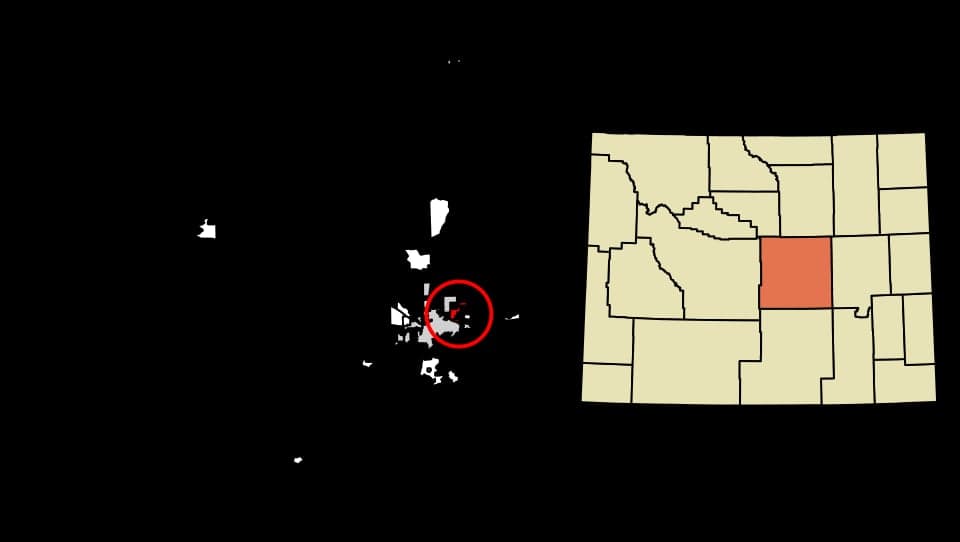
Photo: Wikipedia
Strategic Assessment of Evansville, WY
Workable tactical position. Some exposure to population density or targets, but generally defensible in a crisis.
What does the Strategic Assessment tell us?
Our Strategic Assessment grades tactical survivability of an area. Major population centers, military targets, fallout zones, natural disasters, and border exposure all drive risk — lower exposure means a more defensible position in a crisis.
This is heavily inspired by Joel Skousen's Strategic Relocation book. Highly recommended you checkout the book ($)What does this tell us?
Our Strategic Assessment grades tactical survivability of an area. Major population centers, military targets, fallout zones, natural disasters, and border exposure all drive risk — lower exposure means a more defensible position in a crisis.
This is heavily inspired by Joel Skousen's Strategic Relocation book. Highly recommended you checkout the book ($)Strategic Pillars

Key Distances
Regional Safe Places
Below is our recommended "safe zones" in Wyoming and the surrounding area based on our strategic heuristics. For most people, it's unrealistic to live in a “safe zone” full-time due to work, family or other personal reasons. They tend to be more rural. However, many of these areas are perfect for second homes and retreat properties that double as a vacation home or even a short-term rental.
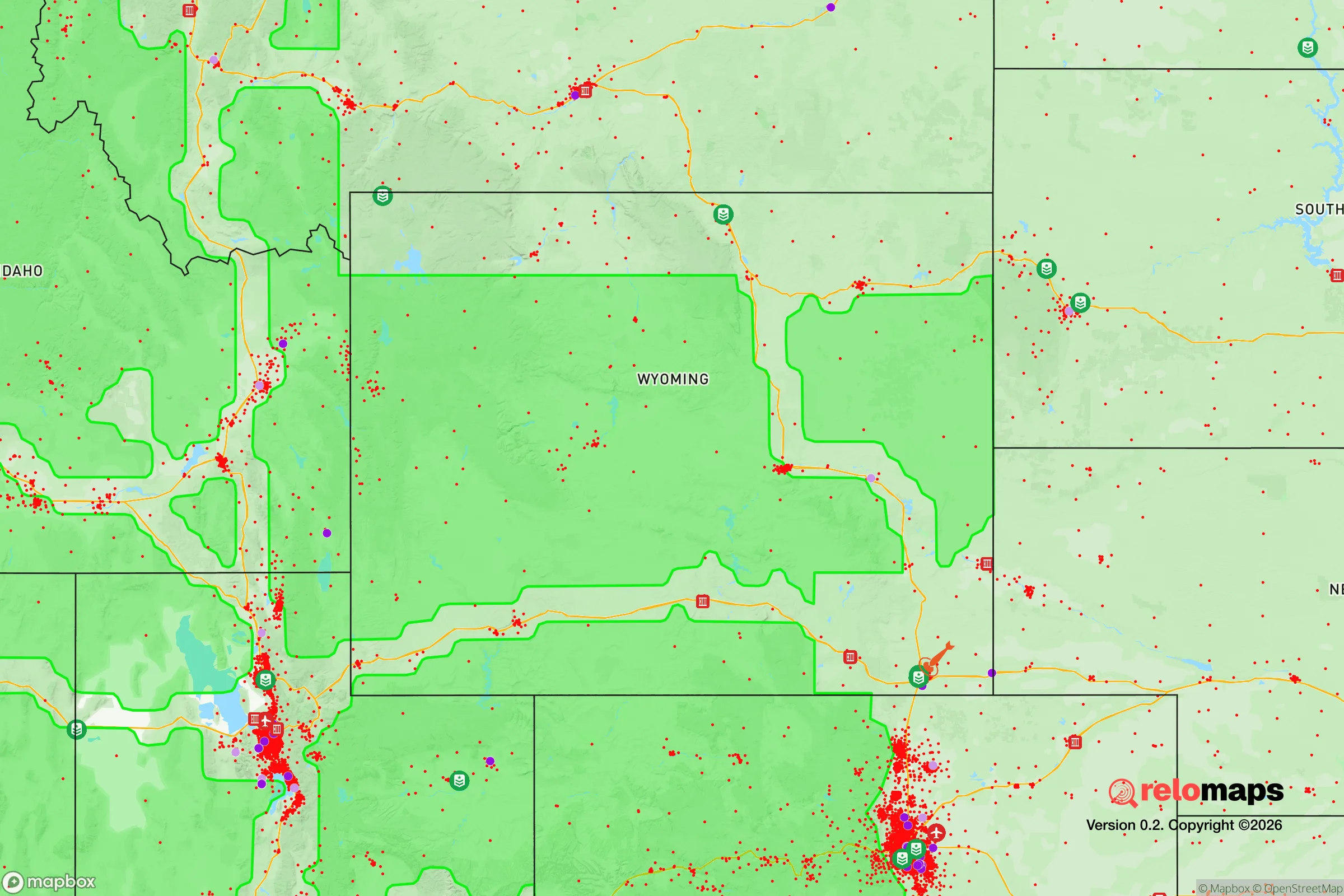
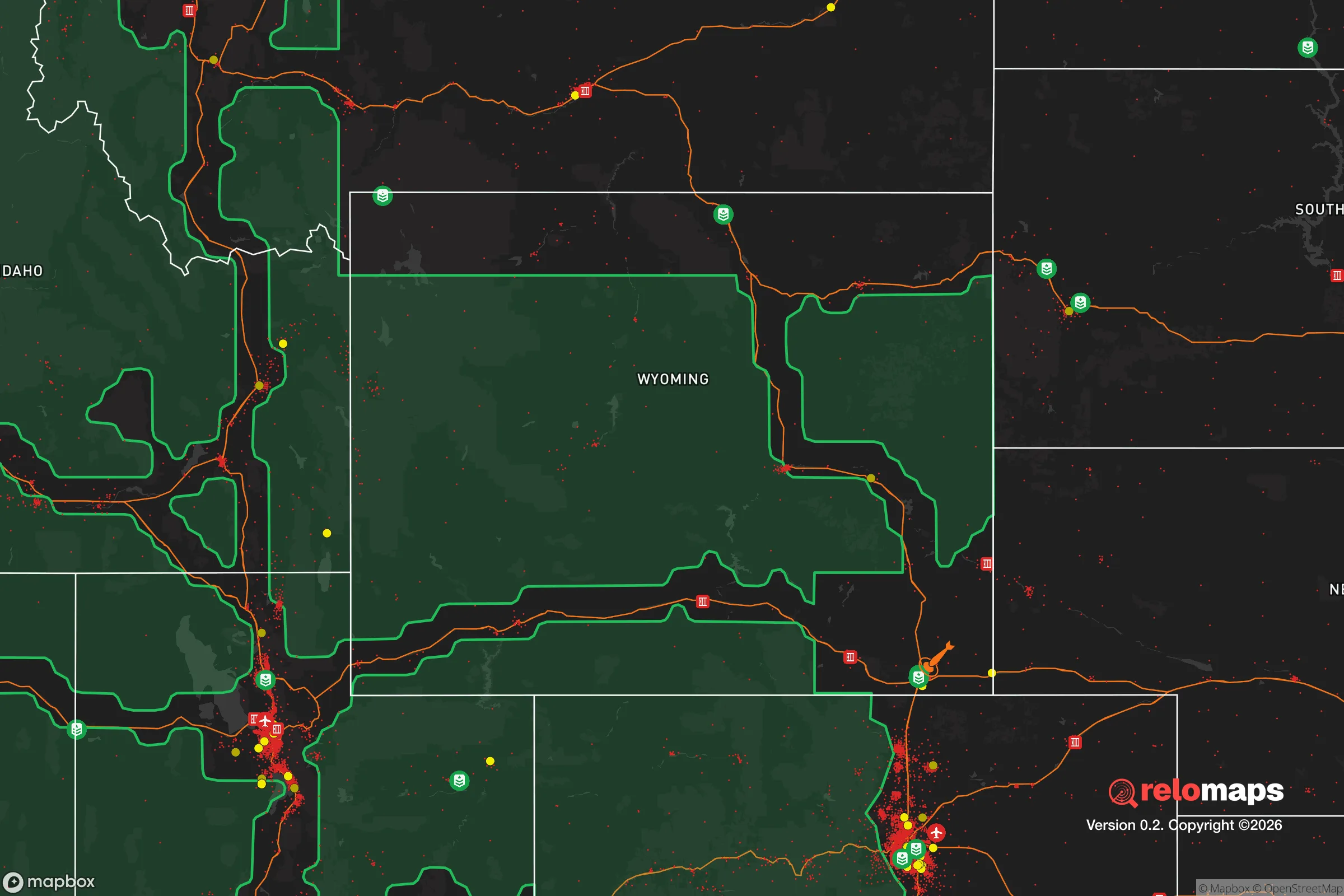


Important Note: For informational purposes only. This does not mean nothing bad ever happens in the green zones. Please use common sense. This is based on public data and modeled with AI. We tried to take a conservative approach but mistakes happen. We update this regularly as new information becomes available.
Solar Generator Recommendations
Backup power matters more here than in safer locations. We've picked three solar generators across budgets and capacity tiers — start with the budget unit if you only need a few essentials, or step up if you want to run a fridge and HVAC for days at a time.

Jackery Portable Power Station Explorer 300
Budget OptionPower on the Go: Weighing only 11 lbs, it's convenient to set up and store with book-sized foldable solar panels

BLUETTI Portable Power Station AC180
Designed for both indoor and outdoor scenarios, AC180 is highly capable as it has a robost capacity and continuous output power.

EF ECOFLOW DELTA Pro Ultra Power Station
Upgraded PickEcoFlow DELTA Pro Ultra is a whole-home energy system designed to grow with your family. Integrated with the Smart Home Panel 2, it scales to meet your evolving energy needs — keeping your home powered, intelligent, and secure through every stage of life.
We earn a commission, at no additional cost to you.
Strategic Assessment Analysis
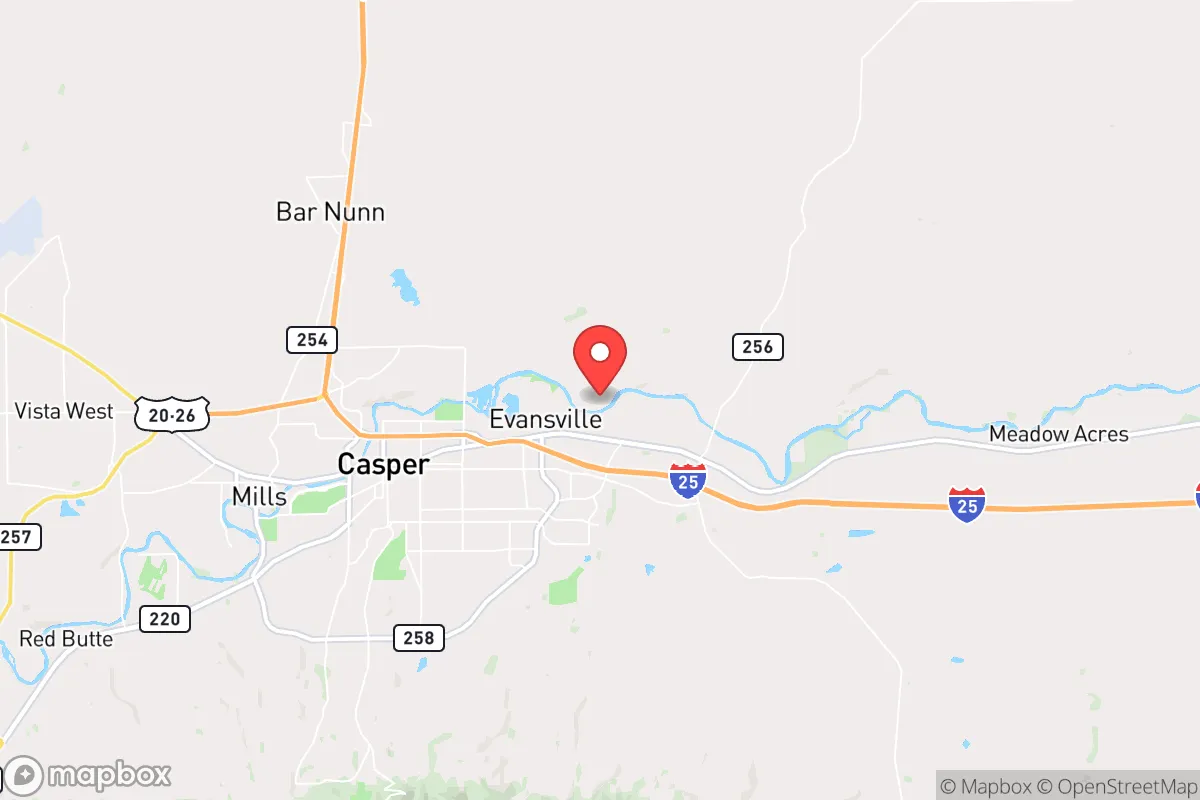
Evansville, Wyoming, offers a strategic relocation option for those prioritizing resilience and self-sufficiency in an uncertain future. Situated just north of Casper in Natrona County, this small town of roughly 2,500 people sits at a critical crossroads of energy infrastructure and remote geography, providing a buffer from major population centers while maintaining access to essential resources. Its location along the North Platte River and near the Interstate 25 corridor gives it a unique blend of isolation and connectivity that preppers and survivalists should evaluate carefully.
Geographic position and natural advantages for long-term security
Evansville’s primary strategic asset is its position in central Wyoming, roughly 150 miles from the nearest major metropolitan area—Denver, Colorado—and over 200 miles from Salt Lake City, Utah. This distance from large population hubs significantly reduces exposure to civil unrest, mass casualty events, or cascading failures that often originate in dense urban centers. The town sits at an elevation of 5,200 feet, offering a high-desert climate with cold winters and dry summers, which naturally limits agricultural pests and disease vectors. The surrounding terrain is a mix of rolling plains and the Laramie Mountains to the east, providing natural defensibility through open sightlines and limited approach routes. The North Platte River runs through the area, offering a reliable surface water source that can be treated for drinking, though it’s important to note that upstream industrial activity near Casper requires careful filtration. The region’s low population density—Natrona County has about 11 people per square mile—means fewer neighbors to compete with for resources during a crisis, but also fewer immediate support networks.
Risks, exposures, and proximity to fallout-relevant landmarks
Evansville’s proximity to Casper, just 5 miles south, is a double-edged sword. Casper is home to the Wyoming Medical Center, the state’s largest hospital, and the Casper-Natrona County International Airport, which could become a target during a national emergency or a focal point for refugee movement. The town is also within 20 miles of the Dave Johnston Power Plant, a coal-fired facility that, while critical for regional energy, could be a vulnerability if grid disruptions occur. More concerning is the presence of the U.S. Air Force’s Francis E. Warren ICBM base near Cheyenne, about 180 miles south, which is a primary target in any nuclear exchange scenario. While Evansville is outside the immediate blast radius, fallout patterns from a strike on Warren could drift northward depending on wind conditions, making a fallout shelter a wise investment. The area also sits near the Powder River Basin, a major coal and natural gas extraction zone, which means industrial accidents or environmental contamination from mining operations are possible. Natural risks include severe winter storms that can isolate the town for days, and occasional tornadoes, though they are less frequent than in the Great Plains. The region’s seismic activity is low, but the nearby Laramie Mountains have minor fault lines that could produce small quakes.
Practical resilience for a relocator: food, water, energy, and defensibility
For a relocator focused on self-sufficiency, Evansville offers several practical advantages. Water access is the strongest point: the North Platte River provides a year-round surface source, and the area’s groundwater is generally potable with basic treatment, though well drilling is common and costs around $15–$30 per foot. The town’s municipal water system is fed by the river, but a backup well or rainwater catchment system is advisable given the arid climate (average 12 inches of precipitation annually). Food production is challenging due to the short growing season (about 100 frost-free days) and alkaline soils, but cold-hardy crops like potatoes, carrots, and kale can succeed with raised beds and season extenders. Local livestock grazing is feasible, and the area has a strong hunting culture for elk, deer, and antelope, which can supplement protein stores. Energy resilience is a major plus: Wyoming is the nation’s leading coal producer and a net exporter of electricity, so grid power is relatively stable, but solar panels are effective here due to 260+ sunny days per year. Wind power is also viable, though small-scale turbines require careful siting to avoid winter ice buildup. Defensibility is moderate: Evansville’s layout is a compact grid with limited choke points, but the surrounding open terrain makes it hard to approach undetected. The town has a small police force, and Natrona County Sheriff’s Office covers rural areas, but during a breakdown, a well-armed household with a perimeter plan would have an advantage. The nearest National Guard armory is in Casper, which could be a stabilizing or destabilizing factor depending on the scenario.
The overall strategic picture for Evansville is one of calculated trade-offs. It offers genuine isolation from the chaos of major cities, reliable water and energy resources, and a climate that, while harsh, is predictable and manageable with proper preparation. The downsides—proximity to Casper’s infrastructure, potential fallout risks from Cheyenne, and a short growing season—are real but can be mitigated with planning and investment. For a conservative-leaning relocator who values self-reliance and wants to avoid the vulnerabilities of urban life, Evansville represents a solid B+ option: not a perfect fortress, but a defensible, resource-rich outpost in a state that still respects individual liberty and property rights. The key is to arrive with a clear plan for water treatment, food storage, and community building, as the area’s small population means you’ll need to forge your own networks rather than rely on existing ones. If you’re serious about long-term preparedness, Evansville deserves a hard look—just don’t expect it to be a turnkey solution.

* Values derived from national, state, county, city and local statistics and may differ in a specific area. Last updated: 2026-04-21T10:50:06.000Z
Narrative content on this page is AI-generated and may contain mistakes. Verify any details that matter before acting on them.
ReloMaps may earn a commission from affiliate links at no extra cost to you.

