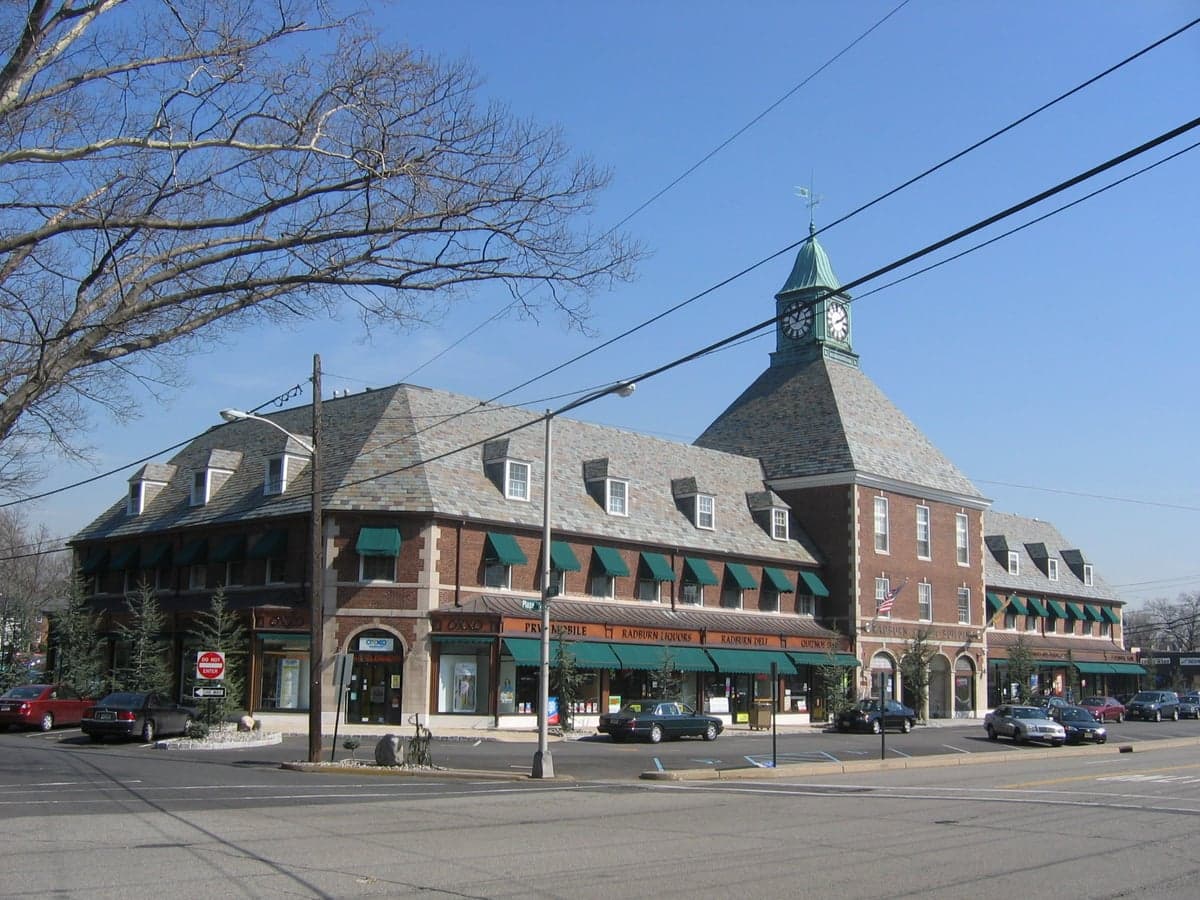
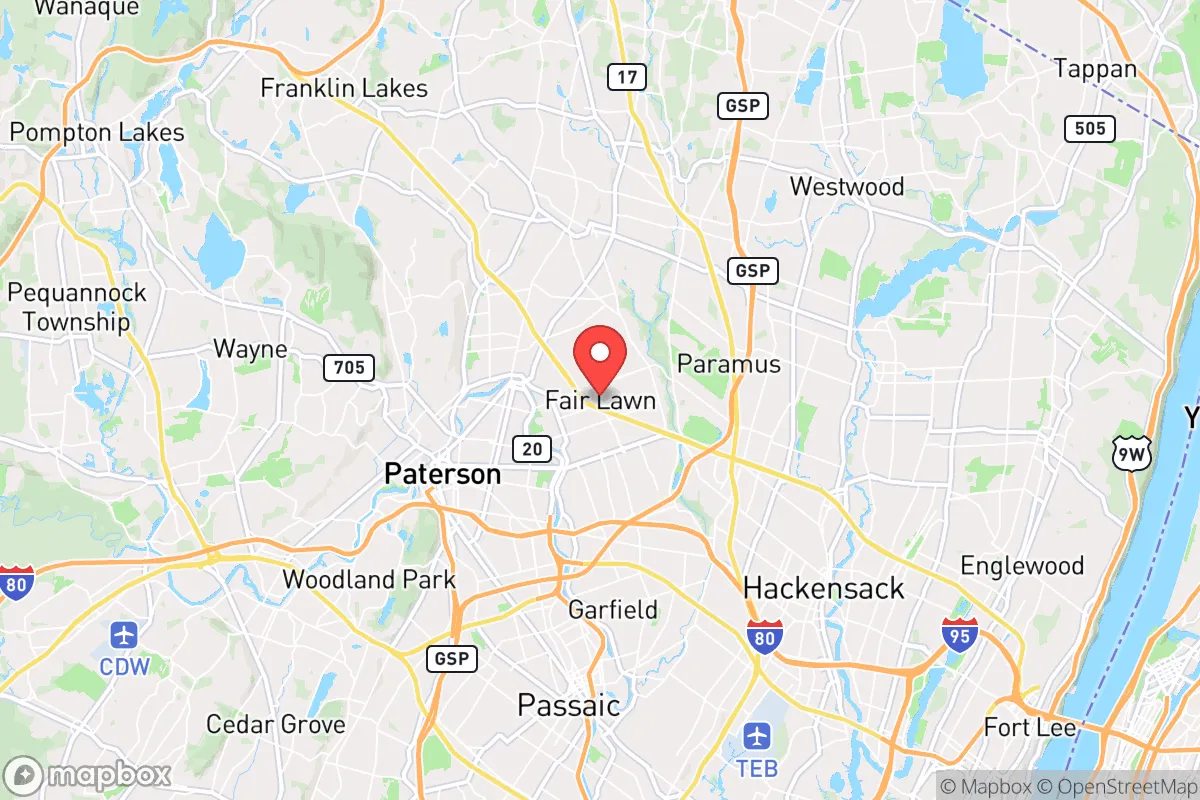
Photo: Wikipedia
Demographics of Fair Lawn, NJ
Affluence Level in Fair Lawn, NJ
An upper-middle-class area. Household wealth, education levels, and homeownership run ahead of national benchmarks.
People of Fair Lawn, NJ
Fair Lawn, New Jersey, is a densely settled borough of 35,153 residents with a distinctly middle-class, family-oriented character. Its population is notably well-educated—64.2% hold a college degree—and ethnically diverse, with a white majority (66.3%) alongside significant Hispanic (13.2%), Indian-subcontinent (7.4%), and East/Southeast Asian (5.9%) communities. The borough’s identity is shaped by its history as a planned suburban haven for European immigrants and their descendants, now evolving into a multi-ethnic enclave where established Jewish and Italian neighborhoods coexist with newer immigrant corridors.
How the city was settled and grew
Fair Lawn’s population history begins not with colonial settlement but with a deliberate 20th-century suburban boom. Originally farmland within Saddle River Township, the area was transformed after 1924 when developer William H. Deeks purchased 500 acres and laid out a planned community of single-family homes, parks, and commercial strips. The first major wave of residents were German and Dutch immigrants who arrived in the 1920s and 1930s, drawn by affordable land and proximity to Paterson’s silk mills. They settled the Radburn section—a nationally famous planned community built around the “town for the motor age” concept—and the adjacent Berdan Heights neighborhood, where many Dutch families established churches and social clubs. A second wave followed after World War II, when returning GIs and their families filled new developments like Fair Lawn Gardens and Morlot Avenue with Italian and Jewish families fleeing Paterson and Newark. By 1960, the borough’s population had surged past 36,000, and its character was solidly middle-class, suburban, and overwhelmingly white (over 98%).
Modern era (post-1965)
The 1965 Hart-Cellar Act opened the door to new immigration, but Fair Lawn’s demographic shift was gradual. Through the 1970s and 1980s, the borough remained predominantly white, with Jewish and Italian families forming the core of neighborhoods like Century Homes and the area around Berkeley College. The first significant non-white influx came in the 1990s, when Hispanic families—primarily from Puerto Rico and the Dominican Republic—began moving into the Fair Lawn Avenue corridor near Route 208, drawn by affordable rentals and service jobs. The 2000s brought a sharp rise in Indian-subcontinent immigration, particularly from Gujarat and Punjab, who clustered in the Plaza Road and River Road sections near the borough’s southern edge. Today, Indian residents make up 7.4% of the population, a share that has doubled since 2010. East/Southeast Asian communities (5.9%)—largely Korean and Chinese—have settled more diffusely, often in the newer condominium complexes near Maple Avenue. The black population (4.2%) remains small but has grown steadily since 2000, concentrated in the Fair Lawn Gardens rental units. Notably, the white share has declined from 85% in 2000 to 66.3% today, while the foreign-born population sits at 9.4%—a figure that understates the number of second-generation residents.
The future
Fair Lawn’s population is heading toward greater diversity, but not toward homogenization. The Indian-subcontinent community is the fastest-growing segment, with young families buying single-family homes in Radburn and Berdan Heights, areas once dominated by German and Jewish families. Hispanic growth has plateaued at around 13%, as many second-generation residents move to more affordable towns in Passaic County. The East/Southeast Asian population is stable but aging, with fewer new arrivals than in neighboring Paramus. The white population, while still a majority, is aging in place; many Jewish and Italian families have children who leave for college and do not return. The borough’s excellent schools (64.2% college-educated) and proximity to New York City will likely sustain demand from professional families of all backgrounds. Over the next 10–20 years, expect the Indian share to approach 10–12%, the Hispanic share to hold steady, and the white share to continue its gradual decline. The borough is not tribalizing into distinct enclaves—most neighborhoods are mixed—but cultural institutions (synagogues, Hindu temples, Italian-American clubs) remain strong markers of identity.
For someone moving in now, Fair Lawn offers a stable, well-educated community with a growing multi-ethnic character. The borough is becoming less insular and more cosmopolitan, but it retains its core identity as a safe, family-oriented suburb with strong public schools and a dense, walkable layout. The demographic trajectory suggests continued diversification without dramatic upheaval—a place where new arrivals can integrate into established neighborhoods while maintaining their own cultural traditions.

* Values derived from national, state, county, city and local statistics and may differ in a specific area. Last updated: 2026-04-29T19:21:50.000Z
Narrative content on this page is AI-generated and may contain mistakes. Verify any details that matter before acting on them.
ReloMaps may earn a commission from affiliate links at no extra cost to you.

