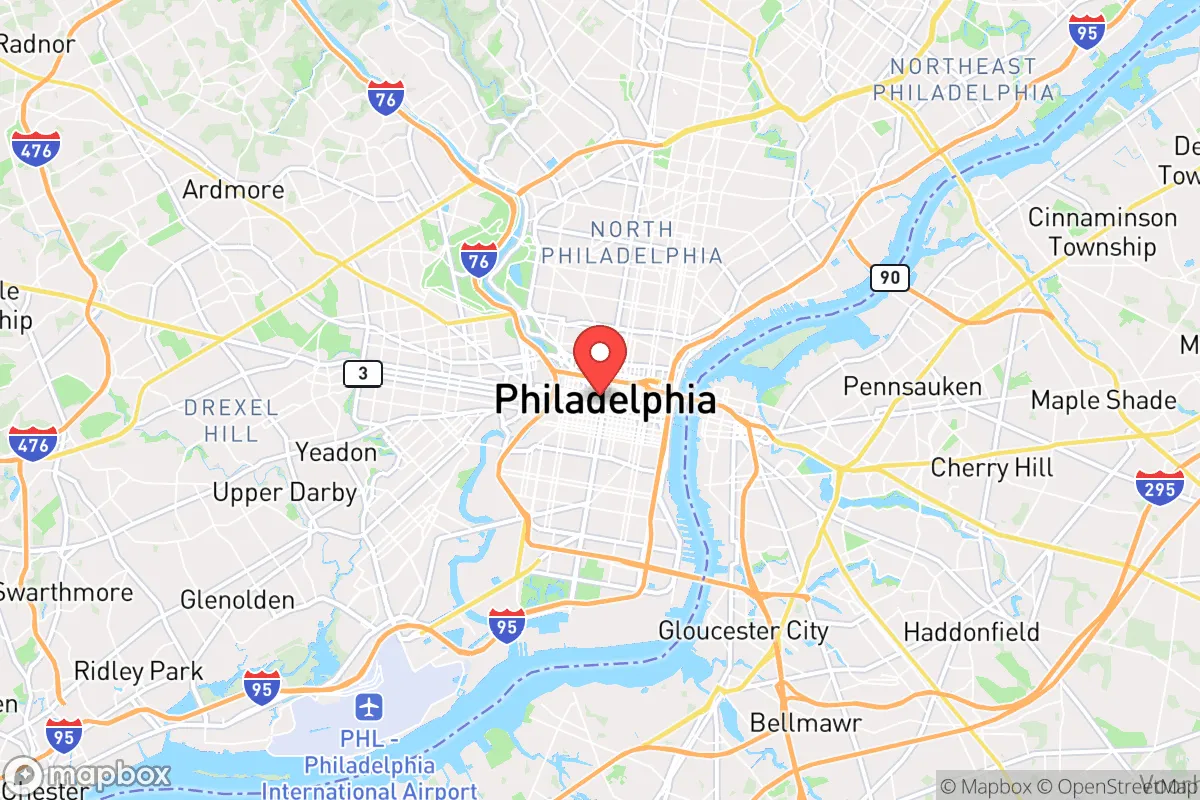
Personal Sovereignty in Filadèlfia, PA
Strong independent fundamentals that actively favor personal liberty and low regulation.
What does Personal Sovereignty tell us?
Personal Sovereignty measures your capacity for self-reliance and independence with minimal government friction. Higher scores mean fewer barriers between you and the way you want to live... but it assumes you have the space you need and good neighbors.
What does this tell us?
Personal Sovereignty measures your capacity for self-reliance and independence with minimal government friction. Higher scores mean fewer barriers between you and the way you want to live... but it assumes you have the space you need and good neighbors.
State Policy
Energy independence: Net exporter (150% of energy produced in-state)
Personal Liberty
Homesteading

Personal Liberty Analysis
Filadèlfia, Pennsylvania, presents a nuanced environment for personal sovereignty, where a dense urban core and a powerful state government create a regulatory atmosphere that is notably heavier than in many other parts of the country. For a relocation researcher prioritizing autonomy, the city offers strong protections for certain personal liberties, particularly around speech and property rights, but imposes significant constraints on self-defense, taxation, and self-reliant living. The overall autonomy environment is best described as "managed freedom"—where individual choice is respected in some domains but heavily structured by state and local mandates in others.
Tax burden and regulatory posture: How heavy is the hand of government?
Pennsylvania's tax structure is a mixed bag for the sovereignty-minded. The state levies a flat 3.07% personal income tax, which is moderate compared to neighboring states, and there is no tax on retirement income (Social Security, pensions, 401(k) withdrawals), a clear advantage for retirees seeking to keep more of their earnings. However, Filadèlfia adds its own city wage tax of 3.75% for residents and 3.5% for non-residents who work in the city, creating a combined effective income tax rate that can exceed 6.8% for residents—one of the highest local income tax burdens in the nation. Property taxes are also notable: the city's average effective property tax rate is around 1.4%, which is above the national average, though assessments are not always current. Sales tax is 8% (state 6% plus city 2%), applied to most goods but not groceries or clothing. The regulatory posture is distinctly heavy-touch. Pennsylvania is a "home rule" state, but Filadèlfia's city council and mayor wield broad authority over zoning, business licensing, and land use. Starting a home-based business requires navigating a complex web of permits and inspections, and the city's strict rental licensing regime adds layers of bureaucracy for property owners. For a reader who values minimal government interference in economic decisions, the combined tax and regulatory burden here is a significant headwind.
Self-defense and gun law specifics: Can you legally protect yourself?
Pennsylvania is generally considered a "shall-issue" state for concealed carry permits, meaning that if you meet basic criteria (age 21, no disqualifying criminal record, no mental health adjudication), the county sheriff must issue a License to Carry Firearms (LTCF). Filadèlfia, however, is a notable exception in practice. While the law is shall-issue, the city's police department has historically been slower and more restrictive in processing applications than rural counties, and the city itself has enacted local ordinances that create friction—such as requiring gun owners to report lost or stolen firearms within 24 hours. Open carry is legal without a permit in most of Pennsylvania, but it is prohibited in Filadèlfia during a state of emergency (which the city has declared multiple times in recent years), and it is effectively discouraged by local police. The city also bans firearms in parks and recreation centers, and state preemption law is strong but not absolute—Filadèlfia has been a battleground for local gun control measures. For self-defense in the home, there is no "duty to retreat" under Pennsylvania's Castle Doctrine, which applies to one's residence and vehicle. However, the state's Stand Your Ground law is limited to outside the home only if you are in a place you have a legal right to be. In practice, a Filadèlfia resident can legally defend their home with deadly force if they reasonably believe it is necessary to prevent imminent death or great bodily harm, but the legal aftermath in a city with a progressive district attorney's office can be costly and protracted. For the sovereignty-focused individual, the legal framework for self-defense is present but the local enforcement climate is adversarial.
Self-reliance and homesteading viability: Lot sizes, zoning, and off-grid feasibility
Filadèlfia is a dense, fully urbanized city where traditional homesteading is essentially impossible within the city limits. The typical residential lot size in rowhouse neighborhoods is around 1,500 to 2,500 square feet, with no meaningful space for livestock, large gardens, or alternative energy systems. Zoning is strictly enforced: keeping chickens is allowed with a permit (up to four hens, no roosters), but goats, pigs, or any other livestock are prohibited in residential zones. Beekeeping is permitted with registration, but the city's code requires hives to be at least 10 feet from property lines. Off-grid living is not feasible—the city mandates connection to municipal water and sewer systems, and building codes require grid-tied electrical service. Rainwater harvesting is technically allowed but limited to 50 gallons per property, and solar panels are permitted but subject to historic district restrictions in many neighborhoods. For a reader seeking self-reliance through food production, energy independence, or reduced reliance on municipal services, Filadèlfia offers almost no room for such pursuits. The regulatory environment is designed for dense urban living, and any attempt to deviate from that norm requires expensive variances and legal battles. The viable path to homesteading is to look at the surrounding counties—Bucks, Montgomery, or Chester—where zoning is more permissive and lot sizes of 1-5 acres are common, allowing for gardens, small livestock, and even off-grid systems with proper permits.
Personal liberties: Parental rights, medical autonomy, speech, and property
Pennsylvania has a mixed record on personal liberties that directly affect daily life. Parental rights are generally respected: the state does not have a universal vaccine mandate for schoolchildren (though certain vaccines are required for attendance, with medical and religious exemptions available), and parents have broad authority over their children's education, including the option to homeschool with relatively simple notification and portfolio review requirements. However, Filadèlfia's school district has been aggressive in implementing progressive curricula, and parents who object have limited recourse beyond opting out of specific lessons. Medical autonomy is constrained: Pennsylvania has no law explicitly protecting the right to refuse medical treatment, and the state's COVID-19 emergency orders in 2020-2021 were among the most restrictive in the nation, including mask mandates and business closures that were enforced by the city. For the sovereignty-minded, this history is a red flag regarding future public health emergencies. Free speech is robustly protected under the Pennsylvania Constitution, which has been interpreted by state courts to provide even broader protections than the First Amendment in some contexts. Filadèlfia has a vibrant public forum culture, and street protests, leafleting, and public speaking are generally unmolested. Property rights are a mixed bag: the city's strong zoning code and historic preservation ordinances mean that what you can do with your property is heavily regulated. The city also has a "use and occupancy" inspection requirement for rental properties, and the recent "whole-home repair" tax credit program is designed to help low-income homeowners but comes with strings attached. Eminent domain is used sparingly but remains a tool for development projects. Overall, personal liberties in Filadèlfia are strongest in the realm of speech and weakest in the realm of property autonomy and medical choice.
In the broader landscape of American cities, Filadèlfia ranks as a moderate-to-low sovereignty environment. It offers genuine advantages—no tax on retirement income, strong free speech protections, and a functional concealed carry system—but these are offset by a high combined tax burden, a dense regulatory code that stifles self-reliance, and a local political culture that is skeptical of gun rights and medical autonomy. For a relocation researcher who prioritizes personal freedom, Filadèlfia is a city where you can speak your mind and keep your retirement savings, but you will find it difficult to live off the land, defend yourself without legal friction, or escape the long arm of city bureaucracy. The most sovereignty-friendly areas in Pennsylvania remain the rural northern and central counties, where taxes are lower, zoning is looser, and the local culture is more aligned with self-reliance.

* Values derived from national, state, county, city and local statistics and may differ in a specific area. Last updated: 2026-08-19T14:46:47.000Z
Narrative content on this page is AI-generated and may contain mistakes. Verify any details that matter before acting on them.
ReloMaps may earn a commission from affiliate links at no extra cost to you.

