Photo: Wikipedia
Demographics of Florence, KY
Affluence Level in Florence, KY
A middle-class area roughly in line with national averages across income, home values, education, and employment.
People of Florence, KY
The people of Florence, Kentucky, today form a predominantly white, middle-class suburban population of 32,334, characterized by a strong conservative tilt and a family-oriented lifestyle centered on the city's excellent public schools and proximity to Cincinnati. With 80.3% of residents identifying as white, the city is less diverse than the national average, though a growing Hispanic community (6.6%) and a notable East/Southeast Asian population (2.2%) are reshaping the demographic landscape. Distinctive identity markers include a deep-rooted sense of local history, a high rate of homeownership, and a practical, no-nonsense civic culture that values low taxes and community safety. The city feels like a stable, established suburb where generational families live alongside newer arrivals drawn by jobs and affordability.
How the city was settled and grew
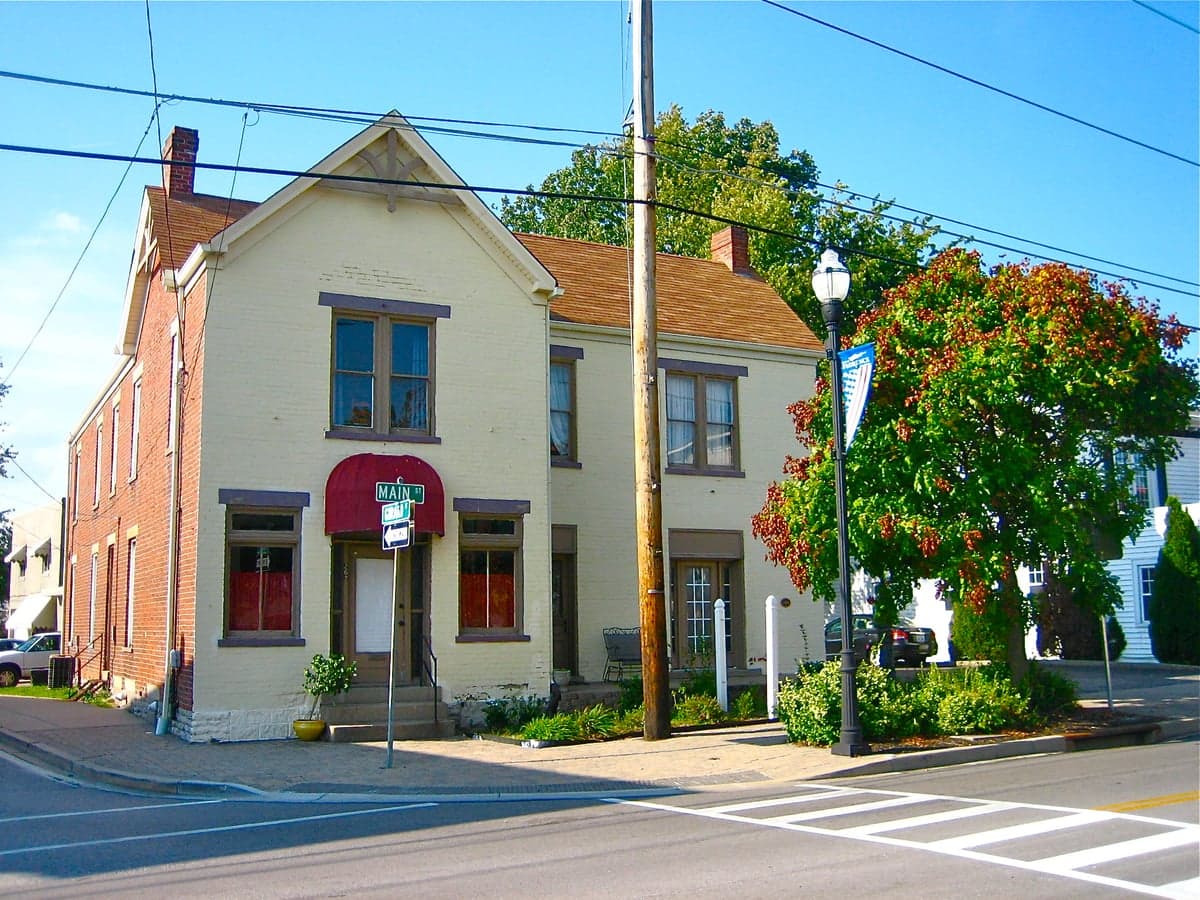
Florence was originally settled in the early 19th century by farmers of German and English descent, drawn by the fertile land along the Ohio River valley and the promise of a new life on the frontier. The arrival of the Cincinnati Southern Railroad in the 1870s transformed the small farming hamlet into a commercial hub, attracting Irish and German immigrants who built the early downtown along Main Street and the surrounding Florence Historic District. These groups established the city's first churches, schools, and businesses, laying the foundation for a tight-knit, Protestant-leaning community. The population grew slowly through the early 1900s, reaching just over 3,000 by 1950, as the city remained a quiet agricultural service center.
Modern era (post-1965)
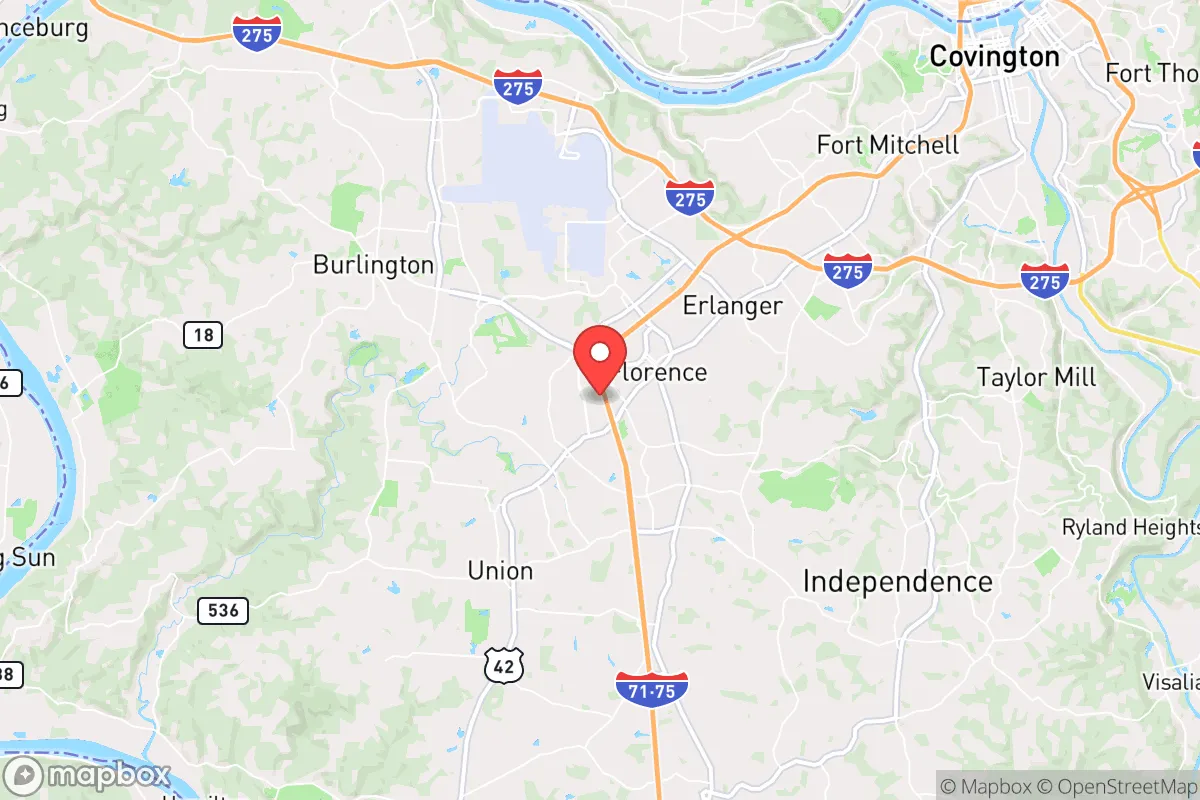
The post-1965 era brought dramatic change as Florence became a bedroom community for Cincinnati's expanding economy. The construction of Interstate 71 and the Florence Mall in the 1970s triggered a suburban boom, drawing white middle-class families from Cincinnati and Northern Kentucky into new subdivisions like Thornwilde and Steeplechase. These neighborhoods, built on former farmland, filled with young families seeking larger homes and better schools, cementing Florence's reputation as a safe, family-friendly suburb. The 1980s and 1990s saw modest diversification: a small but steady influx of East/Southeast Asian families, many of Vietnamese and Korean descent, settled in areas near the Mall Road corridor, often opening small businesses. The Hispanic population began growing in the 2000s, concentrated in the Oakbrook area and along the Burlington Pike corridor, drawn by construction and service jobs. The Indian-subcontinent population, while small at 1.4%, has grown more recently, with families settling in newer developments like Heritage Trails. The foreign-born share now stands at 6.1%, a figure that has risen steadily since 2000.
The future
Florence's population is projected to continue growing slowly, likely reaching 35,000-37,000 by 2040, driven by ongoing suburban infill and the expansion of the Cincinnati metro area. The white population share is gradually declining as Hispanic and Asian communities grow, but the city is not tribalizing into distinct ethnic enclaves; instead, new immigrant groups are dispersing across existing neighborhoods, particularly in the Union area and newer subdivisions near I-71. The Hispanic community is the fastest-growing segment, with a birth rate above the city average, and is expected to reach 10-12% of the population by 2040. The East/Southeast Asian population is plateauing, as younger generations often move to larger cities for career opportunities. The Indian-subcontinent community, while small, is likely to grow modestly as professionals are attracted to the area's affordable housing and good schools. The city is homogenizing in terms of lifestyle—most residents, regardless of background, share a car-dependent, suburban, family-oriented daily life—but slowly diversifying in ethnic composition.
For someone moving in now, Florence is becoming a more diverse but still predominantly white, conservative suburb where newcomers are welcomed but expected to integrate into the existing community fabric. The city offers a stable, safe environment with good schools and a strong sense of local identity, but those seeking a highly diverse or urban experience will find it lacking. The trajectory is toward gradual, managed growth that preserves the city's character while slowly broadening its demographic base.

* Values derived from national, state, county, city and local statistics and may differ in a specific area. Last updated: 2026-04-21T10:46:15.000Z
Narrative content on this page is AI-generated and may contain mistakes. Verify any details that matter before acting on them.
ReloMaps may earn a commission from affiliate links at no extra cost to you.

