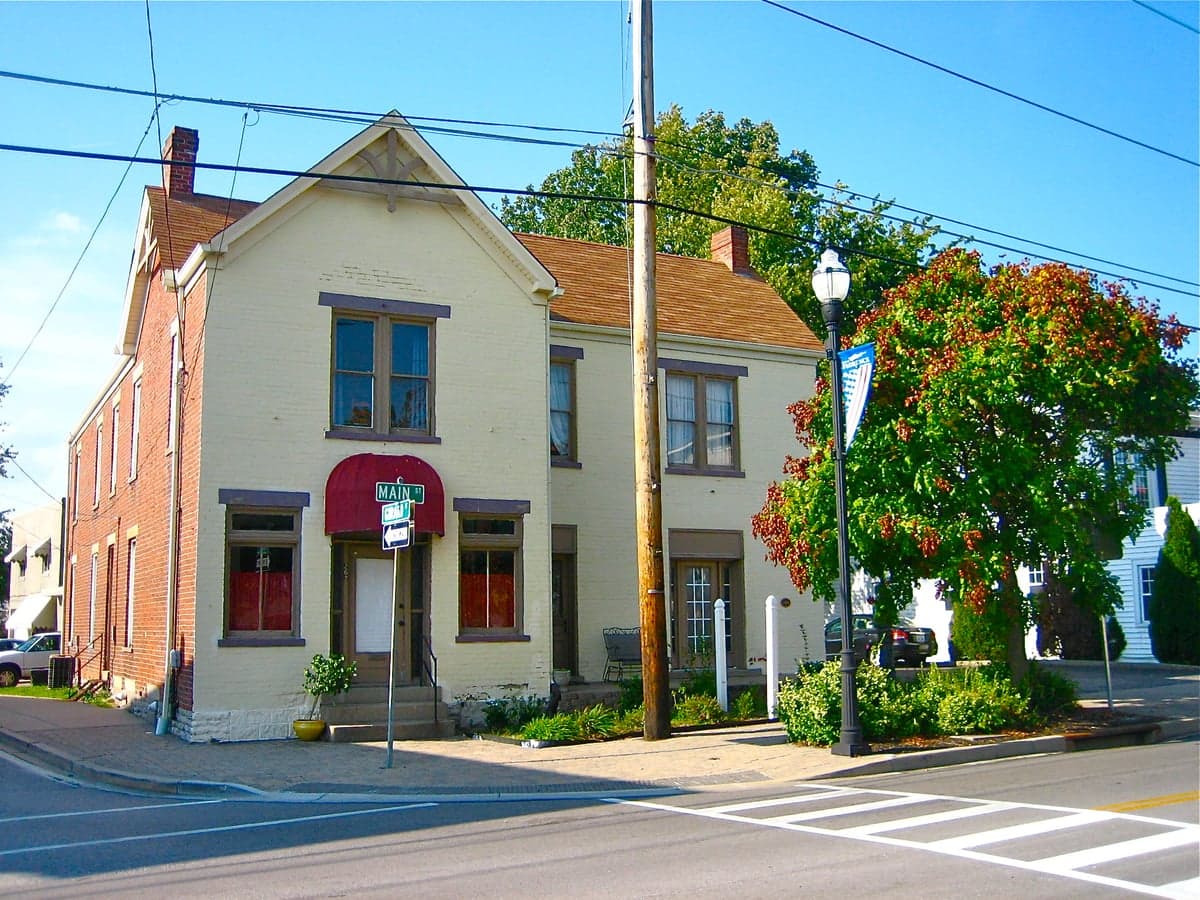
Photo: Wikipedia
Political ClimatePolitical Climate in Florence, KY
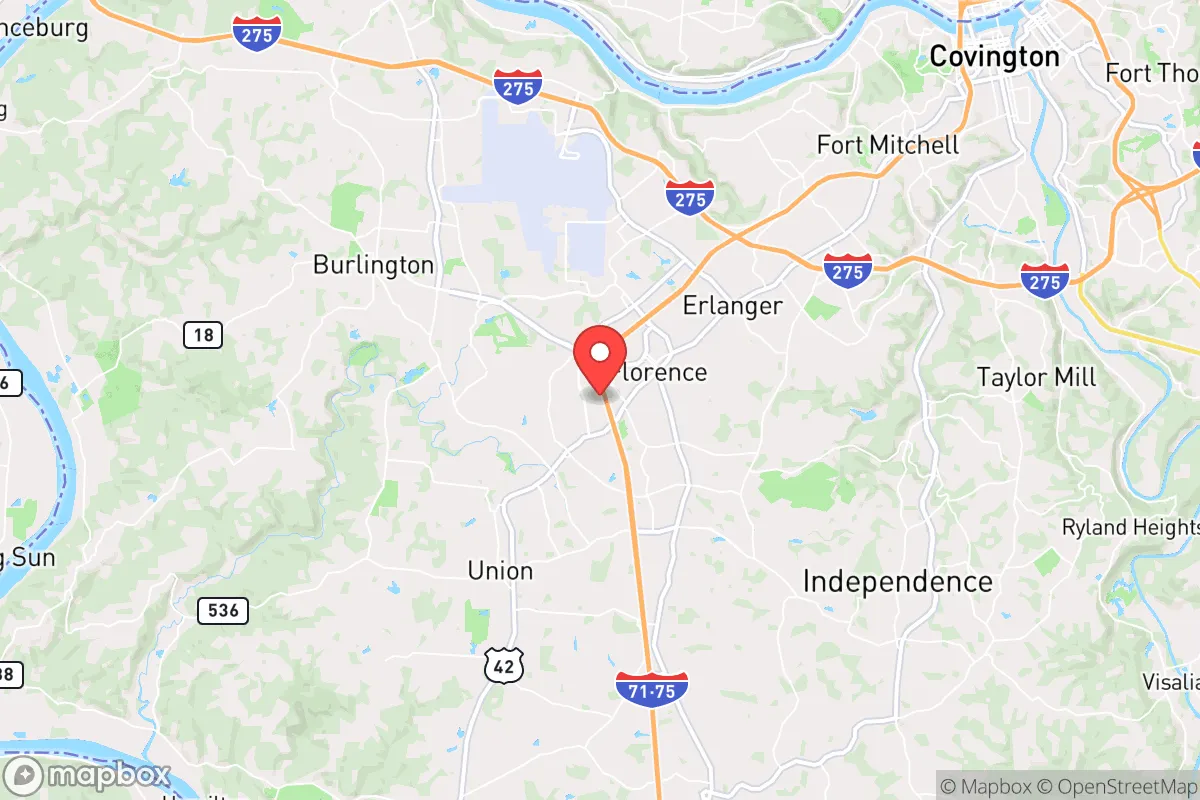
District shown is the primary district for this city’s centroid. Cities may span multiple districts.
Local Political AnalysisPolitical Analysis of Florence, KY
Florence, Kentucky, has long been a rock-solid conservative stronghold, and honestly, it still is for the most part. With a Cook PVI of R+18, this isn't just a red dot on the map; it's a deep crimson one. But like a lot of places in Northern Kentucky, you can feel the winds shifting a bit, especially as more folks move up from Cincinnati or down from Lexington. The core of the town still votes reliably Republican, and you'll see plenty of Trump signs in yards during election season, but there's a growing undercurrent of progressive energy that has some of us long-timers watching closely.
How it compares
To really get the lay of the land, you gotta look at Florence against its neighbors. Head north into Covington or Newport, and you're in a whole different world—those cities are trending blue fast, with a younger, more urban crowd pushing for bike lanes, higher density housing, and all the usual progressive city council stuff. Florence is the buffer zone. It's where a lot of those folks from Covington move when they want a yard and a quieter life, but they don't always leave their politics behind. Compare us to Union or Burlington to the south and west, and Florence looks almost moderate. Those towns are even more conservative, with a stronger "don't tread on me" vibe. So Florence sits in this interesting middle ground: still solidly red, but with a visible blue minority that's getting louder every year.
What this means for residents
For the average family here, the political climate means a few concrete things. First, taxes are low and likely to stay that way—the local government isn't itching to expand programs or raise levies. Second, there's a general hands-off approach to business and property. You can put up a fence, run a small home business, or park your boat in the driveway without a dozen permits and a zoning board meeting. That's the good part. The concerning part is the slow creep of government overreach. We're seeing more talk about "inclusive" zoning rules and diversity initiatives in the school district. It's subtle, but it's there. A few years ago, nobody would have dreamed of a "sustainability coordinator" for the city, and now there's chatter about it. For a town that prides itself on personal freedom and common sense, that kind of bureaucratic expansion is a red flag.
Culturally, Florence still feels like a place where the Second Amendment is a given, not a debate. You can walk into a local diner and hear folks talking about hunting or the local gun show without anyone batting an eye. The churches are full, and the community events—like the Florence Freedom baseball games or the annual festivals—still have that old-school, family-first feel. But there's a tension. The local library has had to deal with challenges over certain books, and the school board meetings have gotten a bit more heated than they used to be. It's not the chaos you see in some big cities, but it's a sign that the cultural battles are coming to our doorstep. If the trend continues, I worry we'll see more regulations, more mandates, and less of the live-and-let-live attitude that made this place great. For now, though, Florence is still a place where you can raise your kids with traditional values and not feel like you're swimming against the current. Just keep an eye on those city council elections—that's where the real fight is happening.

State Political ClimatePolitical Climate in Kentucky
State Political AnalysisPolitical Environment in the State
Kentucky has been a reliably red state for decades, but it’s not the deep South stereotype you might imagine. The state leans Republican by about 15-20 points in presidential elections—Donald Trump won it by 26 points in 2020 and by a similar margin in 2024—but that number masks a complex, shifting coalition. Over the last 20 years, the GOP has consolidated power at every level, flipping the state House in 2016 and now holding supermajorities in both chambers, the governor’s mansion (with Democrat Andy Beshear as a notable exception), and all but one of its congressional seats. The real story is how the old Democratic machine in the coal fields and union halls has collapsed, replaced by a culturally conservative, pro-business Republican majority that’s still wrestling with its own internal divides.
Urban vs. rural divide
The political map of Kentucky is a textbook study in urban-rural polarization. Louisville (Jefferson County) and Lexington (Fayette County) are the blue islands—both voted for Joe Biden in 2020 and Kamala Harris in 2024, with Louisville going about 58% Democratic and Lexington around 55%. These metros are growing, diversifying, and trending left, driven by younger professionals, university populations (University of Louisville, University of Kentucky), and a growing service economy. But outside the I-64 and I-75 corridors, the state is deeply red. Bowling Green, Owensboro, and Paducah are reliably Republican, while the eastern coal counties—like Pike, Perry, and Harlan—have swung hard from being Democratic strongholds to Trump country, sometimes flipping 40 points in a single decade. The most dramatic shift is in the exurbs: Oldham County, just northeast of Louisville, went from purple to deep red, voting 70%+ Republican in 2024. The rural-urban split is stark: if you live in a county with a Walmart and a Starbucks, you’re probably in a red area; if you live in a county with a Whole Foods and a university, you’re blue.
Policy environment
Kentucky’s policy environment is broadly conservative, but with some notable wrinkles. There is no state income tax on the horizon—the legislature passed a phased reduction in 2022, cutting the flat rate from 5% to 4% by 2026, with a goal of elimination. Property taxes are low, and the state has a right-to-work law and is a “shall-issue” state for concealed carry. On education, the 2022 “school choice” bill (HB 563) created education opportunity accounts, though they’re currently tied up in court. The state also passed a near-total abortion ban in 2022 (trigger law HB 3), with no exceptions for rape or incest, which has become a flashpoint. Election laws tightened in 2021 with SB 1, requiring photo ID and limiting absentee voting. Healthcare is a mixed bag: Kentucky expanded Medicaid under the ACA, and about 30% of the population is on it, but the legislature has pushed work requirements and privatization. The state also has a strong “parental rights” bent—HB 563 included provisions for parents to opt kids out of curriculum they find objectionable, and there’s ongoing debate about transgender youth medical care, with a ban on gender-affirming care for minors passed in 2023 (SB 150).
Trajectory & freedom
On the freedom front, Kentucky is moving in two directions at once. On gun rights, it’s expanding: in 2019, the state passed constitutional carry (permitless carry), and in 2023, it passed a “Second Amendment Preservation Act” (HB 153) that attempts to nullify federal gun laws—though it’s largely symbolic. On medical freedom, the state has been a battleground: the 2023 SB 150 law bans gender-affirming care for minors, restricts classroom discussion of sexual orientation, and gives parents broad rights to sue schools. Tax freedom is improving with the income tax cuts, but property taxes are creeping up in growing counties like Warren (Bowling Green) and Boone (northern Kentucky). The concerning trend is the growth of government overreach in the name of public health or safety: during COVID, Governor Beshear’s executive orders (mask mandates, business closures) sparked a backlash that led to a 2021 law (SB 1) limiting the governor’s emergency powers. Personal liberty is generally strong—low taxes, few zoning restrictions outside major cities, and a “live and let live” culture in rural areas—but the state is also seeing more surveillance and data collection through license plate readers and police fusion centers, which hasn’t yet sparked the same pushback.
Civil unrest & political movements
Kentucky has seen its share of political flashpoints. The 2020 Breonna Taylor protests in Louisville were the most intense, with months of demonstrations, property damage, and a state of emergency. That event reshaped local politics: Louisville’s mayor and police chief were replaced, and the city passed some police reforms, but the state legislature responded with a “back the blue” bill (HB 167) in 2021 that increased penalties for rioting and protected officers from lawsuits. On the right, the “Take Back Kentucky” movement has been active, pushing for school board takeovers and anti-CRT legislation. There’s also a small but vocal “State of Franklin” secession movement in eastern Kentucky, though it’s mostly symbolic. Immigration politics are less heated than in border states—Kentucky has a small foreign-born population (about 4%)—but there’s been tension in Louisville’s Shelby Park neighborhood over a growing refugee resettlement program, and in Bowling Green over a Somali refugee community. Election integrity has been a recurring theme: the 2020 election saw Trump’s “stop the steal” rallies in Frankfort, and the 2021 SB 1 law was a direct response. You won’t see daily protests, but the cultural divide is real—you’ll see “Let’s Go Brandon” flags in rural areas and “Black Lives Matter” signs in Lexington and Louisville.
Projection
Over the next 5-10 years, Kentucky will likely get redder at the state level but bluer in its growing metros. In-migration is accelerating from blue states like California and Illinois, but these newcomers are mostly moving to the suburbs of Louisville, Lexington, and northern Kentucky (Cincinnati metro), and they tend to be moderate Republicans or independents, not progressives. The eastern coal counties will continue to lose population and political clout, while the I-65 corridor from Louisville to Bowling Green will grow. The biggest wildcard is the abortion ban: it’s popular in rural areas but a liability in suburban swing districts, and if the GOP overreaches on cultural issues, they could lose the governor’s mansion again. Expect more school choice expansion, further income tax cuts, and continued fights over transgender rights and medical freedom. By 2030, Kentucky will be a solidly red state with a few blue cities, but the internal tension between the libertarian-leaning, low-tax wing and the socially conservative, interventionist wing will define the politics.
For a new resident, the bottom line is this: Kentucky offers low taxes, strong gun rights, and a generally hands-off government in rural areas, but you’ll find more regulation and progressive policies in Louisville and Lexington. If you’re moving for freedom, pick a county like Oldham, Warren, or Boone—avoid Jefferson and Fayette if you want a conservative environment. The state is politically stable but culturally divided, and the biggest threat to your personal liberty is likely to come from local school boards or city councils, not the statehouse. Keep an eye on the 2027 governor’s race: if a Republican wins, expect more tax cuts and cultural restrictions; if Beshear wins again, expect a veto battle every session.
* Values derived from national, state, county, city and local statistics and may differ in a specific area. Last updated: 2026-04-21T10:46:15.000Z
Narrative content on this page is AI-generated and may contain mistakes. Verify any details that matter before acting on them.
ReloMaps may earn a commission from affiliate links at no extra cost to you.

