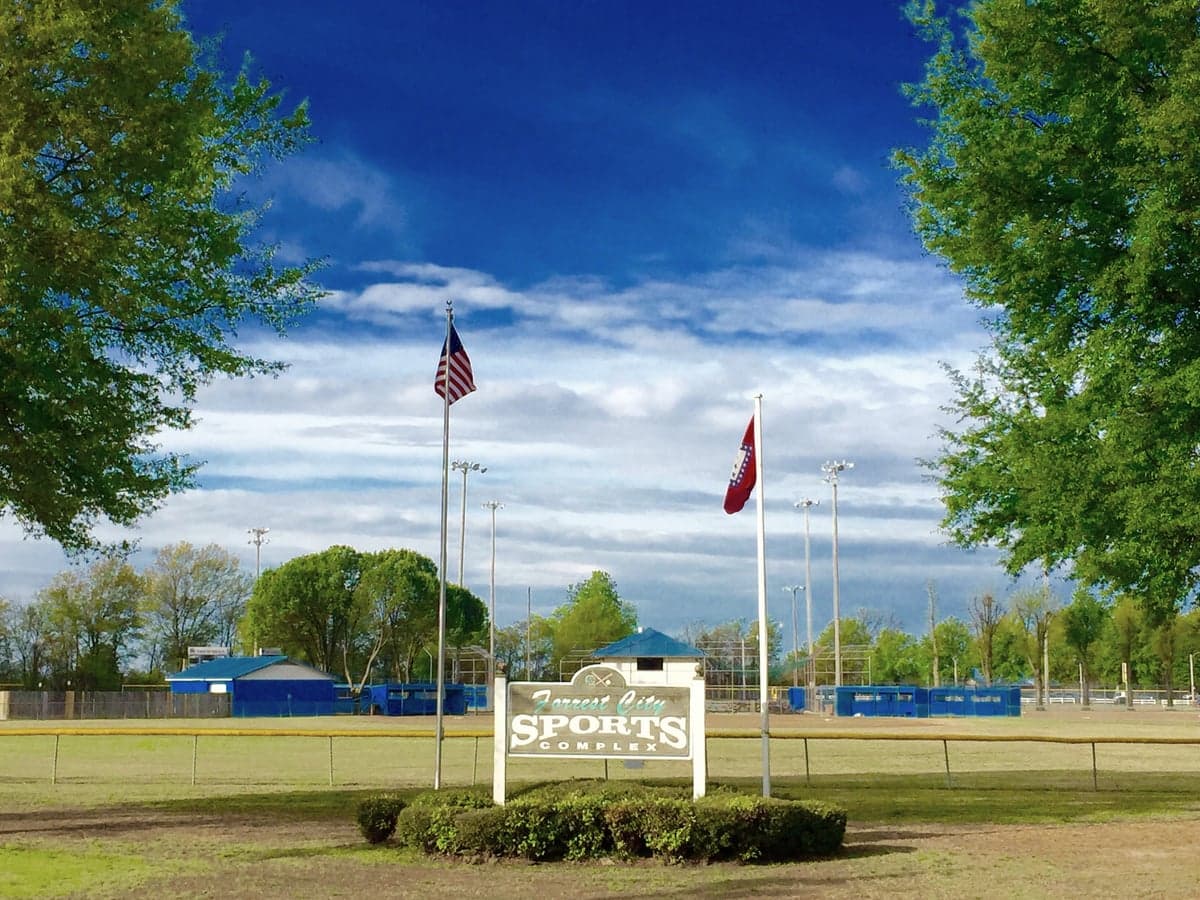
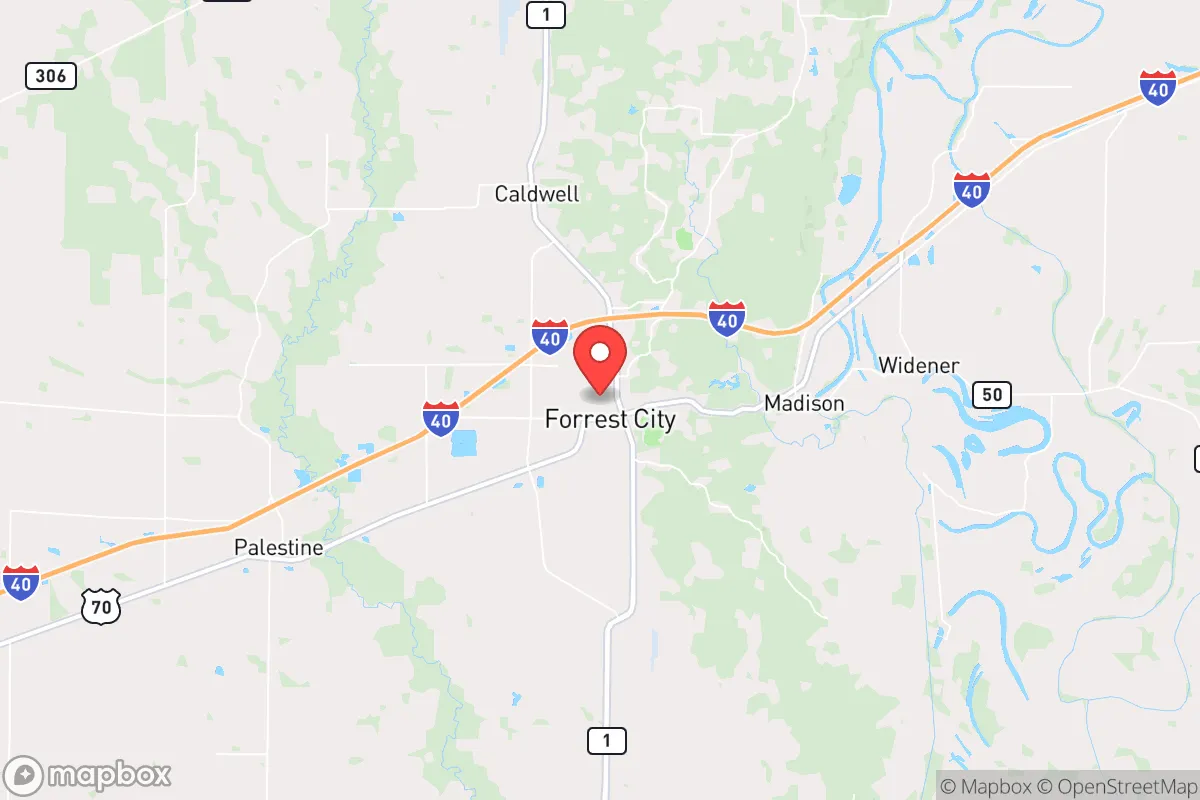
Photo: Wikipedia
Strategic Assessment of Forrest City, AR
Workable tactical position. Some exposure to population density or targets, but generally defensible in a crisis.
What does the Strategic Assessment tell us?
Our Strategic Assessment grades tactical survivability of an area. Major population centers, military targets, fallout zones, natural disasters, and border exposure all drive risk — lower exposure means a more defensible position in a crisis.
This is heavily inspired by Joel Skousen's Strategic Relocation book. Highly recommended you checkout the book ($)What does this tell us?
Our Strategic Assessment grades tactical survivability of an area. Major population centers, military targets, fallout zones, natural disasters, and border exposure all drive risk — lower exposure means a more defensible position in a crisis.
This is heavily inspired by Joel Skousen's Strategic Relocation book. Highly recommended you checkout the book ($)Strategic Pillars

Key Distances
Regional Safe Places
Below is our recommended "safe zones" in Arkansas and the surrounding area based on our strategic heuristics. For most people, it's unrealistic to live in a “safe zone” full-time due to work, family or other personal reasons. They tend to be more rural. However, many of these areas are perfect for second homes and retreat properties that double as a vacation home or even a short-term rental.
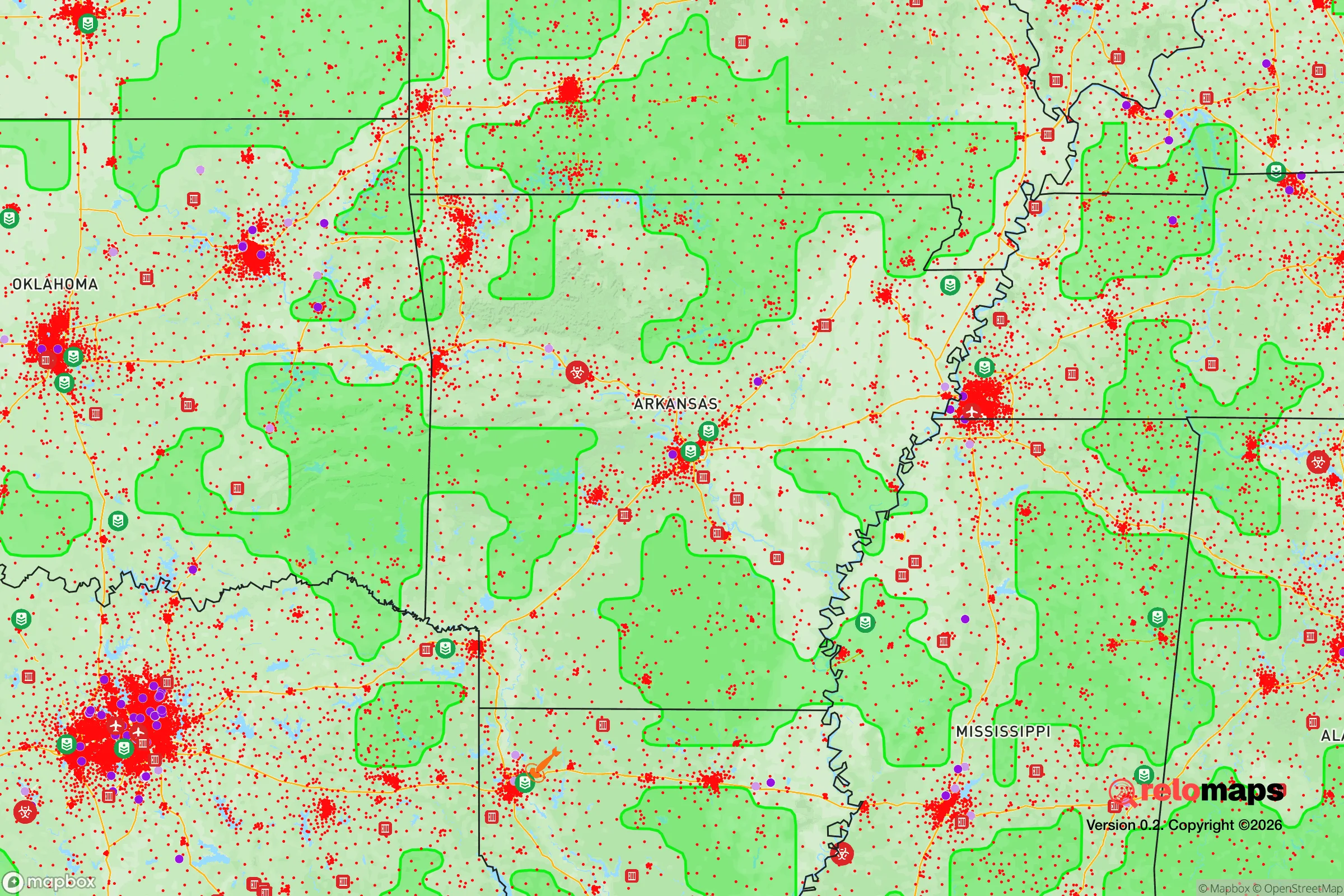
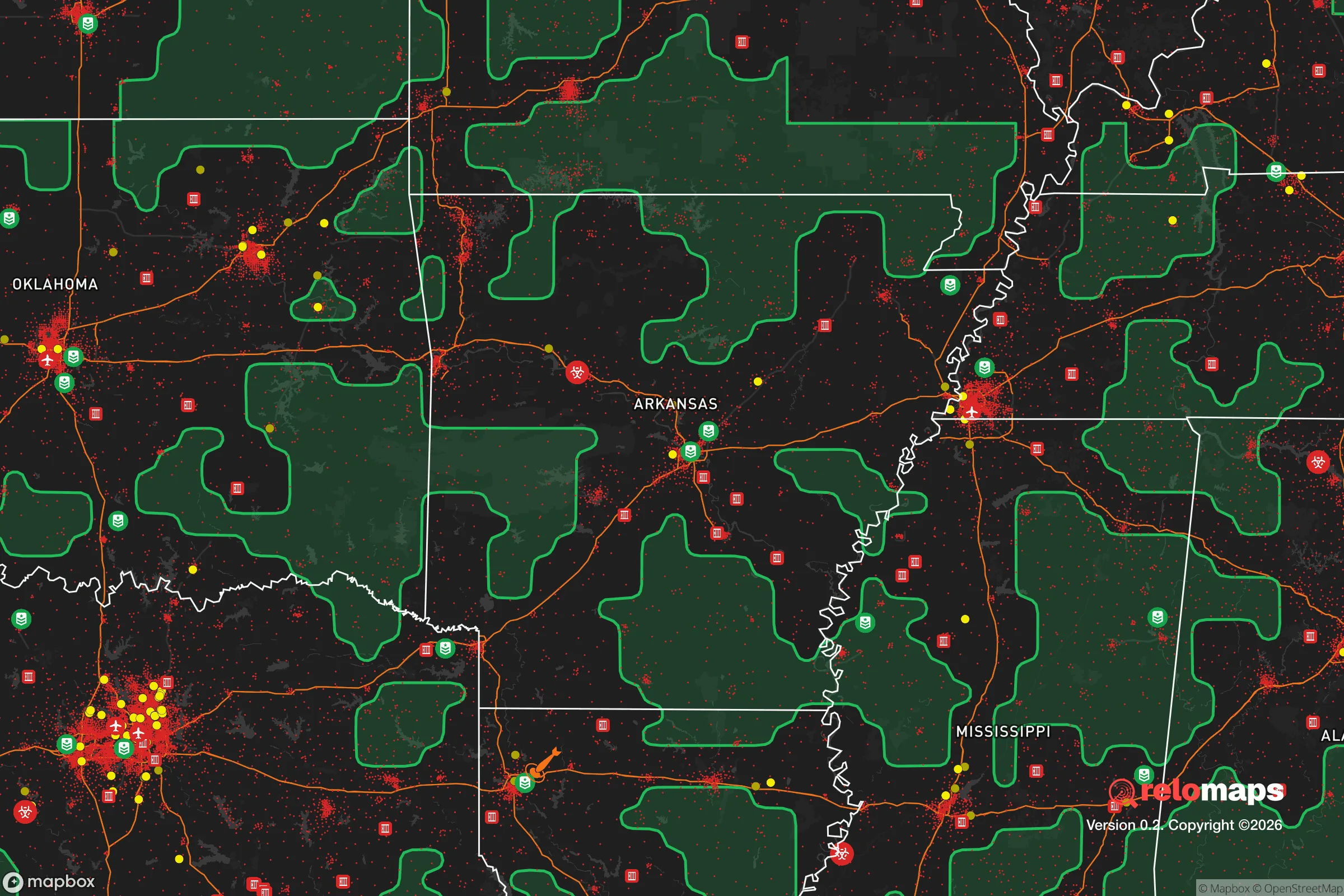


Important Note: For informational purposes only. This does not mean nothing bad ever happens in the green zones. Please use common sense. This is based on public data and modeled with AI. We tried to take a conservative approach but mistakes happen. We update this regularly as new information becomes available.
Solar Generator Recommendations
Backup power matters more here than in safer locations. We've picked three solar generators across budgets and capacity tiers — start with the budget unit if you only need a few essentials, or step up if you want to run a fridge and HVAC for days at a time.

Jackery Portable Power Station Explorer 300
Budget OptionPower on the Go: Weighing only 11 lbs, it's convenient to set up and store with book-sized foldable solar panels

BLUETTI Portable Power Station AC180
Designed for both indoor and outdoor scenarios, AC180 is highly capable as it has a robost capacity and continuous output power.

EF ECOFLOW DELTA Pro Ultra Power Station
Upgraded PickEcoFlow DELTA Pro Ultra is a whole-home energy system designed to grow with your family. Integrated with the Smart Home Panel 2, it scales to meet your evolving energy needs — keeping your home powered, intelligent, and secure through every stage of life.
We earn a commission, at no additional cost to you.
Strategic Assessment Analysis
Forrest City, Arkansas, sits at a crossroads that makes it a serious contender for anyone thinking long-term about strategic relocation, especially if your calculus includes resilience, distance from megacity chaos, and the ability to ride out disruptions. This isn't a flashy pick—it's a working-class Delta town with a population hovering around 13,000—but its position along the I-40 corridor, roughly 50 miles west of Memphis, gives it a unique blend of isolation and access. For a conservative-leaning prepper or survivalist, the key question isn't whether Forrest City is perfect—it's whether its location and infrastructure offer a net advantage over the sprawl and vulnerability of larger metros. The answer leans yes, with clear trade-offs.
Geographic position and natural advantages for long-term stability
Forrest City's primary strategic asset is its location. It sits on Crowley's Ridge, a geological formation that rises 200 to 300 feet above the flat Mississippi Delta floodplain. That elevation matters: it provides natural drainage, reduces flood risk compared to surrounding bottomlands, and offers modest defensible terrain. The town is roughly 130 miles west of the New Madrid Seismic Zone, a major fault line that could produce catastrophic earthquakes—but that distance puts it outside the worst of the liquefaction and ground failure zones that would devastate Memphis or Cairo, Illinois. Water access is a plus: the Mississippi River is 20 miles east, and the L'Anguille River runs through the area, providing surface water sources for filtration or catchment. The surrounding farmland is some of the most productive in the country—rice, soybeans, cotton, corn—meaning local food production capacity is high, even if the supply chain is currently centralized. For a relocator, this means you're not dependent on trucked-in groceries from 500 miles away; you're in a region where subsistence agriculture is viable.
Risks, exposures, and proximity to fallout-relevant landmarks
The biggest downside is proximity to Memphis. At 50 miles, Forrest City is close enough that a major event in Memphis—civil unrest, a terrorist attack on the I-40 bridge, a pandemic surge, or a nuclear incident at the nearby Arkansas Nuclear One plant (about 90 miles northwest in Russellville)—could send refugees or fallout your way. Memphis is a major transportation hub with FedEx's global superhub at Memphis International Airport, which is a prime target for disruption. If the grid goes down or supply chains snap, expect a surge of people fleeing the city along I-40. Forrest City's position as a choke point on that corridor means you'd need a plan to secure your perimeter or bug out further west. The town itself has a crime rate above the national average—property crime is a concern—but that's typical for a small Delta town with economic challenges. From a prepper perspective, the risk is less about direct attack and more about being a waypoint for desperate populations. The New Madrid fault is the other wildcard: a 7.7-magnitude quake could damage infrastructure here, though the ridge geology offers some protection. Flooding from the Mississippi is a low risk at this elevation, but heavy rain events are increasing.
Practical resilience for a relocator: food, water, energy, and defensibility
Forrest City offers a mixed bag for practical self-sufficiency. Water is abundant—the Alluvial Aquifer beneath the Delta provides reliable groundwater, and many rural properties have wells. The city's municipal water comes from the aquifer, so even if surface sources are contaminated, deep wells remain viable. Food production is realistic: the growing season runs 220+ days, and the soil is rich. You can raise poultry, goats, or cattle on small acreage, and the local farmers' markets and co-ops (like the Forrest City Farmers Market) provide a buffer if supply chains falter. Energy is a weak point. The grid here is aging, and outages from storms are common. Solar is viable—the region gets about 215 sunny days per year—but you'll need battery storage and a backup generator for winter ice storms. Natural gas is available in town, but rural properties may rely on propane. Defensibility is moderate. The ridge offers some natural chokepoints, but the flat farmland around the town means you can't rely on terrain alone. A rural property with a good well, solar array, and a perimeter fence is the ideal setup. The local gun culture is strong—Arkansas is a constitutional carry state—and the county sheriff's office is responsive, but you're still responsible for your own security. The nearest major medical center is in Memphis, which is a liability if roads are blocked; Forrest City has a small hospital (Forrest City Medical Center) for basic care, but trauma cases would require evacuation.
Overall, Forrest City works best as a secondary relocation node—a place to establish a foothold with access to farmland, water, and a lower cost of living, while staying within a day's drive of the Ozarks or the Ouachita Mountains for deeper retreat. The conservative demographic is a plus: the area votes reliably red, and the local culture is self-reliant, church-oriented, and wary of federal overreach. You won't find prepper supply stores on every corner, but you'll find neighbors who know how to hunt, garden, and fix machinery. The strategic picture is this: Forrest City isn't a fortress, but it's a defensible position in a resource-rich region, with manageable exposure to the chaos of Memphis and the New Madrid fault. If you're looking for a low-profile base with room to grow food and store supplies, it's worth a serious look—just have a bug-out plan for the first 72 hours after a major event.

* Values derived from national, state, county, city and local statistics and may differ in a specific area. Last updated: 2026-04-30T04:51:10.000Z
Narrative content on this page is AI-generated and may contain mistakes. Verify any details that matter before acting on them.
ReloMaps may earn a commission from affiliate links at no extra cost to you.

