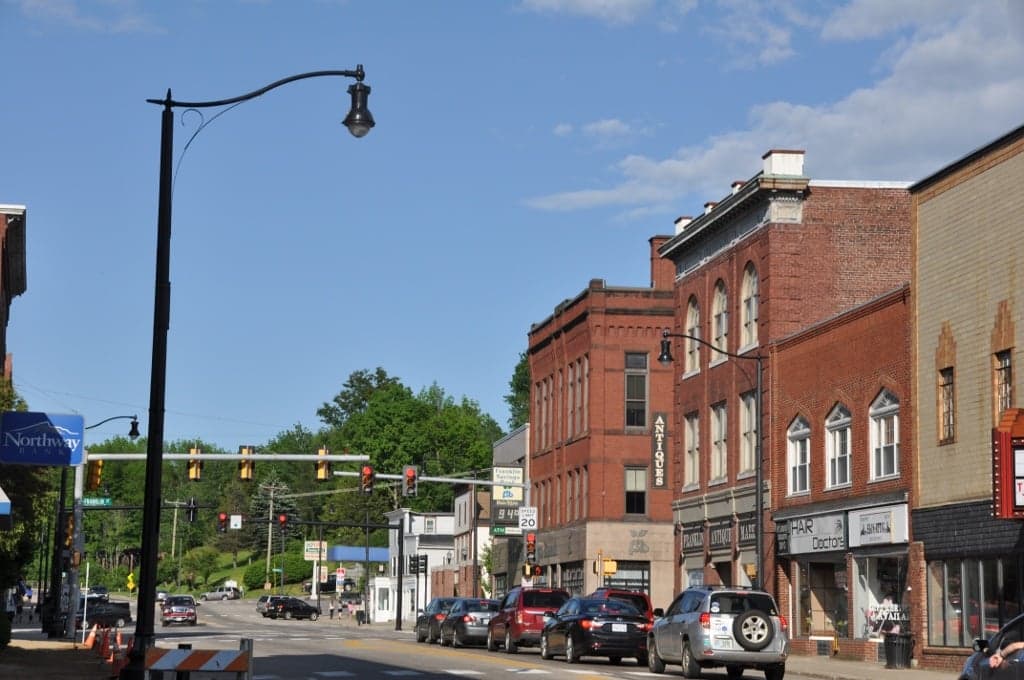
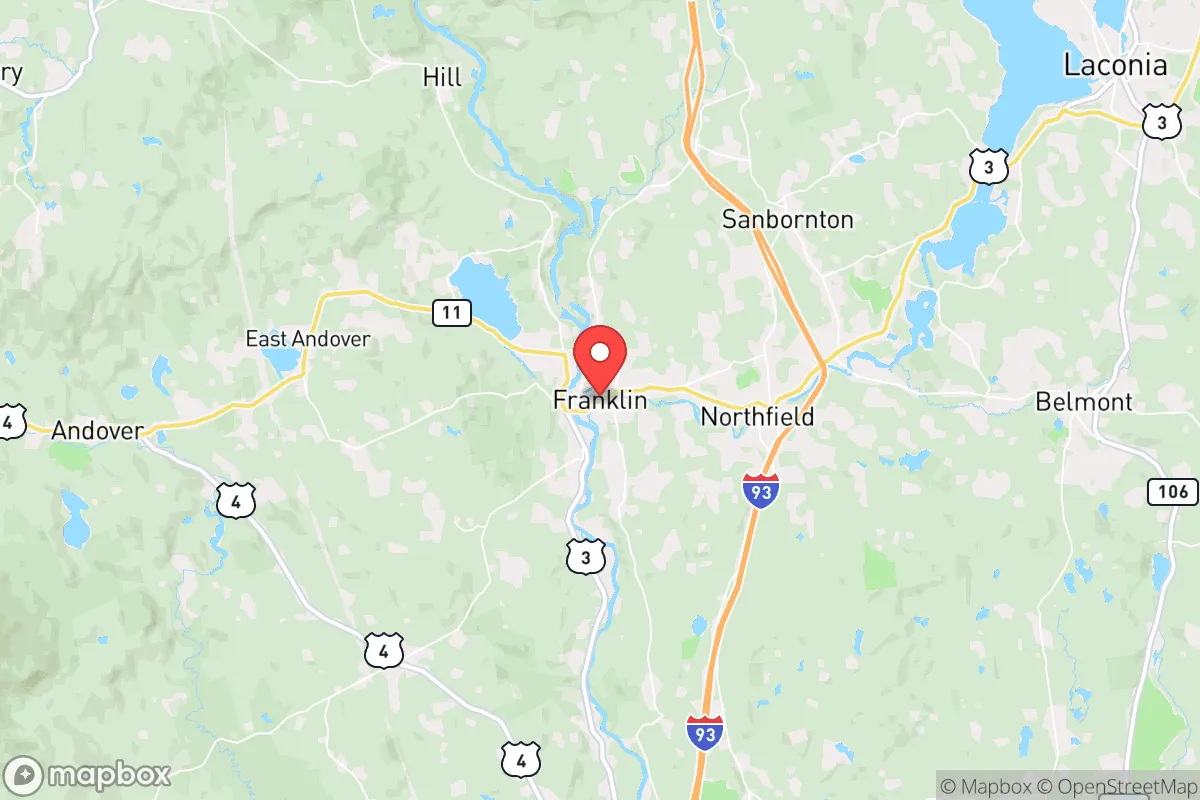
Photo: Wikipedia
Personal Sovereignty in Franklin, NH
Viable for self-reliance. Generally workable, though some barriers may limit total independence.
What does Personal Sovereignty tell us?
Personal Sovereignty measures your capacity for self-reliance and independence with minimal government friction. Higher scores mean fewer barriers between you and the way you want to live... but it assumes you have the space you need and good neighbors.
What does this tell us?
Personal Sovereignty measures your capacity for self-reliance and independence with minimal government friction. Higher scores mean fewer barriers between you and the way you want to live... but it assumes you have the space you need and good neighbors.
State Policy
Energy independence: Importer (10% of energy produced in-state)
Personal Liberty
Homesteading

Personal Liberty Analysis
Franklin, New Hampshire, offers a notably high degree of personal sovereignty compared to much of the Northeast, functioning as a pocket of relative autonomy within a state that already ranks among the most liberty-respecting in the region. For the survivalist or prepper, the calculus here is straightforward: New Hampshire’s lack of a broad-based income or sales tax, its constitutional carry gun laws, and its strong tradition of local control create a legal environment where an individual’s ability to live by their own rules is largely intact. While no location is a perfect fortress against federal overreach, Franklin’s position in the Lakes Region—away from the denser, more regulated southern tier—amplifies the state’s baseline freedoms. This analysis examines the specific pillars of sovereignty that matter most to those prioritizing self-reliance, from tax policy and self-defense law to homesteading feasibility and parental rights.
Tax burden and regulatory posture: How Franklin compares to surrounding areas
New Hampshire’s tax structure is a primary draw for those seeking to minimize government extraction. The state imposes no personal income tax and no general sales tax, meaning every dollar you earn or spend stays in your pocket unless it goes to property taxes. Franklin’s property tax rate, while not the lowest in the state, is competitive for the Lakes Region—roughly $18.50 per $1,000 of assessed value as of recent data, which translates to about $3,700 annually on a $200,000 home. Compare that to neighboring Massachusetts, where combined state and local tax burdens can exceed 10% of income, and the advantage is stark. Regulatory posture in Franklin is similarly lean. The city operates under a general law city charter, which limits the scope of local ordinances. There are no onerous business licensing requirements beyond basic state mandates, and zoning is relatively permissive outside the downtown core. For the prepper, this means fewer bureaucratic hurdles for activities like constructing a workshop, storing fuel, or keeping livestock—activities that would invite scrutiny in more regulated towns like Concord or Portsmouth. The state’s Right-to-Farm law (RSA 432) further shields agricultural practices from nuisance lawsuits, a critical protection for anyone planning to raise food.
Self-defense and gun law specifics: Constitutional carry and castle doctrine
New Hampshire is a constitutional carry state, meaning no permit is required to carry a concealed firearm for anyone legally allowed to possess one. This is a foundational liberty for the survivalist mindset, as it removes a potential point of government interference in personal defense. Franklin residents enjoy the full force of the state’s castle doctrine (RSA 627:9), which presumes a reasonable fear of death or serious bodily injury if an intruder unlawfully enters your home, vehicle, or workplace—no duty to retreat. The state also preempts local firearm ordinances, so Franklin cannot impose its own restrictions beyond state law. Magazine capacity is unlimited, and there is no state-level registry or waiting period. For those concerned about federal overreach, New Hampshire’s Firearm Freedom Act (RSA 159:26) explicitly declares that firearms manufactured and retained in-state are not subject to federal regulation, a symbolic but legally significant stance. The practical takeaway: Franklin offers one of the most permissive self-defense legal environments in the Northeast, on par with states like Vermont or Maine. The nearest gun-friendly ranges and training facilities are within a 20-minute drive, including the Granite State Rifle and Pistol Club in nearby Northfield.
Self-reliance and homesteading viability: Lot sizes, zoning, and off-grid feasibility
Franklin’s land use patterns are a mixed bag but generally favorable for self-reliance. The city’s zoning code allows for agricultural uses by right on parcels of two acres or more in the Rural Residential district, which covers most of the city’s land area outside the compact downtown. Minimum lot size in that district is one acre, but many available properties—especially on the outskirts toward Hill or Andover—come on 5- to 20-acre parcels. Off-grid living is legally feasible but requires attention to state building codes. New Hampshire has no state law prohibiting solar panels, rainwater collection, or composting toilets, though local health ordinances may regulate septic systems. Franklin’s building department is known for being pragmatic rather than punitive; permits for alternative energy systems are routinely approved. Wood heat is a dominant heating source in the region, with abundant firewood available from local suppliers or your own lot. The city does not have a ban on backyard chickens or beekeeping, and larger livestock like goats or pigs are permitted on parcels over two acres with minimal hoop-jumping. For the prepper, the key limitation is the lack of a strong off-grid community infrastructure—you’ll need to be self-sufficient in water (well drilling is common) and waste management. But the regulatory environment is not hostile to that goal, which is more than can be said for most of New England.
Personal liberties: Parental rights, medical autonomy, speech, and property
New Hampshire has a robust legal framework for parental rights. The state’s Parental Bill of Rights (RSA 186-C:1) affirms that parents have the primary responsibility for the education, health care, and moral upbringing of their children. This means Franklin parents can opt their kids out of school curricula they find objectionable without facing legal retaliation, and homeschooling is straightforward—just a one-time notification to the local school district, with no portfolio reviews or standardized testing requirements unless the parent chooses them. Medical autonomy is similarly strong. New Hampshire has no state-level vaccine mandate for adults, and while school vaccine requirements exist, religious and philosophical exemptions are available (RSA 141-C:20-c). The state’s Right to Try Act (RSA 141-C:20-a) allows terminally ill patients access to experimental treatments without FDA interference. On speech and property, Franklin operates under the same First Amendment protections as the rest of the country, but the local culture is notably live-and-let-live. There are no hate speech ordinances or overly broad noise restrictions that could be weaponized against political expression. Property rights are protected by the state’s eminent domain limitations (RSA 498-A), which restrict takings to genuinely public uses—no Kelo-style seizures for private development. For the survivalist, this means your land is your castle, legally speaking.
Overall, Franklin, NH, ranks as a stronghold of personal sovereignty within the Northeast corridor. It lacks the extreme libertarian infrastructure of a place like Grafton County (home to the Free State Project’s epicenter), but it offers a more balanced mix of affordability, access to services, and legal protections. The tax burden is low, gun laws are among the best in the nation, homesteading is viable without excessive red tape, and parental and medical autonomy are codified in state law. The primary trade-offs are the cold winters (which test self-reliance in a practical sense) and the proximity to a state government that, while generally liberty-minded, is not immune to federal pressure. For the strategic relocator who values the ability to live without government permission slips, Franklin represents a solid, defensible choice—a place where the law largely stays out of your way, and the land gives you room to breathe.

* Values derived from national, state, county, city and local statistics and may differ in a specific area. Last updated: 2026-04-19T09:38:14.000Z
Narrative content on this page is AI-generated and may contain mistakes. Verify any details that matter before acting on them.
ReloMaps may earn a commission from affiliate links at no extra cost to you.

