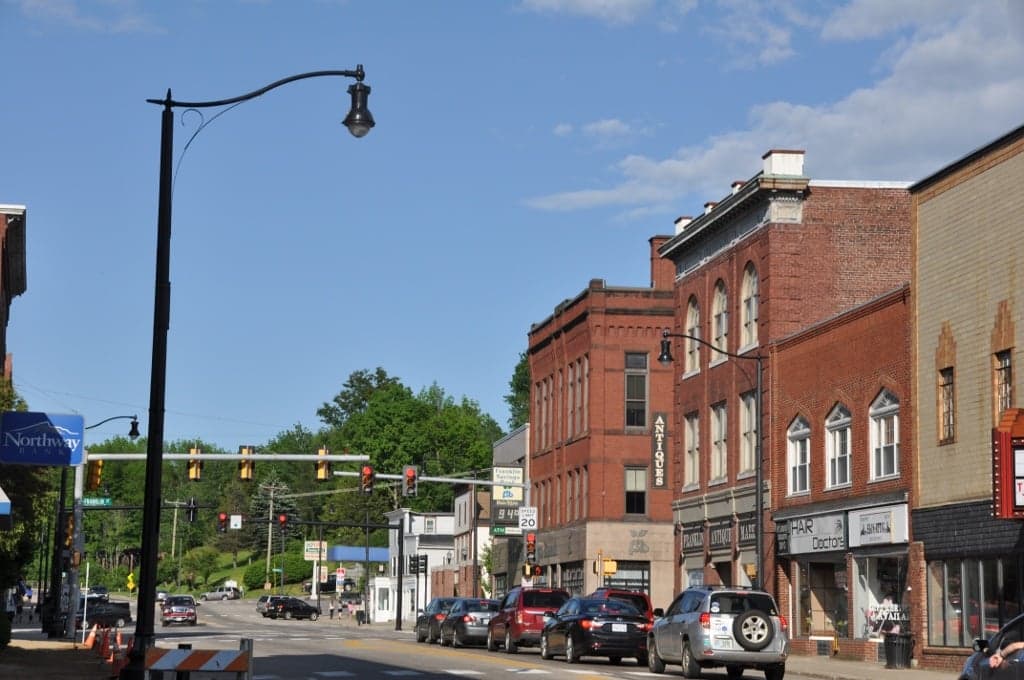
Photo: Wikipedia
Political ClimatePolitical Climate in Franklin, NH
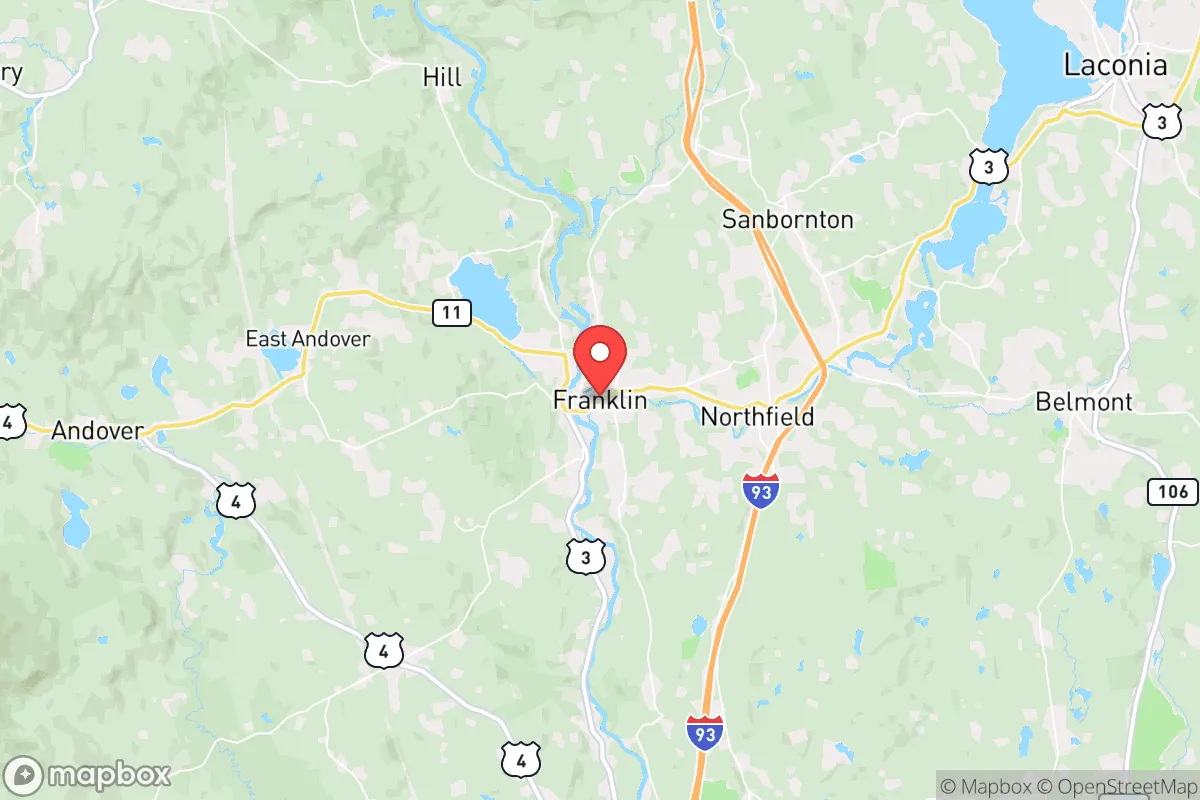
District shown is the primary district for this city’s centroid. Cities may span multiple districts.
Local Political AnalysisPolitical Analysis of Franklin, NH
Franklin, New Hampshire, sits in a bit of a political tug-of-war, and if you’ve been around here long enough, you’ve felt the shift. The town itself carries a Cook PVI of D+2, meaning it leans slightly Democratic compared to the nation as a whole, but that number doesn’t tell the whole story. Walk into a diner on Central Street or a town hall meeting, and you’ll hear a mix of old-school Yankee independence and newer voices pushing for more progressive policies. The real story is how this balance has changed over the last decade, and frankly, it’s getting harder to recognize the place I grew up in.
How it compares
Franklin is a bit of an island compared to the towns around it. Head north to Bristol or south to Concord, and you’ll see different flavors. Bristol is more reliably conservative, with a strong libertarian streak—people there still talk about keeping the government out of their backyards)Skip to content. Concord, on the other hand, is a solidly blue city, with state government workers and college folks driving a more liberal agenda. Franklin sits right in the middle, but the trend line is worrying. Ten years ago, you could count on local elections being decided by a few dozen votes between a conservative and a moderate Democrat. Now, you’re seeing more candidates who openly embrace progressive ideas on things like zoning, school curriculum, and even police funding. The surrounding towns like Tilton and Northfield still lean more to the right, but Franklin’s growing population of younger families and remote workers is tilting the scales. It’s not a radical shift overnight, but it’s a steady one, and that’s what makes it hard to fight.
What this means for residents
For a long-time resident like me, the biggest concern is how this political drift affects daily life. The most immediate impact is on property taxes and local regulations. The city council has been flirting with more aggressive zoning rules, which sounds fine on paper but usually means more red tape for homeowners who want to build a shed or run a small business from their garage. There’s also been talk of adopting “sanctuary city” policies, which might sound compassionate but raises real questions about who’s calling the shots on law enforcement. And let’s not forget the school board—there’s a growing push to bring in “equity” training and critical race theory into the curriculum, which a lot of us see as government overreach into what our kids are taught. The state’s “Live Free or Die” motto still carries weight here, but it feels like it’s being chipped away at, one ordinance at a time. If you value personal freedom and minimal government interference, you’re going to have to stay engaged and vote in every local election, because the quiet changes are the ones that stick.
One cultural distinction that stands out is Franklin’s relationship with the Merrimack River and its industrial past. The old mills are mostly gone, but the town’s identity is still tied to that working-class, self-reliant ethos. That’s why the push for more progressive policies feels so out of step with the community’s roots. You see it in the debates over the new downtown revitalization plan—some want to turn it into a walkable, bike-friendly hub with more public art and green spaces, which sounds nice, but the cost and the regulations that come with it make you wonder who’s really benefiting. The long-term trajectory, if current trends hold, is a Franklin that looks more like a small Concord than the independent mill town it used to be. That’s not necessarily a disaster, but it’s a loss of something real. If you’re thinking of moving here, just know that the political climate is in flux, and the direction it takes will depend on whether the old guard can hold the line or the new wave washes over everything.

State Political ClimatePolitical Climate in New Hampshire
State Political AnalysisPolitical Environment in the State
New Hampshire has long been a political paradox, leaning Republican in its state legislature and local governance while voting for Democrats in presidential elections more often than not since the 1990s. The state’s motto, “Live Free or Die,” still carries real weight, but the coalition that defines that freedom has shifted dramatically over the last 20 years. The old Yankee Republican establishment—fiscally conservative, socially moderate—has been squeezed by a growing progressive base in the southeastern corner and a more populist, liberty-oriented GOP in the rest of the state. The result is a state that feels like two different countries depending on whether you’re in Nashua or North Conway.
Urban vs. rural divide
The political map of New Hampshire is a textbook case of the urban-rural split. The southeastern crescent—Manchester, Nashua, Portsmouth, and the Seacoast region—drives the state’s blue vote. These areas have seen an influx of out-of-state professionals, many from Massachusetts, who bring progressive voting habits and high housing demand. Hillsborough and Rockingham counties, which contain these cities, have flipped from swing to reliably Democratic in presidential years. In 2020, Joe Biden won Manchester by 18 points and Portsmouth by 30. Meanwhile, the rest of the state—the North Country, the Lakes Region, and the western border along the Connecticut River—votes solidly Republican. Carroll County, home to the White Mountains, voted for Trump by 12 points in 2020, while Coös County (the northernmost) went for Trump by 16. The divide isn’t just about population density; it’s about economic base. The Seacoast thrives on tech, healthcare, and tourism, while the North Country relies on logging, manufacturing, and seasonal recreation. A new resident moving to Bedford or Londonderry will find a purple suburb with conservative leanings, while someone settling in Keene or Hanover will be in deep-blue college towns.
Policy environment
New Hampshire’s policy environment is a mixed bag for conservatives. The good news: there is no state income tax on wages and no state sales tax, making it one of the most tax-friendly states in the country. Property taxes are high—averaging about 2.2% of assessed value—but that’s the price of no income tax. The state’s regulatory posture is generally light, with no statewide zoning mandates and a right-to-work law that has kept union influence modest. On education, the state has a robust school choice system, including charter schools, open enrollment, and the Education Freedom Account program, which lets parents use state funds for private school tuition or homeschooling. That program was expanded in 2023 under Governor Chris Sununu. Healthcare is a flashpoint: New Hampshire expanded Medicaid under the Affordable Care Act, and the state-run exchange remains popular, but there’s no state-level individual mandate. Election laws are relatively clean—same-day voter registration is allowed, but voter ID is required. The state’s “Live Free or Die” ethos still shows in its alcohol laws (state-run liquor stores but no blue laws) and its lack of a seatbelt requirement for adults. However, the state has moved left on social issues: it legalized same-sex marriage in 2009 and has a strong anti-discrimination framework. For a conservative, the tax structure is a major draw, but the cultural drift in the southeast is a concern.
Trajectory & freedom
On the freedom front, New Hampshire is a tale of two trends. On the positive side, the state has been a national leader in gun rights. It has constitutional carry (no permit needed for concealed carry), no magazine capacity limits, and no “red flag” law—though such a law was proposed in 2023 and narrowly defeated. The state also passed a parental rights bill in 2022 (HB 1431) that requires schools to notify parents of any curriculum changes involving sexual orientation or gender identity. On the negative side, the state has expanded government overreach in healthcare. In 2021, the legislature passed a vaccine mandate for healthcare workers, though it was later repealed. The state also has a strict mask mandate history—Sununu imposed one in 2020, but it was lifted early compared to neighbors. More concerning for liberty-minded residents is the education establishment’s resistance to school choice; the teachers’ union has fought the Education Freedom Account program in court, and a 2023 ruling temporarily blocked it before the state Supreme Court allowed it to continue. Property rights are generally strong, but the state’s wetlands and shoreland protection laws can be burdensome for landowners near lakes and rivers. The trajectory is mixed: the state is becoming more free on fiscal and educational fronts, but less free on public health mandates and cultural issues. The Free State Project, a movement that relocated thousands of libertarians to New Hampshire, has had a real impact—its members have pushed for gun rights, school choice, and tax reform, but they’ve also alienated some traditional Republicans with their anti-war and drug decriminalization stances.
Civil unrest & political movements
New Hampshire is not a hotbed of civil unrest, but it has its flashpoints. The Free State Project has been the most visible political movement, with its annual Porcupine Freedom Festival drawing thousands to the North Country. On the left, the NH Rebellion and Indivisible groups have organized protests against Trump-era policies and for gun control. The state saw significant protests in 2020 over COVID restrictions, with a notable “Reopen NH” rally at the State House in Concord that drew thousands. Immigration politics are relatively quiet—New Hampshire has no sanctuary city policies, and the state’s foreign-born population is only about 6%. However, the issue of election integrity has been a flashpoint. In 2020, the state’s same-day voter registration and no-excuse absentee voting were criticized by conservatives, though no major fraud was found. The state’s ballot harvesting laws are strict—it’s a felony to collect and submit another person’s absentee ballot. A more recent flashpoint is the transgender athlete debate. In 2023, the legislature passed a bill (HB 1205) that bans transgender girls from participating in girls’ sports, overriding Sununu’s veto. This has energized both sides, with the left threatening legal challenges and the right celebrating a win for parental rights. For a new resident, the political atmosphere is generally civil—New Hampshire is known for its “retail politics” and town hall meetings—but the cultural divide between the Seacoast and the rest of the state is palpable.
Projection
Over the next 5-10 years, New Hampshire is likely to become more polarized, not less. The southeastern crescent will continue to grow, driven by remote workers and Massachusetts refugees, pushing the state’s presidential vote further blue. However, the state legislature—which is apportioned by town, not just population—will remain Republican-leaning for the foreseeable future, thanks to the rural advantage. The Free State Project has already peaked in terms of relocation numbers, but its influence will persist in the legislature. The biggest wildcard is housing costs. If the state doesn’t build more housing, the influx of progressives will slow, and the rural conservative base will hold its ground. On policy, expect continued battles over school choice, gun rights, and transgender issues. The state’s tax structure is unlikely to change—an income tax would require a constitutional amendment, which is a non-starter. But the cultural war will intensify: the Seacoast will push for more progressive policies, while the North Country and Lakes Region will resist. A new resident moving in now should expect a state that remains fiscally conservative but culturally divided, with the freedom to live as they choose as long as they stay out of the southeast’s orbit.
For a conservative relocating to New Hampshire, the bottom line is this: you’ll pay no income or sales tax, you’ll have strong gun rights, and you’ll find a school choice system that respects parental authority. But you’ll also be moving into a state where the political center of gravity is shifting leftward in the population centers. If you choose a town like Bedford, Londonderry, or Merrimack, you’ll find a conservative-leaning community with good schools and low taxes. If you pick Portsmouth or Nashua, you’ll be in a blue bubble. The key is to pick your location carefully—the state’s motto still holds, but only if you know where to live.
* Values derived from national, state, county, city and local statistics and may differ in a specific area. Last updated: 2026-04-19T09:38:14.000Z
Narrative content on this page is AI-generated and may contain mistakes. Verify any details that matter before acting on them.
ReloMaps may earn a commission from affiliate links at no extra cost to you.

