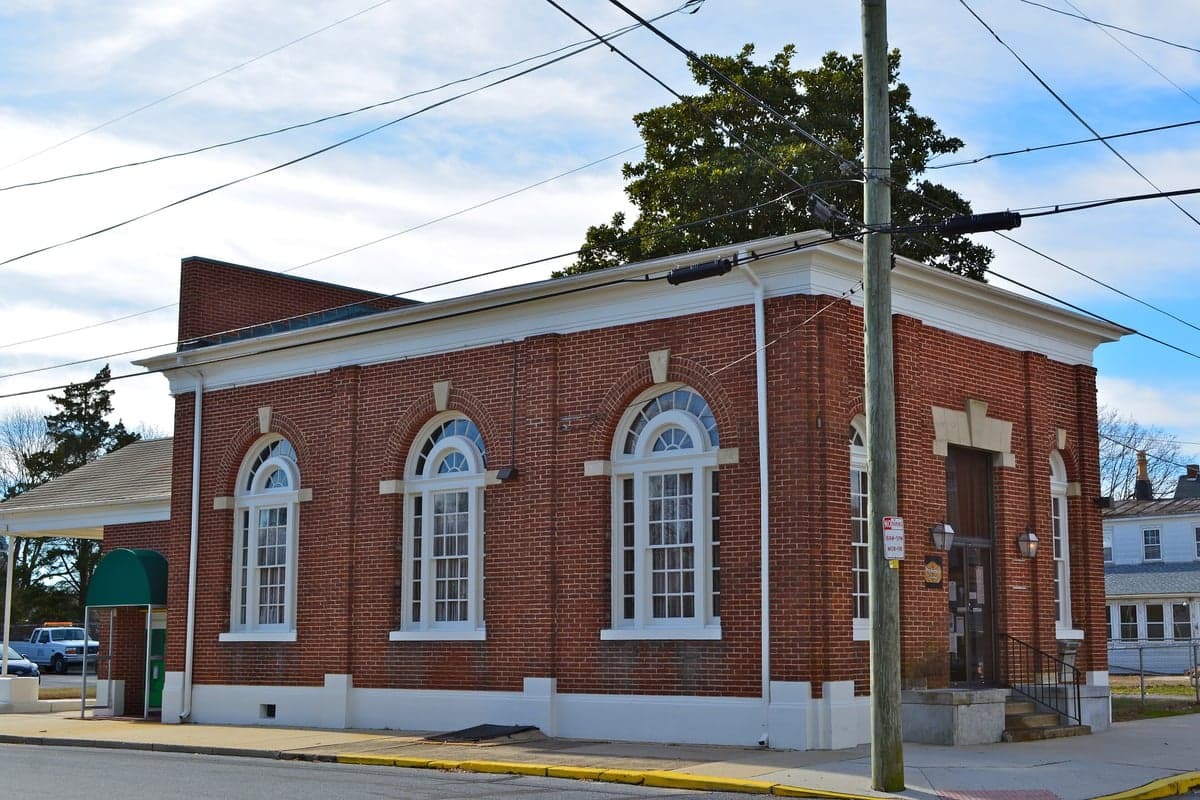
Photo: Wikipedia
Demographics of Frederica, DE
Affluence Level in Frederica, DE
A middle-class area roughly in line with national averages across income, home values, education, and employment.
People of Frederica, DE
The people of Frederica, Delaware today number just 972 residents, creating a small-town atmosphere where nearly half the population identifies as White (46.3%) and significant shares are Black (16.9%) and Hispanic (8.3%). The city is notably homogeneous in nativity, with a foreign-born population of 0.0%, and its educational profile shows 22.6% of adults holding a college degree. Frederica’s identity is shaped by its deep rural Kent County roots, a tight-knit community feel, and a demographic composition that reflects both its historic settlement patterns and limited recent in-migration.
How the city was settled and grew
Frederica’s population history begins with European land grants in the late 17th century, when the area was part of the larger St. Jones Hundred. The city was formally laid out in the 1760s along the Murderkill River, a name derived from Dutch and Lenape origins, and its early economy centered on shipbuilding, milling, and agriculture. The original settlers were predominantly English and Welsh farmers, who established homesteads in what is now the Historic District along Front and Market Streets. By the early 19th century, a small but steady influx of German and Irish laborers arrived to work the grain mills and shipyards, settling in the Mill Pond area near the river. The city remained a modest agricultural service center through the mid-20th century, with population hovering around 500–600 residents, almost entirely native-born White families. The North Frederica neighborhood, along Main Street, became the commercial and residential anchor for these early waves, with many original farmhouses still standing.
Modern era (post-1965)
The post-1965 period brought gradual demographic change to Frederica, though far less dramatic than in larger Delaware cities. The 1970s and 1980s saw the first significant Black population growth, as African American families moved from rural Kent County farms into the South Frederica area, particularly along Walnut and Cherry Streets. This migration was driven by the decline of small-scale agriculture and the search for affordable housing near Dover’s growing job market. By the 1990s, Hispanic residents began arriving, primarily Mexican-origin families working in poultry processing and construction in Kent County; they concentrated in the West Side neighborhood near the railroad tracks. The Asian population remains negligible at 0.2%, and no Indian-subcontinent residents are recorded. The city’s foreign-born share of 0.0% underscores that Frederica has not been a destination for international immigration; its demographic shifts have come almost entirely from domestic relocation within Delaware and the broader Delmarva Peninsula. The Frederica Estates subdivision, developed in the 2000s off Route 12, attracted some White and Black middle-class families seeking newer housing, but the city’s overall growth has been minimal—population rose only from 648 in 2000 to 972 in 2020.
The future
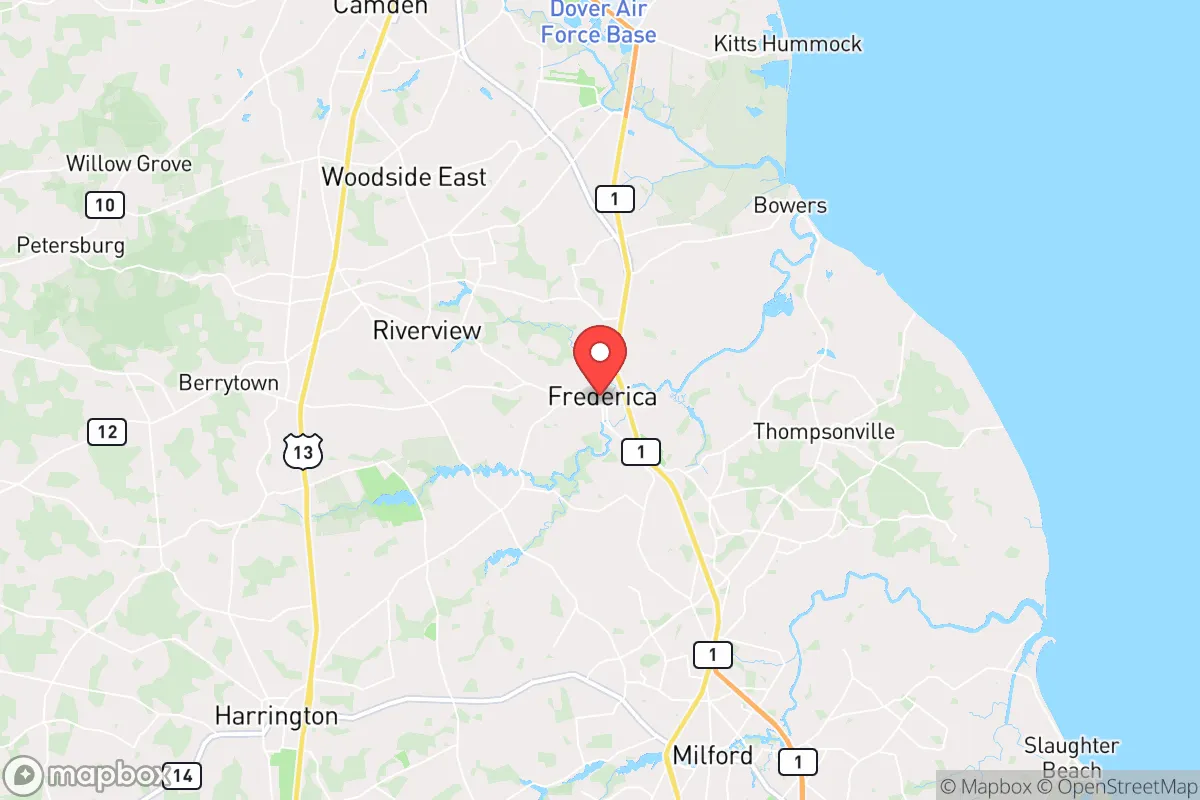
Frederica’s population trajectory points toward slow, modest diversification rather than rapid change. The White share has declined from roughly 60% in 2000 to 46.3% today, while the Hispanic share has grown from near zero to 8.3%, and the Black share has held steady around 16–18%. With a foreign-born population of 0.0%, future growth will depend entirely on domestic in-migration and natural increase. The city’s location along Route 12, about 10 miles south of Dover, positions it as a potential bedroom community for Kent County workers, but limited housing stock and lack of major employers constrain growth. The Frederica Village planned development, approved in 2019 for up to 200 homes, could attract younger families, but its build-out has been slow. The most likely scenario over the next 10–20 years is a gradual increase in Hispanic and Black shares, with the White share continuing to edge downward, while the city remains overwhelmingly native-born. The Historic District will likely retain its older White population, while South Frederica and the West Side become more ethnically mixed. No significant Asian or Indian-subcontinent growth is expected given the lack of employment anchors or ethnic networks.
For someone moving in now, Frederica is becoming a more diverse but still deeply rooted small town—a place where demographic change is happening slowly and organically, without the tensions or rapid transformation seen in larger Delaware cities. The city offers affordable housing, a quiet rural setting, and a population that is predominantly native-born and English-speaking, with a growing Hispanic presence that is integrating into existing neighborhoods rather than forming separate enclaves.

* Values derived from national, state, county, city and local statistics and may differ in a specific area. Last updated: 2026-04-29T19:14:06.000Z
Narrative content on this page is AI-generated and may contain mistakes. Verify any details that matter before acting on them.
ReloMaps may earn a commission from affiliate links at no extra cost to you.

