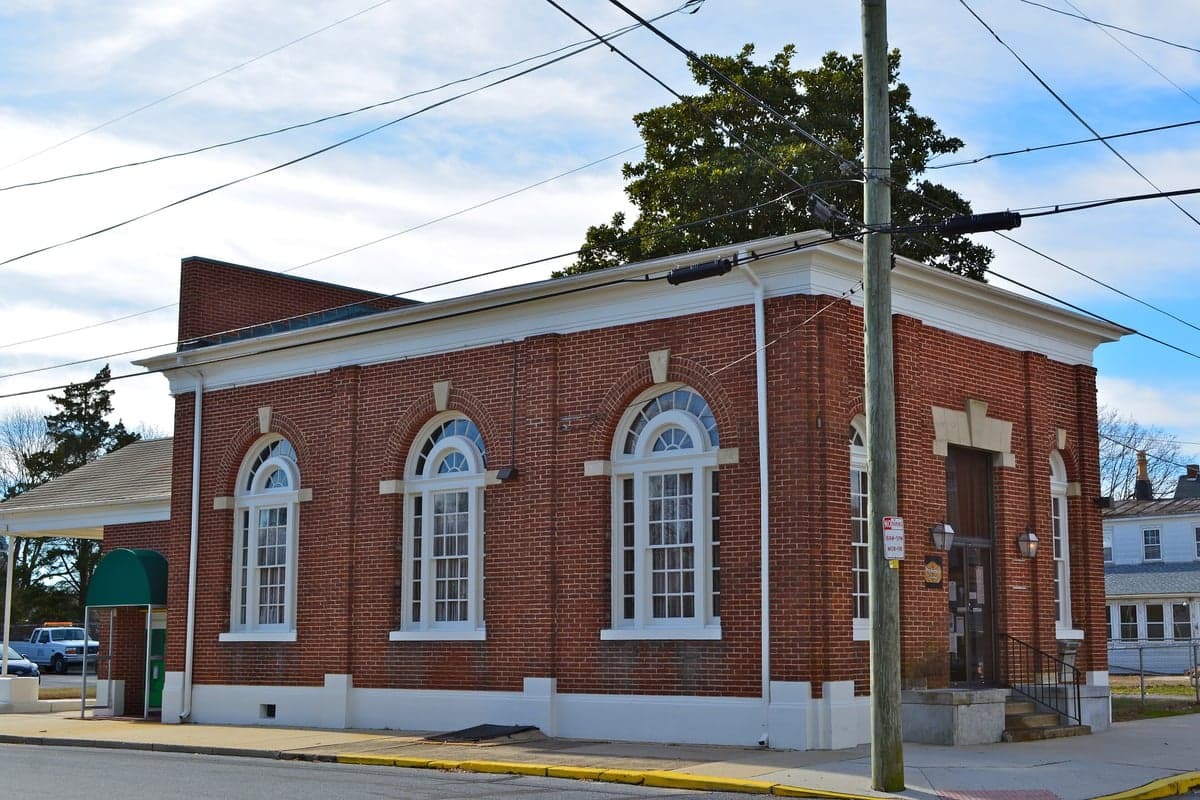
Photo: Wikipedia
Political ClimatePolitical Climate in Frederica, DE
District shown is the primary district for this city’s centroid. Cities may span multiple districts.
Inherited from parent state — no local data available.
Local Political AnalysisPolitical Analysis of Frederica, DE
Frederica, Delaware, leans heavily Democratic, with a Cook PVI of D+8, meaning the area votes about eight points more Democratic than the national average. This wasn't always the case—I remember when this town was a quiet, conservative-leaning farming community where folks kept to themselves and the government stayed out of your business. Over the last decade or so, the political winds have shifted noticeably, driven by an influx of newcomers from up north and a growing reliance on state-level policies that feel increasingly out of step with the values many of us grew up with. The trajectory here is concerning: what was once a place where personal freedoms were respected is now trending toward progressive governance that tends to meddle in local affairs.
How it compares
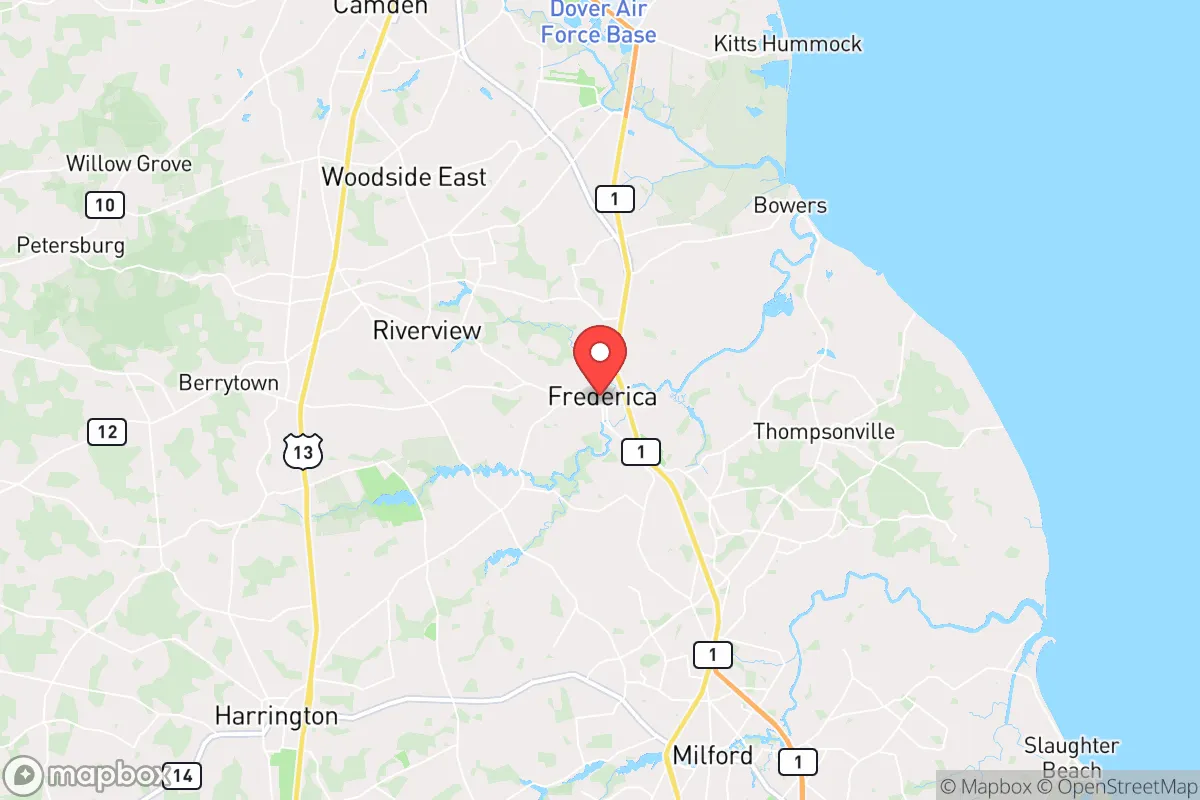
If you drive just a few miles west to Harrington or south to Milford, you'll find a different political reality. Those towns lean more conservative, with Milford voting red in recent elections and Harrington holding a mix of blue-collar independence and Republican lean. Frederica, by contrast, is part of Kent County's broader shift toward Democratic dominance, especially as Dover's influence spreads. The contrast is stark: in Harrington, you'll hear folks grumbling about state mandates on everything from land use to school curriculum, while in Frederica, those same mandates are often embraced by local officials. The D+8 rating here isn't just a number—it reflects a real cultural divide from the surrounding countryside, where personal responsibility and limited government are still the norm. Even nearby Magnolia, just a few miles north, feels more balanced politically, with a stronger independent streak.
What this means for residents
For those of us who value individual liberty, the shift in Frederica's political climate is a daily concern. Property taxes have crept up as state-level spending increases, and new zoning regulations feel like they're designed to control how you use your own land. You'll see more signs for progressive candidates during election season, and local meetings often focus on issues like expanding public programs or adopting state-level environmental rules that add costs for small businesses and homeowners. The school system, too, has seen changes—curriculum decisions that once involved local input now seem driven by Dover's agenda. If you're a conservative or libertarian-leaning resident, you'll find yourself increasingly in the minority, especially on issues like gun rights, school choice, and property rights. The sense of community is still here, but the political pressure to conform to a more progressive outlook is real and growing.
Culturally, Frederica retains some of its small-town charm—the annual fire company carnival and the local diner are still gathering spots where politics rarely comes up. But the policy distinctions are hard to ignore. The town has embraced state-funded housing initiatives and renewable energy mandates that many of us see as overreach. There's a growing frustration among longtime residents that our voices are being drowned out by newcomers who want to remake the town in their image. Looking ahead, I worry that if this trend continues, Frederica will lose the very character that made it a great place to raise a family—where your neighbor's business was his own, and the government was a help, not a hindrance. For now, it's still home, but you've got to keep your eyes open and your vote ready.

State Political ClimatePolitical Climate in Delaware
State Political AnalysisPolitical Environment in the State
Delaware has long been a political oddity — a small state with a big blue tilt, but one that’s far more nuanced than its statewide election results suggest. Over the past 20 years, the First State has shifted from a competitive purple battleground to a reliably Democratic stronghold, driven largely by the explosive growth of New Castle County and the Wilmington metro area. While the state’s two at-large congressional seats and governor’s mansion have been held by Democrats for most of the last decade, the political geography tells a story of two Delawares: a dense, progressive northern corridor and a more conservative, rural south that feels increasingly disconnected from the state’s policy direction.
Urban vs. rural divide
The political map of Delaware is essentially a tale of three counties. New Castle County, home to over 55% of the state’s population, is the engine of Democratic power. Wilmington, Newark, and the sprawling suburbs around them — places like Hockessin and Middletown — vote overwhelmingly blue. In 2024, New Castle County gave Joe Biden (a native son) a 30-point margin, and that trend has only deepened as corporate transplants from the Philadelphia and New York metros flood into developments like those around Bear and Glasgow. Meanwhile, Kent County (Dover, Smyrna) is a true swing county, often tipping the balance in close races. It’s more working-class and military-affiliated (Dover Air Force Base is a major employer), and it leans slightly right in presidential years but can flip for moderate Democrats in state races. Sussex County — the beach and farming region — is the conservative heartland. Towns like Georgetown, Seaford, and Millsboro vote Republican by double digits, driven by retirees, poultry farmers, and a growing population of conservative-leaning transplants from Maryland and Pennsylvania. The divide is stark: a drive from the liberal coffee shops of Newark to the gun shops of Georgetown feels like crossing a state line.
Policy environment
Delaware’s policy environment has become increasingly progressive, and that’s a red flag for anyone valuing personal freedom. The state’s tax burden is among the highest in the nation — no sales tax sounds great, but it’s offset by high property taxes (especially in New Castle County) and a progressive income tax that tops out at 6.6%. The regulatory posture is business-friendly on paper (Delaware is the corporate home of choice for half of all U.S. publicly traded companies), but that’s a legal fiction — the state’s actual business climate for small, physical operations is middling. Education policy is a flashpoint: the state has moved toward centralized control, with the governor and legislature overriding local school boards on curriculum and funding. In 2023, Delaware passed a law requiring all public schools to adopt “culturally responsive” curricula, which critics argue is a backdoor for progressive ideology. Healthcare is heavily regulated, with the state expanding Medicaid under Obamacare and mandating paid family leave. Election laws have been loosened significantly: no-excuse absentee voting and same-day registration are now permanent, and in 2024, the legislature passed a bill allowing 16- and 17-year-olds to pre-register to vote — a move that alarms conservatives who see it as a way to lock in a young, left-leaning electorate.
Trajectory & freedom
On the freedom front, Delaware is trending in the wrong direction. The most concerning area is gun rights. In 2022, the state passed a sweeping gun control package that included a ban on “assault weapons” (defined broadly enough to cover many common rifles), a 10-round magazine limit, and a permit-to-purchase requirement. The law survived a Second Amendment challenge in 2024, and the state has since doubled down with a “safe storage” mandate that effectively criminalizes keeping a firearm accessible for self-defense. On parental rights, the picture is mixed but worrying. In 2023, the legislature defeated a bill that would have required schools to notify parents if a child changes their gender identity at school — a win for progressive activists who argue that parental notification is “outing.” Meanwhile, the state has expanded its “medical autonomy” in the opposite direction: recreational marijuana was legalized in 2023, but the state’s regulatory framework is so heavy that only a handful of licensed dispensaries have opened, creating a de facto state monopoly. Property rights are under pressure from a growing trend of “upzoning” mandates in New Castle County, where local zoning boards are being overridden by state law to allow high-density development. Taxation is the biggest freedom killer: Delaware’s estate tax and inheritance tax are among the few left in the country, and the state’s gas tax is the 10th highest nationally.
Civil unrest & political movements
Delaware hasn’t seen the kind of violent protests that have rocked larger states, but the political temperature is rising. In 2020, Wilmington saw several nights of looting and arson during the George Floyd protests, with businesses along Market Street damaged. Since then, the city has become a flashpoint for the “defund the police” movement — the Wilmington City Council cut the police budget by 5% in 2021, though it was restored after a spike in homicides. On the right, the Sussex County Republican Party has become a hotbed of election integrity activism, with members challenging voter rolls and demanding hand-count audits. The 2022 election saw a minor controversy when a Republican candidate for state senate in the Dover area alleged irregularities in absentee ballot processing, though no widespread fraud was proven. Immigration politics are relatively quiet, but Delaware is a sanctuary state in practice — state law prohibits local law enforcement from cooperating with ICE detainers, and the governor has resisted federal immigration enforcement efforts. The most visible political movement is the “Save Our Schools” coalition, a parent-led group that has successfully blocked some curriculum mandates in Kent and Sussex counties, but they’re fighting an uphill battle against the state’s powerful teachers union.
Projection
Looking ahead 5-10 years, the trajectory is clear: Delaware will continue to drift left, driven by demographic shifts. The northern suburbs are filling up with young professionals and remote workers from the Northeast who bring progressive voting habits. The beach towns of Sussex County are also changing — Lewes and Rehoboth Beach are becoming more liberal as second-home owners from Washington D.C. and New York buy up properties, while the inland farming communities shrink. The state’s population is projected to grow by about 8% by 2035, with nearly all of that growth in New Castle County. That means the political center of gravity will shift further north, making it harder for conservatives to win statewide races. The state’s tax burden is unlikely to decrease — in fact, a 2024 commission recommended raising the income tax on top earners to fund a new “universal pre-K” program. Gun rights will likely face further restrictions, and parental rights battles will intensify as the state pushes for more centralized control over education. The one wild card is the military community around Dover Air Force Base — if the base expands or contracts, it could shift Kent County’s politics. But overall, someone moving to Delaware today should expect a state that is increasingly comfortable with high taxes, heavy regulation, and progressive social policies.
Bottom line for a new resident: If you’re a conservative looking for a low-tax, high-freedom haven, Delaware is not your state. The northern suburbs are solidly blue, the policy environment is trending left, and your personal liberties — especially your Second Amendment rights — are under active assault. The best bet for a conservative-leaning family is to look at Sussex County, particularly towns like Millsboro or Georgetown, where the local culture is more traditional and the cost of living is lower. But even there, you’ll be fighting state-level policies that are increasingly hostile to your values. If you value low taxes, school choice, and the right to keep and bear arms without government permission, you’re better off looking at states like Texas, Florida, or Tennessee. Delaware is a beautiful state with a rich history, but its political future is written in blue ink.
* Values derived from national, state, county, city and local statistics and may differ in a specific area. Last updated: 2026-04-29T19:14:06.000Z
Narrative content on this page is AI-generated and may contain mistakes. Verify any details that matter before acting on them.
ReloMaps may earn a commission from affiliate links at no extra cost to you.

