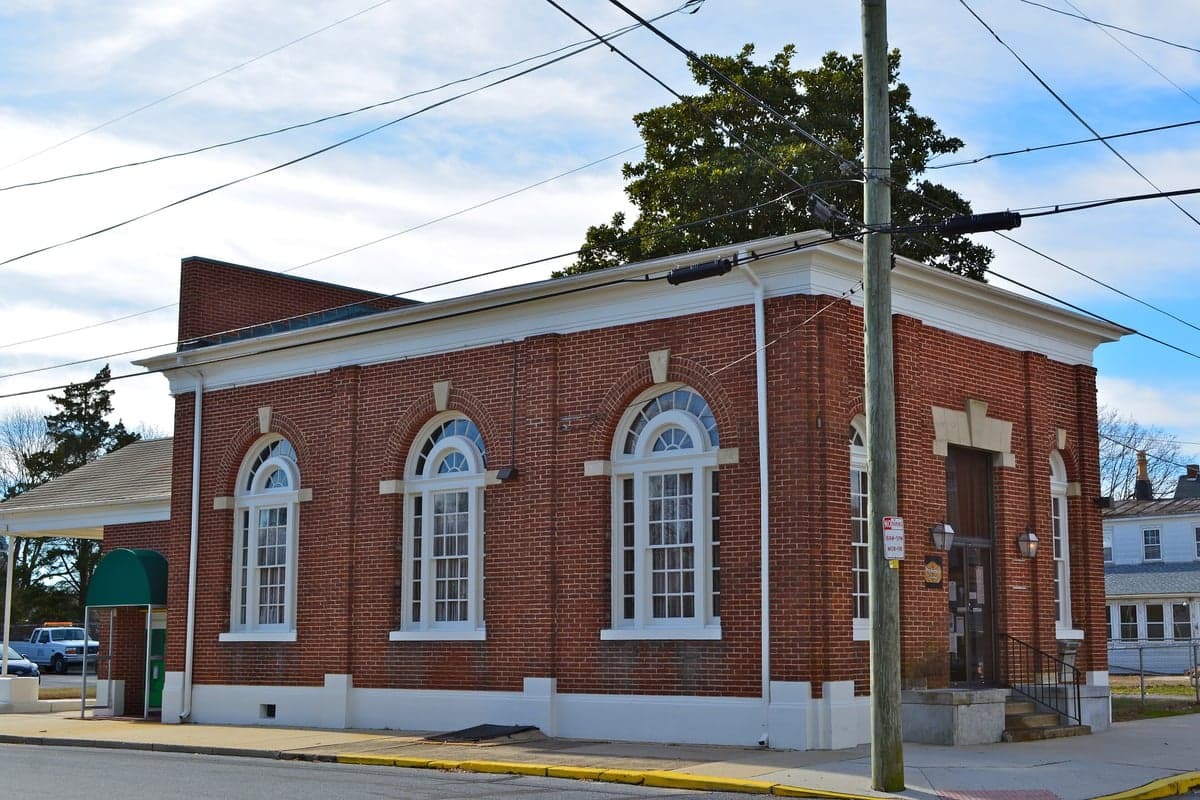
Photo: Wikipedia
Personal Sovereignty in Frederica, DE
Viable for self-reliance. Generally workable, though some barriers may limit total independence.
What does Personal Sovereignty tell us?
Personal Sovereignty measures your capacity for self-reliance and independence with minimal government friction. Higher scores mean fewer barriers between you and the way you want to live... but it assumes you have the space you need and good neighbors.
What does this tell us?
Personal Sovereignty measures your capacity for self-reliance and independence with minimal government friction. Higher scores mean fewer barriers between you and the way you want to live... but it assumes you have the space you need and good neighbors.
State Policy
Energy independence: Importer (2% of energy produced in-state)
Personal Liberty
Homesteading

Personal Liberty Analysis
Frederica, Delaware offers a notably high degree of personal sovereignty relative to the Mid-Atlantic region, but it is not a libertarian free zone. The town’s small size and rural character create a low-friction environment for daily life, yet residents must contend with state-level policies that tilt toward progressive governance. For the survivalist or prepper-minded individual, the key trade-off is clear: you get significant day-to-day autonomy in a quiet, low-regulation community, but you must remain vigilant against state-level overreach in areas like taxation, gun control, and medical mandates. The overall sovereignty picture is mixed—strong on property and lifestyle freedom, weaker on self-defense and tax burdens compared to truly red states.
Tax burden and regulatory posture: how much the state takes and controls
Delaware’s tax posture is a double-edged sword for Frederica residents. On the plus side, there is no state or local sales tax, which keeps the cost of everyday goods low and reduces the government’s ability to tax consumption. Property taxes are also among the lowest in the nation—Kent County’s effective rate hovers around 0.55% of assessed value, meaning a $300,000 home costs roughly $1,650 annually. This is a major win for property owners and those seeking to hold land long-term. However, the state income tax is progressive, with rates climbing to 6.6% on income over $60,000. For a single earner or a family pulling a decent wage, that bite is real. The regulatory environment in Frederica itself is light—zoning is minimal, and the town does not impose heavy business licensing or occupancy restrictions. But Delaware’s state-level environmental and building codes are stricter than those in, say, West Virginia or Texas. For the prepper, this means you can likely build a shed or workshop without endless permits, but you cannot ignore state wetland or septic rules. The overall regulatory posture is moderate: the town leaves you alone, but the state keeps a hand in your pocket.
Self-defense and gun law specifics: what you can and cannot do
This is the most contentious area for sovereignty-minded individuals in Frederica. Delaware is not a gun-friendly state by national standards. In 2022, the legislature passed a permit-to-purchase law for handguns, requiring a background check, fingerprinting, and a training course before you can buy. Magazines over 17 rounds are banned, and the state has a red-flag law that allows courts to temporarily seize firearms based on a complaint. Open carry is legal without a permit, but concealed carry requires a permit—and while Delaware is shall-issue, the process takes weeks and involves a fee. For the survivalist, this is a significant limitation. You cannot stockpile standard-capacity magazines, and the red-flag law creates a vulnerability if a neighbor or ex-partner makes a false report. On the positive side, Frederica is in Kent County, where sheriff’s deputies are generally pro-Second Amendment, and the town itself has no additional gun ordinances. You can keep firearms in your home without registration, and there is no state-level assault weapons ban (though that could change). Compared to Maryland or New Jersey, Delaware is freer; compared to Florida or Texas, it is restrictive. The bottom line: you can defend your home, but your options for gear and carry are constrained by state law.
Self-reliance and homesteading viability: lot sizes, zoning, and off-grid feasibility
Frederica’s rural character makes it a strong candidate for homesteading and self-reliance. The town and surrounding areas feature lots ranging from half an acre to several acres, with many properties zoned for agricultural use. Zoning is permissive: you can keep chickens, goats, and even a cow on larger parcels without special permits. The town does not ban front-yard gardens or clotheslines, and there are no HOA-style restrictions in the unincorporated areas. For off-grid living, the feasibility is moderate. Delaware has no state law prohibiting rainwater collection, and solar panels are allowed without excessive red tape. However, the state does require connection to a septic system (no composting toilets without a variance), and well water is common but must be tested. The climate is forgiving—mild winters mean lower heating costs, and a long growing season supports year-round food production. The biggest hurdle is the lack of true wilderness; Frederica is surrounded by farmland and suburban sprawl, so you cannot disappear into the woods. For the prepper, this means you can achieve a high degree of food and energy independence, but you will always be within earshot of neighbors and subject to county health inspections. It is a good place for a productive homestead, not a bug-out location.
Personal liberties: parental rights, medical autonomy, speech, and property
On the spectrum of personal liberties, Frederica scores well on property rights and speech, but less so on medical autonomy and parental rights. Property rights are strong: there is no statewide rent control, no forced inclusionary zoning, and eminent domain is rarely used. You can build fences, add structures, and use your land largely as you see fit. Free speech is protected under the First Amendment, and the town has no local ordinances restricting political signs or public assembly. However, Delaware’s state-level policies on medical freedom are concerning. The state mandated COVID-19 vaccines for healthcare workers and school staff (though that has since been relaxed), and it has a strict vaccine schedule for school attendance with limited religious exemptions. Parental rights in education are weaker than in many red states: Delaware has adopted comprehensive sex education standards that include LGBTQ+ content, and parents do not have a blanket right to opt their children out of specific lessons. The state also has a broad anti-discrimination law that can override a business owner’s religious objections. For the conservative parent, this means you may need to homeschool or choose a private religious school to avoid state-mandated curricula. Medical autonomy is similarly constrained: Delaware has no right-to-try law for terminally ill patients and no explicit protection for alternative medicine practitioners. You can refuse medical treatment for yourself, but the state’s health department has broad powers during declared emergencies. Overall, Frederica offers strong property and speech freedoms, but parental and medical autonomy are compromised by state-level progressive policies.
In the broader context of the United States, Frederica, DE ranks as a moderate-to-strong area for personal sovereignty—better than the Northeast corridor but weaker than the Mountain West or Deep South. The town itself is a haven of low regulation and rural independence, but it sits within a state that is trending toward greater government control in areas like gun rights, education, and health mandates. For the survivalist or prepper who values quiet land, low property taxes, and the ability to raise food, Frederica is a solid choice. For those who prioritize unrestricted firearm ownership, medical freedom, or the ability to opt out of state mandates entirely, it falls short. The strategic move is to buy land here, build your homestead, and stay politically active to push back against state-level overreach—because the town’s sovereignty is only as strong as the state’s willingness to leave it alone.

* Values derived from national, state, county, city and local statistics and may differ in a specific area. Last updated: 2026-04-29T19:14:06.000Z
Narrative content on this page is AI-generated and may contain mistakes. Verify any details that matter before acting on them.
ReloMaps may earn a commission from affiliate links at no extra cost to you.

