 Popular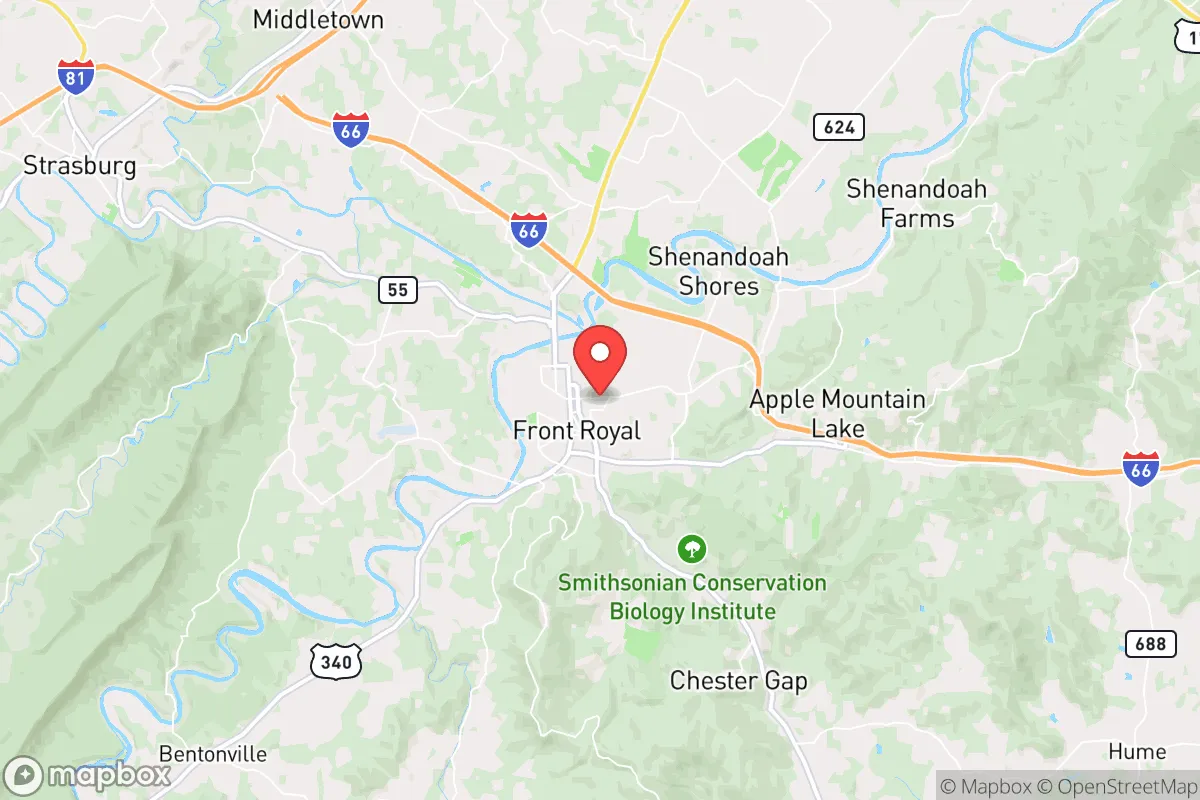
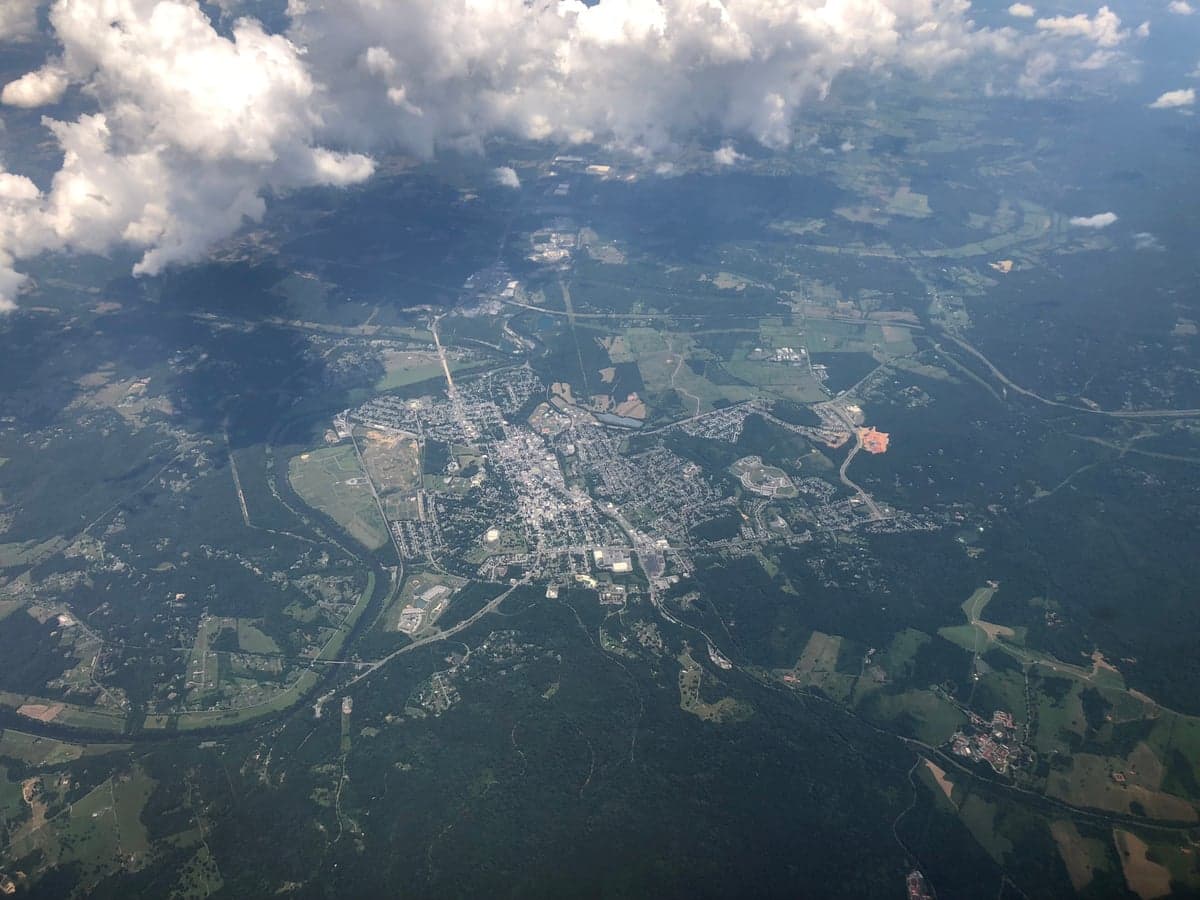
Photo: Wikipedia
Demographics of Front Royal, VA
Affluence Level in Front Royal, VA
A below-average socioeconomic profile. Incomes, home values, and educational attainment trail the U.S., with higher poverty and unemployment.
People of Front Royal, VA
The people of Front Royal, Virginia, today number 15,152 and form a predominantly white (71.1%) community with a notable Hispanic minority (11.2%) and a smaller Black population (9.2%). The city’s character is defined by its Appalachian foothill setting, a strong sense of local identity tied to the Shenandoah River and Skyline Drive, and a relatively low college attainment rate of 18.0%, reflecting a workforce historically rooted in manufacturing, agriculture, and tourism. Distinctive markers include a tight-knit, family-oriented social fabric and a growing Hispanic presence that is reshaping parts of the city’s eastern neighborhoods.
How the city was settled and grew
Front Royal’s original population was drawn by the fertile Shenandoah Valley land grants of the mid-18th century, primarily to English, Scots-Irish, and German settlers. The town was officially established in 1788 as a crossroads for farmers and traders, with the earliest homes clustering around what is now Historic Downtown Front Royal along Main Street. The arrival of the railroad in the 1850s spurred a second wave of growth, bringing Irish and German laborers who settled in the South Royal Avenue corridor, building modest frame houses that still stand. The Civil War and Reconstruction era saw little new immigration, but the late 19th-century apple and livestock boom attracted more rural white families from surrounding counties, who filled the Riverton district along the Shenandoah River. By 1900, Front Royal was a small, overwhelmingly white farming and railroad hub, with a population under 1,500.
Modern era (post-1965)
The post-1965 period brought the first significant non-white populations. The Immigration and Nationality Act of 1965 opened doors for new arrivals, but Front Royal’s remote location meant limited direct immigration until the 1980s. The most transformative shift came with the expansion of the poultry and meatpacking industries in the Shenandoah Valley, which drew Hispanic laborers—primarily from Mexico and Central America—starting in the 1990s. These workers and their families concentrated in the East Front Royal area, particularly along Commerce Avenue and Happy Creek Road, where affordable housing and proximity to industrial plants made settlement practical. Today, the Hispanic share stands at 11.2%, with many families now second-generation and increasingly bilingual. The Black population (9.2%) has deeper roots, dating to the early 20th-century railroad and domestic service jobs, with a historic cluster in the West 14th Street neighborhood near the old segregated school site. East/Southeast Asian communities (0.5%) and Indian-subcontinent residents (1.4%) are very small, mostly professionals drawn to the nearby federal law enforcement and intelligence agencies in the region, and they tend to live in newer subdivisions like Blue Ridge Shadows rather than older city blocks. The foreign-born share is 5.2%, below the national average but growing slowly.
The future
The population of Front Royal is heading toward modest diversification, but the pace is slow. The Hispanic community is the fastest-growing segment, projected to rise from 11.2% to perhaps 15-18% by 2040, driven by family reunification and continued demand for labor in food processing and construction. This growth is likely to remain concentrated in East Front Royal, creating a distinct Hispanic enclave that is gradually assimilating while retaining cultural ties. The white population (71.1%) is aging and slightly declining in absolute numbers, as younger white families move to newer exurban developments in Warren County outside city limits. The Black and Asian shares are expected to remain stable or grow only marginally, as Front Royal lacks the professional job base to attract large numbers of college-educated immigrants. The city is not tribalizing into sharply divided enclaves, but it is developing a clearer east-west socioeconomic and ethnic gradient: older, poorer, and more Hispanic in the east; newer, wealthier, and whiter in the west and in subdivisions like Avon Bend.
For someone moving in now, Front Royal is becoming a more layered community—still predominantly white and working-class, but with a growing Hispanic presence that is adding cultural and economic texture. The city’s future is one of slow, organic diversification rather than rapid transformation, making it a stable choice for families seeking a small-town environment with a gradually broadening demographic base. New arrivals should expect a place where neighborly familiarity remains the norm, but where the faces in the grocery store and at the school PTA are slowly becoming more varied.

* Values derived from national, state, county, city and local statistics and may differ in a specific area. Last updated: 2026-10-10T16:27:31.000Z
Narrative content on this page is AI-generated and may contain mistakes. Verify any details that matter before acting on them.
ReloMaps may earn a commission from affiliate links at no extra cost to you.

