 Popular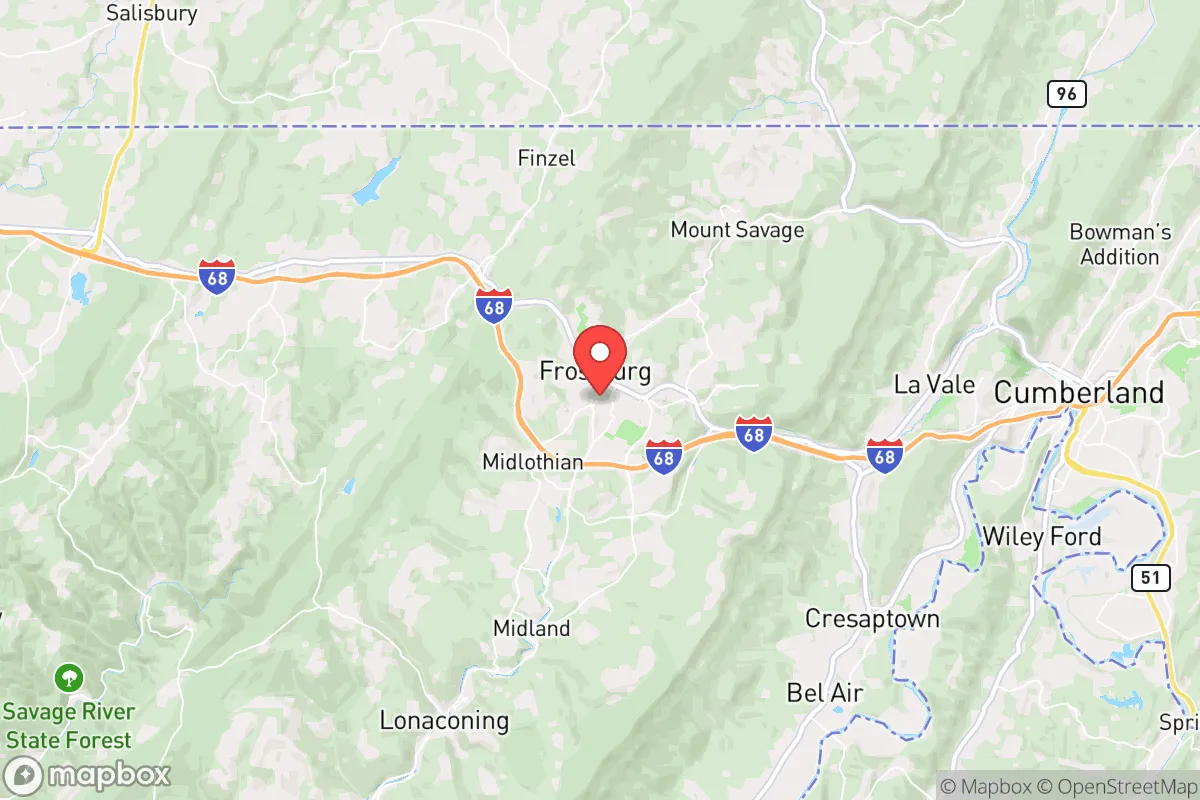
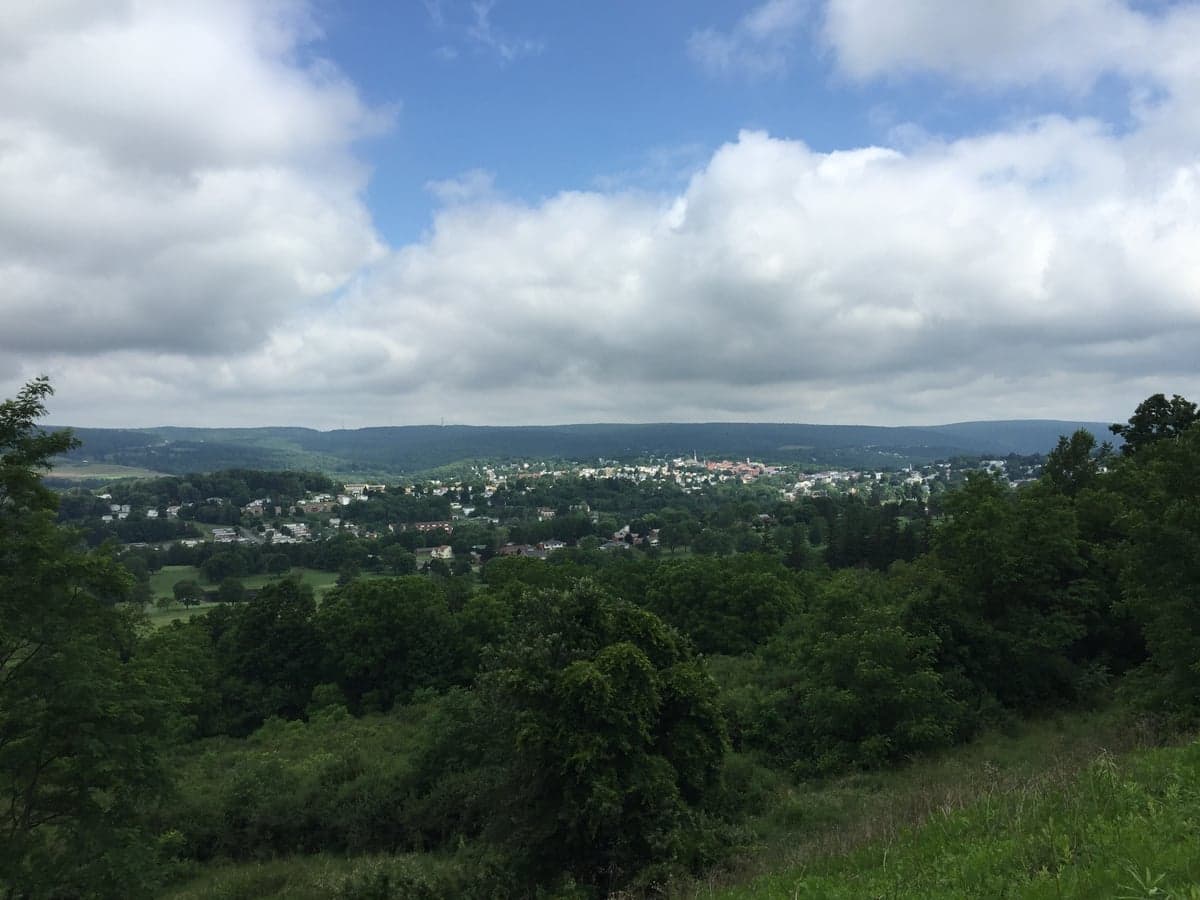
Photo: Wikipedia
Political ClimatePolitical Climate in Frostburg, MD
District shown is the primary district for this city’s centroid. Cities may span multiple districts.
Local Political AnalysisPolitical Analysis of Frostburg, MD
Frostburg, Maryland, sits in a curious political pocket. While the town itself leans left, with a Cook PVI of D+3, that number doesn’t tell the whole story of the surrounding area. Drive ten minutes east to LaVale or Cumberland, and you’ll find a much more conservative, blue-collar vibe. Frostburg’s tilt is largely driven by the university—Frostburg State University brings in a steady flow of faculty and students who tend to vote progressive. But if you’ve lived here as long as I have, you know the real Frostburg—the one outside the campus bubble—is more independent, more wary of government overreach, and increasingly frustrated with the direction things are heading.
How it compares
Compared to the rest of Allegany County, Frostburg is an outlier. The county as a whole voted for Trump by a solid margin in 2020 and 2024, while Frostburg’s precincts went for Biden and then Harris. That D+3 rating masks a deeper divide: the town’s progressive lean is concentrated in the student-heavy wards near the university. Head west into the residential neighborhoods or out toward the rural edges, and you’ll find folks who feel like their values—personal responsibility, limited government, and Second Amendment rights—are being steamrolled by a vocal minority. Nearby towns like Lonaconing and Westernport are even more conservative, with a strong working-class identity tied to the coal and railroad history. Frostburg’s political climate is a microcosm of the national divide: a small, progressive island in a sea of traditional, self-reliant Marylanders.
What this means for residents
For those of us who value personal freedoms, the shift in Frostburg is concerning. The town council has increasingly embraced progressive policies—think zoning changes that favor dense, government-subsidized housing over single-family homes, and a push for “equity” initiatives that sound good on paper but often mean more bureaucracy and less local control. Property taxes have crept up, and there’s talk of new fees for small businesses. If you’re a homeowner or a small business owner, you’re feeling the squeeze. The university’s influence means Frostburg gets state grants and programs that other parts of the county don’t, but that money comes with strings attached—mandates on everything from energy codes to diversity training. For residents who just want to be left alone to live their lives, it’s a slow erosion of the old Frostburg, where neighbors helped neighbors without a government program telling them how.
What daily life is like for families
Daily life here is still good for families who keep their heads down and focus on what matters. The schools are decent, the crime rate is low compared to bigger cities, and you can still buy a house for under $150,000. But the political climate adds a layer of tension. You’ll hear folks at the hardware store grumbling about the new “climate action plan” the town adopted—more regulations on home renovations and landscaping. The local gun shop does steady business, partly because people feel the need to protect themselves from the chaos they see on the news from places like Baltimore or D.C. The long-term trend is what worries me most: if Frostburg keeps following the progressive playbook, it risks becoming a place where the cost of living rises faster than wages, and where the independent spirit that made this town special gets regulated out of existence.
One cultural distinction worth noting: Frostburg still has a strong sense of community, especially around the annual Autumn Glory Festival and the local volunteer fire department. But that community is fraying along political lines. The old-timers and the newcomers—often younger, more liberal transplants from the D.C. suburbs—don’t always see eye to eye. The policy differences are real: Frostburg has a “welcoming city” resolution for immigrants, which rankles folks who think we should focus on our own struggling families first. If the trend continues, I expect more conservative residents will move to the unincorporated parts of the county, leaving Frostburg to become a smaller, more progressive enclave. That’s their choice, but it’s a shame to see a town that used to be a place where everyone, regardless of politics, could find common ground.

State Political ClimatePolitical Climate in Maryland
State Political AnalysisPolitical Environment in the State
Maryland has long been one of the most reliably Democratic states in the nation, but don’t let the blue veneer fool you—this is a state of stark internal contradictions. Over the past 20 years, the Democratic stronghold has only tightened, with the party controlling the governorship for 16 of the last 20 years and holding supermajorities in both legislative chambers. The 2024 presidential election saw Kamala Harris carry the state by over 30 points, but that number masks a deeply divided electorate: the Baltimore-Washington corridor drives the leftward lean, while the Eastern Shore, Western Maryland, and much of the rural south remain reliably red. For a conservative considering a move, the key question isn’t whether Maryland is liberal—it’s whether you can find a pocket where your values still have breathing room.
Urban vs. rural divide
Maryland’s political map is a tale of two worlds. The urban core—Baltimore City and the close-in D.C. suburbs of Montgomery County and Prince George’s County—generates roughly 40% of the state’s vote and delivers margins of 70-80% for Democrats. These areas are dense, diverse, and overwhelmingly progressive, with high concentrations of federal workers, academics, and young professionals. In contrast, the rural and exurban counties tell a different story. Garrett County in the far west voted +40 for Trump in 2024, while Carroll County and Harford County northeast of Baltimore have become reliable Republican strongholds, often flipping county-level offices. The most interesting battleground is Anne Arundel County (home to Annapolis): it’s been trending blue over the last decade as D.C. commuters push in, but its southern and western precincts still vote red. The divide isn’t just geographic—it’s cultural. Drive 45 minutes from downtown Baltimore to Havre de Grace on the Susquehanna, and you’ll feel like you’ve crossed into a different state entirely.
Policy environment
Maryland’s policy posture is aggressively progressive, and it shows in the wallet. The state has a graduated income tax that tops out at 5.75%, but when you add county-level “piggyback” taxes, effective rates can exceed 8% in Baltimore City and Montgomery County. Property taxes are high, and the state’s estate tax kicks in at $5 million—far lower than the federal exemption. On the regulatory side, Maryland has some of the strictest environmental laws in the country, including a 2023 ban on new gas stations in certain zones and a mandate for 60% renewable electricity by 2030. Education policy is dominated by the Blueprint for Maryland’s Future, a massive funding overhaul that funnels billions into public schools but has drawn criticism for its top-down mandates and lack of school choice. Election laws are among the most permissive: no-excuse mail-in voting, same-day registration, and automatic voter registration are all in place. For conservatives, the policy environment feels like a slow squeeze—each new session brings another layer of regulation, another tax, another mandate from Annapolis.
Trajectory & freedom
On the freedom index, Maryland is moving in the wrong direction for conservatives. The most glaring example is the Firearm Safety Act of 2013, which banned assault weapons and limited magazine capacity to 10 rounds, followed by the 2024 expansion requiring a state police-issued “handgun qualification license” for all purchases. In 2023, the legislature passed a “red flag” law allowing courts to seize firearms without a criminal conviction, and a 2024 law banned carrying firearms in most public places, including parks and hospitals. On parental rights, the Healthy Youth Act of 2022 mandates comprehensive sex education in public schools, including LGBTQ+ content, with no opt-out for parents—a flashpoint for many conservative families. Medical freedom took a hit with the 2021 repeal of the state’s religious exemption for vaccine mandates, though a 2023 bill to allow physician-assisted suicide was narrowly defeated. Property rights are under pressure from the Maryland Department of the Environment’s new “Critical Area” regulations, which restrict development within 1,000 feet of tidal waters. The trajectory is clear: each legislative session chips away at personal autonomy, and the supermajority in Annapolis shows no sign of relenting.
Civil unrest & political movements
Maryland has a history of visible political activism, and it’s not all one-sided. The 2020 George Floyd protests in Baltimore turned violent, with dozens of businesses looted and a statue of Christopher Columbus toppled—an event that still stings for many residents. On the right, the Maryland Shall Issue organization has been a persistent legal force, successfully challenging the state’s handgun permit law in the 2022 Bruen decision. The Eastern Shore has seen a quiet but growing secession movement, with some residents floating the idea of joining Delaware or forming a new state—though it remains fringe. Immigration politics are a live wire: Maryland is a sanctuary state under a 2019 executive order that limits cooperation between state police and ICE, and Baltimore City has gone further, refusing to honor ICE detainers. Election integrity remains a sore spot: the 2020 election saw widespread use of mail-in ballots, and a 2021 audit found no fraud, but many conservatives remain skeptical of the state’s no-ID-required voting system. The most visible flashpoint for a new resident would be the constant presence of political signage—in rural areas, you’ll see Trump flags and “Don’t Tread on Me” banners; in the suburbs, it’s “Black Lives Matter” and “Hate Has No Home Here” signs.
Projection
Over the next 5-10 years, Maryland’s political trajectory is likely to continue leftward, driven by two forces: in-migration from D.C. and the aging of the conservative rural base. The D.C. suburbs are growing faster than the rest of the state, and those new arrivals tend to be younger, more diverse, and more progressive. Meanwhile, the rural counties that vote red are losing population—Garrett County shrank by 3% between 2020 and 2025. The state’s Democratic supermajority is unlikely to be broken, barring a major scandal or economic collapse. However, there are countercurrents: the Maryland Republican Party has been gaining ground in exurban counties like Frederick and Washington County, and the 2022 gubernatorial election saw Republican Dan Cox lose by 32 points, but the party’s base is energized. A conservative moving in now should expect that the state’s policy environment will continue to tighten—more gun restrictions, higher taxes, and less parental control over education. The best bet for a like-minded community is to target the red pockets: Carroll County, Harford County, or the Eastern Shore towns like Easton and Chestertown, where local politics still lean right even as the state tilts blue.
For a conservative considering Maryland, the bottom line is this: you can find a community that shares your values, but you’ll be fighting an uphill battle at the state level. The taxes are high, the regulations are thick, and the cultural momentum is against you. If you’re willing to be a voice in the wilderness—and pay a premium for the privilege—places like Westminster or Bel Air offer a quality of life that’s hard to beat. But if you’re looking for a state where your vote carries weight and your freedoms are expanding, you’d be better off looking south or west. Maryland is a beautiful state with a lot to offer, but it’s not getting any more conservative.
* Values derived from national, state, county, city and local statistics and may differ in a specific area. Last updated: 2026-04-22T02:14:30.000Z
Narrative content on this page is AI-generated and may contain mistakes. Verify any details that matter before acting on them.
ReloMaps may earn a commission from affiliate links at no extra cost to you.

