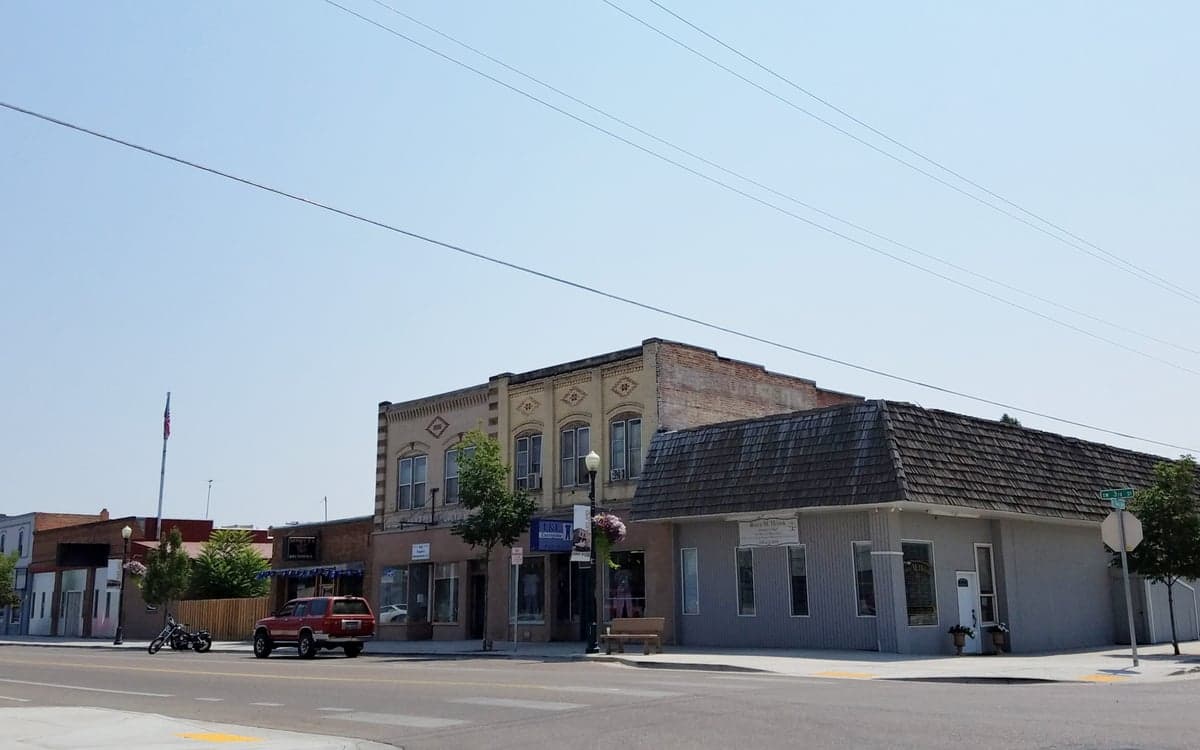
Photo: Wikipedia
Personal Sovereignty in Fruitland, ID
Moderate friction. Expect trade-offs in some aspect of personal liberty and independence.
What does Personal Sovereignty tell us?
Personal Sovereignty measures your capacity for self-reliance and independence with minimal government friction. Higher scores mean fewer barriers between you and the way you want to live... but it assumes you have the space you need and good neighbors.
What does this tell us?
Personal Sovereignty measures your capacity for self-reliance and independence with minimal government friction. Higher scores mean fewer barriers between you and the way you want to live... but it assumes you have the space you need and good neighbors.
State Policy
Energy independence: Importer (25% of energy produced in-state)
Personal Liberty
Homesteading

Personal Liberty Analysis
Fruitland, Idaho, offers a personal sovereignty environment that stands in stark contrast to the increasingly restrictive jurisdictions found along the West Coast and in the Northeast. For those prioritizing autonomy—whether as a single individual or a parent—this small city in Payette County provides a legal and cultural framework where the default answer from government is often "yes," not "no." The state's constitutional protections, combined with a local ethos of self-reliance, create a rare pocket where personal decision-making remains largely unencumbered by the regulatory creep that has hollowed out freedom in many other parts of the country.
Tax burden and regulatory posture: How Idaho protects your wallet and choices
Idaho's tax structure is a deliberate feature of its sovereignty-friendly design. The state imposes a flat income tax rate of 5.8% (as of 2025), which simplifies planning and avoids the punitive brackets found in states like California or New York. Property taxes in Payette County are among the lowest in the region, with effective rates typically hovering around 0.7% to 0.9% of assessed value—a fraction of what you'd pay in Portland or Seattle. There is no estate tax, no inheritance tax, and no state-level capital gains tax on most long-term holdings. On the regulatory side, Idaho operates under a "right-to-farm" framework that shields agricultural and homesteading activities from nuisance lawsuits, and the state has actively resisted adopting California-style environmental mandates, building codes, or energy efficiency standards that would dictate how you construct or modify your property. The local government in Fruitland is small and accessible; zoning variances and building permits are handled with a speed and common-sense approach that would be unrecognizable to anyone who has dealt with a large city's planning department. This low-tax, low-regulation posture is not an accident—it is a deliberate policy choice that preserves the individual's ability to keep more of what they earn and make their own decisions about their land and livelihood.
Self-defense and gun law specifics: No permission slips required
Idaho is a constitutional carry state, meaning that as of July 1, 2016, any law-abiding adult 18 or older may carry a concealed firearm without a permit. Fruitland sits in a county where the sheriff's office is explicitly pro-Second Amendment, and there are no local ordinances that restrict magazine capacity, ban specific firearm types, or impose waiting periods. The state has a strong "stand your ground" law (Idaho Code § 19-202A) that removes any duty to retreat before using deadly force in self-defense, and the Castle Doctrine extends full protection to your home, vehicle, and place of business. For those concerned about government overreach, Idaho also passed the "Second Amendment Preservation Act" (Idaho Code § 18-3302), which declares that any federal firearm law, regulation, or executive order that infringes on the right to keep and bear arms is null and void within the state. This is not symbolic—local law enforcement is prohibited from enforcing federal gun laws that violate the state constitution. For a prepper or survivalist, this means you can maintain a personal arsenal without fear of sudden bans, registration schemes, or confiscation orders. The legal environment treats self-defense as a fundamental right, not a privilege to be licensed and taxed.
Self-reliance and homesteading viability: Lot sizes, zoning, and off-grid feasibility
Fruitland's agricultural roots make it one of the more viable locations in the Treasure Valley for serious self-reliance. While the city itself has standard residential lots (typically 0.15 to 0.25 acres in subdivisions), the unincorporated areas of Payette County just outside city limits offer 2.5-acre to 20-acre parcels at prices that are still reasonable—often under $10,000 per acre for raw land. Zoning in the county allows for accessory dwelling units, workshops, barns, and small-scale livestock without the bureaucratic hurdles common in Ada County (Boise). Off-grid living is legally feasible: Idaho has no state-level prohibition on rainwater collection, and many rural properties rely on private wells and septic systems. Solar panel installation does not require a permit for systems under a certain size, and net metering is available for grid-tied setups. The county's building code is based on the 2018 International Residential Code but with local amendments that reduce requirements for owner-builders. For those who want to raise chickens, goats, or even a family cow, the city of Fruitland allows up to four hens per residential lot (no roosters), and the county has no meaningful restrictions on larger livestock. The growing season is roughly 150 days, and the soil in the Payette River valley is rich volcanic loam—ideal for a serious garden or small orchard. Water rights are a consideration, but for domestic use and a small acreage, they are generally straightforward to obtain.
Personal liberties: Parental rights, medical autonomy, speech, and property
Idaho has been at the forefront of protecting parental rights in education. The state's "Parents' Bill of Rights" (Idaho Code § 33-5201) guarantees that parents have the fundamental right to direct the upbringing, education, and health care of their children. This means no school district in Fruitland can hide curriculum, medical treatments, or behavioral interventions from parents. The state also has a robust medical freedom framework: Idaho was one of the first states to pass a law prohibiting discrimination based on COVID-19 vaccination status (Idaho Code § 39-9901), and it has maintained strong conscience protections for healthcare providers and patients. There is no state-level vaccine mandate for children attending public school, though standard childhood immunizations are required unless a parent claims a religious or philosophical exemption—both of which are explicitly allowed. On speech and assembly, Idaho has no hate speech laws that criminalize political or religious expression, and the state has passed legislation to protect free speech on college campuses. Property rights are protected by the "Private Property Protection Act," which requires the government to compensate landowners for any regulatory taking that reduces property value by more than 20%. For those concerned about surveillance and data privacy, Idaho has also restricted the use of facial recognition technology by law enforcement without a warrant. These protections create an environment where the individual—not the state—remains the primary decision-maker in the most critical areas of life.
Compared to the regulatory saturation of states like Oregon, Washington, or California, Fruitland represents a deliberate alternative for those who view personal sovereignty as the foundation of a free society. The trade-offs are real: you are trading access to dense urban amenities, public transit, and cultural institutions for lower taxes, fewer restrictions, and a legal system that still respects the individual's right to make their own choices about self-defense, medical care, education, and how they live on their land. For the strategic relocator who prioritizes autonomy over convenience, Fruitland, Idaho, offers one of the most intact sovereignty environments still available in the continental United States—a place where the government's role is limited, and the individual's capacity for self-determination is the operating principle.

* Values derived from national, state, county, city and local statistics and may differ in a specific area. Last updated: 2026-05-03T04:44:57.000Z
Narrative content on this page is AI-generated and may contain mistakes. Verify any details that matter before acting on them.
ReloMaps may earn a commission from affiliate links at no extra cost to you.

