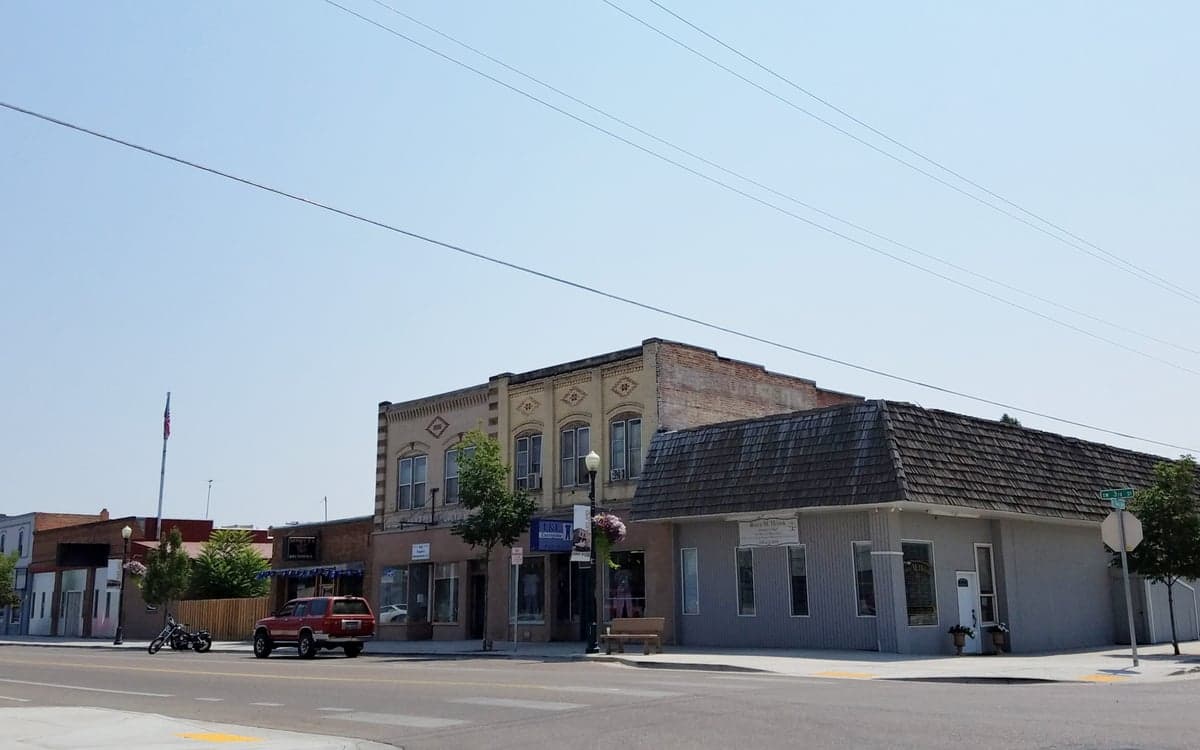
Photo: Wikipedia
Strategic Assessment of Fruitland, ID
Deep buffer from population centers and strategic targets. Low natural disaster risk and minimal exposure to border or coastal threats.
What does the Strategic Assessment tell us?
Our Strategic Assessment grades tactical survivability of an area. Major population centers, military targets, fallout zones, natural disasters, and border exposure all drive risk — lower exposure means a more defensible position in a crisis.
This is heavily inspired by Joel Skousen's Strategic Relocation book. Highly recommended you checkout the book ($)What does this tell us?
Our Strategic Assessment grades tactical survivability of an area. Major population centers, military targets, fallout zones, natural disasters, and border exposure all drive risk — lower exposure means a more defensible position in a crisis.
This is heavily inspired by Joel Skousen's Strategic Relocation book. Highly recommended you checkout the book ($)Strategic Pillars

Key Distances
Regional Safe Places
Below is our recommended "safe zones" in Idaho and the surrounding area based on our strategic heuristics. For most people, it's unrealistic to live in a “safe zone” full-time due to work, family or other personal reasons. They tend to be more rural. However, many of these areas are perfect for second homes and retreat properties that double as a vacation home or even a short-term rental.
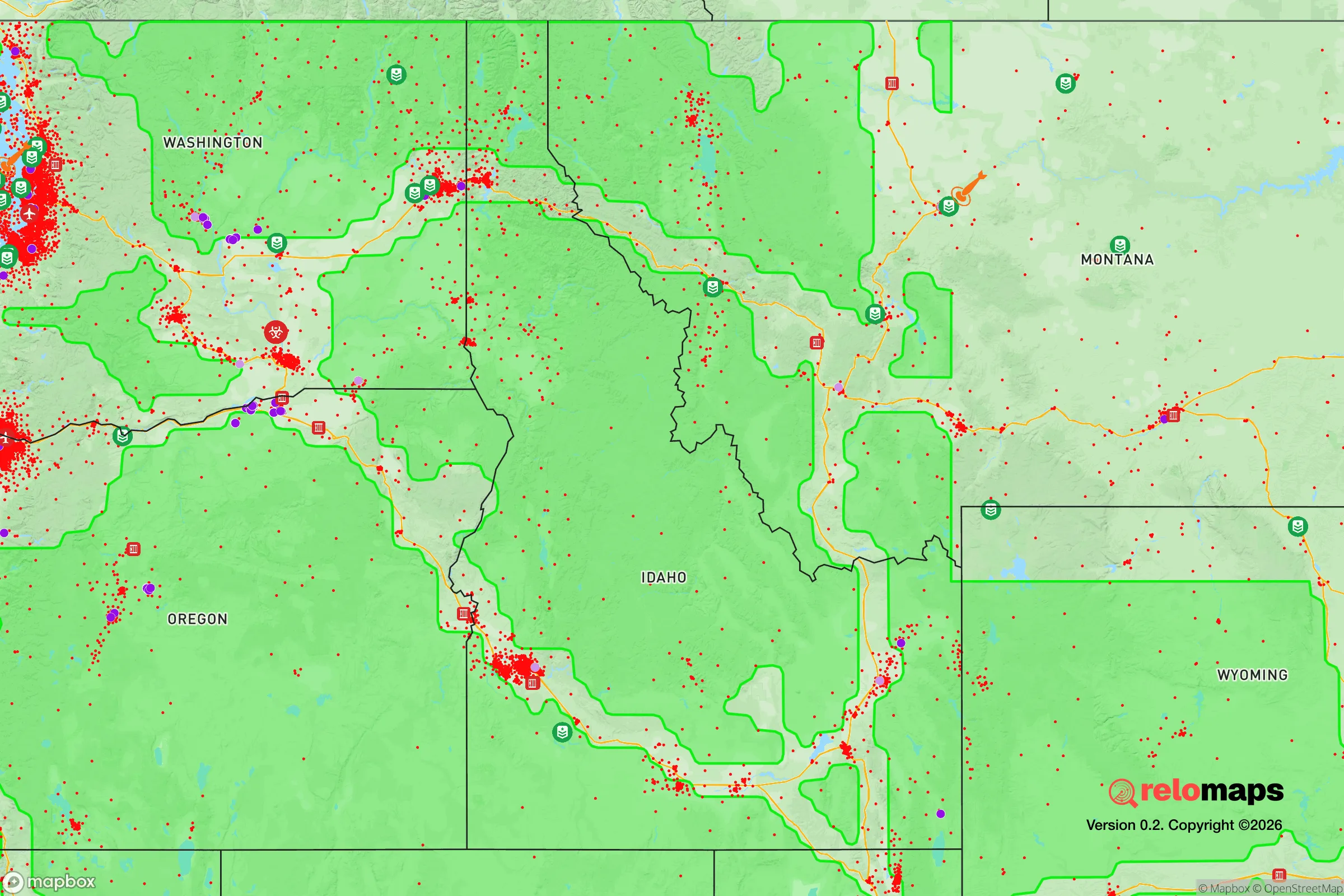
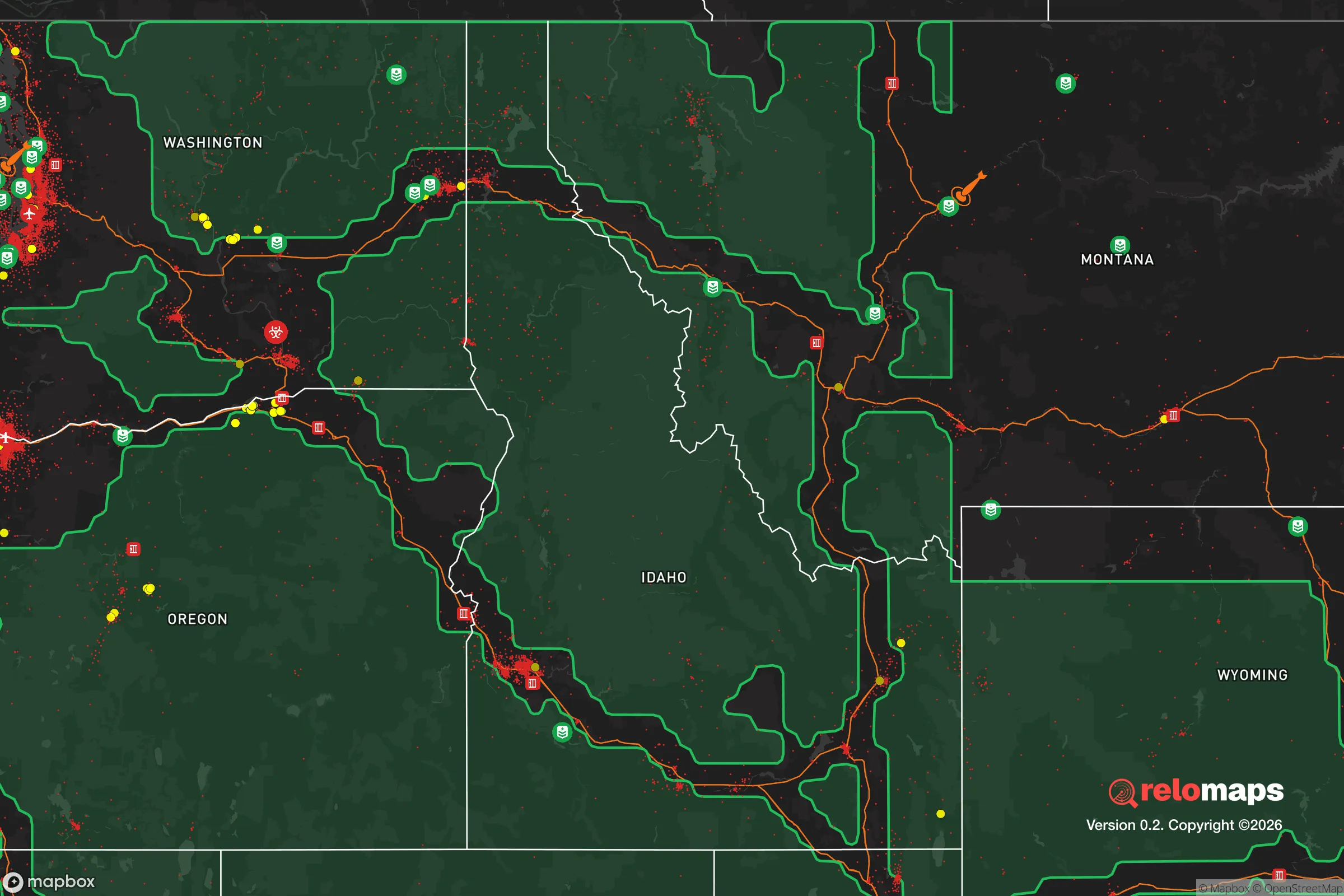


Important Note: For informational purposes only. This does not mean nothing bad ever happens in the green zones. Please use common sense. This is based on public data and modeled with AI. We tried to take a conservative approach but mistakes happen. We update this regularly as new information becomes available.
Solar Generator Recommendations
Backup power matters more here than in safer locations. We've picked three solar generators across budgets and capacity tiers — start with the budget unit if you only need a few essentials, or step up if you want to run a fridge and HVAC for days at a time.

Jackery Portable Power Station Explorer 300
Budget OptionPower on the Go: Weighing only 11 lbs, it's convenient to set up and store with book-sized foldable solar panels

BLUETTI Portable Power Station AC180
Designed for both indoor and outdoor scenarios, AC180 is highly capable as it has a robost capacity and continuous output power.

EF ECOFLOW DELTA Pro Ultra Power Station
Upgraded PickEcoFlow DELTA Pro Ultra is a whole-home energy system designed to grow with your family. Integrated with the Smart Home Panel 2, it scales to meet your evolving energy needs — keeping your home powered, intelligent, and secure through every stage of life.
We earn a commission, at no additional cost to you.
Strategic Assessment Analysis
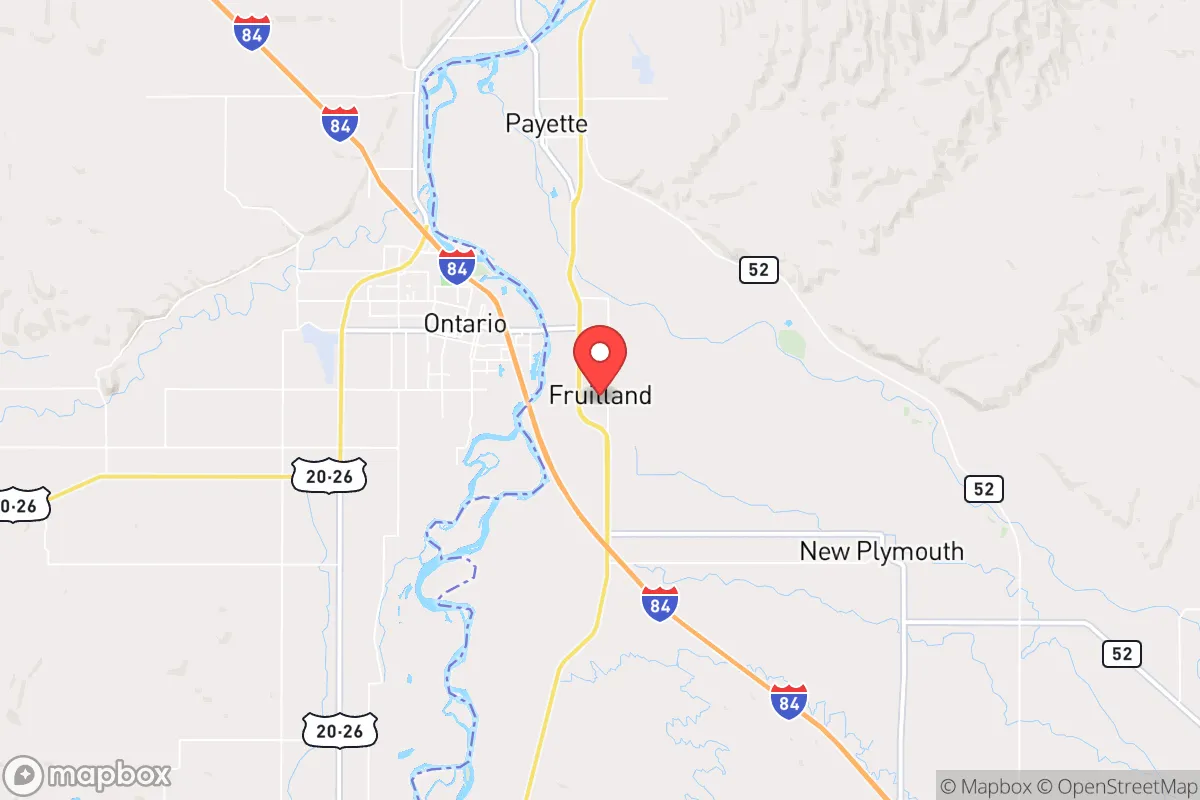
Fruitland, Idaho, sits in a position that demands a hard look from anyone serious about long-term strategic relocation. Nestled in the western Treasure Valley along the Snake River, this town of roughly 6,000 people offers a blend of agricultural self-sufficiency, geographic isolation from major population centers, and access to critical natural resources that make it a viable node in a post-disruption scenario. Its location—roughly 60 miles northwest of Boise and 20 miles from the Oregon border—places it outside the immediate blast radius of any major metropolitan target, yet close enough to a regional hub (Boise) for pre-crisis supply runs. The area’s resilience is rooted in its agricultural base, water abundance, and relatively low population density, but it’s not without significant exposure to fallout corridors, infrastructure vulnerabilities, and proximity to a handful of high-value targets that could complicate survival planning.
Geographic position and natural advantages for long-term survival
Fruitland’s geography is its strongest card. The town sits on the fertile floodplain of the Snake River, which provides both irrigation for local farms and a reliable surface water source. The surrounding Payette Valley is one of Idaho’s most productive agricultural regions, with orchards, vineyards, and row crops that could sustain a local population even if supply chains collapse. The area’s elevation—roughly 2,200 feet—keeps summers warm and dry, while winters are cold enough to limit pest cycles but not so severe as to make off-grid living impossible without heavy infrastructure. The Owyhee Mountains to the south and the Boise National Forest to the east offer rugged terrain for retreat, hunting, and foraging, though access requires a vehicle capable of handling unmaintained roads. Critically, Fruitland is over 300 miles from the nearest major nuclear target (the Hanford Site in Washington, a decommissioned but still hazardous nuclear production facility), and the prevailing westerly winds would carry fallout from a West Coast strike away from this valley. The Snake River itself is a strategic asset—it’s a perennial, high-volume waterway that could support small-scale hydroelectric generation, irrigation, and transportation if fuel becomes scarce. For a relocator, the natural advantages here are real, but they require a willingness to live with rural trade-offs: limited medical facilities, a single hospital in nearby Ontario (Oregon), and a local economy that depends heavily on agriculture and a few large employers.
Risks, exposures, and proximity to fallout-relevant landmarks
No strategic assessment is honest without naming the threats. Fruitland’s biggest exposure is its proximity to Boise (60 miles southeast), which is a regional population and government center that would be a likely target for any coordinated attack on the U.S. electrical grid or transportation networks. A conventional or EMP strike on Boise’s substations or the nearby Mountain Home Air Force Base (roughly 90 miles southeast) could knock out power to the entire Treasure Valley for weeks or months. Fruitland itself is not a primary target—no military bases, no major industrial complexes, no nuclear plants—but it sits within the fallout plume zone of a strike on Boise if winds shift northwesterly. The Hanford Site (300 miles northwest) is a more distant but serious concern: a direct hit there could release radioactive material into the Columbia River system, which feeds the Snake River via the Columbia-Snake confluence downstream. That’s a long-term water contamination risk, not an immediate blast danger. Closer to home, the Payette River runs through town and is prone to spring flooding from snowmelt—a natural hazard that could disrupt roads and utilities for days. The area also sits in a seismically quiet zone, so earthquakes are not a primary concern. For the prepper, the real risk is infrastructure fragility: Fruitland’s power grid is tied to the broader Idaho Power network, and a single substation failure could leave the town dark for extended periods. The local water system relies on electric pumps, so a prolonged outage would require manual or generator-driven alternatives. The town’s population is small, but it’s growing—new subdivisions are creeping in from Boise exurbs—which means the social fabric is shifting, and the likelihood of transient populations during a crisis is increasing.
Practical resilience for a relocator: food, water, energy, and defensibility
For someone serious about self-reliance, Fruitland offers a mixed bag. Food security is strong: the surrounding farmland produces apples, cherries, onions, sugar beets, and alfalfa, and the Snake River provides year-round fishing (smallmouth bass, catfish, and trout). Local farmers’ markets and co-ops operate seasonally, and the area has a handful of small-scale livestock operations. A relocator with a half-acre lot could easily grow a significant portion of their own calories, though soil quality varies and irrigation rights are tied to senior water claims. Water is the standout advantage: the Snake River is a massive, reliable source, and the local aquifer is deep but well-recharged. A well-drilling permit is straightforward for rural properties, and rainwater catchment is viable given the area’s 10-12 inches of annual precipitation (supplemented by irrigation canals). Energy is the weak link. The grid is vulnerable, and natural gas lines are limited. Solar potential is good—the valley gets over 200 sunny days per year—but winter cloud cover can reduce output for weeks at a time. A propane backup generator or a small wind turbine (if you have the elevation) would be wise investments. Defensibility is moderate. Fruitland is a compact town with a grid street layout, not a natural fortress. The surrounding farmland is open, offering long sightlines but little cover. The best defensive position would be a rural property on the outskirts, with the Snake River as a natural barrier on one side and the foothills to the north providing escape routes into the Payette National Forest. The local law enforcement presence is thin—the Fruitland Police Department has fewer than a dozen officers—so in a prolonged crisis, community self-policing would be the norm. The town’s social cohesion is a double-edged sword: it’s a tight-knit, largely conservative community where neighbors know each other, but outsiders (especially those moving in from blue states) may face a period of skepticism before being accepted.
The overall strategic picture for Fruitland is one of cautious viability. It’s not a hardened bunker location—it lacks the natural chokepoints, elevation, and isolation of, say, the Idaho panhandle or the central mountains. But it offers a realistic balance of agricultural self-sufficiency, water abundance, and distance from primary targets that many other relocation spots in the West cannot match. The key trade-off is proximity to Boise: close enough to be affected by a regional collapse, far enough to avoid the immediate blast. For a relocator willing to invest in off-grid power, water storage, and community integration, Fruitland provides a solid foundation. The threats are real—grid vulnerability, flooding, and the long shadow of Hanford—but they are manageable with preparation. The town’s growth trajectory suggests it will become more suburban over the next decade, so the window for securing affordable land and establishing a foothold is narrowing. If you’re looking for a place that can sustain you through a decade of instability without requiring a complete retreat from society, Fruitland deserves a serious look. Just don’t expect it to stay quiet forever.

* Values derived from national, state, county, city and local statistics and may differ in a specific area. Last updated: 2026-05-03T04:44:57.000Z
Narrative content on this page is AI-generated and may contain mistakes. Verify any details that matter before acting on them.
ReloMaps may earn a commission from affiliate links at no extra cost to you.

