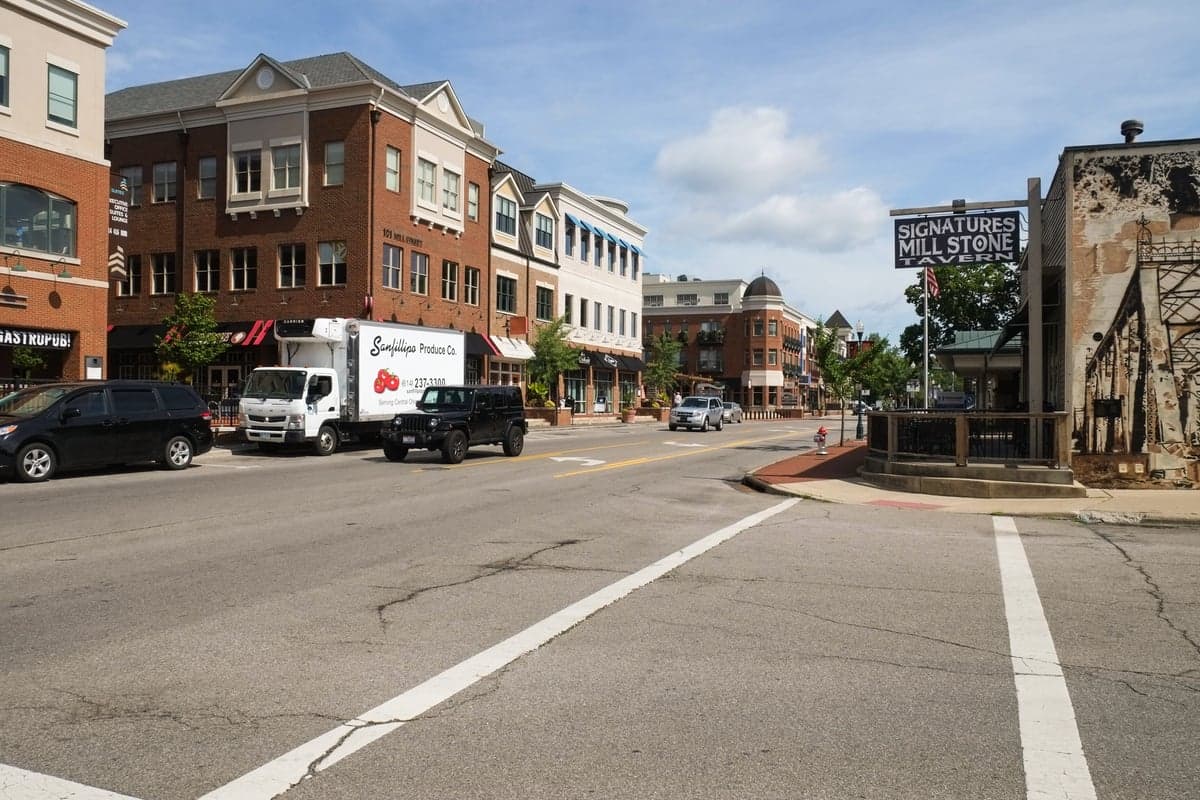
Photo: Wikipedia
Political ClimatePolitical Climate in Gahanna, OH
District shown is the primary district for this city’s centroid. Cities may span multiple districts.
Local Political AnalysisPolitical Analysis of Gahanna, OH
Gahanna’s political climate has shifted noticeably over the past decade, and if you’ve lived here as long as I have, you’ve felt it. The Cook PVI now sits at D+21, meaning the city leans heavily Democratic—a far cry from the more balanced, common-sense community I remember from the 1990s and early 2000s. While the city itself isn’t as progressive as Columbus proper, the trend is unmistakable: each election cycle brings a tighter embrace of policies that prioritize government solutions over individual liberty.
How it compares
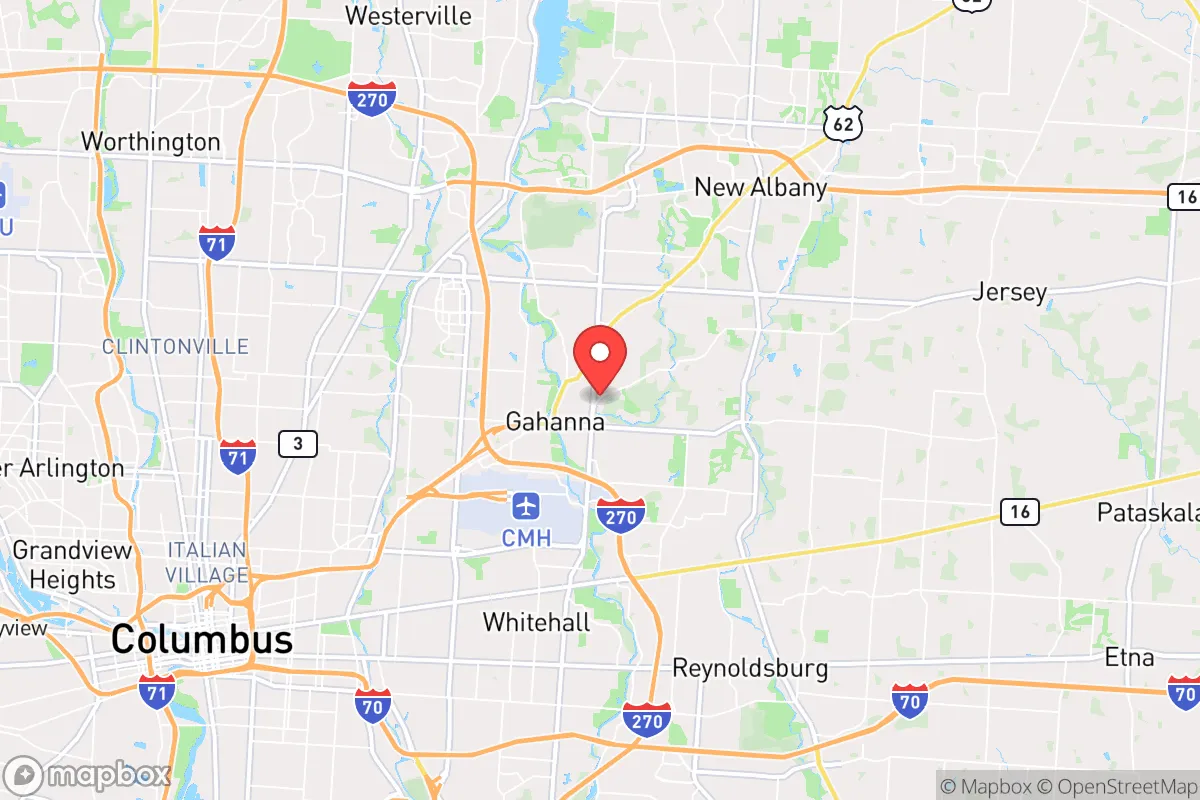
Drive ten minutes west into Columbus, and you’re in a deep-blue stronghold where progressive politics are the norm—think higher taxes, more regulations, and a general acceptance of government overreach into personal freedoms. Head east to places like Pataskala or Johnstown, and you’ll find communities that still value limited government and local control. Gahanna sits right in the middle, but it’s sliding toward the Columbus side of the spectrum. The contrast is stark: in nearby New Albany, you’ll see a more fiscally conservative approach, while Gahanna’s city council has increasingly embraced zoning changes and spending initiatives that feel like they’re borrowed from the city to the west. It’s a reminder that where you live in central Ohio can mean the difference between a government that trusts you to make your own choices and one that thinks it knows better.
What this means for residents
For those of us who value personal freedoms—like the right to decide how to run our businesses, what to teach our kids, or how to use our property—the D+21 lean is a red flag. It means policies that sound good on paper, like “equity initiatives” or “sustainability mandates,” often come with strings attached. I’ve seen it firsthand: new housing regulations that make it harder to build a simple addition without jumping through hoops, and school board meetings where progressive curriculum changes get pushed through despite parent concerns. The tax burden has crept up too, funding programs that prioritize social engineering over core services like roads and public safety. If you’re the type who believes government should stay out of your life unless absolutely necessary, Gahanna’s trajectory is something to watch closely.
On the cultural side, Gahanna still has a strong sense of community—neighbors know each other, and the local businesses on Mill Street and around Creekside Park feel genuine. But the political shift has brought a subtle change in tone. There’s less tolerance for dissenting views in public forums, and some longtime residents feel their voices are drowned out by newcomers who bring big-city attitudes. The city’s annual festivals and events remain family-friendly, but the underlying policy direction is increasingly about conformity to progressive ideals rather than protecting the individual rights that made this country great. If you’re considering a move here, I’d say come for the schools and the location, but keep an eye on the voting booth—because the Gahanna I grew up in is fading, and the one taking its place is a lot more comfortable telling you how to live.

State Political ClimatePolitical Climate in Ohio
State Political AnalysisPolitical Environment in the State
Ohio has long been the quintessential swing state, but over the past decade it has shifted decisively to the right, with Donald Trump carrying it by 8 points in both 2016 and 2020 and Republicans now holding supermajorities in the state legislature. The state’s political DNA is a mix of Appalachian conservatism, Midwestern pragmatism, and a growing rural-urban chasm that has turned once-competitive suburbs into reliable GOP strongholds. For a conservative looking to relocate, Ohio offers a solid red foundation with a few blue pockets that are increasingly isolated.
Urban vs. rural divide
The political map of Ohio is a study in contrasts. The three Cs — Cleveland, Columbus, and Cincinnati — are the Democratic anchors, with Cuyahoga County (Cleveland) delivering 68% for Biden in 2020 and Franklin County (Columbus) hitting 62%. But outside these urban cores, the landscape is overwhelmingly red. The rural counties of Mercer, Auglaize, and Shelby in western Ohio routinely vote 75-80% Republican, while the Appalachian counties of Belmont, Monroe, and Noble in the southeast have flipped hard from blue-dog Democrat to deep red since 2012. The real story is the suburbs: Delaware County north of Columbus, once a swing area, now votes 60% Republican, and Warren County near Cincinnati is a GOP fortress at 65%. The urban-rural divide is so stark that Ohio’s 88 counties are almost perfectly split between a few blue metros and a vast red countryside, with no purple middle left.
Policy environment
Ohio’s policy environment has shifted sharply conservative in the last decade. The state income tax was cut from a top rate of 4.997% to 3.5% in 2023, and the sales tax is a moderate 5.75%. Property taxes are locally controlled but generally low compared to the coasts. The state is a right-to-work state in practice if not in law, and union power has waned significantly since the 2011 SB 5 fight. On education, Ohio passed universal school vouchers in 2023, allowing any family to use public funds for private or homeschool expenses — a huge win for parental rights. The state also enacted a six-week abortion ban in 2022, though a 2023 ballot measure enshrined abortion rights in the state constitution, a bitter loss for conservatives. Election laws tightened in 2023 with stricter voter ID requirements and limits on drop boxes, which conservatives see as integrity measures and progressives call suppression. The regulatory climate is business-friendly, with no state-level minimum wage above the federal $7.25 and a streamlined permitting process for energy and manufacturing.
Trajectory & freedom
Ohio’s trajectory on personal freedom is a mixed bag, but the trend is positive for conservatives. The state became a constitutional carry state in 2022, meaning no permit is needed to carry a concealed firearm — a major expansion of Second Amendment rights. Parental rights were strengthened with the 2023 Parents’ Bill of Rights, which requires schools to notify parents of any medical or mental health services offered to minors and prohibits instruction on sexual orientation in grades K-3. On medical freedom, Ohio banned COVID-19 vaccine mandates for state employees and contractors in 2023. However, the 2023 abortion rights amendment was a setback, and the state’s marijuana legalization vote in 2023 (which passed) is a double-edged sword for conservatives who see it as a freedom issue but worry about social decay. Property rights are strong, with no statewide rent control and a relatively low eminent domain risk. The biggest red flag is the growing influence of the state’s bureaucracy in Columbus, which has pushed for stricter environmental regulations on farms and factories, though the GOP legislature has largely blocked these efforts.
Civil unrest & political movements
Ohio has seen its share of political flashpoints. The 2020 protests in Columbus and Cincinnati over George Floyd’s death turned violent in some areas, with looting and property damage that soured many moderates on the BLM movement. The 2023 East Palestine train derailment sparked a populist backlash against federal regulatory failures, with both local Republicans and Democrats blaming the Biden administration’s rail policies. Immigration politics are relatively quiet compared to border states, but the influx of Somali and Latino communities in Columbus’s Hilltop neighborhood has fueled local tensions over resources and cultural change. Election integrity remains a hot-button issue: the 2020 election saw no major fraud in Ohio, but the 2023 voter ID law was a direct response to lingering distrust. The state has no sanctuary city policies, and local law enforcement generally cooperates with ICE. Organized activist movements are small but vocal: the left has a presence on college campuses like Ohio State University, while the right has strong grassroots through groups like the Ohio Freedom Alliance and county-level Republican parties that are increasingly populist and anti-establishment.
Projection
Over the next 5-10 years, Ohio is likely to become more conservative, not less. The in-migration pattern is telling: people are moving from blue states like California and Illinois to red suburbs in Delaware, Warren, and Medina counties, drawn by lower taxes and housing costs. These new arrivals tend to be moderate-to-conservative, reinforcing the GOP trend. The urban cores of Cleveland and Cincinnati are shrinking in population, while the exurbs and rural areas are growing. The state’s demographic shift is slow but steady: the white population is aging, but the Hispanic and Asian populations are growing in conservative-leaning areas like Union County and Fairfield County. The biggest wildcard is the state’s education system: if universal vouchers continue to expand, it could accelerate the decline of public schools in blue cities and further entrench conservative values in the suburbs. The 2023 abortion amendment was a warning that ballot initiatives can bypass the legislature, so conservatives will need to stay vigilant on that front. Overall, expect Ohio to be a solid red state for the foreseeable future, with the GOP supermajority likely to hold or grow.
For a conservative moving to Ohio, the bottom line is this: you’ll find a state that respects your gun rights, your parental authority, and your wallet. The urban areas are blue but manageable, the suburbs are safe and growing, and the rural areas are deeply red. The biggest practical takeaway is to choose your county carefully — Delaware County offers excellent schools and a conservative community, while Cuyahoga County will feel like a different country. Ohio isn’t perfect, but it’s trending in the right direction for anyone who values freedom over government control.
* Values derived from national, state, county, city and local statistics and may differ in a specific area. Last updated: 2026-04-21T18:01:29.000Z
Narrative content on this page is AI-generated and may contain mistakes. Verify any details that matter before acting on them.
ReloMaps may earn a commission from affiliate links at no extra cost to you.

